
How many calories are in rice noodles?
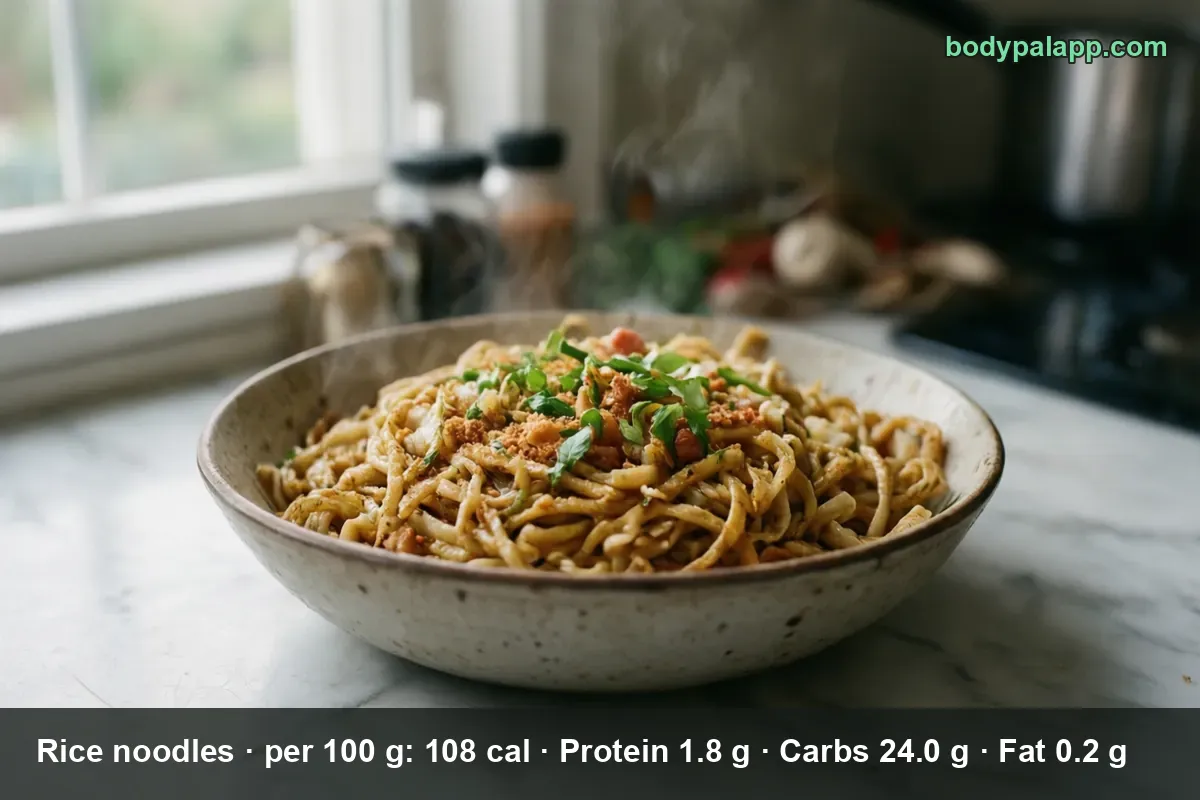
A 1-cup serving of cooked rice noodles weighs 176 g and holds 190 calories. Per 100 g they run 108 calories, one of the lightest noodle bases on the shelf once boiled. Almost all of it is starch: 42.3 g of carbohydrate a cup, 3.2 g of protein, 0.4 g of fat.
On this page
- Rice noodle quick facts
- US servings from one ounce to a full cup
- Dry packs and glass noodles
- Sodium is the row that moves
- How do rice noodles compare?
- Most popular rice noodles brands
- FAQ
Rice noodle quick facts
The numbers below come from USDA SR Legacy 168914, "Rice noodles, cooked". That is the record for what you actually put on the plate — boiled noodles, drained, nothing on them yet — and it is the one USDA gives a real household measure for, 1 cup at 176 g. The dry pack in the cabinet is a separate record with very different numbers, and it gets its own section further down.
One thing to keep straight before you read the table: this record was boiled in unsalted water. USDA's FNDDS version of the same noodle, cooked in salted water, is nearly identical in calories but carries thirteen times the sodium.
| Nutrient | Per 100 g | Per 1 cup (176 g) | % Daily Value |
|---|---|---|---|
| Calories | 108 | 190 | — |
| Total fat | 0.2 g | 0.4 g | 0% |
| Saturated fat | 0.02 g | 0.0 g | 0% |
| Carbohydrate | 24.01 g | 42.3 g | 15% |
| Dietary fiber | 1 g | 1.8 g | 6% |
| Total sugars | 0.03 g | 0.1 g | — |
| Protein | 1.79 g | 3.2 g | 6% |
| Sodium | 19 mg | 33 mg | 1% |
% Daily Value is based on a 2,000-calorie diet.
Verified nutrition data
Numbers on this page come from USDA FoodData Central, the U.S. Department of Agriculture’s food composition database, and from manufacturer labels where a branded product is named. Last verified September 2026. How we verify our data →
There is no added sugars row and no trans fat row here, because the SR Legacy edition of this record does not publish either. Cholesterol is 0 mg, as you would expect from rice and water, and potassium is 4 mg per 100 g, 7 mg in a cup — a rounding error against the 4,700 mg Daily Value.
The fat row is worth a second look. At 0.2 g per 100 g, boiled rice noodles are essentially fat-free. Every gram of fat in a finished plate of pad thai or stir-fried noodles comes from the oil, the sauce and the peanuts, not from the noodles, so the USDA record is the floor of the dish and never the whole of it.
US servings from one ounce to a full cup
| Serving | Weight | Calories |
|---|---|---|
| 1 oz, cooked | 28 g | 30 kcal |
| 1/2 cup, cooked | 88 g | 95 kcal |
| 3/4 cup, cooked | 132 g | 143 kcal |
| 1 cup, cooked | 176 g | 190 kcal |
| Per 100 g | 100 g | 108 kcal |
Only the 1-cup row is a USDA household measure. The ounce, the half cup and the three-quarter cup are our own arithmetic from the USDA 100 g figure, not USDA servings, which is why they scale so cleanly.
The cup is where people get caught. A cup of cooked noodles looks like a modest side, and at 190 calories it is one. A restaurant bowl of pho or a takeout container of drunken noodles usually holds two to three cups, which puts 380 to 570 calories of plain noodles in front of you before the broth, the meat or the sauce is counted. Measure once at home with a dry measuring cup and you will recognize the difference for good.
Dry packs and glass noodles
| Version | Per 100 g | Typical serving | Calories |
|---|---|---|---|
| Dry (uncooked) rice noodles | 364 kcal | 2 oz (57 g) | 208 kcal |
| Cooked in unsalted water (main record) | 108 kcal | 1 cup (176 g) | 190 kcal |
| Cooked in salted water | 107 kcal | 1 cup (175 g) | 187 kcal |
| Glass noodles, mung bean | 84 kcal | 1 cup (190 g) | 160 kcal |
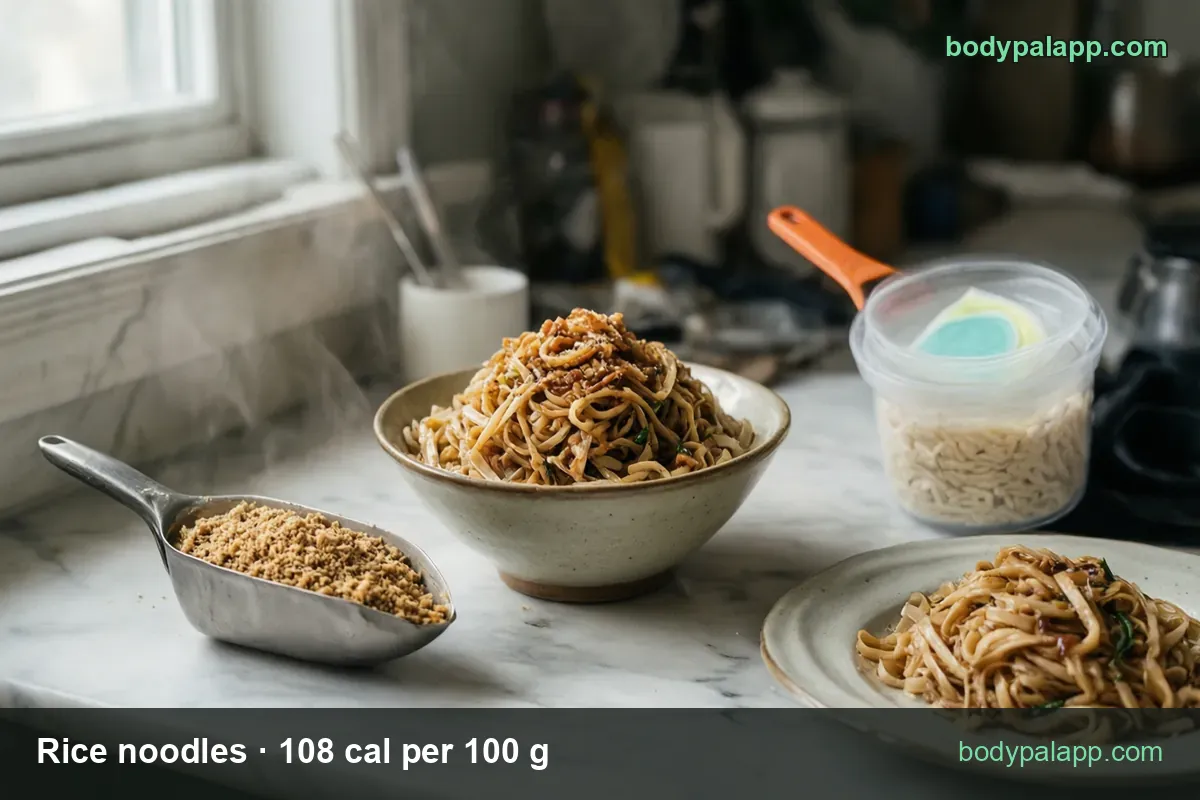
Dry noodles. A 2 oz portion of the dry pack — 57 g, and 208 calories by our own arithmetic from the USDA 100 g figure — carries more calories than a whole cooked cup. Nothing was added; water was. The same rice ends up about 3.4 times heavier after boiling, so the dry number and the cooked number are not comparable unless you convert one to the other. If your label says 2 oz dry, that is the honest count for what you cooked, whatever the drained noodles weigh afterward.
Salted water. USDA's FNDDS record for cooked rice noodles is 107 calories per 100 g, effectively the same food, but sodium reads 250 mg per 100 g instead of 19 mg. That difference is the cooking water, not the noodle.
Glass noodles. Long rice noodles made from mung bean starch are a different food that shares a shelf. At 84 calories per 100 g they are the lightest of the four USDA records here, and a 1-cup 190 g serving is 160 calories. The catch is protein: 0.04 g per 100 g, essentially none at all.
On the branded shelf, dry packs sit close together. Thai Kitchen Stir-Fry Rice Noodles list 200 calories per 2 oz (56 g) serving at 357 per 100 g, King Soba's organic black rice noodles 364 per 100 g, and a Mama instant whole grain rice noodle piece 160 calories for 45 g. Read those as dry-weight numbers, the same way you read the USDA dry record.
Sodium is the row that moves
Plain rice noodles are one of the quietest sodium sources in the pantry: 33 mg in a cup, 1% of the FDA Daily Value of 2,300 mg. Salt the boiling water and USDA's own figure climbs to 250 mg per 100 g. Reach for an instant pho or noodle-soup packet and the seasoning sachet can push a product to somewhere between 1,383 and 3,367 mg per 100 g. The noodle never changed. The water and the packet did.
The other row people misread is fiber. At 1.8 g a cup, 6% of the 28 g Daily Value, refined rice noodles are not a whole grain, and MyPlate counts them on the refined side of the grains group. If you are watching fiber, that is an argument for what goes on top — vegetables, herbs, beans — rather than against the noodles themselves.
How do rice noodles compare?
| Noodle | Per 100 g | US serving | Calories |
|---|---|---|---|
| Rice noodles, cooked | 108 kcal | 1 cup, 176 g | 190 kcal |
| Rice noodles, dry | 364 kcal | 2 oz, 57 g | 208 kcal |
| Rice noodles cooked in salted water | 107 kcal | 1 cup, 175 g | 187 kcal |
| Glass noodles, mung bean | 84 kcal | 1 cup, 190 g | 160 kcal |
Our take: for weight loss, cooked rice noodles are already a cheap base — a cup is 190 calories, less than most people assume — and, apart from the same noodle boiled in salted water at 107, the only lighter option in this table is the mung bean glass noodle at 84 calories per 100 g, which buys you 30 fewer calories a cup and gives up what little protein there was. For fullness, neither wins on its own. With 3.2 g of protein and 1.8 g of fiber in a cup, rice noodles do not hold you; the shrimp, chicken, tofu, eggs or vegetables you pile on them do. Track the noodles by the dry weight if you cook from the pack, by the cup if you are eating them cooked, and never mix the two.
Most popular rice noodles brands in the United States
Ranked by how widely each product appears among foods sold in the United States, from the BodyPal food database of over 3.3 million products. Calories are the figures printed on each Nutrition Facts label, checked against USDA FoodData Central.
| Product | Calories (per 100 g) |
|---|---|
| Thai Kitchen Stir-Fry Rice Noodles | 357 cal |
| King Soba Organic Black Rice Noodles | 364 cal |
| Mama Instant Whole Grain Rice Noodles | 356 cal |
| Thai Kitchen Rice Noodles | 357 cal |
| Asian Creations Red Rice Noodles | 357 cal |
Brand popularity: BodyPal food database. Nutrition: manufacturer labels / USDA FoodData Central.
Rice noodle FAQs
How many calories are in 1 cup of cooked rice noodles?
One cup of cooked rice noodles weighs 176 g and carries 190 calories, at 108 calories per 100 g. That cup also brings 42.3 g of carbohydrate, 3.2 g of protein and almost no fat at 0.4 g. Sauce, oil and toppings are what move the total.
How many calories are in 2 oz of dry rice noodles?
Two ounces of dry rice noodles is 57 g and about 208 calories, scaled from the USDA figure of 364 calories per 100 g rather than taken from a USDA serving. That is more than a whole cooked cup at 190 calories, because the dry pack has not soaked up water yet.
Are rice noodles gluten free?
Plain rice noodles are rice flour and water: the USDA cooked record shows 24.01 g of carbohydrate and only 1.79 g of protein per 100 g, which is what rice starch looks like. Rice contains no gluten. Still read the label, because some noodle packs blend in wheat or egg.
How many carbs are in rice noodles?
A 1-cup serving has 42.3 g of carbohydrate, 15% of the FDA Daily Value, from 24.01 g per 100 g cooked. Fiber is only 1.8 g of that cup and total sugars 0.1 g, so nearly all of it is plain rice starch with nothing else attached.
Do rice noodles have protein?
Barely: 3.2 g in a 1-cup serving, 6% of the Daily Value, or 1.79 g per 100 g cooked. Mung bean glass noodles have even less, 0.04 g per 100 g. Rice noodles are a carbohydrate base, so the protein has to come from what you put on them.
How much does 1 cup of cooked rice noodles weigh?
USDA lists one cup of cooked rice noodles at 176 g, which is 190 calories. Half a cup is 88 g and 95 calories by our own arithmetic from the 100 g figure. Restaurant bowls usually hold two to three cups, so 380 to 570 calories of noodles.
Are rice noodles high in sodium?
Not on their own: 33 mg in a 1-cup serving, 1% of the Daily Value, from 19 mg per 100 g. Boil them in salted water and the USDA figure jumps to 250 mg per 100 g, while instant pho packets run 1,383 to 3,367 mg per 100 g.
Are glass noodles the same as rice noodles?
No — glass or cellophane noodles are made from mung bean starch and run 84 calories per 100 g, against 108 for cooked rice noodles. A 1-cup 190 g serving is 160 calories. They also carry almost no protein at all, just 0.04 g per 100 g.
Similar foods
- Wild Rice — 166 cal per cup, cooked
- Quinoa — 222 cal per cup cooked
- Rice — 205 cal per cup, cooked
- Milk — 149 cal per cup
- Pasta — 168 cal per cup penne
- Penne pasta — 169 cal per cup
Count it without the math
Point the camera at the bowl and BodyPal counts the noodles for you, sauce and all.


How long does it take to burn off rice Noodles?
A 1-cup (176 g) serving is 190 kcal. Enter your weight and the amount you ate to see how long it takes you to burn that off:
lb
| Activity | Time to burn 190 kcal |
|---|---|
| Walking, brisk | 38 min |
| Cycling, moderate | 24 min |
| Swimming, moderate | 27 min |
| Jogging | 22 min |
| Weight training, moderate | 42 min |
Times are for a 155 lb adult at a steady pace; change the weight to see yours. The amount is set to the portion in the text (176 g); change it to what you actually ate. BodyPal works this out from your steps automatically.
One food is easy to picture; a whole day is harder. See how many calories you need a day and what a deficit actually looks like.