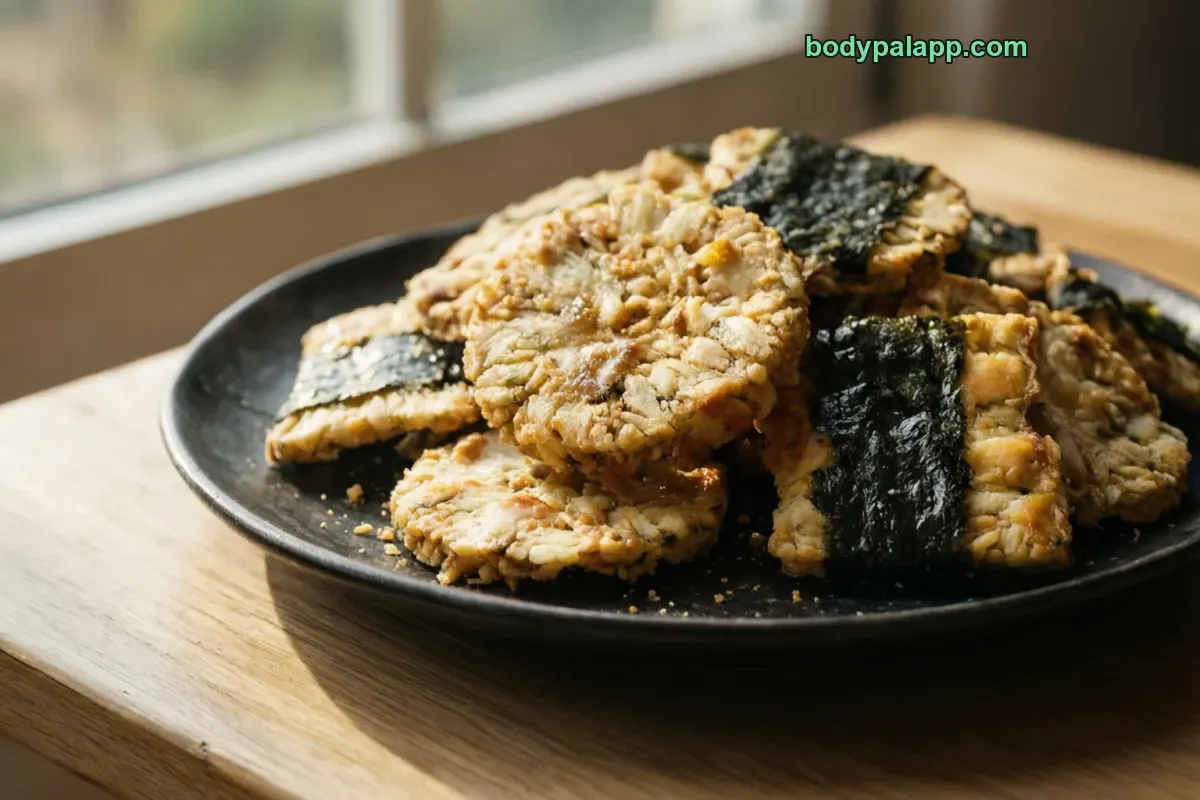
Rice crackers calories come to 125 for a 30 g serving and 416 per 100 g. The number to notice is the carb share: about 80% of those calories come from carbohydrate, with 0 g fiber and 0 g sugar per 100 g. A serving is light, but it is not very filling on its own.
125kcal
1 30 g serving · 30 g, plain, ready to eat
10%protein
3 gProtein
25 gCarbs
1.5 gFat
How to burn off 125 kcal
—Walking, brisk
—Jogging
—Cycling, moderate
—Swimming
Skip the math. BodyPal counts these calories from your steps and workouts automatically.
Nutrition facts
Plain, ready to eat · per 30 g
Calories
125 kcal
Protein
3 g
Carbohydrate
25 g
Fat
1.5 g
Saturated fat
0 g
Cholesterol
0 mg
Sodium
70 mg
Potassium
73 mg
Iron
0 mg
Source: USDA FoodData Central
🛡️
Verified nutrition data
Numbers on this page come from USDA FoodData Central, the U.S. Department of Agriculture’s food composition database, and from manufacturer labels where a branded product is named. Last verified September 2026. How we verify our data →
Rice crackers: calories, protein and sodium by serving
Percent of daily value uses the FDA reference of 2,000 kcal a day.
Serving
kcal
Protein
Carbs
Fat
Sodium
% DV kcal
1 serving (30 g)
125
3 g
24.8 g
1.5 g
70 mg
6%
1 cracker (3 g)
12
0.3 g
2.5 g
0.2 g
7 mg
1%
1 cup (40 g)
166
4 g
33.1 g
2 g
93 mg
8%
100 g
416
10 g
82.6 g
5 g
233 mg
21%
3 × 1 serving (30 g)
374
9 g
210 mg
5 × 1 serving (30 g)
624
15 g
350 mg
One serving is 125 calories, an open bag is not
A single 3 g cracker has 12 calories, which is why rice crackers feel almost free. The standard 30 g serving lands at 125 calories, or 6% of the daily value, with 70 mg of sodium. A loosely filled cup, about 40 g, comes to 166 calories.
The catch is pace. Two servings (60 g) bring 250 calories, three servings (90 g) reach 374, and five servings, or 150 g, total 624 calories with 350 mg of sodium. Thin, crisp crackers vanish quickly from an open package. Eating straight from the bag is how a light snack quietly turns into a meal's worth of energy.
If you track, weigh once. Count out a 30 g portion into a bowl, note how many crackers it takes, and use that pile as your visual rule from then on. Plating a portion also slows you down more than reaching into a sleeve. BodyPal can log rice crackers from a photo if you would rather skip the scale.
Four out of five calories are carbs
Per 100 g, plain rice crackers carry 82.6 g of carbohydrate, 10 g of protein and 5 g of fat. In calorie terms that splits roughly 80% carbs, 10% protein and 11% fat. This is a refined starch snack, and the label reads like one.
Per 30 g serving you get 24.8 g of carbs, 3 g of protein and 1.5 g of fat. The fat is low and saturated fat is listed at 0, which keeps the calories lower than many buttery crackers. The protein is modest too: 3 g covers 6% of the daily value, not enough to make the snack satisfying on its own.
What is missing matters as much as what is there. The card shows 0 g of fiber and 0 g of sugars for plain rice crackers, so there is nothing slowing digestion down. Expect them to be crunchy and pleasant but gone from your stomach quickly. Brown rice, red rice or sesame versions, like those from Nature's Place or Laiki, may read differently, so check the package for those.
Sodium is modest for a cracker
Plain rice crackers contain 233 mg of sodium per 100 g, which is 10% of the daily value. A 30 g serving holds 70 mg, just 3%, and a single cracker has 7 mg. For a salty-tasting snack, that is a restrained number.
The comparison with classic crackers is stark. Saltines and soda crackers list 941 mg per 100 g, so if you watch sodium, plain rice crackers are the easier pick in the cracker aisle. Portions still count, though: five servings bring 350 mg, and seasoned toppings add more.
Flavored versions are where this advantage can slip. Wasabi, soy or seaweed coatings, such as Asian Gourmet Wasabi Rice Crackers, are seasoned on the surface, and the card gives no numbers for them, so read the label rather than assuming they match plain ones. The rest of the profile is quiet: 0 mg cholesterol and 243 mg potassium per 100 g.
Rice crackers need a partner to keep you full
With no fiber and little protein, rice crackers work best as a base rather than the whole snack. Their flat, crisp shape makes them an easy carrier for toppings that bring what the cracker lacks. Think of them as the plate, not the meal.
Protein toppings do the most work: cottage cheese, tuna, sliced turkey, hummus or a thin layer of nut butter. Vegetables like cucumber, tomato or avocado add volume and fiber for few extra calories. Each topping adds its own calories, so log them separately rather than counting only the crackers.
As a plain side, a 30 g serving next to soup or a salad adds crunch for 125 calories without much sodium. If you snack in the afternoon, pairing a serving with a protein food usually keeps you going longer than doubling up to 250 calories of crackers alone. Brands such as Back To Nature or Laiki make similar plain styles, so the same approach applies.
How does rice crackers compare?
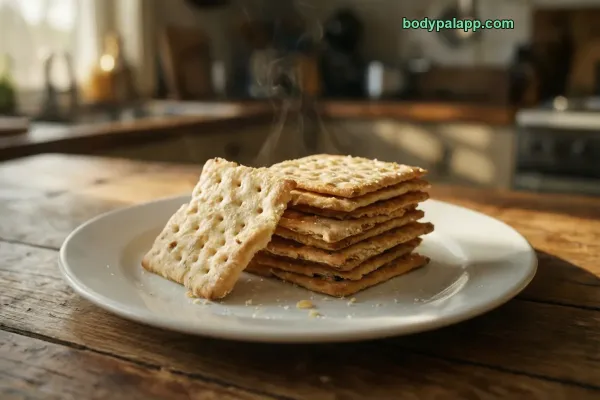
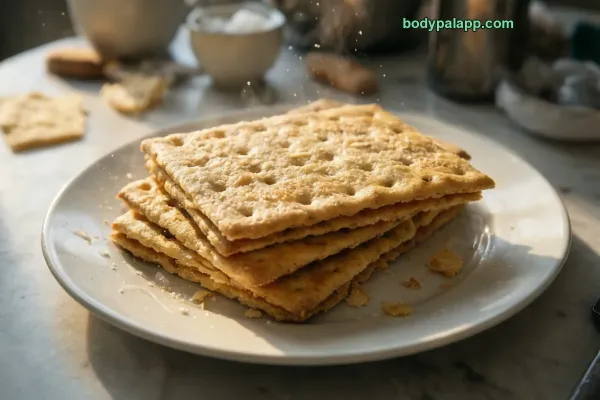
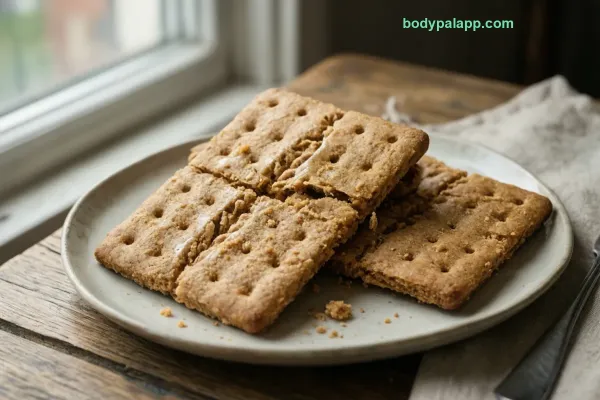
Here is how plain rice crackers stack up against saltine, soda and graham crackers, per 100 g and per usual serving.
Verdict: Per 100 g the four are close on calories, from 416 for rice crackers to 430 for graham crackers, so choose on sodium and fat rather than energy. If you watch sodium, pick rice crackers at 233 mg against 941 mg for saltines and soda crackers; if you want a sweet cracker, a graham at 60 calories per piece is the one to portion carefully.
Most popular rice crackers brands in the United States
Ranked by popularity in the BodyPal database
# Productkcal / 100 g
1Back To Nature Rice Crackers15 crackers · 30 g433 kcal
2Nature's Eats Rice Crackers Snacks1 oz · 28 g393 kcal
3NW Delights Rice Crackers2/3 cup · 30 g400 kcal
4Nature's Place Sesame Brown Rice Crackers18 crackers · 30 g433 kcal
5Laiki Red Rice Crackers21 crackers · 28 g464 kcal
6Laiki Black Rice Crackers16 crackers · 21 g476 kcal
These labels are for the same ready-to-eat state as the number above, but sesame, wasabi and colored-rice versions carry added oil and seeds, so they read higher per 100 g. Source: manufacturer labels / USDA FoodData Central.
Rice crackers FAQs
How many calories are in rice crackers?
A 30 g serving is about 125 calories, and a single small cracker is about 12. Per 100 g, rice crackers are 416 calories.
Are rice crackers good for weight loss?
A 30 g serving is 125 calories with 24.8 g carbs, 3 g protein and 1.5 g fat. At 416 calories per 100 g they are easy to overeat, so the portion decides the total.
Rice crackers vs soda crackers: which has fewer calories?
They are almost identical: 416 calories per 100 g for rice crackers and 418 for soda crackers. A 30 g serving of rice crackers works out to 125 calories.
How much protein is in rice crackers?
About 10 g per 100 g, which is 3 g in a 30 g serving. The same serving also has 24.8 g carbs and 70 mg sodium.
How many calories are in one rice cracker?
One plain rice cracker (3 g) has 12 calories, with 2.5 g of carbs, 0.3 g of protein and 7 mg of sodium. Because each piece is so light, counting by weight or by serving is more reliable than counting crackers.
How many calories are in a cup of rice crackers?
A cup of rice crackers, about 40 g, has 166 calories. It also brings 33.1 g of carbs, 4 g of protein, 2 g of fat and 93 mg of sodium, which is 4% of the daily value.
Do rice crackers have sugar or fiber?
Plain rice crackers list 0 g of sugars and 0 g of fiber per 100 g. Nearly all of their 416 calories per 100 g come from starch, so pairing them with protein or vegetables helps them feel more filling.
How much sodium is in rice crackers?
A 30 g serving of plain rice crackers has 70 mg of sodium, 3% of the daily value. Per 100 g it is 233 mg, far below saltines at 941 mg. Flavored varieties can be saltier, so check the label.
Are rice crackers high in fat?
No. Plain rice crackers have 5 g of fat per 100 g and 1.5 g per 30 g serving, with saturated fat listed at 0. Fat supplies about 11% of their calories, while carbs supply about 80%.