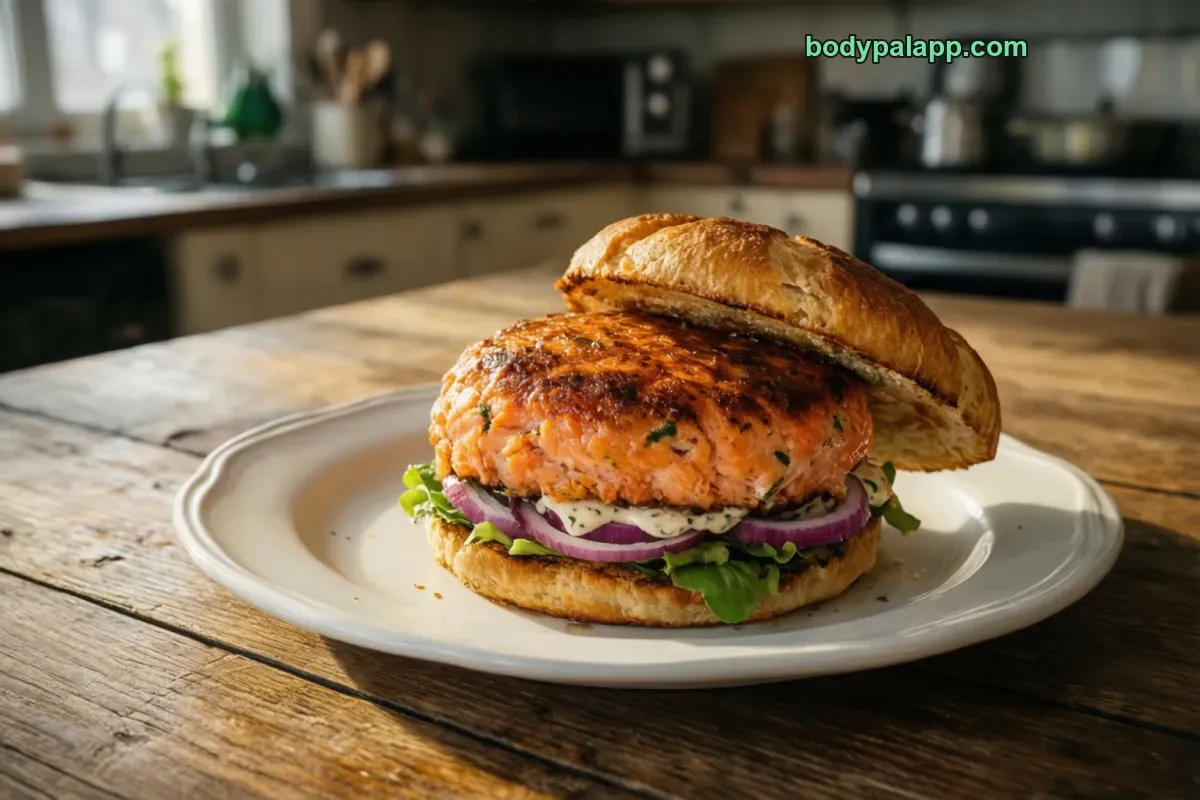
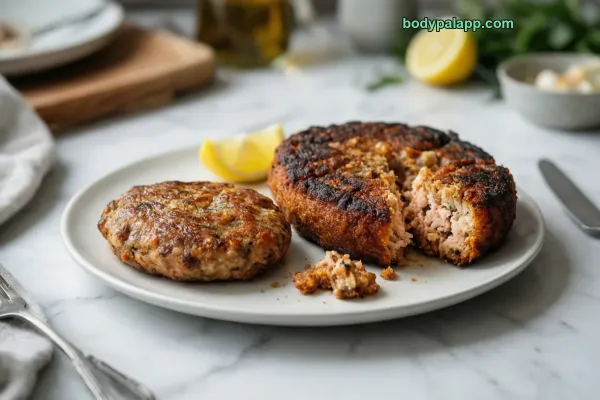
Salmon burger calories come to 242 for one 85 g patty and 285 per 100 g. Fat drives that total: it supplies 71% of the calories, while protein brings 23%. A 4 oz patty climbs to 322 calories and 457 mg of sodium, so patty size matters more than most people expect.
242kcal
1 patty · 85 g, cooked salmon cake or patty
23%protein
13.7 gProtein
4 gCarbs
18.8 gFat
How to burn off 242 kcal
—Walking, brisk
—Jogging
—Cycling, moderate
—Swimming
Skip the math. BodyPal counts these calories from your steps and workouts automatically.
Nutrition facts
Cooked salmon cake or patty · per 85 g
Calories
242 kcal
Protein
13.7 g
Carbohydrate
3.8 g
Fat
18.8 g
Saturated fat
3.4 g
Cholesterol
71 mg
Sodium
343 mg
Potassium
240 mg
Iron
0.6 mg
Source: USDA FoodData Central
🛡️
Verified nutrition data
Numbers on this page come from USDA FoodData Central, the U.S. Department of Agriculture’s food composition database, and from manufacturer labels where a branded product is named. Last verified September 2026. How we verify our data →
Salmon burger: calories, protein and sodium by serving
Percent of daily value uses the FDA reference of 2,000 kcal a day.
Serving
kcal
Protein
Carbs
Fat
Sodium
% DV kcal
1 patty (85 g)
242
13.7 g
3.8 g
18.8 g
343 mg
12%
4 oz patty (113 g)
322
18.2 g
5 g
25 g
457 mg
16%
100 g
285
16.1 g
4.5 g
22.1 g
404 mg
14%
3 × 1 patty (85 g)
727
41 g
1,030 mg
5 × 1 patty (85 g)
1,211
68.3 g
1,717 mg
One patty is 242 calories, two are 485
The standard reference here is a single 85 g patty at 242 calories, 13.7 g of protein and 18.8 g of fat. That covers 12% of the daily value for calories, which is modest for the main item on a plate. Many store-bought salmon burgers land near this size, but not all of them.
Bigger patties move the total fast. A 4 oz patty weighs 113 g and comes to 322 calories, with 25 g of fat and 18.2 g of protein. That one patty covers 16% of the daily value for calories and 36% for protein. Weigh a frozen patty from the box before you log it, because the gap between 85 g and 113 g is easy to miss by eye.
Doubling up is where the numbers stack. 2 patties at 170 g total 485 calories and 27.3 g of protein. 3 patties reach 727 calories, and a batch of 5 (425 g) adds up to 1,211 calories, which matters when you cook for a group and estimate shares.
Fat supplies 71% of the calories
Salmon has a lean reputation, but the salmon burger does not follow it. Per 100 g it carries 22.1 g of fat, 16.1 g of protein and just 4.5 g of carbs. Translated into calories, fat accounts for 71%, protein for 23% and carbs for only 6%.
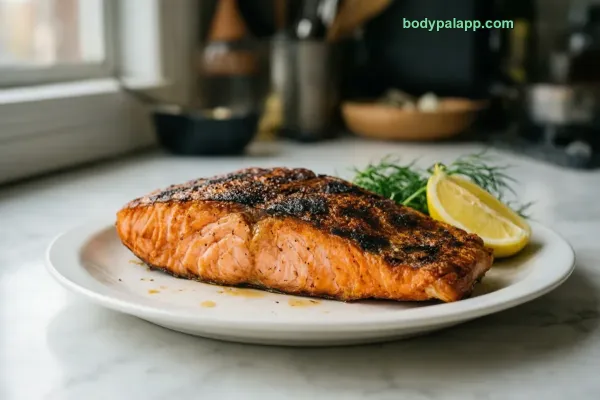
Part of that fat comes from the salmon itself, and part from what holds a patty together. The USDA row behind these numbers is "Fish, salmon cake or patty", a cooked mixed item rather than plain fish. Set it next to grilled salmon at 259 calories and 16.5 g of fat per 100 g, and the patty is clearly the richer option.
Saturated fat sits at 4 g per 100 g, against a daily value of 20 g. Fiber is a token 0.3 g and sugars 0.7 g, so the carb side barely registers. If you track macros, log this as a fat-forward protein food, not a lean one.
Sodium is the row to watch
A single 85 g patty brings 343 mg of sodium, 15% of the daily value. The 4 oz patty rises to 457 mg, or 20%. Per 100 g the figure is 404 mg, well above grilled salmon at 288 mg.
Those numbers cover the patty only. The bun, cheese, pickles and sauces push the plate higher, and they rarely show up in a quick estimate. Eat 3 patties across a day and the patties alone reach 1,030 mg; 5 patties hit 1,717 mg. If you watch sodium, keep those totals in mind when you batch-cook or reheat leftovers.
Cholesterol is 83 mg per 100 g, against a 300 mg daily value, and potassium comes in at 282 mg per 100 g. Neither changes the picture as much as sodium does. Both are still worth a glance on the label of the brand you buy, since recipes differ.
Let the sides bring the fiber
With 0.3 g of fiber and most of its calories from fat, the salmon burger leaves gaps a side dish can fill. Vegetables, a green salad or a whole-grain bun add the fiber the patty lacks. That keeps the plate filling without leaning harder on fat.
Watch the extras more than the patty. Mayonnaise-based sauces and cheese add fat to a food that already gets 71% of its calories from fat. A squeeze of lemon, mustard or a yogurt sauce keeps the flavor up with less added fat, and crunchy slaw or sliced onion gives texture without much else.
Brands vary in size and recipe, from Whole Catch Salmon Burgers to Odyssey Salmon Burgers and SeaPak Alaskan Salmon Burger, so check the patty weight on the box before you count. BodyPal can log a salmon burger from a photo, which helps when the bun and toppings change from meal to meal.
How does salmon burger compare?
Here is the salmon burger next to the salmon patty, turkey burger and grilled salmon, per 100 g and per usual serving.
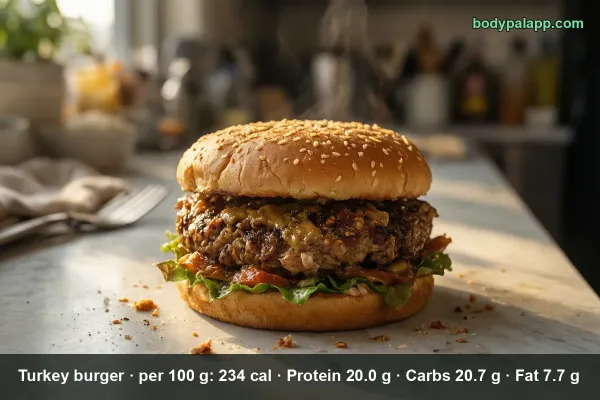
Verdict: For the most protein per calorie, pick grilled salmon: 25.9 g of protein per 100 g against 16.1 g in the salmon burger, with less sodium at 288 mg versus 404 mg. If you want a patty on a bun with less fat, the turkey burger at 234 calories and 7.7 g of fat per 100 g beats the salmon burger's 285 calories and 22.1 g.
Most popular salmon burger brands in the United States
8True North Seafood Company Atlantic Salmon Burgers1 burger · 142 g239 kcal
Frozen patties are labeled at raw weight and carry less added fat than the cooked salmon cake above, so they read lower per 100 g. Source: manufacturer labels / USDA FoodData Central.
Salmon burger FAQs
How many calories are in one salmon burger?
About 242 calories for one 85 g patty, or 322 calories for a 4 oz (113 g) patty.
Is a salmon burger good for weight loss?
One 85 g patty has 242 calories, 13.7 g protein and 18.8 g fat. Frozen store patties are leaner, from 97 to 239 calories per 100 g.
Salmon burger vs turkey burger: which has fewer calories?
Per 100 g a salmon cake or patty is 285 calories and a turkey burger is 234 calories.
How much protein is in a salmon burger?
About 13.7 g in an 85 g patty and 18.2 g in a 4 oz (113 g) patty, which is 16.1 g per 100 g.
What are the macros of a salmon burger?
Per 100 g, a salmon burger has 22.1 g of fat, 16.1 g of protein and 4.5 g of carbs. By calories that is 71% fat, 23% protein and 6% carbs, so it is a fat-forward protein food.
How many calories are in a 4 oz salmon burger patty?
A 4 oz patty (113 g) has 322 calories. It also carries 18.2 g of protein, 25 g of fat and 457 mg of sodium, which is 20% of the daily value.
Do salmon cakes have the same calories as salmon burgers?
Yes, the numbers here come from the USDA row for a cooked salmon cake or patty: 285 calories per 100 g and 242 per 85 g patty. Recipes and brands vary, so check your label.
How much sodium is in a salmon burger?
One 85 g salmon burger patty has 343 mg of sodium, 15% of the daily value. Per 100 g it is 404 mg, before adding a bun, cheese or sauce.
How many calories are in two salmon burgers?
Two 85 g patties total 485 calories and 27.3 g of protein. Their sodium adds up to 687 mg, before you count buns or toppings.