
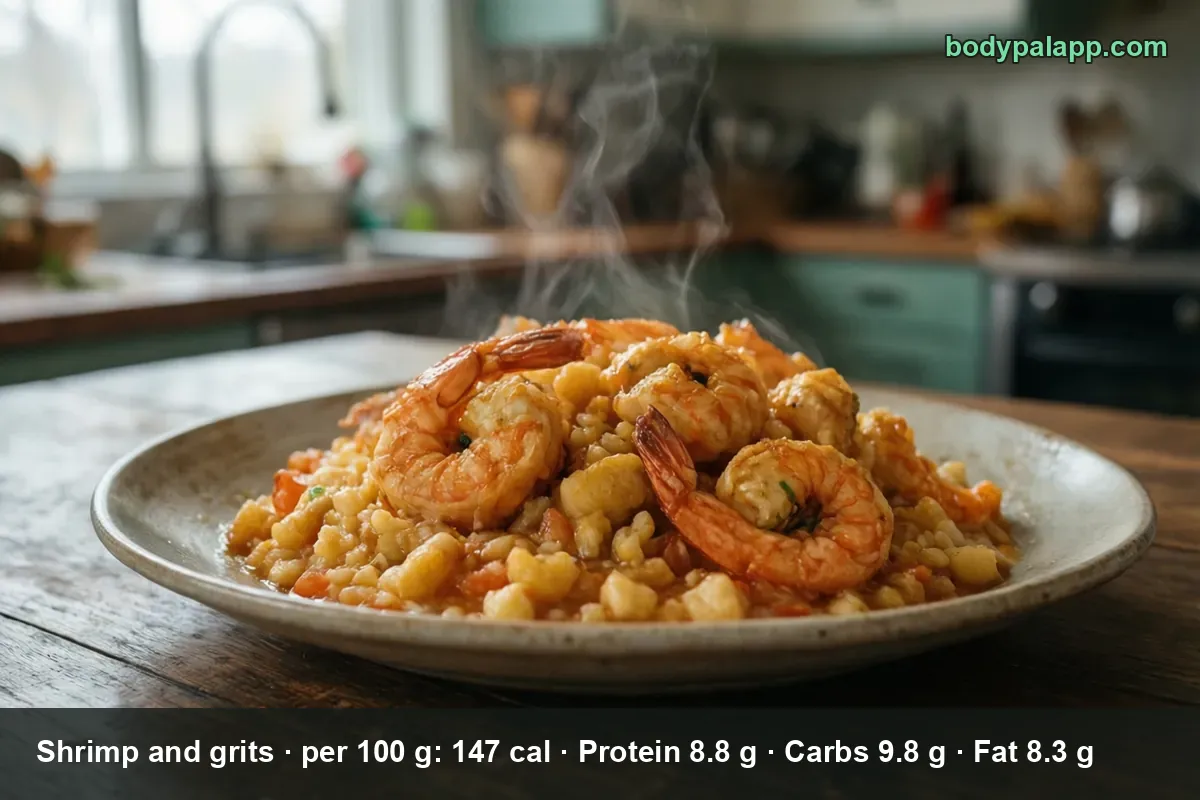
How many calories are in shrimp and grits?
A 1-cup serving of shrimp and grits carries 300 calories, and per 100 g the finished dish runs 147 calories. That cup also brings 18 g of protein and 1,100 mg of sodium. Move to a 1.5-cup restaurant plate and the same recipe reaches 450 calories.
On this page
- Shrimp and grits quick facts
- US servings, from a half cup to a restaurant plate
- Cheese grits, frozen bowls and shrimp on its own
- Sodium is the row to watch
- How does shrimp and grits compare?
- Most popular shrimp and grits brands
- FAQ
Shrimp and grits quick facts
Shrimp and grits is a plated dish, not an ingredient, and that makes the record hard to pick. FNDDS has no entry for the finished plate, and adding a cup of grits to a few ounces of shrimp throws away the butter, the sauce and the pork that make the dish what it is. The number below comes from a single deli record: USDA Branded 2120942, "SHRIMP AND GRITS" from B. Robert's Foods, sold prepared in a tub with a 1-cup household measure on the label.
One detail worth knowing before you read the table. This is a Nutrition Facts panel, so the per-serving column is label-rounded to whole grams, while the per-100 g column keeps its decimals. That is why the cup lands on clean numbers like 17.0 g of fat and 18.0 g of protein.
| Nutrient | Per 100 g | Per 1 cup (204 g) | % Daily Value |
|---|---|---|---|
| Calories | 147 | 300 | — |
| Total fat | 8.33 g | 17.0 g | 22% |
| Saturated fat | 3.92 g | 8.0 g | 40% |
| Carbohydrate | 9.8 g | 20.0 g | 7% |
| Dietary fiber | 0.5 g | 1.0 g | 4% |
| Total sugars | 1.47 g | 3.0 g | — |
| Protein | 8.82 g | 18.0 g | 36% |
| Sodium | 539 mg | 1100 mg | 48% |
| Cholesterol | 49 mg | 100 mg | 33% |
% Daily Value is based on a 2,000-calorie diet.
Verified nutrition data
Numbers on this page come from USDA FoodData Central, the U.S. Department of Agriculture’s food composition database, and from manufacturer labels where a branded product is named. Last verified September 2026. How we verify our data →
Two rows you will not see here. Added sugars and potassium are not declared on this record, so there is nothing to report for either, and estimating them from a similar product would be a guess dressed up as data. Cholesterol is on the label and it is high for a 300-calorie plate: 100 mg, a third of the Daily Value, essentially all of it from the shrimp.
US servings, from a half cup to a restaurant plate
| Serving | Weight | Calories |
|---|---|---|
| 1 oz | 28 g | 41 kcal |
| Half cup, side portion | 102 g | 150 kcal |
| 6 oz, small bowl | 170 g | 250 kcal |
| 1 cup, label serving | 204 g | 300 kcal |
| 1.5 cups, restaurant plate | 306 g | 450 kcal |
| Per 100 g | 100 g | 147 kcal |
Only the 1-cup line is a USDA household measure. The half cup, the 6-ounce bowl, the 1.5-cup plate and the ounce are our own arithmetic from the USDA 100 g figure of 147 calories, not USDA servings.
The spread across that table is the point. A side portion next to eggs and a sit-down entree differ by 300 calories, and nothing about the recipe changed between them. This is a dish people often log by eye in BodyPal, and eye estimates of a soft, saucy plate tend to land low. If the grits cover the plate rather than sitting in a bowl, count 1.5 cups.
Cheese grits, frozen bowls and shrimp on its own
The name covers several different plates. Packaged versions differ in how much grits sits under the shrimp, how much cheese goes in, and how much sauce or water the bowl carries.
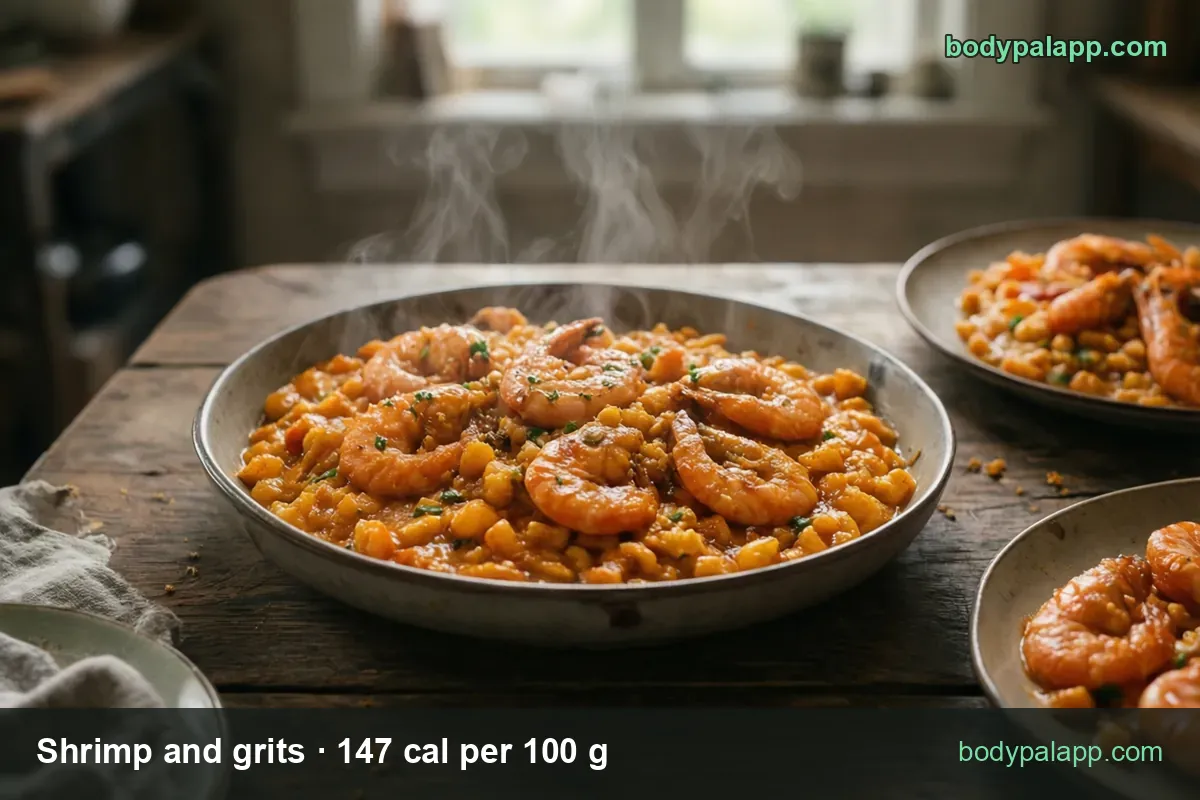
| Version | Per 100 g | Typical serving | Calories |
|---|---|---|---|
| Deli shrimp and grits (main record) | 147 kcal | 1 cup (204 g) | 300 kcal |
| Shrimp and cheese grits | 232 kcal | 2 oz (56 g) | 130 kcal |
| Cajun-style tray | 163 kcal | 1 package (312 g) | 509 kcal |
| Frozen shrimp and grits bowl | 97 kcal | 1 bowl (227 g) | 220 kcal |
| Grits alone, no shrimp | 71 kcal | 1 cup cooked (240 g) | 170 kcal |
| Steamed shrimp alone | 90 kcal | 3 oz (85 g) | 77 kcal |
| Grilled shrimp alone | 110 kcal | 3 oz (85 g) | 94 kcal |
The cheese version is the outlier. At 232 calories per 100 g it is the densest thing on the list, well past the 147 of the deli plate, and it carries 30.36 g of carbohydrate per 100 g against 9.8 g. That is a thick, cheese-bound grits base with shrimp folded through, closer to a casserole than to a plate of shrimp in sauce. Its 2-ounce label serving keeps the calorie count small, but almost nobody eats two ounces of it.
Frozen bowls run the other way. The gouda-and-bacon bowl in the USDA data is 97 calories per 100 g, the lightest per gram of the five packaged brands on file, because a frozen bowl carries more sauce and water per bite. Across those five, the numbers spread from 97 to 232 calories per 100 g, and the largest single package is a Cajun-style tray at 509 calories. Read the panel on the box rather than assuming your brand matches the deli record.
Split the dish into its parts and the arithmetic gets clear. Grits alone are 71 calories per 100 g; steamed shrimp are 90 and grilled shrimp 110, the difference being the oil on the grill. None of the three reaches 147 on its own, which tells you where the missing calories come from: butter, cheese, cream and cured pork stirred into the grits.
Sodium is the row to watch
Saturated fat looks like the problem row at 8 g a cup, 40% of the FDA Daily Value of 20 g. Sodium is the one that catches people out. A single cup delivers 1,100 mg, 48% of the 2,300 mg Daily Value, or roughly half a teaspoon of table salt in one bowl. Order the restaurant plate and you are at about 1,650 mg before the biscuit arrives.
The corn is not to blame. Plain cooked grits carry 81 mg of sodium per 100 g. Steamed shrimp carry 248 mg per 100 g, grilled shrimp 359 mg. The finished dish sits at 539 mg per 100 g, above every one of its parts, which points at the seasoning, the sauce and the bacon or andouille rather than at the grain.
The protein side is genuinely good. Eighteen grams a cup is 36% of the Daily Value, and shrimp is one of the leaner options in the MyPlate protein group at 17.19 g of protein per 100 g with 1.28 g of fat. If you are watching sodium, a half cup of grits with extra shrimp on top gives you most of the protein for half the salt.
How does shrimp and grits compare?
| Dish | Per 100 g | US serving | Calories |
|---|---|---|---|
| Shrimp and grits | 147 kcal | 1 cup (204 g) | 300 kcal |
| Grits, plain cooked | 71 kcal | 1 cup cooked (240 g) | 170 kcal |
| Shrimp, steamed or boiled | 90 kcal | 3 oz (85 g) | 77 kcal |
| Shrimp and cheese grits | 232 kcal | 2 oz (56 g) | 130 kcal |
Our take: for weight loss, order the dish and eat half of it, or build it at home with plain grits and steamed shrimp. A cup of plain grits is 170 calories and a cup of the finished dish is 300, even though the plain cup actually weighs more at 240 g. Three ounces of steamed shrimp on top adds only 77. For staying full through a long afternoon, the full cup wins outright, because 18 g of protein does work that 170 calories of corn cannot. The cheese version is the one to skip if either goal matters to you.
Most popular shrimp and grits brands in the United States
Ranked by how widely each product appears among foods sold in the United States, from the BodyPal food database of over 3.3 million products. Calories are the figures printed on each Nutrition Facts label, checked against USDA FoodData Central.
| Product | Calories (per 100 g) |
|---|---|
| B. Robert's Foods Shrimp and Grits | 147 cal |
| Louisiana Cajun Cuisine Shrimp and Grits | 163 cal |
| FreshRealm Shrimp and Grits | 126 cal |
| Silver Spoon Shrimp & Cheese Grits | 232 cal |
| Aqua Star Shrimp & Grits Bowl | 97 cal |
Brand popularity: BodyPal food database. Nutrition: manufacturer labels / USDA FoodData Central.
Shrimp and grits FAQs
How many calories are in shrimp and grits?
A 1-cup serving of shrimp and grits is 300 calories, which works out to 147 calories per 100 grams. That figure comes from the USDA deli record for the finished dish, sauce and all. Portion size drives the rest: a half cup is 150, a restaurant plate closer to 450.
How many calories in a restaurant plate of shrimp and grits?
About 450 calories for a 1.5-cup plate, our own arithmetic from the USDA 100-gram figure of 147. Restaurant versions usually add butter to the grits and bacon or andouille on top, so treat 450 as the floor rather than the ceiling for a sit-down order.
How much protein is in shrimp and grits?
18 grams of protein in a 1-cup serving, 36% of the Daily Value, from 8.82 grams per 100 grams. The shrimp do the work: steamed shrimp alone run 17.19 grams of protein per 100 grams, while plain grits contribute 1.19 grams. More shrimp per plate means more protein.
How many carbs are in shrimp and grits?
20 grams of carbohydrate in a cup, 7% of the Daily Value, with 1 gram of fiber and 3 grams of total sugars. That is low for a grain-based plate because the deli version is mostly shrimp and sauce. The cheese-grits version is much denser: 30.36 grams per 100 grams.
Is shrimp and grits high in sodium?
Yes. One cup carries 1,100 mg of sodium, 48% of the 2,300 mg Daily Value and roughly half a teaspoon of table salt. Plain grits are only 81 mg per 100 grams, so the salt arrives with the shrimp, the cured pork and the sauce, not the corn.
Is shrimp and grits healthy?
At 300 calories and 18 grams of protein a cup, it fits a normal lunch well. The two rows to weigh are sodium at 48% of the Daily Value and saturated fat at 8 grams, 40% of the limit. Half a cup alongside vegetables solves both.
How many calories in cheese grits with shrimp?
130 calories in a 2-ounce (56 g) label serving, but that is a small scoop. Per 100 grams the cheese version runs 232 calories against 147 for the deli plate, and 30.36 grams of carbohydrate against 9.8. Cheese and a thicker grits base move both numbers.
How many calories in grits alone?
170 calories in a cup of cooked grits, 240 grams at 71 calories per 100 grams. That is the plain corn base with 1.19 grams of protein per 100 grams. Adding shrimp roughly doubles the calorie density and multiplies the protein sevenfold per 100 grams.
Similar foods
- Fish — 129 cal per fillet
- Fish Roe — 20 cal per tbsp
- Salmon Roe — 20 cal per tablespoon
- Shrimp In Lobster Sauce — 279 cal per cup
- Grilled Calamari — 209 cal per cup
- Calamari Steak — 175 cal per steak
Count it without the math
Point the camera at the bowl and BodyPal counts the shrimp, the grits and the sauce for you.


How long does it take to burn off 300 kcal of shrimp and grits?
A 1-cup (204 g) serving is 300 kcal. Enter your weight and the amount you ate to see how long it takes you to burn that off:
lb
| Activity | Time to burn 300 kcal |
|---|---|
| Walking, brisk | 1 hr |
| Cycling, moderate | 38 min |
| Swimming, moderate | 43 min |
| Jogging | 35 min |
| Weight training, moderate | 1 hr 7 min |
Times are for a 155 lb adult at a steady pace; change the weight to see yours. The amount is set to the portion in the text (204 g); change it to what you actually ate. BodyPal works this out from your steps automatically.
Burning it off is one side of it. The other is knowing your number: work out how many calories you need a day, with macros and a goal date.