Sugar cane calories come to 184 for 1 cup (248 g) of fresh cane juice and 74 per 100 g. Every one of those calories is sugar: 50 g per cup, with zero protein, fat or fiber. The glass size decides everything, because a second cup takes you to 367.
184kcal
1 cup · 248 g, fresh cane juice
0%protein
0 gProtein
50 gCarbs
0 gFat
How to burn off 184 kcal
—Walking, brisk
—Jogging
—Cycling, moderate
—Swimming
Skip the math. BodyPal counts these calories from your steps and workouts automatically.
Nutrition facts
Fresh cane juice · per 248 g
Calories
184 kcal
Protein
0 g
Carbohydrate
50 g
Fat
0 g
Saturated fat
0 g
Cholesterol
0 mg
Sodium
107 mg
Potassium
27 mg
Iron
0.2 mg
Source: USDA FoodData Central
🛡️
Verified nutrition data
Numbers on this page come from USDA FoodData Central, the U.S. Department of Agriculture’s food composition database, and from manufacturer labels where a branded product is named. Last verified September 2026. How we verify our data →
Sugar cane juice: calories, protein and sodium by serving
Percent of daily value uses the FDA reference of 2,000 kcal a day.
Serving
kcal
Protein
Carbs
Fat
Sodium
% DV kcal
1 cup (248 g)
184
0 g
50 g
0 g
107 mg
9%
1 fl oz (31 g)
23
0 g
6.3 g
0 g
13 mg
1%
100 g
74
0 g
20.2 g
0 g
43 mg
4%
Cane syrup (21 g)
56
0 g
15.4 g
0 g
12 mg
3%
3 × 1 cup (248 g)
551
0 g
320 mg
5 × 1 cup (248 g)
918
0 g
533 mg
One cup is 184 calories, and refills add up fast
A standard 1 cup (248 g) pour of fresh cane juice lands at 184 calories, about 9% of a 2000-calorie daily value. That is a reasonable number for a drink. The trouble is that cane juice is usually sold by the glass at street stalls and juice bars, and those glasses rarely stop at one cup.
Double the pour to 496 g and you are at 367 calories. Three cups, or 744 g, reach 551. A big jug shared over an afternoon, 5 cups or 1,240 g, comes to 918 calories, close to half of the daily reference value, without a single bite of food.
Small portions behave very differently. A 1 fl oz (31 g) taste is only 23 calories with 6.3 g of sugar. If you like the flavor, a short pour gives you the experience at a fraction of the cost. Size the cup before you order, because nothing in the drink itself will tell you to stop.
Every calorie in cane juice is sugar
The calorie split is as simple as it gets: 100% carbohydrate, 0% protein, 0% fat. Per 100 g, the juice carries 20.2 g of carbs, and all 20.2 g of them are sugars. There is no fiber listed, so none of the carbohydrate comes from anything other than sugar.
In a full cup that means 50 g of carbs and 50 g of sugars. Against the 275 g carbohydrate daily value used on this page, one cup takes a large bite out of the day's carb budget on its own. Protein stays at 0 g per serving, and the protein daily value share is 0%.
This is the key difference between drinking cane and eating most other carbohydrate foods. Bread, fruit or rice bring at least some protein or fiber along with the carbs. Cane juice brings only sugar dissolved in water, which is why it counts as a sweet drink rather than a snack.
Sodium is low and the other rows are empty
Sodium is the only mineral row that registers. Fresh cane juice has 43 mg per 100 g, and a cup carries 107 mg, about 5% of the daily value. That is low for a single drink. Even 3 cups only reach 320 mg, so sodium is not the reason to limit cane juice.
Potassium is listed at 11 mg per 100 g, a small amount. Fat, saturated fat and cholesterol all sit at 0, which keeps the label tidy. If you track saturated fat or cholesterol, cane juice will not move those numbers at all.
So the row to watch is sugar, not salt. Each cup adds 50 g of sugars, and that number scales directly with every refill. Read the sodium line as reassurance and the sugar line as the real budget item.
Cane syrup is denser, and juice fits best as a treat
Cane syrup, the boiled-down form used on pancakes and in baking, packs more sugar into less volume. A 21 g serving has 56 calories and 15.4 g of sugars, with 12 mg of sodium. A spoonful of syrup weighs less than a small glass of juice yet brings more than double the calories of a 1 fl oz pour.
Brands on this page range from bottled drinks such as Yeo's Sugar Cane Drink to whole cane from Goya Fruta and solid brown cane sugar like piloncillo and panela from La Molienda and Mi Dulzura. The solid forms are far more concentrated than fresh juice, so check the label before you treat them as interchangeable.
If you enjoy cane juice, it fits most easily alongside a meal that already carries protein and fiber, such as eggs, beans or a grain bowl, rather than as a stand-alone snack. Pick 1 cup, log it, and count it with your other sweet drinks. BodyPal can log it from a photo of the glass.
How does sugar cane juice compare?
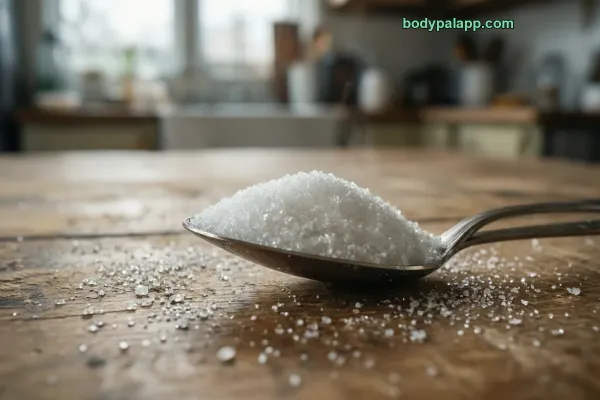
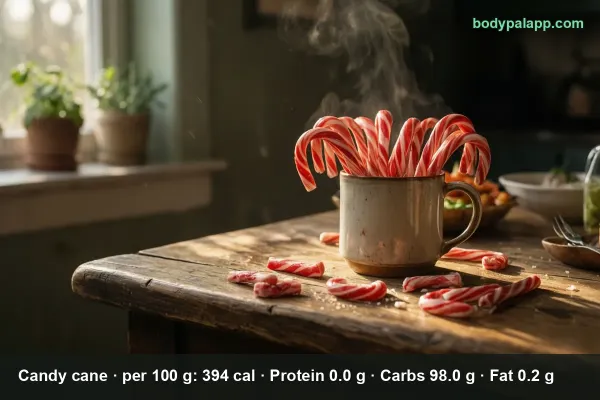
Here is how fresh sugar cane juice stacks up against table sugar and candy cane, per 100 g and per usual serving.
Verdict: Per gram, cane juice is the lightest option at 74 calories per 100 g, while granulated sugar at 387 and candy cane at 394 are more than 5.2 times as dense. Per serving the picture flips: a teaspoon of sugar is just 16 calories, so if you only want a hint of sweetness, a spoonful beats a 184-calorie cup of juice.
Most popular sugar cane juice brands in the United States
6La Molienda Piloncillo Brown Sugar Cane100 g325 kcal
7Mi Dulzura Brown Sugar Cane Panela4 g375 kcal
Several of these are solid panela or brown cane sugar blocks rather than juice, so their labels read 325 to 375 calories per 100 g. Source: manufacturer labels / USDA FoodData Central.
Sugar cane juice FAQs
How many calories are in sugar cane juice?
About 184 calories in a cup (248 g). Per 100 g, sugar cane juice is 74 calories.
Is sugar cane juice good for weight loss?
A cup is 184 calories with 50 g of carbs, all of it sugar, and no protein or fat.
Sugar cane juice or cane syrup: which has more calories?
Cane syrup is 269 calories per 100 g against 74 for the juice, because the water has been boiled off.
How much sugar is in sugar cane?
The juice has 20.2 g of sugar per 100 g, which works out to 50 g in a 248 g cup.
How many calories are in a small shot of sugar cane juice?
A 1 fl oz (31 g) shot of fresh sugar cane juice has 23 calories and 6.3 g of sugar. It has 0 g of protein and fat and only 13 mg of sodium, so it is a light way to taste it.
How many calories are in two cups of sugar cane juice?
Two cups (496 g) of fresh sugar cane juice come to 367 calories. Three cups reach 551, and 5 cups add up to 918 calories, all from sugar, since the drink has no protein or fat.
Does sugar cane juice have protein or fat?
No. Fresh sugar cane juice lists 0 g of protein and 0 g of fat per 100 g. The calorie split is 100% carbohydrate, and those carbs are 20.2 g of sugars per 100 g.
Is sugar cane juice high in sodium?
No. Sugar cane juice has 43 mg of sodium per 100 g and 107 mg per cup, about 5% of the daily value. Sugar, at 50 g per cup, is the number to watch instead.