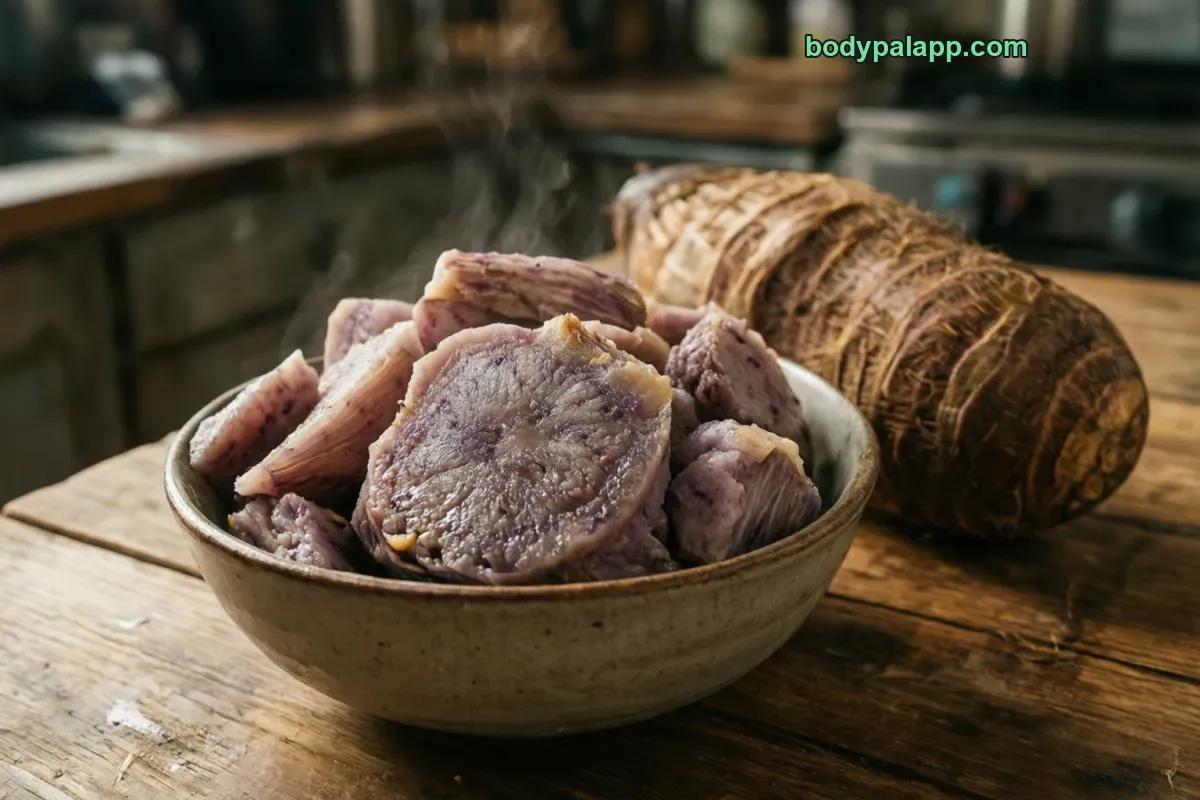
Taro calories come to 187 for 1 cup sliced (132 g) of cooked, unsalted taro, or 142 per 100 g. The number to notice is the split: 98 percent of those calories come from carbs. Taro is a starch, closer to a potato than to a green vegetable, and it brings almost no protein.
187kcal
1 cup of sliced taro · 132 g, cooked, unsalted
1%protein
0.7 gProtein
46 gCarbs
0.1 gFat
How to burn off 187 kcal
—Walking, brisk
—Jogging
—Cycling, moderate
—Swimming
Skip the math. BodyPal counts these calories from your steps and workouts automatically.
Nutrition facts
Cooked, unsalted · per 132 g
Calories
187 kcal
Protein
0.7 g
Carbohydrate
46 g
Fat
0.1 g
Saturated fat
0 g
Cholesterol
0 mg
Sodium
20 mg
Potassium
639 mg
Iron
1 mg
Source: USDA FoodData Central
🛡️
Verified nutrition data
Numbers on this page come from USDA FoodData Central, the U.S. Department of Agriculture’s food composition database, and from manufacturer labels where a branded product is named. Last verified October 2026. How we verify our data →
Taro: calories, protein and sodium by serving
Percent of daily value uses the FDA reference of 2,000 kcal a day.
Serving
kcal
Protein
Carbs
Fat
Sodium
% DV kcal
1 cup sliced (132 g)
187
0.7 g
45.7 g
0.1 g
20 mg
9%
Raw, 1 cup sliced (104 g)
116
1.6 g
27.5 g
0.2 g
11 mg
6%
3 oz portion (85 g)
121
0.4 g
29.4 g
0.1 g
13 mg
6%
100 g
142
0.5 g
34.6 g
0.1 g
15 mg
7%
3 × 1 cup sliced (132 g)
562
2.1 g
59 mg
5 × 1 cup sliced (132 g)
937
3.4 g
99 mg
A cup of cooked taro is a 187-calorie side
The standard reference is 1 cup sliced, which weighs 132 g cooked and lands at 187 calories. That is 9 percent of the daily calorie value on a single side dish. A 3 oz portion (85 g) is the lighter option at 121 calories, about the size of a deck of cards on the plate.
Taro is dense, so portions climb fast. Two cups sliced (264 g) reach 375 calories, three cups (396 g) hit 562, and a large shared pot of five cups (660 g) comes to 937. Sodium barely moves along the way: even that five-cup pot holds only 99 mg, because the cooked, unsalted root starts at 15 mg per 100 g.
If you track portions, weigh taro after cooking. The cooked and raw numbers differ, and a cup of cubes can pack tighter or looser depending on how you cut them. A kitchen scale and the per 100 g figure of 142 calories will keep your log honest.
Nearly every calorie in taro is carbohydrate
The calorie split is about as lopsided as food gets: 98 percent carbs, 1 percent protein and 1 percent fat. Per 100 g that works out to 34.6 g of carbs, 0.5 g of protein and 0.1 g of fat. Saturated fat and cholesterol both read 0.
Sugar is not where those carbs sit. Taro has only 0.5 g of sugars per 100 g, so the bulk is starch plus a solid dose of fiber. A cooked cup carries 45.7 g of carbs, which matters if you count carbs closely, while its sugar row stays at 0.6 g.
The weak spot is protein. A full cup gives 0.7 g, just 1 percent of the daily value, and even five cups only reach 3.4 g. Treat taro as the starch on the plate, not as a filling main, and plan the protein somewhere else.
Fiber and potassium are the rows worth reading
Most of taro's label is quiet, but two rows stand out. Fiber reaches 5.1 g per 100 g and 6.7 g per cooked cup, measured against a daily value of 28 g. That is a meaningful share from one side dish, and it is a big part of why taro feels heavier in the stomach than its sugar row suggests.
Potassium is the other strong number: 484 mg per 100 g. Few starchy sides post a figure that high while keeping sodium at 15 mg. If you watch sodium, plain cooked taro is an easy fit, since a cup lands at 20 mg, about 1 percent of the daily value.
The catch is what goes on it. Coconut milk, salted sauces or frying will change the fat and sodium rows completely, and none of that shows up in the cooked, unsalted numbers here. If you cook taro with extras, log them as separate items.
Raw and cooked cups are not the same serving
A raw cup sliced weighs 104 g and comes to 116 calories, while a cooked cup sliced weighs 132 g and reaches 187. The difference is mostly about how the slices pack and how much the cup holds, so do not swap one figure for the other. Raw taro also lists 1.6 g of protein and 4.3 g of fiber per cup.
For everyday logging, use the cooked values, since that is how taro is eaten. Pair it with a real protein source, such as beans, edamame, fish or eggs, and a green vegetable to round out the plate. BodyPal can log taro from a photo, which helps when the portion is a scoop rather than a measured cup.
Taro also shows up in sweets and drinks, from bubble tea to mooncakes. Those products add sugar, milk and fat, so their numbers have little to do with the plain root on this page. Brands like Polynesian Treasures White Taro sell the plain root form.
How does taro compare?
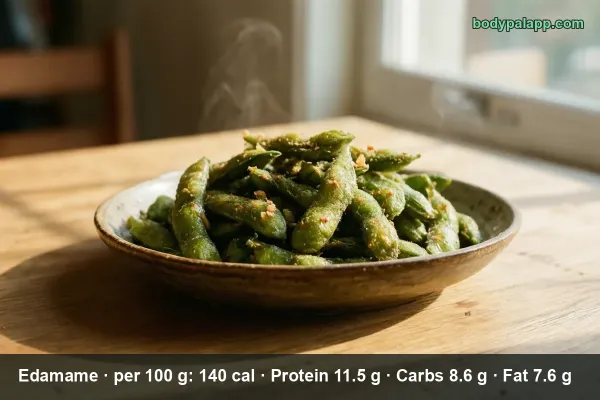
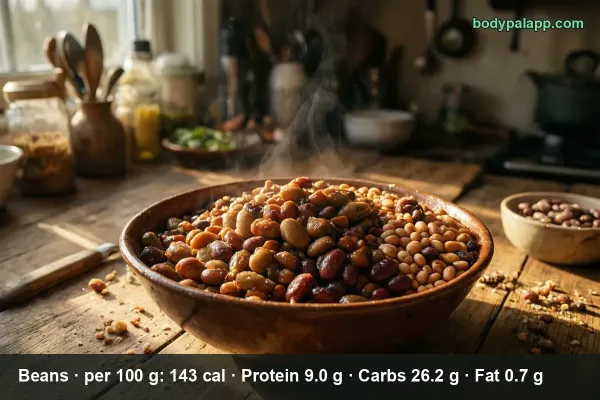
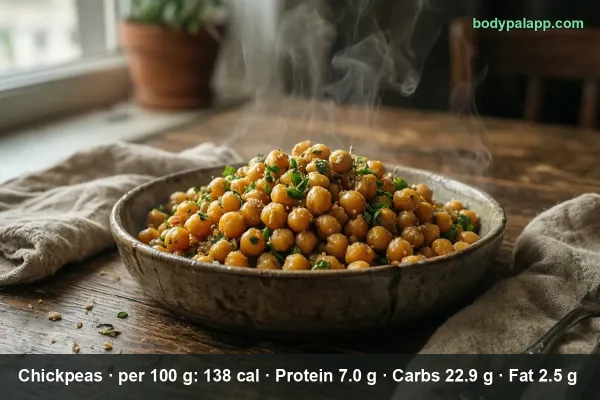
Here is how cooked taro stacks up against edamame, beans and chickpeas per 100 g and per usual serving.
Verdict: On calories it is a tie: taro has 142 per 100 g against 140 for edamame, 143 for beans and 138 for chickpeas. For staying full and getting protein, pick edamame at 11.5 g or beans at 9 g, and keep taro as the starch with 0.5 g.
Most popular taro brands in the United States
Ranked by popularity in the BodyPal database
# Productkcal / 100 g
1Polynesian Treasures White Taro1.5 pieces · 110 g95 kcal
Packaged taro is labeled in its uncooked state, so it reads lower than the cooked number above. Source: manufacturer labels / USDA FoodData Central.
Taro FAQs
How many calories are in a cup of taro?
About 187 calories in 1 cup of cooked taro slices (132 g), or 116 in 1 cup of raw slices (104 g).
Is taro good for weight loss?
Cooked taro has 142 calories per 100 g, with 5.1 g of fiber and 0.1 g of fat.
Taro vs edamame: which has more calories?
They are almost equal: 142 calories per 100 g for cooked taro and 140 for edamame. Taro gets most of its calories from carbs, 34.6 g per 100 g.
How many carbs are in taro?
A cup of cooked taro (132 g) has 45.7 g of carbs, including 6.7 g of fiber and 0.6 g of sugar.
How much protein is in taro?
Cooked taro has 0.5 g of protein per 100 g and 0.7 g per cup sliced. That is about 1 percent of the daily value, so taro adds almost nothing to your protein for the day.
How many calories are in a 3 oz serving of taro?
A 3 oz portion (85 g) of cooked, unsalted taro has 121 calories. It also brings 29.4 g of carbs, 4.3 g of fiber and only 13 mg of sodium.
Does raw taro have fewer calories than cooked taro?
A raw cup sliced (104 g) lists 116 calories, while a cooked cup sliced (132 g) lists 187. The cups weigh differently, so log the form you actually eat, usually cooked.
How much fiber is in taro?
Cooked taro has 6.7 g of fiber per cup sliced and 5.1 g per 100 g, against a daily value of 28 g. Sugar stays low at 0.6 g per cup.
Taro vs beans: which is better for protein?
Beans win clearly with 9 g of protein per 100 g against 0.5 g for taro. Calories are almost identical, 143 for beans and 142 for taro.