Turkey neck calories come to 250 for one medium neck (155 g) and 161 per 100 g, cooked and bone-in. Protein supplies 58% of those calories, giving 34.5 g per medium neck. The catch is sodium: that same neck carries 877 mg, or 38% of the daily value, before any seasoning or broth.
250kcal
1 medium neck · 155 g, cooked, bone-in
58%protein
35 gProtein
0 gCarbs
11.3 gFat
How to burn off 250 kcal
—Walking, brisk
—Jogging
—Cycling, moderate
—Swimming
Skip the math. BodyPal counts these calories from your steps and workouts automatically.
Nutrition facts
Cooked, bone-in · per 155 g
Calories
250 kcal
Protein
35 g
Carbohydrate
0 g
Fat
11.3 g
Saturated fat
3.4 g
Cholesterol
197 mg
Sodium
877 mg
Potassium
175 mg
Iron
1.8 mg
Source: USDA FoodData Central
🛡️
Verified nutrition data
Numbers on this page come from USDA FoodData Central, the U.S. Department of Agriculture’s food composition database, and from manufacturer labels where a branded product is named. Last verified September 2026. How we verify our data →
Turkey neck: calories, protein and sodium by serving
Percent of daily value uses the FDA reference of 2,000 kcal a day.
Serving
kcal
Protein
Carbs
Fat
Sodium
% DV kcal
1 medium (155 g)
250
34.5 g
0 g
11.3 g
877 mg
12%
1 small (115 g)
185
25.6 g
0 g
8.4 g
651 mg
9%
1 large (195 g)
314
43.5 g
0 g
14.2 g
1,104 mg
16%
100 g
161
22.3 g
0 g
7.3 g
566 mg
8%
3 × 1 medium (155 g)
749
103.6 g
2,632 mg
5 × 1 medium (155 g)
1,248
172.7 g
4,387 mg
One medium neck is a 250-calorie portion
Turkey necks vary a lot in size, and the calorie count follows the weight. A small neck of 115 g lands at 185 calories, a medium one of 155 g at 250, and a large one of 195 g at 314. That spread is wide enough that picking the right size when you log matters more than any rounding.
Necks are rarely served one at a time. Two medium necks add up to 499 calories and 69.1 g of protein, which is a full dinner by itself. Three medium necks reach 749 calories, and a plate of five climbs to 1,248 calories, about what some people eat across two meals.
Sodium scales the same way, and faster in practical terms. Two medium necks bring 1,755 mg, and three bring 2,632 mg, which is already past the full daily value for sodium. If you cook a big pot for the family, serve one neck per person with sides rather than piling necks on the plate.
Protein carries 58% of the calories
Turkey neck is a protein food with a meaningful fat share. Per 100 g it has 22.3 g of protein, 7.3 g of fat and 0 g of carbs. In calorie terms that splits into 58% protein and 42% fat, with nothing coming from carbohydrate, sugar or fiber.
The protein numbers are strong for the price of the cut. One medium neck covers 69% of the daily value for protein, a small one covers 51%, and a large one reaches 87%. Even a plain 100 g portion delivers 45% of the protein daily value for just 161 calories.
The fat is not trivial, though. A medium neck has 11.3 g of fat and a large one 14.2 g, and saturated fat sits at 2.2 g per 100 g. Much of that fat sits in the skin and connective tissue around the bone, so how you cook and trim the neck shapes what actually ends up in your bowl.
Sodium is the row to watch
At 566 mg per 100 g, turkey neck is salty for a plain cut of poultry. That is 25% of the daily value in 100 g, 38% in a medium neck at 877 mg, and 48% in a large neck at 1,104 mg. A single large neck uses up nearly half a day of sodium on its own.
Many necks sold in stores are smoked, and brands such as Kroger, Royal and A&R sell smoked versions. The values on this page follow the USDA row for turkey neck, so read the label on a smoked pack, since curing changes the sodium figure. Cooking liquid matters too: necks simmered in seasoned broth pick up salt from the pot.
Cholesterol is the other row worth a glance. Turkey neck has 127 mg per 100 g, set against a daily value of 300 mg. If you track either number, a single medium neck with unsalted sides is the easiest way to keep the day in range.
Necks need fiber from the rest of the plate
With 0 g of carbs and 0 g of fiber, turkey neck brings nothing to the fiber column, where the daily value is 28 g. Potassium is modest too, at 113 mg per 100 g. The rest of the plate has to do that work.
Greens, beans, cabbage or a pot of mixed vegetables fit the classic way necks are cooked, and they add volume and fiber without much fat. A scoop of rice or a baked sweet potato rounds out the meal if you need more energy. Go easy on salty sides, since the neck already covers a big slice of the sodium budget.
For logging, weigh the neck or match it to the small, medium or large size, since the gap between 185 and 314 calories is large. BodyPal can also log a turkey neck from a photo of your plate, which helps when you are eating a stew rather than a single piece.
How does turkey neck compare?
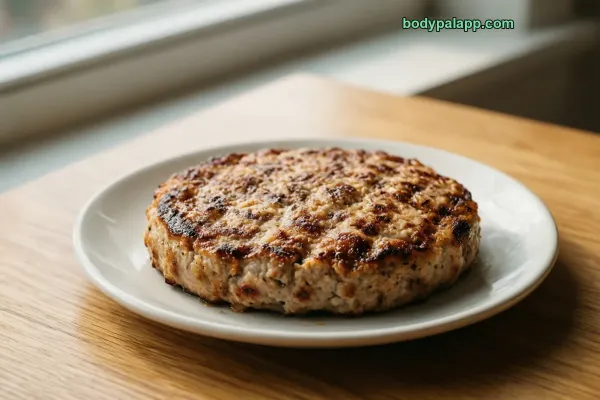
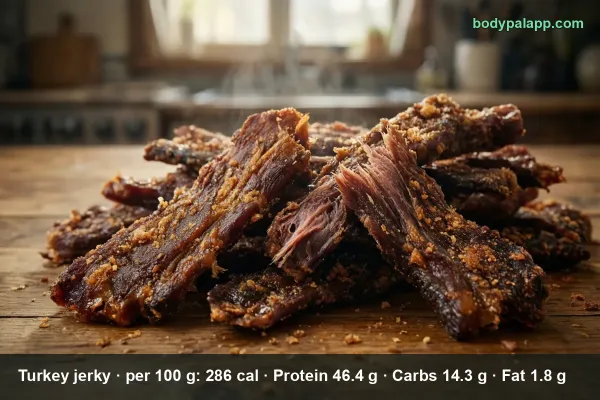
Here is how turkey neck stacks up against turkey thigh, turkey patty and turkey jerky, per 100 g and per usual serving.
Verdict: For the fewest calories per 100 g, turkey neck wins at 161, ahead of thigh at 183, patty at 262 and jerky at 286. If sodium is your concern pick turkey thigh at 101 mg per 100 g, and if you want the most protein per bite pick jerky at 46.4 g, but accept its 1,750 mg of sodium.
Most popular turkey neck brands in the United States
Ranked by popularity in the BodyPal database
# Productkcal / 100 g
1Kroger Smoked Turkey Necks4 oz · 113 g124 kcal
2Butterball Turkey Necks4 oz · 112 g134 kcal
3Honeysuckle White Turkey Necks, Bone-In4 oz · 112 g125 kcal
4Jennie-O Turkey Necks4 oz · 112 g134 kcal
5Royal Smoked Turkey Necks2 oz · 56 g161 kcal
6A&R Ready to Cook Smoked Turkey Necks4 oz · 113 g124 kcal
7Honeysuckle White Turkey Neck Pieces Family Pack4 oz · 112 g125 kcal
Most of these packages are raw or smoked-but-uncooked turkey necks labeled by that lower raw weight, so they read below the cooked whole neck used above. Source: manufacturer labels / USDA FoodData Central.
Turkey neck FAQs
How many calories are in a turkey neck?
One medium turkey neck (155 g) is about 250 calories. A small neck (115 g) is about 185 calories, and a large one (195 g) about 314.
Is turkey neck good for weight loss?
A medium turkey neck (155 g) has about 250 calories with 34.5 g of protein and 11.3 g of fat, making it a fairly lean, high-protein cut at 161 calories per 100 g.
Turkey neck vs turkey patty: which has fewer calories?
Turkey neck is 161 calories per 100 g against 262 for a turkey patty, a difference of 101 calories per 100 g.
How much protein is in a turkey neck?
A medium turkey neck (155 g) has about 34.5 g of protein and 11.3 g of fat. Per 100 g that is 22.3 g protein and 7.3 g fat.
What are the nutrition facts for a turkey neck?
Per 100 g, cooked turkey neck has 161 calories, 22.3 g protein, 7.3 g fat, 0 g carbs and 566 mg sodium. A medium neck of 155 g brings 250 calories and 34.5 g of protein.
How much sodium is in smoked turkey necks?
The USDA turkey neck values show 566 mg of sodium per 100 g and 877 mg in a medium neck, 38% of the daily value. Smoked packs can differ, so check the label on the brand you buy.
How many calories are in a baked turkey neck?
A cooked medium turkey neck has about 250 calories, or 161 per 100 g. Baking without added oil keeps it close to that figure; a large neck comes to 314 calories.
How many calories are in two turkey necks?
Two medium turkey necks have 499 calories, 69.1 g of protein and 1,755 mg of sodium. Three medium necks reach 749 calories and 2,632 mg of sodium.
Do turkey necks have any carbs?
No. Turkey neck has 0 g of carbs, 0 g of sugar and 0 g of fiber per 100 g. Its 161 calories per 100 g come 58% from protein and 42% from fat.