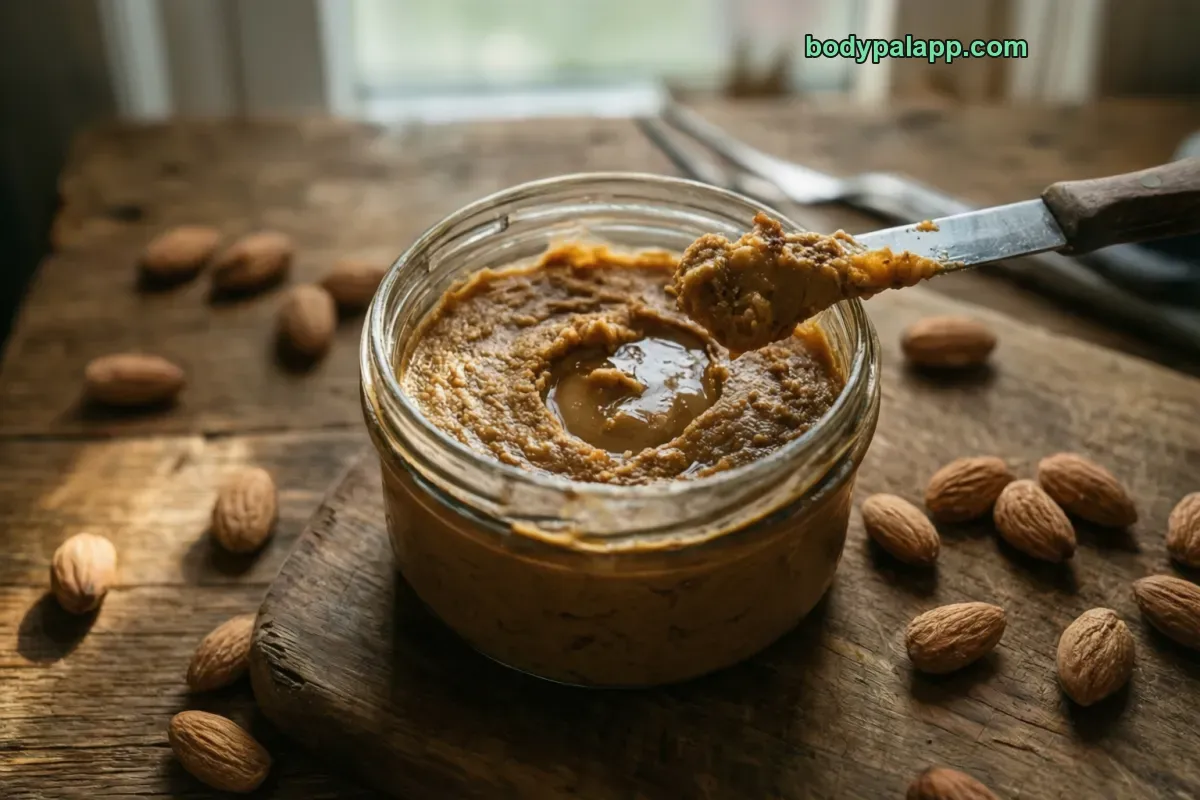
Almond butter calories come to 98 for one tablespoon (16 g) and 614 per 100 g of plain, unsalted almond butter. Fat supplies 76% of those calories, so the spoon is the real variable: a heaped scoop or a second tablespoon moves your total faster than almost any other spread in the pantry.
98kcal
1 tablespoon · 16 g, plain, unsalted
13%protein
3.4 gProtein
3 gCarbs
8.9 gFat
How to burn off 98 kcal
—Walking, brisk
—Jogging
—Cycling, moderate
—Swimming
Skip the math. BodyPal counts these calories from your steps and workouts automatically.
Nutrition facts
Plain, unsalted · per 16 g
Calories
98 kcal
Protein
3.4 g
Carbohydrate
3 g
Fat
8.9 g
Saturated fat
0.7 g
Cholesterol
0 mg
Sodium
1 mg
Potassium
120 mg
Iron
0.6 mg
Source: USDA FoodData Central
🛡️
Verified nutrition data
Numbers on this page come from USDA FoodData Central, the U.S. Department of Agriculture’s food composition database, and from manufacturer labels where a branded product is named. Last verified September 2026. How we verify our data →
Almond butter: calories, protein and sodium by serving
Percent of daily value uses the FDA reference of 2,000 kcal a day.
Serving
kcal
Protein
Carbs
Fat
Sodium
% DV kcal
1 tbsp (16 g)
98
3.4 g
3 g
8.9 g
1 mg
5%
1 oz (28 g)
172
5.9 g
5.3 g
15.5 g
2 mg
9%
100 g
614
21 g
18.8 g
55.5 g
7 mg
31%
3 × 1 tbsp (16 g)
295
10.1 g
3 mg
5 × 1 tbsp (16 g)
491
16.8 g
6 mg
Two tablespoons are a 196-calorie spread
One level tablespoon (16 g) holds 98 calories, about 5% of the daily value for energy. That is the portion on most labels, and it is smaller than people think. A spoon dragged through a fresh jar easily carries more, and a knife loaded for toast often carries two.
The totals climb in a straight line. Two tablespoons (32 g) come to 196 calories, three tablespoons (48 g) reach 295, and five tablespoons (80 g), the kind of amount that disappears into a smoothie or a bowl of oats, add up to 491. A 1 oz (28 g) portion, the same weight as a handful of whole almonds, lands at 172 calories, or 9% of the daily value.
At 100 g the number is 614 calories, 31% of the daily value in one go. Nobody spreads 100 g on a slice of toast, but a few generous dips straight from the jar get closer than expected. If you track, weigh the spoon once or twice. It calibrates your eye better than any guess.
Three quarters of the calories come from fat
The calorie split is lopsided: 76% fat, 13% protein and 11% carbs. Per 100 g that works out to 55.5 g of fat, 21 g of protein and 18.8 g of carbohydrate. Almond butter is a fat source that happens to bring some protein, not the other way around.
Most of that fat is unsaturated. Saturated fat sits at 4.2 g per 100 g, a small slice of the 55.5 g total. One tablespoon carries 8.9 g of fat, and a 1 oz portion carries 15.5 g, which is why the calories stack up so quickly for such a small volume.
The protein is real but modest per spoon. One tablespoon gives 3.4 g, 7% of the daily value; two tablespoons give 6.7 g, and three give 10.1 g. If protein is your main goal, almond butter works best as a supporting player next to a bigger protein source rather than as the star of the meal.
Fiber is high and sodium is close to zero
For a spread, almond butter is unusually rich in fiber: 10.3 g per 100 g, 1.6 g per tablespoon and 2.9 g per ounce. Sugars stay low at 4.4 g per 100 g, or 0.7 g in a tablespoon. Cholesterol is 0, and potassium comes to 748 mg per 100 g.
Sodium is where the plain version shines. These figures follow the USDA row for almond butter that is plain and without salt added, which carries 7 mg of sodium per 100 g and 1 mg per tablespoon, effectively 0% of the daily value. If you watch sodium, this is about as quiet as a spread gets.
That changes once a jar is salted, sweetened or flavored. Chocolate or dessert-style versions, like Futters Nut Butters Chocolate Almond Butter or Eliot's Chocolate Chili Almond Butter, are different products, so check their own labels. Simple jars such as Mound City Pure Almond Butter or NutUp Natural Almond Butter sit closer to the plain profile.
Measure it, then pair it with volume
Because almond butter packs so many calories into a small spoon, it works best as a flavor and fat layer on top of foods with more bulk. Spread one tablespoon over apple slices, stir it into oatmeal, or thin it into a sauce for vegetables. The 98 calories go further when the plate around them is large.
Pair it with protein if you want a snack that holds you. A spoon of almond butter beside yogurt or eggs adds richness without turning the snack into a second meal. If your total for the day runs tight, the 1 oz portion is a sensible ceiling for most snacks.
The easiest mistake is unlogged licks from the jar. Count them the same way you count a tablespoon on toast. BodyPal can log almond butter from a photo, which helps on days when you spread it on several things and lose track of how many spoons went in.
How does almond butter compare?
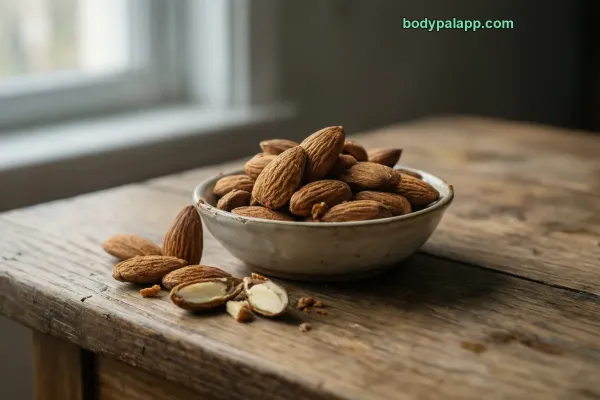
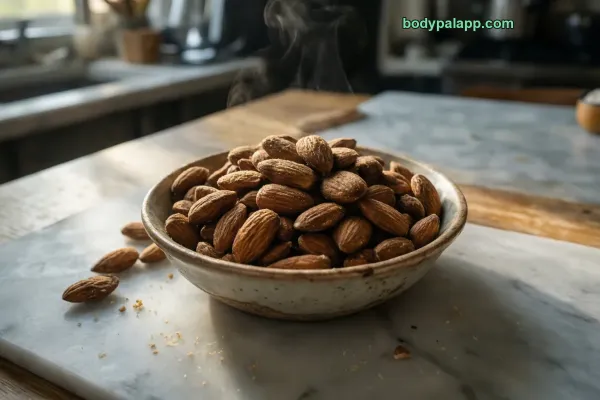
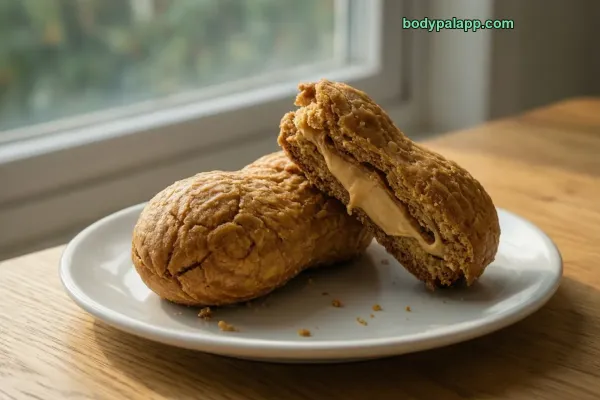
Here is how almond butter stacks up against whole almonds, raw almonds and Nutter Butter cookies, per 100 g and per usual serving.
Verdict: Almond butter and whole almonds are near twins at 614 and 598 calories per 100 g with 21 g of protein each, so pick whole almonds if you want slower eating and almond butter if you want to spread it thin. Nutter Butter looks lighter at 67 calories per cookie, but with 8.8 g of protein and 368 mg of sodium per 100 g it is the weaker choice for staying full.
Most popular almond butter brands in the United States
Jars are labelled per package serving, and flavoured versions with added chocolate or sugar read differently from plain almond butter. Source: manufacturer labels / USDA FoodData Central.
Almond butter FAQs
How many calories are in a tablespoon of almond butter?
One tablespoon (16 g) has 98 calories. The usual 2 tablespoon serving comes to 196 calories.
Is almond butter good for weight loss?
It is calorie dense at 614 calories per 100 g, so the spoon size decides the total. One tablespoon is 98 calories with 3.4 g protein and 1.6 g fiber.
Almond butter or almonds: which has more calories?
Almond butter has 614 calories per 100 g and whole almonds 598, so grinding the nuts into butter changes the calories very little.
How much protein is in almond butter?
Almond butter has 21 g of protein per 100 g, which is 3.4 g in one tablespoon and 6.7 g in two tablespoons.
How many calories are in 2 tablespoons of almond butter?
Two tablespoons (32 g) of plain almond butter have 196 calories. That portion also carries 6.7 g of protein and just 2 mg of sodium, so most of the energy comes from fat.
How many carbs are in almond butter?
Almond butter has 18.8 g of carbs per 100 g and 3 g per tablespoon. Of those 3 g, 1.6 g is fiber and 0.7 g is sugar, so carbs supply only 11% of its calories.
How much fat is in almond butter?
Almond butter has 55.5 g of fat per 100 g, 8.9 g per tablespoon and 15.5 g per ounce. Fat provides 76% of its calories, and saturated fat is 4.2 g per 100 g.
What are the nutrition facts for almond butter per 100 g?
Per 100 g, plain almond butter has 614 calories, 21 g protein, 18.8 g carbs and 55.5 g fat. It also brings 10.3 g of fiber, 4.4 g of sugars and 7 mg of sodium.
Is almond butter keto-friendly?
One tablespoon of almond butter has 3 g of carbs, 1.6 g of them fiber, and 8.9 g of fat. With 76% of calories from fat and 11% from carbs, it fits low-carb plans in measured portions.