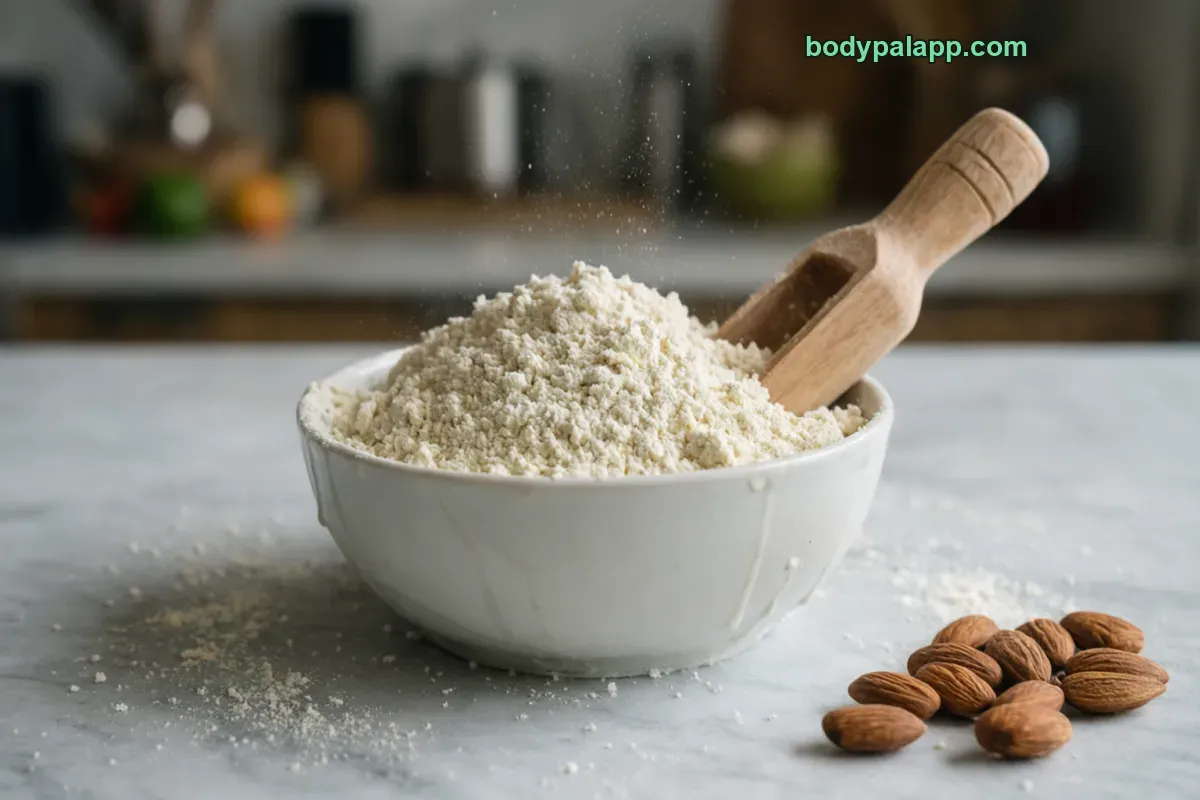
Almond flour calories come to 170 for a 1/4 cup (28 g) and 607 per 100 g. The number to notice is fat: it supplies 74% of the calories, so this flour is far denser than wheat flour, and every extra scoop in a recipe adds up fast.
170kcal
1 1/4 cup · 28 g, packaged, per label
13%protein
6 gProtein
6 gCarbs
15 gFat
How to burn off 170 kcal
—Walking, brisk
—Jogging
—Cycling, moderate
—Swimming
Skip the math. BodyPal counts these calories from your steps and workouts automatically.
Nutrition facts
Packaged, per label · per 28 g
Calories
170 kcal
Protein
6 g
Carbohydrate
6 g
Fat
15 g
Saturated fat
1 g
Cholesterol
0 mg
Sodium
0 mg
Potassium
190 mg
Source: USDA FoodData Central
🛡️
Verified nutrition data
Numbers on this page come from USDA FoodData Central, the U.S. Department of Agriculture’s food composition database, and from manufacturer labels where a branded product is named. Last verified September 2026. How we verify our data →
Almond flour: calories, protein and sodium by serving
Percent of daily value uses the FDA reference of 2,000 kcal a day.
Serving
kcal
Protein
Carbs
Fat
Sodium
% DV kcal
1/4 cup (28 g)
170
6 g
6 g
15 g
0 mg
8%
100 g
607
21.4 g
21.4 g
53.6 g
0 mg
30%
3 × 1/4 cup (28 g)
510
18 g
0 mg
5 × 1/4 cup (28 g)
850
30 g
0 mg
A 1/4 cup is 170 calories, and recipes rarely stop there
The label serving is 1/4 cup, or 28 g, and it carries 170 calories. That is about 8% of a 2000-calorie daily value. On its own that looks modest. The catch is that almond flour is rarely used in single scoops.
Double it to 56 g and you are at 340 calories. Three scoops, 84 g, reach 510. A batch of muffins or a pie crust can easily call for 140 g, which is 850 calories from the flour alone, before any butter, eggs or sugar go in. Those totals belong to the whole recipe, so the per-piece number depends entirely on how many pieces you cut.
The practical move is to weigh the flour once and divide by servings. Spooned and scooped cups vary, and with a flour this dense the gap between a level and a heaped scoop is real. If you log a homemade bake, log the flour by grams rather than guessing from the finished slice. BodyPal can also log a baked item from a photo when you did not make it yourself.
Fat is nearly three quarters of every calorie
Per 100 g, almond flour holds 53.6 g of fat, 21.4 g of protein and 21.4 g of carbs. The calorie split is 74% fat, 13% protein and 13% carbs. That is the profile of ground nuts, not of a grain flour, and it explains why the calorie count sits at 607 per 100 g.
Most of that fat is not saturated. Saturated fat is only 3.6 g per 100 g, out of 53.6 g total. Per 1/4 cup you get 15 g of fat, which is a big share of the daily value of 78 g for one scoop of an ingredient.
Protein is the quiet upside. A 1/4 cup gives 6 g, or 12% of the daily value, and 100 g gives 21.4 g, which is 43%. That is roughly double the protein of white flour gram for gram. It will not turn a cookie into a protein snack, but it does shift the balance of a bake compared with the wheat version.
Carbs stay low and fiber does real work
Carbs are the reason most people reach for almond flour. At 21.4 g per 100 g, it carries far less than the 76.3 g in regular flour. A 1/4 cup holds just 6 g of carbs, and 2 g of that is fiber.
Fiber reaches 7.1 g per 100 g, against a daily value of 28 g. Sugars are low too, at 3.6 g per 100 g and about 1 g per scoop. For anyone counting net carbs, those numbers make the flour easy to fit.
Other rows are clean. Sodium is 0 mg and cholesterol is 0 mg, so any salt in an almond flour bake comes from what you add. Potassium is notable at 679 mg per 100 g, set against a daily value of 4700 mg. The tradeoff to keep in mind is simple: fewer carbs, but more calories per gram than any grain flour.
Treat it as a nut ingredient, not a flour swap
Because almond flour behaves like ground almonds on the label, it makes sense to budget it the way you would budget nuts. A coating for chicken or fish uses a small amount and adds crunch for few calories per piece. A cake built on several cups is a different story.
Pair it with lean, watery foods to balance the density. Almond-crusted fish with vegetables, or a thin almond flour flatbread with salad, keeps the plate filling without stacking fat on fat. Watch the butter and oil in recipes, since the flour already brings plenty of fat.
Brands on the shelf include Bob's Red Mill Super-Fine Almond Flour, Kirkland Signature Blanched Almond Flour and Blue Diamond Almonds Finely Sifted Almond Flour. Blanched, super-fine versions bake lighter, but check each label for its own serving numbers rather than assuming they match.
How does almond flour compare?
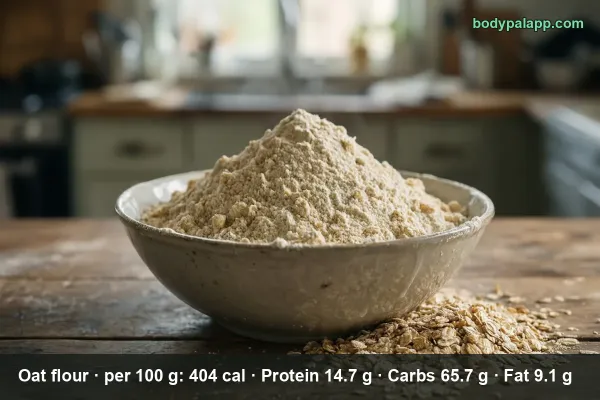
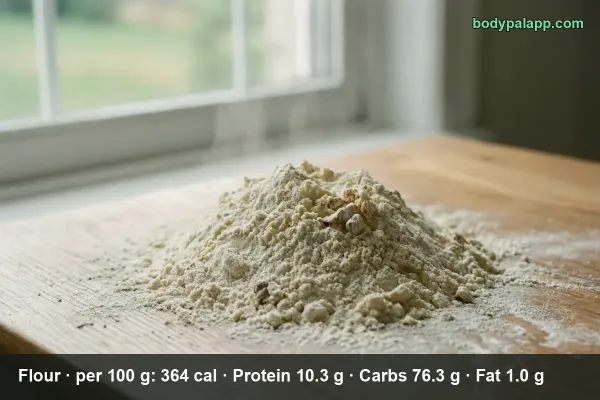
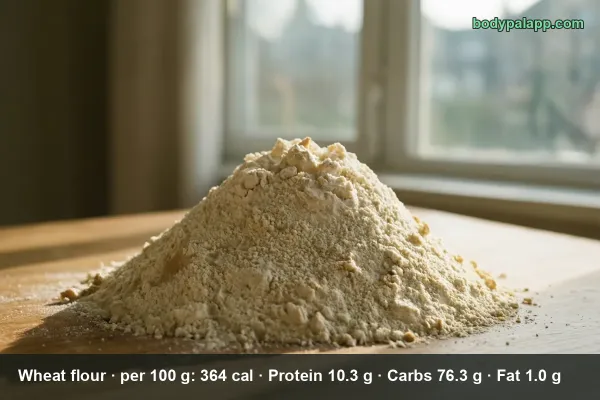
Here is how almond flour stacks up against oat flour, all-purpose flour and wheat flour, per 100 g and per usual serving.
Verdict: If calories are your priority, regular or wheat flour wins at 364 per 100 g, and oat flour sits in the middle at 404, versus 607 for almond flour. If you are cutting carbs, almond flour is the clear pick, with 21.4 g of carbs per 100 g against 65.7 g in oat flour and 76.3 g in wheat flour.
Most popular almond flour brands in the United States
Ranked by popularity in the BodyPal database
# Productkcal / 100 g
1Bob's Red Mill Super-Fine Almond Flour1/4 cup · 28 g571 kcal
2Kirkland Signature Blanched Almond Flour1/4 cup · 28 g643 kcal
A quarter cup (28 g) is 170 calories. Per 100 g almond flour has 607 calories.
Is almond flour good for weight loss?
It is calorie dense: 607 calories per 100 g, so a 28 g quarter cup adds 170 calories to a recipe. The same 28 g also brings 6.0 g protein and 2.0 g fiber.
Almond flour vs oat flour: which has fewer calories?
Oat flour has 404 calories per 100 g against 607 for almond flour, a gap of 203 calories per 100 g.
How much protein and carbs are in almond flour?
Per 100 g there are 21.4 g protein and 21.4 g carbs, of which 7.1 g is fiber. A 28 g quarter cup gives 6.0 g protein and 6.0 g carbs.
How many calories are in 1/2 cup of almond flour?
Two 1/4-cup scoops, 56 g in total, come to 340 calories. That amount also carries 12 g of protein and 0 mg of sodium, so most of the energy comes from almond fat.
Is almond flour keto friendly?
It fits low-carb eating well: 1/4 cup has 6 g of carbs, 2 g of which is fiber. Fat makes up 74% of its calories, which is the profile keto bakers look for.
How much fiber is in almond flour?
Almond flour has 7.1 g of fiber per 100 g, and about 2 g per 1/4 cup. Against a daily value of 28 g, a heavy almond flour bake can make a real dent in the day's fiber.
Does almond flour have sodium?
No. Almond flour lists 0 mg of sodium per 1/4 cup and per 100 g. Any sodium in muffins, crusts or breading made with it comes from salt, baking soda, cheese or other ingredients.
How many calories are in 100 g of almond flour?
100 g of almond flour has 607 calories, about 30% of a 2000-calorie daily value. It also gives 21.4 g of protein, 21.4 g of carbs and 53.6 g of fat.