
How many calories are in a bagel?
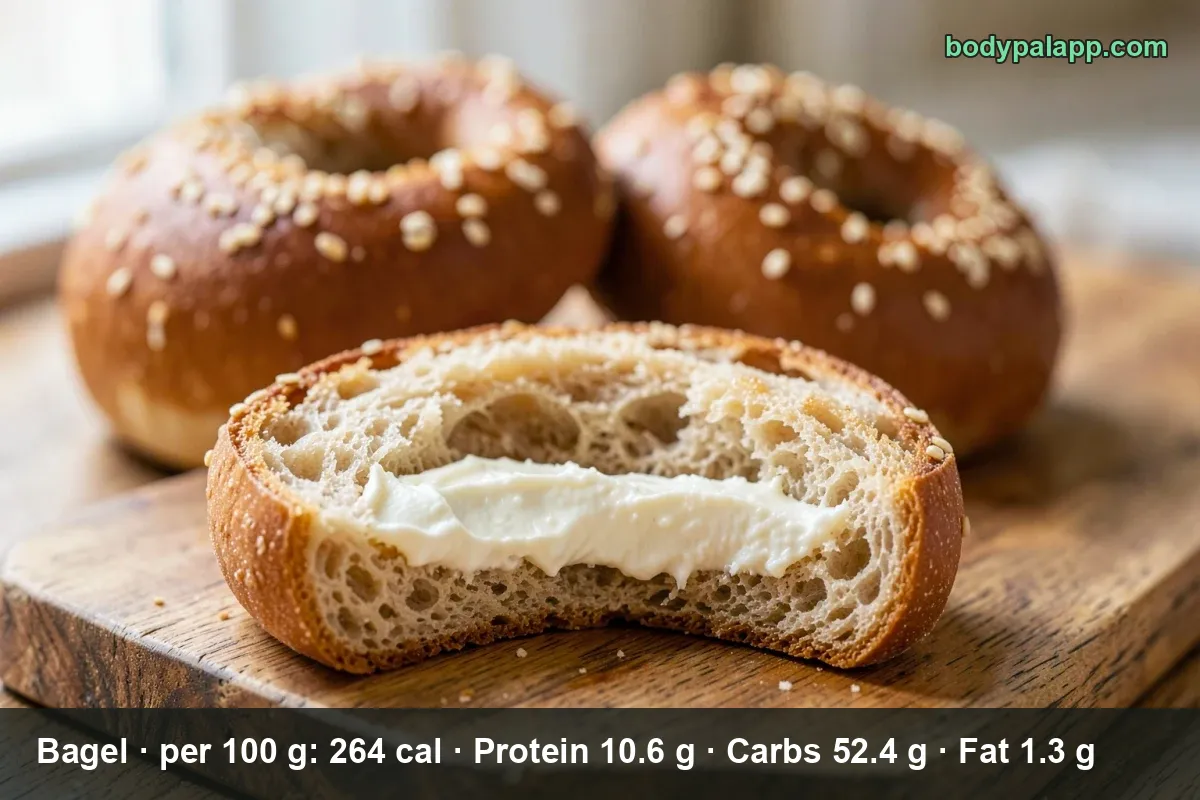
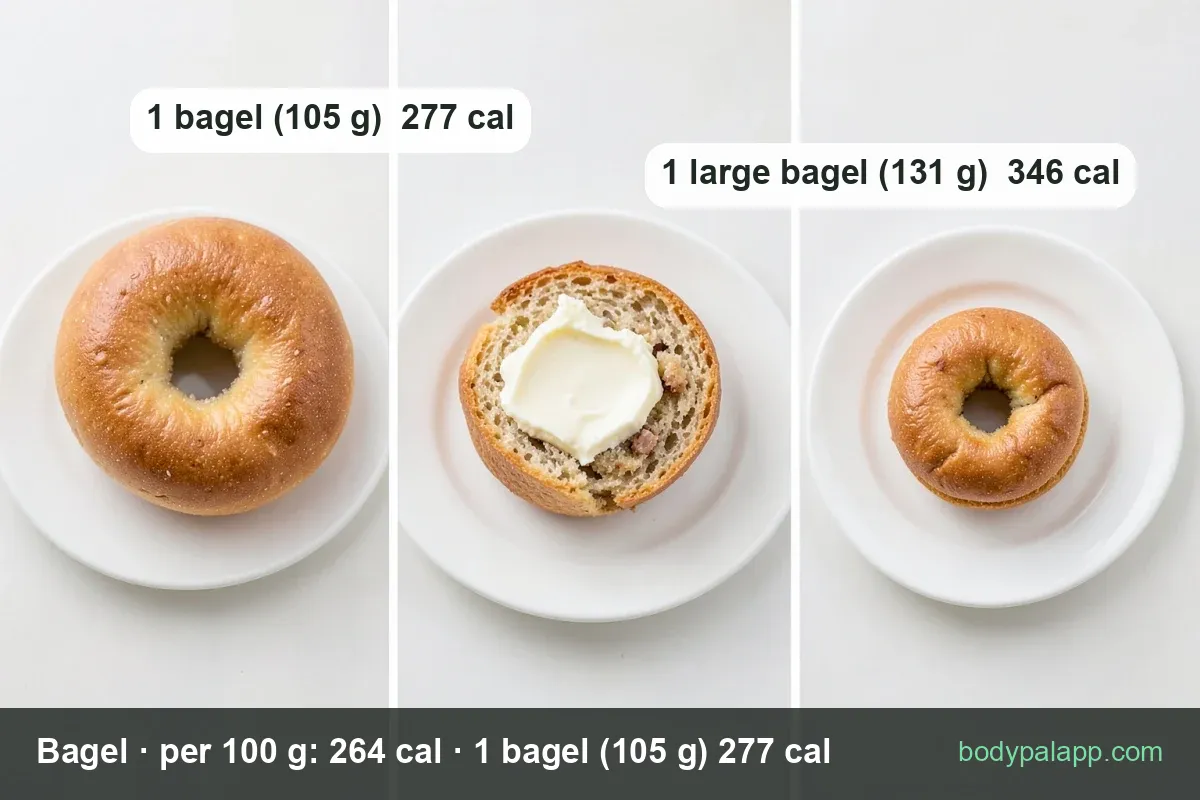
One regular bagel weighs 105 g and carries 277 calories. Per 100 g the dough runs 264 calories, so the size of the bagel decides almost everything: a 46 g Bagel Thin is 121, a 131 g deli bagel is 346. Same name, same recipe, 225 calories apart.
On this page
- Bagel quick facts
- US servings from a bagel thin to a deli bagel
- Wheat multigrain toasted and bagel chips
- Sodium is the row to watch
- How does a bagel compare?
- Most popular bagel brands
- Bagel FAQs
Bagel quick facts
The number here comes from the USDA FNDDS record 2707684, "Bagel". It is the plain store or bakery bagel, and USDA folds onion, poppy and sesame into the same record, because seeds on the crust move the total by less than the difference between two bagels off the same tray. The figures match the older SR Legacy entry 174899 line for line, and FNDDS is the version that also carries the US household sizes: Bagel Thin, small, regular, large.
A regular bagel is 105 g. That is the size most bagged supermarket bagels land on, and it is the row below.
| Nutrient | Per 100 g | Per 1 regular bagel (105 g) | % Daily Value |
|---|---|---|---|
| Calories | 264 | 277 | — |
| Total fat | 1.32 g | 1.4 g | 2% |
| Saturated fat | 0.36 g | 0.4 g | 2% |
| Carbohydrate | 52.38 g | 55.0 g | 20% |
| Dietary fiber | 1.6 g | 1.7 g | 6% |
| Total sugars | 8.43 g | 8.9 g | — |
| Protein | 10.56 g | 11.1 g | 22% |
| Sodium | 422 mg | 443 mg | 19% |
% Daily Value is based on a 2,000-calorie diet.
Verified nutrition data
Numbers on this page come from USDA FoodData Central, the U.S. Department of Agriculture’s food composition database, and from manufacturer labels where a branded product is named. Last verified September 2026. How we verify our data →
Two rows you will see on a package are missing here on purpose: USDA does not publish added sugars or trans fat for this record, so there is nothing honest to print. Cholesterol is 0 mg, as you would expect from flour, water, yeast and malt. Potassium comes to 112 mg per bagel, about 2% of the Daily Value, which is not a reason to eat one or to skip one.
The shape of this food is unusual for bread. Fat is almost absent at 1.4 g, protein is high at 11.1 g, and the calories are essentially all starch. A bagel is a dense disc of boiled-then-baked dough, and density is exactly why the household size matters more than the variety.
US servings from a bagel thin to a deli bagel
| Serving | Weight | Calories |
|---|---|---|
| 1 Bagel Thin | 46 g | 121 kcal |
| 1 small bagel | 69 g | 182 kcal |
| 1 regular bagel | 105 g | 277 kcal |
| 1 large deli bagel | 131 g | 346 kcal |
| 1 oz | 28 g | 74 kcal |
| Per 100 g | 100 g | 264 kcal |
Four of those are real USDA household measures: Bagel Thin, small, regular and large. The 1 oz line is our own arithmetic from the USDA 100 g figure, not a USDA serving, and it is there because deli bagels are sometimes priced and weighed by the ounce.
Here is the trap. Nobody weighs a bagel, and the gap between the sizes is bigger than the gap between most breakfast foods. A Bagel Thin at 121 calories and a deli bagel at 346 are the same product with the same label word on the bag. If you log "1 bagel" and you actually ate the deli size, you are 69 calories short of the truth on a regular estimate and 225 short of a Bagel Thin estimate. Put one on a kitchen scale once. You will not need to do it again, because the bakery you buy from is consistent.
The small size, 69 g and 182 calories, is the one most people never think about. It is the classic mini-ish bagel sold in six-packs, and it makes a sandwich that costs about a third less than the regular size.
Wheat multigrain toasted and bagel chips
| Version | Per 100 g | Typical piece | Calories |
|---|---|---|---|
| Wheat or whole wheat bagel | 250 kcal | 1 regular, 105 g | 263 kcal |
| Multigrain bagel | 250 kcal | 1 regular, 105 g | 263 kcal |
| Oat bran bagel | 250 kcal | 1 regular, 105 g | 263 kcal |
| Bagel with fruit and nuts | 263 kcal | 1 regular, 105 g | 276 kcal |
| Toasted plain bagel | 287 kcal | 1 oz, 28 g | 80 kcal |
| Bagel chips, plain | 451 kcal | 1 oz, 28 g | 126 kcal |
Notice what FNDDS does with the "healthy" varieties: wheat, multigrain and oat bran all land on the same 250 calories per 100 g, a saving of 14 calories per bagel against plain. As a calorie decision that is noise. As a fiber decision it is not. The SR Legacy records separate them, and there the wheat bagel carries 4.1 g of fiber per 100 g and multigrain 6.2 g, against 1.6 g for plain. Multigrain also comes in lower on calories in that older data, at 241 per 100 g.
Fruit and nut bagels sit at 263 per 100 g, which surprises people who assume raisins and cinnamon push a bagel up. They do not, because the raisins displace dough that was denser than they are.
Toasting is the one that confuses everybody. Toasted plain bagels read 287 calories per 100 g against 264 untoasted, and nothing was added to the bagel. The heat drove off water, so what is left weighs less and each gram is more concentrated. An ounce of toasted bagel is 80 calories against 74 untoasted. Log the bagel at the weight it had before it went in the toaster and you are right either way.
Bagel chips are not bread at all. At 451 calories per 100 g and 15.14 g of fat they belong with crackers and fried snacks, and one ounce is 126 calories. Egg bagels are a smaller step in the same direction: record 174901 puts them at 278 calories per 100 g with 2.1 g of fat and 24 mg of cholesterol.
Retail brands stretch the range further than USDA's generic records do. USDA's Branded database lists The Better Bagel Classic at 152 calories per 100 g, a protein-heavy formulation, and Odd Bagel Sesame at 345, while a Franz plain bagel at 253 and a Walmart bakery plain bagel at 271 sit close to the generic 264. If you buy the same bag every week, the package panel beats the average.
Sodium is the row to watch
Bagels get judged on carbs. The row that actually stands out on the label is sodium: 443 mg in one regular bagel, 19% of the FDA Daily Value of 2,300 mg. That is roughly a fifth of a teaspoon of table salt in something nobody thinks of as salty, and it arrives before the cream cheese, the lox or the deli ham. A large deli bagel takes it to about 553 mg by the same arithmetic from the 422 mg per 100 g figure.
Fiber goes the other way. A plain bagel gives 1.7 g, only 6% of the Daily Value, from a food that reads as a serious portion of grain. The Dietary Guidelines ask for at least half of your grains to be whole grains, and a plain bagel does nothing for that column. If you eat bagels often, the wheat or multigrain version is the better pick, not for the 14 calories it saves but for the fiber it more than doubles.
Protein is the pleasant surprise, and it is the reason a bagel holds people to lunch better than a same-calorie pastry. At 11.1 g it covers 22% of the Daily Value, nearly eight times the fat in the same bagel. On MyPlate terms one regular bagel counts as a substantial share of the day's grain group all by itself.
How does a bagel compare?
| Bagel type | Per 100 g | US serving | Calories |
|---|---|---|---|
| Plain bagel | 264 kcal | 1 regular, 105 g | 277 kcal |
| Wheat bagel | 250 kcal | 1 regular, 105 g | 263 kcal |
| Bagel with fruit and nuts | 263 kcal | 1 regular, 105 g | 276 kcal |
| Bagel chips, plain | 451 kcal | 1 oz, 28 g | 126 kcal |
Our take: within the bread bagels the choice barely moves the calories at all, since 250, 263 and 264 per 100 g are within rounding distance of each other on a scale nobody owns. Pick by fiber and pick by size. If you want the bagel habit to cost less, drop from the deli size to a regular, or from a regular to a Bagel Thin, and you save 69 or 156 calories without changing a thing about what you buy. Bagel chips are the only row here above 400 per 100 g, and they are a snack food wearing a bread name.
Most popular bagel brands in the United States
Ranked by how widely each product appears among foods sold in the United States, from the BodyPal food database of over 3.3 million products. Calories are the figures printed on each Nutrition Facts label, checked against USDA FoodData Central.
| Product | Calories (per 100 g) |
|---|---|
| The Better Bagel Classic | 152 cal |
| The Better Bagel Everything | 162 cal |
| Odd Bagel Plain | 319 cal |
| Odd Bagel Sesame | 345 cal |
| Franz Plain Bagels | 253 cal |
| The Bakery (Walmart) Plain Bagels | 271 cal |
Brand popularity: BodyPal food database. Nutrition: manufacturer labels / USDA FoodData Central.
Bagel FAQs
How many calories are in a plain bagel?
A regular plain bagel weighs 105 g and carries 277 calories, which works out to 264 calories per 100 g. The figure comes from the USDA FNDDS bagel record, and it covers plain, onion, poppy and sesame bagels alike, since the seeds on the crust barely move the total.
How many calories are in a large deli bagel?
A large deli bagel weighs 131 g and comes to 346 calories, 69 more than the 277 in a regular one. That is the biggest household size USDA lists for a bagel. Bakery and deli bagels are often this size even when nobody calls them large, so weigh one once.
How many carbs are in a bagel?
One regular bagel holds 55.0 g of carbohydrate, 20 percent of the FDA Daily Value, of which 1.7 g is fiber and 8.9 g total sugars. Per 100 g the figure is 52.38 g. Carbohydrate is essentially the whole bagel, since fat contributes only 1.4 g to the total.
How much protein is in a bagel?
A regular bagel gives 11.1 g of protein, 22 percent of the Daily Value, from 10.56 g per 100 g. Bagels carry nearly eight times as much protein as fat, 11.1 g against 1.4 g. The dough is flour and water, so what is in it is starch or wheat protein.
Are whole wheat bagels lower in calories?
Barely — a wheat bagel is 250 calories per 100 g against 264 for plain, so a regular 105 g wheat bagel is 263 calories, 14 fewer. The real difference is fiber: SR Legacy puts wheat bagels at 4.1 g per 100 g and multigrain at 6.2 g, against 1.6 g for plain.
How many calories are in a bagel thin?
A Bagel Thin weighs 46 g and comes to 121 calories, well under half the 277 in a regular bagel. USDA lists it as its own household portion. It also drops the sodium to about 194 mg, our own arithmetic from the 422 mg per 100 g figure rather than a USDA serving.
Does toasting a bagel change the calories?
Toasted plain bagels read 287 calories per 100 g against 264 untoasted, but nothing was added. Toasting drives off water, so the same bagel weighs less and each gram is denser. One ounce of toasted bagel is 80 calories against 74 untoasted. Log it at its untoasted weight.
How much sodium is in a bagel?
One regular bagel carries 443 mg of sodium, 19 percent of the 2,300 mg Daily Value, from 422 mg per 100 g. That is roughly a fifth of a teaspoon of table salt in a plain bread roll, before any cream cheese. A large deli bagel takes it to about 553 mg.
Similar foods
- Bagel Thin — 150 cal per thin
- Bagel With Cream Cheese — 277 cal per medium bagel
- Sesame bagel — 277 cal per medium bagel
- Sesame Seed Bagel — 277 cal per regular bagel
- Whole Grain Bread — 69 cal per slice
- Chicken Spring Roll — 170 cal per spring roll
Count it without the math
Point the camera at the plate and BodyPal counts the bagel for you, thin or deli size.


How long does it take to burn off a bagel?
One regular bagel (105 g) is 277 kcal. Enter your weight and the amount you ate to see how long it takes you to burn that off:
lb
| Activity | Time to burn 277 kcal |
|---|---|
| Walking, brisk | 55 min |
| Cycling, moderate | 35 min |
| Swimming, moderate | 40 min |
| Jogging | 33 min |
| Weight training, moderate | 1 hr 2 min |
Times are for a 155 lb adult at a steady pace; change the weight to see yours. The amount is set to the portion in the text (105 g); change it to what you actually ate. BodyPal works this out from your steps automatically.
This table assumes you know your daily total. If you do not, the daily calorie calculator works it out from five numbers.