
How many calories are in beef bulgogi?
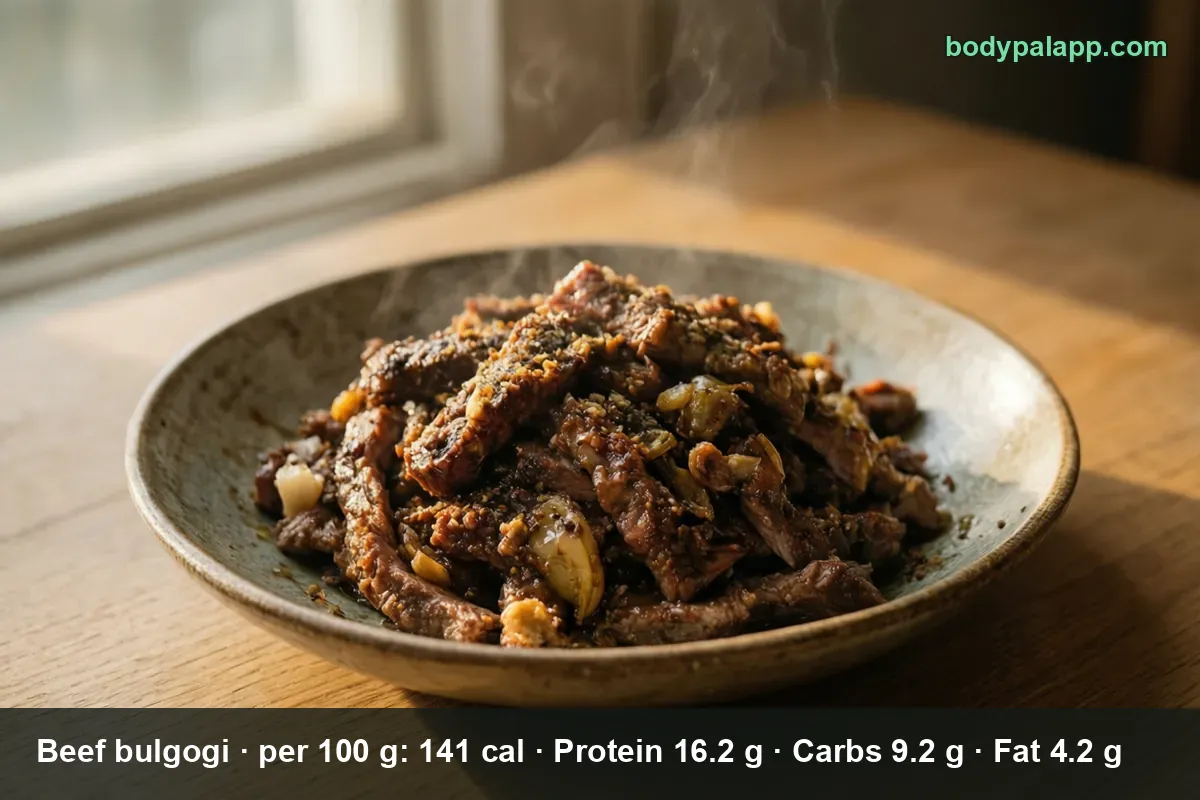
A 5 oz (142 g) serving of cooked beef bulgogi is 200 calories. The meat runs 141 calories per 100 g — thin, marinated, already grilled. Protein is the reason to put it on the plate: 23 g in that serving. Sodium is the reason to keep an eye on it: 920 mg, 40% of a day.
On this page
- Beef bulgogi quick facts
- US servings, from one ounce to half a pound
- Raw, cooked, over rice and folded into mandu
- Sodium is the row to watch
- How does beef bulgogi compare?
- Most popular beef bulgogi brands
- Beef bulgogi FAQs
Beef bulgogi quick facts
Bulgogi is a gap in the reference databases. USDA's Foundation, SR Legacy and FNDDS sets have no entry for it at all, so the number here comes from a packaged US product: Korean BBQ Style Beef Bulgogi, grilled beef in a soy garlic marinade (fdc_id 2079695, Suji's Korean Cuisine). It is cooked, ready to eat, thin-sliced marinated beef — the same thing you would lift off a tabletop grill, not a rice bowl and not a meal kit.
That choice matters more than it sounds. Many bulgogi records in the Branded set are entrées with rice underneath, which drags the per-100-g calories down while adding nothing to the meat.
| Nutrient | Per 100 g | Per 5 oz (142 g) | % Daily Value |
|---|---|---|---|
| Calories | 141 | 200 | — |
| Total fat | 4.23 g | 6.0 g | 8% |
| Carbohydrate | 9.15 g | 13.0 g | 5% |
| Protein | 16.2 g | 23.0 g | 46% |
| Sodium | 648 mg | 920 mg | 40% |
% Daily Value is based on a 2,000-calorie diet.
Verified nutrition data
Numbers on this page come from USDA FoodData Central, the U.S. Department of Agriculture’s food composition database, and from manufacturer labels where a branded product is named. Last verified September 2026. How we verify our data →
Six rows you would expect are missing, and they are missing for a reason: this manufacturer's label as filed in USDA Branded does not declare saturated fat, dietary fiber, total sugars or added sugars, and it lists neither cholesterol nor potassium. Rather than borrow those figures from a different record and pretend they belong to this one, we leave them out. The carbohydrate line is almost entirely marinade — soy sauce, sugar, garlic, Asian pear — but with no sugar declaration we cannot say how much of the 13 g is sugar.
US servings, from one ounce to half a pound
| Serving | Weight | Calories |
|---|---|---|
| 1 oz | 28 g | 39 kcal |
| 3 oz | 85 g | 120 kcal |
| 4 oz | 113 g | 159 kcal |
| 5 oz, the label serving | 142 g | 200 kcal |
| 8 oz, half a pound | 227 g | 320 kcal |
| Per 100 g | 100 g | 141 kcal |
Only the 5 oz line is a USDA serving. Everything else in that table is our own arithmetic from the USDA 100 g figure, scaled by weight, which is the honest way to handle a food nobody eats in a fixed unit. Bulgogi comes off the pan in a heap; there is no "one piece."
A tongs-worth of strips looks like a lot and weighs about 3 oz, or 120 calories. A restaurant portion for one, the kind that arrives sizzling with lettuce leaves on the side, is closer to half a pound of meat before anyone touches the rice — 320 calories, 37 g of protein, and 1,471 mg of sodium by the same scaling.
Raw, cooked, over rice and folded into mandu
| Version | Per 100 g | Typical serving | Calories |
|---|---|---|---|
| Cooked, ready to eat (Suji's) | 141 kcal | 5 oz (142 g) | 200 kcal |
| Raw marinated slices (Emart PK) | 200 kcal | 5 oz (140 g) | 280 kcal |
| Butcher-style marinated (OMI Meat) | 188 kcal | 4 oz (112 g) | 211 kcal |
| With white rice (ShopRite) | 106 kcal | 1 entrée (255 g) | 270 kcal |
| With brown rice (Saffron Road) | 120 kcal | 10 oz (283 g) | 340 kcal |
| Mandu dumplings (Bibigo) | 200 kcal | 4 pieces (140 g) | 280 kcal |
The raw-versus-cooked gap is the one that costs people calories. A refrigerated pack of raw marinated bulgogi is 200 calories per 100 g against 141 for the cooked version, because raw meat carries water and fat that render off on the heat, and the raw packs are cut from fattier trim. Five ounces of raw pack is 280 calories; five ounces of the finished stir-fry is 200. Weigh after cooking if you can, and use the cooked figure.
The rice versions run the other way. Per 100 g the ShopRite entrée is 106 calories and the Saffron Road brown-rice dinner 120, both well under the plain meat — but you are eating 255 g and 283 g of it, so the plate lands at 270 and 340. Protein tells the real story: 12 g in that white-rice entrée against 23 g in 142 g of meat.
Mandu are a different food wearing the same name. At 200 calories per 100 g, four dumplings come to 280 calories with 24.29 g of carbohydrate per 100 g — the wrapper, not the filling, is doing most of that.
Sodium is the row to watch
The number to remember is 920 mg in a 5 oz serving. That is 40% of the 2,300 mg Daily Value the FDA sets, and it arrives with only 200 calories — an unusually salty ratio for a plain protein. In kitchen terms it is about two-fifths of a teaspoon of table salt. Plain grilled beef has almost none of it; the soy marinade does all the work.
Serve bulgogi with kimchi, a salted banchan spread and a splash of extra sauce and a single dinner clears 2,000 mg without much effort, against the 2,300 mg ceiling in the Dietary Guidelines for Americans. If sodium is something you track, two adjustments help more than shrinking the portion: rinse nothing, but skip the extra dipping sauce, and pick the leaner butcher-style marinade — the OMI Meat record is 384 mg per 100 g, so a 4 oz portion is about 430 mg, roughly 40% less salt than the same weight of the cooked product.
Protein is the row that pays you back. Twenty-three grams from one 5 oz serving is 46% of the 50 g Daily Value, and beef sits in the protein foods group that MyPlate asks you to fill with variety. If you are choosing lunch on protein per calorie, this beats most things at 200 calories.
How does beef bulgogi compare?
| Dish | Per 100 g | US serving | Calories | Protein |
|---|---|---|---|---|
| Cooked beef bulgogi | 141 kcal | 5 oz (142 g) | 200 kcal | 23.0 g |
| Raw marinated bulgogi (Emart PK) | 200 kcal | 5 oz (140 g) | 280 kcal | 21.0 g |
| Butcher marinated bulgogi (OMI Meat) | 188 kcal | 4 oz (112 g) | 211 kcal | 15.0 g |
| Bulgogi with brown rice (Saffron Road) | 120 kcal | 10 oz (283 g) | 340 kcal | 18.0 g |
Our take: the cooked, ready-to-eat bulgogi is the smallest calorie count and the biggest protein number in the table, which makes the choice easy. The brown-rice dinner is the lightest per 100 g and the heaviest on the plate — a clean example of why per-100-g comparisons mislead when the serving sizes differ by 141 g. For weight loss, take the 5 oz of cooked meat and add your own vegetables. For a full meal that keeps you full, the brown-rice version at 340 calories is a reasonable dinner, just not a light one.
Most popular beef bulgogi brands in the United States
Ranked by how widely each product appears among foods sold in the United States, from the BodyPal food database of over 3.3 million products. Calories are the figures printed on each Nutrition Facts label, checked against USDA FoodData Central.
| Product | Calories (per 100 g) |
|---|---|
| Suji's Korean BBQ Style Beef Bulgogi | 141 cal |
| Emart PK Korean BBQ Style Beef Bulgogi | 200 cal |
| OMI Meat Korean Recipe Marinated Beef Bulgogi | 188 cal |
Brand popularity: BodyPal food database. Nutrition: manufacturer labels / USDA FoodData Central.
Beef bulgogi FAQs
How many calories are in beef bulgogi?
A 5 oz (142 g) cooked serving is 200 calories, and the meat runs 141 calories per 100 g. That is the ready-to-eat Korean BBQ style bulgogi in USDA's Branded set. Raw marinated packs are denser at 200 calories per 100 g, so the same 5 oz there lands nearer 280 calories.
How many calories in 4 oz of beef bulgogi?
Four ounces is 113 g and 159 calories — our own arithmetic from the USDA 100 g figure, not a label serving. It carries about 18 g of protein and 732 mg of sodium. The same 4 oz taken from a raw marinated pack would be roughly 226 calories instead.
How much protein is in beef bulgogi?
A 5 oz serving carries 23 g of protein for 200 calories, which is 46% of the 50 g Daily Value. Per 100 g that is 16.2 g. Very few 200-calorie plates do better, which is why thin marinated beef works so well in a lunch built around protein.
Is beef bulgogi high in sodium?
Yes. One 5 oz serving carries 920 mg of sodium, 40% of the 2,300 mg Daily Value, from just 200 calories. That is about two-fifths of a teaspoon of table salt. The soy marinade does it, not the beef — plain grilled steak has a small fraction of that.
Is beef bulgogi healthy for weight loss?
At 141 calories per 100 g with 16.2 g of protein, cooked bulgogi is one of the leaner ways to eat marinated beef, and a 5 oz serving is 200 calories. The sodium, 920 mg per serving, is the part worth watching if it is a weekly dinner rather than a treat.
How many carbs are in beef bulgogi?
A 5 oz serving has 13.0 g of carbohydrate, 5% of the Daily Value, from 9.15 g per 100 g. Nearly all of it is marinade — soy sauce, sugar, garlic and pear. The USDA Branded record for this product does not declare total sugars, so the sugar share is not published.
Does a beef bulgogi rice bowl have more calories?
Yes, by weight. A 255 g bulgogi-and-white-rice entrée is 270 calories against 200 for 5 oz of meat, and a 10 oz brown-rice dinner is 340. Per 100 g the bowls read lighter, 106 and 120, only because rice and vegetables make up much of the weight.
Raw or cooked bulgogi: which weight do I log?
Log the cooked weight. Ready-to-eat bulgogi is 141 calories per 100 g while raw marinated slices are 200, because water and fat leave the pan. Five ounces of the raw pack is 280 calories and shrinks on the grill, so weighing after cooking gives you the number you actually ate.
Similar foods
- Chicken Casserole — 314 cal per cup
- Lasagna Portion — 286 cal per piece
- Tuna Casserole — 311 cal per cup
- Chicken Dumpling — 351 cal per cup
- Hamburger Helper — 331 cal per cup
- Chicken Mole — 334 cal per cup
Count it without the math
Point the camera at the plate and BodyPal counts the bulgogi for you, marinade and all.


How long does it take to burn off beef bulgogi?
A 5 oz (142 g) cooked serving is 200 kcal. Enter your weight and the amount you ate to see how long it takes you to burn that off:
lb
| Activity | Time to burn 200 kcal |
|---|---|
| Walking, brisk | 40 min |
| Cycling, moderate | 25 min |
| Swimming, moderate | 29 min |
| Jogging | 24 min |
| Weight training, moderate | 44 min |
Times are for a 155 lb adult at a steady pace; change the weight to see yours. The amount is set to the portion in the text (142 g); change it to what you actually ate. BodyPal works this out from your steps automatically.
One food is easy to picture; a whole day is harder. See how many calories you need a day and what a deficit actually looks like.