
How many calories are in a beer?
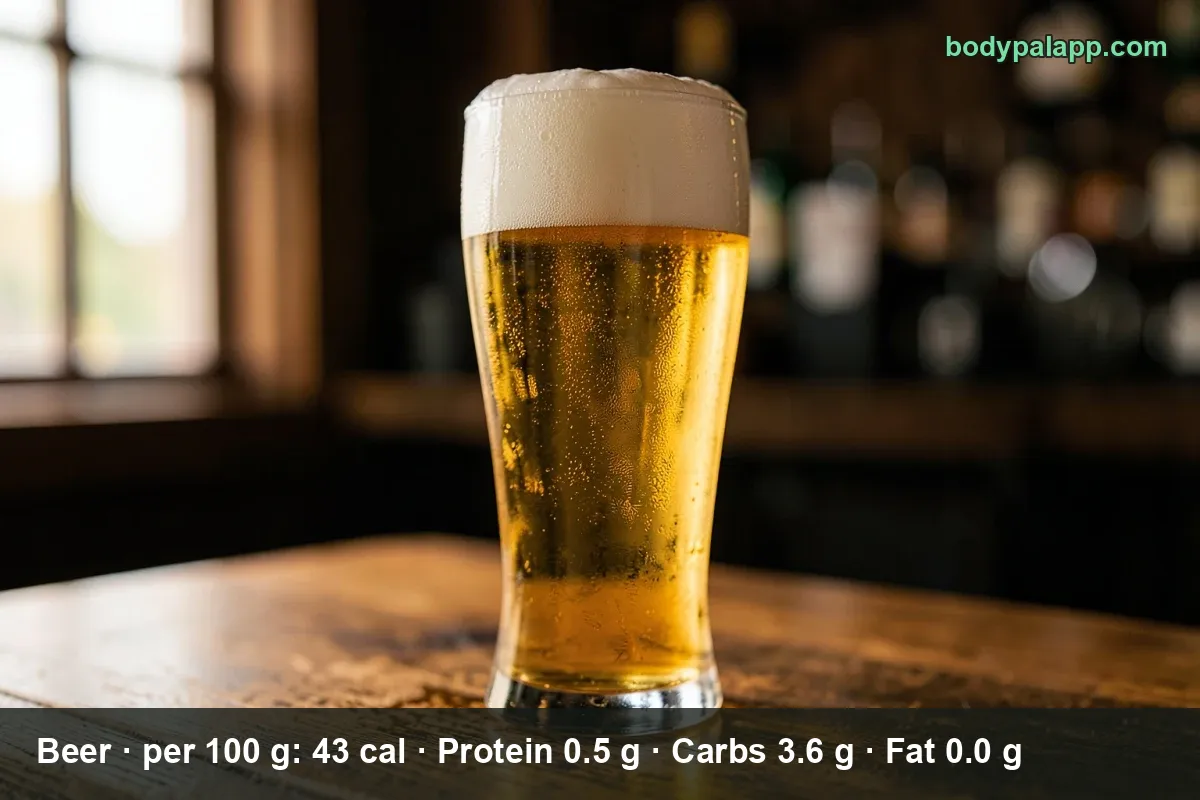
A 12 fl oz can or bottle of regular beer carries 155 calories, and beer is 43 calories per 100 g. That per-gram number sounds modest until you notice how much liquid a can holds: 360 g. Almost none of it is sugar - the can has 12.8 g of carbohydrate and 0 g of sugars.
On this page
- Beer quick facts
- US pours, from one ounce to a 40 oz bottle
- Light, low-carb and higher-alcohol beer
- Non-alcoholic beer and hard lemonade
- Where beer calories actually come from
- How does beer compare?
- Most popular beer brands
- FAQ
Beer quick facts
The row behind this page is FNDDS 2710616, "Beer" - the plain American lager at roughly 5% alcohol that someone hands you at a cookout. USDA also carries the same food as SR Legacy 168746 with identical values, but the FNDDS entry is the one that ships with the household measures Americans actually pour: 12 fl oz, 16 fl oz and 40 fl oz. That is why the serving column below is a can, not an abstract 100 g.
| Nutrient | Per 100 g | Per 12 fl oz can (360 g) | % Daily Value |
|---|---|---|---|
| Calories | 43 | 155 | — |
| Total fat | 0 g | 0 g | 0% |
| Saturated fat | 0 g | 0 g | 0% |
| Carbohydrate | 3.55 g | 12.8 g | 5% |
| Dietary fiber | 0 g | 0 g | 0% |
| Total sugars | 0 g | 0 g | — |
| Protein | 0.46 g | 1.7 g | 3% |
| Sodium | 4 mg | 14 mg | 1% |
% Daily Value is based on a 2,000-calorie diet.
Verified nutrition data
Numbers on this page come from USDA FoodData Central, the U.S. Department of Agriculture’s food composition database, and from manufacturer labels where a branded product is named. Last verified September 2026. How we verify our data →
There is no added sugars row and no trans fat row here, because USDA does not publish either value for this beer record. Nothing is hiding: fermentation eats the malt sugars, and beer gets no sweetener afterward. Cholesterol is 0 mg a can, and potassium comes in at 97 mg, about 2% of the Daily Value - a rounding error next to a baked potato.
The sodium line is worth a glance if you are watching salt: 14 mg per can is nothing, far less than a hundredth of a teaspoon of table salt. Beer is not where sodium sneaks in. The bar snacks are.
US pours, from one ounce to a 40 oz bottle
| Serving | Weight | Calories |
|---|---|---|
| 1 fl oz | 30 g | 13 kcal |
| 1 oz | 28 g | 12 kcal |
| 1 can or bottle, 12 fl oz | 360 g | 155 kcal |
| 1 glass, 16 fl oz | 480 g | 206 kcal |
| 1 bottle, 40 fl oz | 1200 g | 516 kcal |
| Per 100 g | 100 g | 43 kcal |
The 1 fl oz, 12 fl oz, 16 fl oz and 40 fl oz lines are USDA household measures for this record. The 1 oz row is our own arithmetic from the USDA 100 g figure, not a USDA serving - it exists only because kitchen scales read in ounces of weight, not fluid ounces.
Here is the trap. Cans and bottles are 12 fl oz; the glass a bartender fills is usually a 16 fl oz US pint. Same phrase, "one beer," but 480 g instead of 360 g and 206 calories instead of 155. Three rounds at the bar cost 618 calories against 465 from cans at home, and nobody logs the difference because the drink has the same name. The 40 fl oz bottle is its own category: 516 calories, more than three cans.
Light, low-carb and higher-alcohol beer
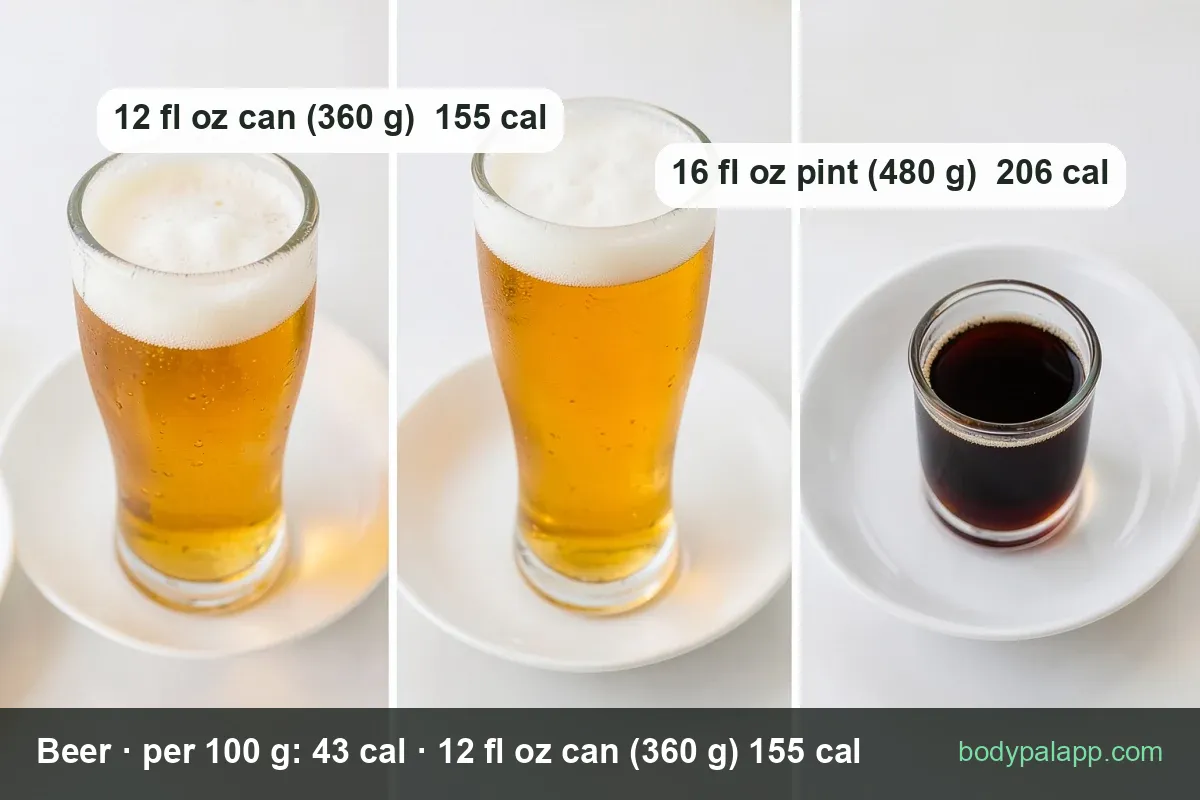
| Version | Per 100 g | 12 fl oz can | Calories |
|---|---|---|---|
| Regular beer | 43 kcal | 360 g | 155 kcal |
| Light beer | 29 kcal | 360 g | 104 kcal |
| Low-carb light beer | 27 kcal | 360 g | 97 kcal |
| Light, higher-alcohol beer | 46 kcal | 360 g | 166 kcal |
| Higher-alcohol craft beer | 58 kcal | 360 g | 209 kcal |
Light beer earns its name: 104 calories a can, 51 fewer than regular. Low-carb light goes a little further at 97, because the brewer ferments more of the sugar away, leaving 2.6 g of carbohydrate per can against 12.8 g in a regular beer.
Then the label stops being reliable. A light beer brewed for higher alcohol is 166 calories a can - more than the regular lager it is meant to replace - because ethanol, not carbohydrate, is doing the counting. And a 16 fl oz glass of ordinary light beer works out to 139 calories, which is our own arithmetic from the USDA 100 g figure rather than a USDA serving. It still beats a can of regular beer, but only barely. Size beats the word "light" more often than drinkers expect.
Craft beer and strong IPAs land at the top: 58 calories per 100 g, 209 a can, in the neighborhood of a can of soda plus a cookie. Among named products, USDA's older brand records put Budweiser at 41 calories per 100 g (about 148 a can), Bud Light at 29 (about 104) and Budweiser Select at 28 (about 101) - all three per-can figures our own arithmetic from the 100 g values. The spread between mainstream brands is small; the spread between a mainstream can and a double IPA is enormous.
Non-alcoholic beer and hard lemonade
Non-alcoholic beer is the surprise on this page. It is 133 calories a 12 fl oz can, only 22 below regular beer, at 37 calories per 100 g. The reason sits in the carbohydrate column: 29 g per can, all of it sugars, because the malt sugars never ferment into alcohol. You drop the alcohol and inherit the sugar. It also carries 13 mg of sodium per 100 g, the highest sodium figure of any beer record here.
Hard lemonade and similar flavored malt beverages are further out again: 68 calories per 100 g, 245 a 12 fl oz bottle, with 36 g of carbohydrate. That is a sweetened drink wearing a beer license. If you are counting, treat it as dessert, not as a beer.
Where beer calories actually come from
Run the arithmetic on a can and the numbers refuse to add up. Using the standard 4-calories-per-gram factors, 12.8 g of carbohydrate is about 51 calories and 1.7 g of protein about 7 - roughly 58 of the 155 in the glass. The other 97 or so come from ethanol, which the Nutrition Facts panel has no row for. This is our own calculation from the USDA values, and it explains why the 5% Daily Value on carbohydrate is misleading: nearly two-thirds of a beer is a calorie source that never appears in a macro column.
That matters if you log macros. Enter beer by its carbs alone and you will lose about 97 calories per can from your day - roughly 300 across a three-beer evening. Log the drink itself, not its nutrients.
For context on the units, CDC counts one standard drink as 12 fl oz of regular beer at about 5% alcohol - exactly the can in the table above. The Dietary Guidelines for Americans advise adults who drink to keep it to two drinks or fewer a day for men and one or fewer for women. Two cans is 310 calories, about the same as a bagel, and it is the calorie load rather than the carb line that shows up on the scale. Percentages here follow the FDA Daily Values for a 2,000-calorie diet.
How does beer compare?
| Drink | Per 100 g | US serving | Calories |
|---|---|---|---|
| Beer | 43 kcal | 12 fl oz can, 360 g | 155 kcal |
| Hard cider | 56 kcal | 12 fl oz, 360 g | 202 kcal |
| Hard seltzer | 24 kcal | 12 fl oz, 360 g | 86 kcal |
| Michelada | 33 kcal | 12 fl oz, 360 g | 119 kcal |
Our take: hard seltzer wins on arithmetic and it is not close - 86 calories a can is the only figure in this table under 100, and it is 69 below a beer. If the goal is a lighter evening without giving up a drink in your hand, that is the swap. Hard cider is the one to watch, since it drinks like a soft drink and costs 202 a can, 47 more than beer. Beer itself sits in the middle, and a michelada is cheaper than the beer it started as only because tomato juice dilutes it. For satisfaction per calorie, a single 12 oz regular beer at 155 beats two light beers at 208.
Most popular beer brands in the United States
Ranked by how widely each product appears among foods sold in the United States, from the BodyPal food database of over 3.3 million products. Calories are the figures printed on each Nutrition Facts label, checked against USDA FoodData Central.
| Product | Calories (per 100 g) |
|---|---|
| Budweiser | 41 cal |
| Bud Light | 29 cal |
| Budweiser Select | 28 cal |
Brand popularity: BodyPal food database. Nutrition: manufacturer labels / USDA FoodData Central.
Beer FAQs
How many calories are in a 12 oz beer?
A 12 fl oz can or bottle of regular beer holds 155 calories, from 360 g of liquid at 43 calories per 100 g. That is the USDA figure for a standard American lager near 5% alcohol. Two cans put you at 310 calories before any food reaches the table.
How many calories in a pint of beer?
A 16 fl oz US pint of regular beer is 206 calories, 51 more than the 12 oz can. The glass holds 480 g against 360 g, so the pour, not the brew, adds the calories. Order two and you are at 412 calories for the evening.
Does light beer have fewer calories?
Yes, light beer runs 29 calories per 100 g against 43, so a 12 fl oz can is 104 calories instead of 155, a saving of 51. Low-carb light beer drops to 97. But a 16 fl oz glass of light beer is about 139, close to a regular can.
How many carbs are in a beer?
A 12 fl oz can carries 12.8 g of carbohydrate, 5% of the Daily Value. Light beer has 5.9 g and low-carb light only 2.6 g. Non-alcoholic beer is the outlier at 29 g a can, because the malt sugars never ferment into alcohol.
Does beer have sugar?
Regular beer has 0 g of total sugars per can in the USDA record, because fermentation converts the malt sugars into alcohol. Non-alcoholic beer is the opposite: 29 g of sugars in a 12 fl oz can, all of it left behind. USDA does not publish added sugars for beer.
How many calories in non-alcoholic beer?
A 12 fl oz non-alcoholic beer is 133 calories, only 22 below regular beer, at 37 calories per 100 g. The unfermented sugars stay in the glass, giving 29 g of carbohydrate a can. Dropping the alcohol saves less than most drinkers expect it to.
Which beer has the fewest calories?
Low-carb light beer is the lightest USDA record at 27 calories per 100 g, or 97 per 12 fl oz can. Standard light beer is close behind at 104. Among named products, Budweiser Select works out to about 101 a can and Bud Light 104, against 148 for Budweiser.
How many calories in a 40 oz beer?
A 40 fl oz bottle of regular beer is 516 calories, weighing 1,200 g. That is more than three 12 oz cans and roughly a quarter of a 2,000-calorie day. Filled with light beer, the same bottle would come to about 348 calories by our own arithmetic.
Similar foods
- Beer (Lager) — 153 cal per can
- Corona Beer — 153 cal per bottle
- Guinness Stout Beer — 153 cal per bottle
- Heineken Beer — 153 cal per bottle
- Beer Pint — 206 cal per pint
- Blue Moon — 206 cal per pint (16 fl oz)
Count it without the math
Point the camera at the glass and BodyPal logs the beer for you, can or pint.


How long does it take to burn off beer?
A 12 fl oz can (360 g) is 155 kcal. Enter your weight and the amount you ate to see how long it takes you to burn that off:
lb
| Activity | Time to burn 155 kcal |
|---|---|
| Walking, brisk | 31 min |
| Cycling, moderate | 19 min |
| Swimming, moderate | 22 min |
| Jogging | 18 min |
| Weight training, moderate | 34 min |
Times are for a 155 lb adult at a steady pace; change the weight to see yours. The amount is set to the portion in the text (360 g); change it to what you actually ate. BodyPal works this out from your steps automatically.
Burning it off is one side of it. The other is knowing your number: work out how many calories you need a day, with macros and a goal date.