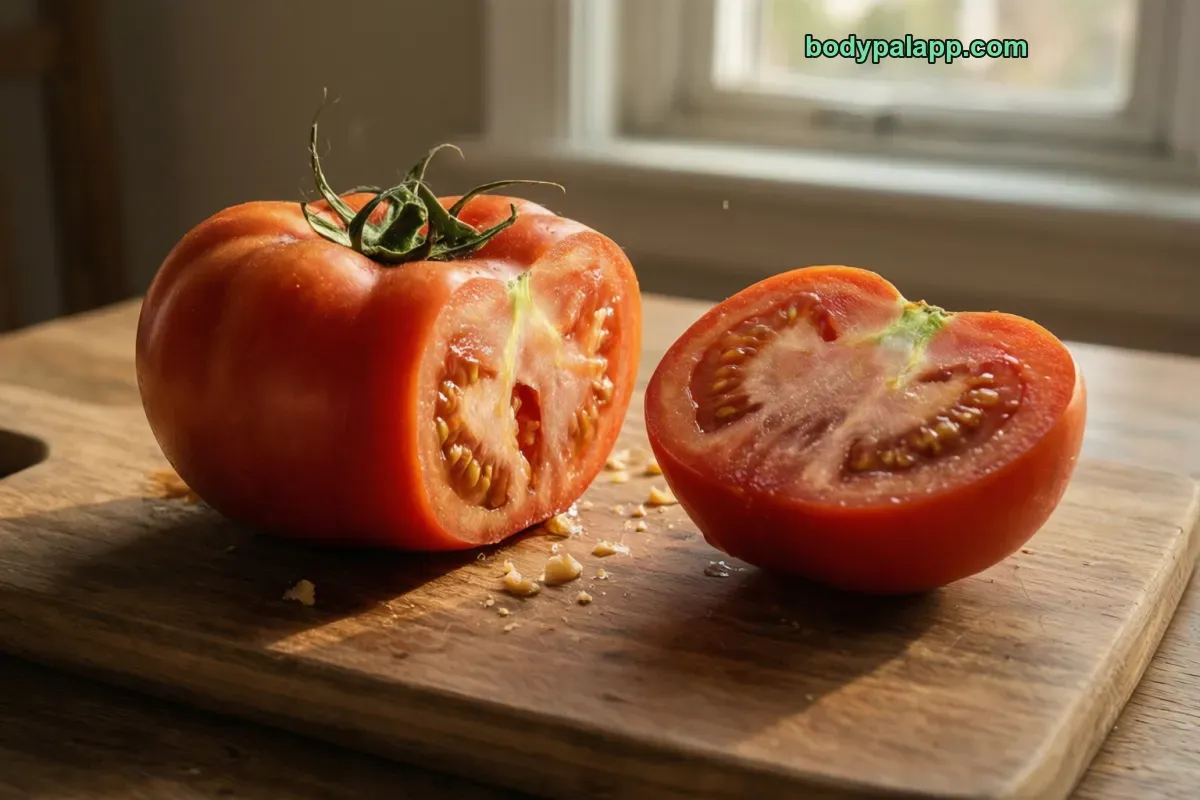
Big tomato calories come to 31 for one large tomato (170 g) and 18 per 100 g. That is just 2% of a 2000-calorie daily value. The number to notice is not the calories but the volume: a whole large tomato is a lot of food for very little energy, and extra tomatoes barely move the total.
31kcal
1 large tomato · 170 g, red, ripe
18%protein
1.6 gProtein
7 gCarbs
0.2 gFat
How to burn off 31 kcal
—Walking, brisk
—Jogging
—Cycling, moderate
—Swimming
Skip the math. BodyPal counts these calories from your steps and workouts automatically.
Nutrition facts
Red, ripe · per 170 g
Calories
31 kcal
Protein
1.6 g
Carbohydrate
6.8 g
Fat
0.2 g
Saturated fat
0 g
Cholesterol
0 mg
Sodium
19 mg
Potassium
371 mg
Iron
1.2 mg
Source: USDA FoodData Central
🛡️
Verified nutrition data
Numbers on this page come from USDA FoodData Central, the U.S. Department of Agriculture’s food composition database, and from manufacturer labels where a branded product is named. Last verified September 2026. How we verify our data →
Big tomato: calories, protein and sodium by serving
Percent of daily value uses the FDA reference of 2,000 kcal a day.
Serving
kcal
Protein
Carbs
Fat
Sodium
% DV kcal
1 large (170 g)
31
1.6 g
6.8 g
0.2 g
19 mg
2%
1 cup (240 g)
43
2.3 g
9.6 g
0.3 g
26 mg
2%
3 oz portion (85 g)
15
0.8 g
3.4 g
0.1 g
9 mg
1%
100 g
18
1 g
4 g
0.1 g
11 mg
1%
3 × 1 large (170 g)
92
4.8 g
56 mg
5 × 1 large (170 g)
153
8.1 g
94 mg
Even five large tomatoes stay near 153 calories
One large tomato (170 g) has 31 calories, with 1.6 g protein, 6.8 g carbs and 0.2 g fat. A cup of chopped tomato at 240 g comes to 43 calories, and a 3 oz portion of 85 g is 15. Those are the sizes people actually use: a whole tomato sliced on a plate, a cup tossed into a salad, a few slices on a sandwich.
Scaling up changes very little. Two large tomatoes (340 g) total 61 calories, three (510 g) come to 92, and five, which is 850 g of food, reach 153. Sodium climbs on the same gentle slope, from 37 mg to 56 mg to 94 mg. Few foods let you eat that much by weight for so little.
The practical takeaway is that you do not need a kitchen scale to log tomatoes honestly. Counting how many you ate is close enough. What really moves the total is what goes on top: oil, cheese, dressing or mayo. BodyPal can log a sliced tomato from a photo, so the plate and its extras land in your diary together.
Carbs supply 77% of the calories
Of the 18 calories in 100 g, 77% come from carbohydrate, 18% from protein and 5% from fat. In grams that is 4 g carbs, 1 g protein and 0.1 g fat per 100 g. Of those 4 g of carbs, 2.5 g are sugars and 0.7 g is fiber.
For one large tomato that works out to 4.2 g sugars and 1.2 g fiber. The sugar is the tomato's own; nothing is added. The fiber is a modest contribution against the 28 g daily value, useful but not the reason to eat tomatoes.
Protein looks respectable as a share of calories, but the grams tell the real story. A large tomato gives 1.6 g, which is 3% of the 50 g daily value. Treat tomato as a volume food that adds bulk, color and moisture to a meal, and get your protein from whatever you pair it with.
Sodium barely registers, potassium is the bigger number
Plain tomato is close to sodium-free. There are 11 mg per 100 g and 19 mg in a large tomato, which is 1% of the 2300 mg daily value. Even a cup at 240 g only reaches 26 mg. Saturated fat and cholesterol both sit at 0.
Potassium is the row that actually shows up. A 100 g serving has 218 mg, measured against a daily value of 4700 mg. That is far more potassium than sodium, which makes tomato one of the easier vegetables to work into a lower-sodium day.
If you watch sodium, the risk is not the tomato itself. It is the salt shaker, the feta, the bottled dressing or the deli meat sharing the plate. A large tomato starts you at 19 mg; what you add decides where you finish.
A large tomato fits almost any meal
At 31 calories, a large tomato is easy to add to breakfast, lunch or dinner without rethinking the rest of the day. Slices go with eggs or cottage cheese in the morning, wedges into a lunch salad, and chopped tomato into a pan sauce or a bowl of beans at dinner.
Because a tomato brings almost no protein or fat, it works best next to foods that do. A slice of whole-grain toast with eggs and tomato, or a salad with chicken, tuna or beans, gives you the bulk of the tomato plus something that keeps you full longer. A small drizzle of olive oil adds flavor, but count it, because the oil quickly outweighs the tomato in calories.
The figures on this page come from the USDA entry for red, ripe tomatoes. Whether you eat it sliced raw, roasted or stewed, the tomato itself stays one of the lightest items on the plate; the cooking fat and the salt are what change.
How does big tomato compare?
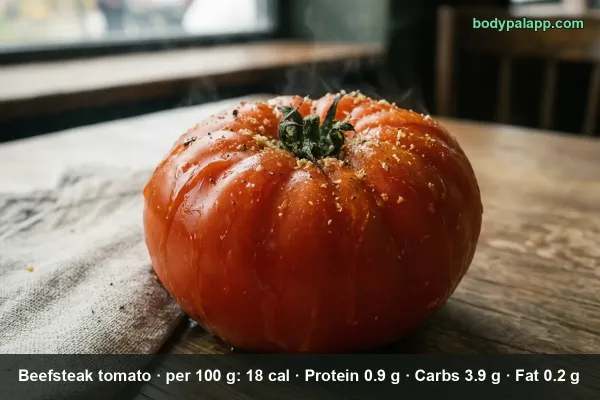
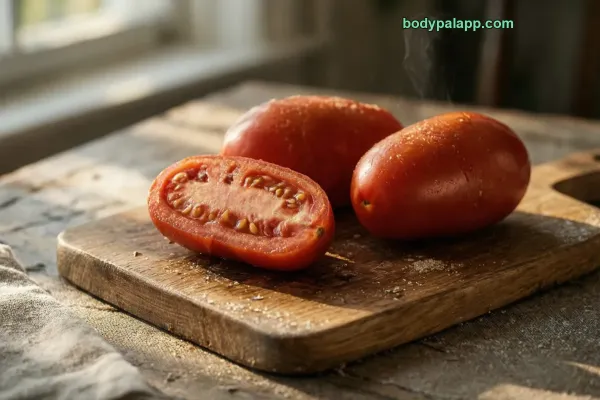
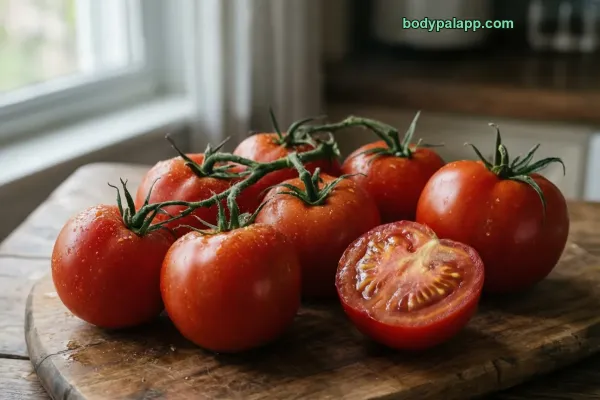
Here is how a big tomato stacks up against beefsteak, roma and campari tomatoes, per 100 g and per usual serving.
Verdict: All four land at 18 calories per 100 g, so choose by size and use, not by calories: a roma tomato at 10 calories is the easiest single unit to count, while a large tomato at 31 gives the most food per piece. If you watch sodium, beefsteak is the lowest at 5 mg per 100 g, against 11 mg for the other three.
Big tomato FAQs
How many calories are in one big tomato?
A large tomato of about 170 g has 31 calories. A red ripe tomato is 18 calories per 100 g.
Is a big tomato good for weight loss?
A large tomato has 31 calories, 1.2 g of fiber and 0.2 g of fat, so it adds volume to a meal for very few calories.
Big tomato vs beefsteak tomato: which has more calories?
They match at 18 calories per 100 g, so a 170 g tomato of either kind comes to 31 calories.
How many carbs are in a big tomato?
A 170 g tomato has 6.8 g of carbs, of which 4.2 g are sugars and 1.2 g is fiber. Per 100 g that is 4 g of carbs.
How many calories are in a cup of chopped tomato?
A cup of chopped tomato (240 g) has 43 calories. It also brings 2.3 g protein, 9.6 g carbs, 6 g sugars and 1.7 g fiber, with only 26 mg sodium.
How much sugar is in a large tomato?
A large tomato (170 g) contains 4.2 g of sugars, all naturally occurring. Per 100 g that is 2.5 g, out of 4 g of total carbohydrate.
How much protein does a big tomato have?
A big tomato has 1.6 g of protein, which is 3% of the 50 g daily value. Protein supplies 18% of its calories, but the gram amount stays small, so pair it with a real protein source.
How much sodium is in a large tomato?
A large tomato has 19 mg of sodium, just 1% of the 2300 mg daily value. Per 100 g it is 11 mg, so nearly all the sodium in a tomato dish comes from added salt or toppings.
How many calories are in two large tomatoes?
Two large tomatoes (340 g) have 61 calories, 3.2 g protein and 37 mg sodium. Three come to 92 calories, so even a generous tomato salad stays light before dressing.