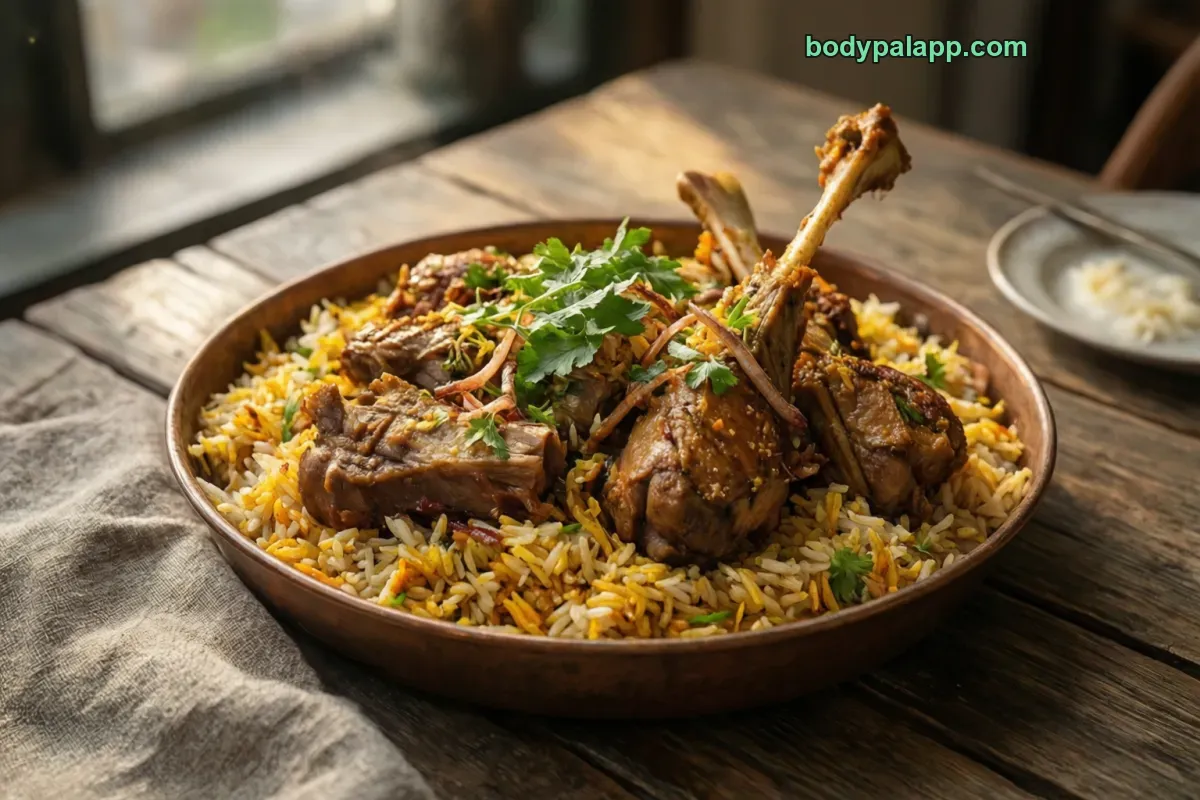
Biryani calories come to 284 for 1 cup (196 g) of biryani with meat, or 145 per 100 g. Fat supplies 42% of those calories, more than the rice or the meat's protein. The version you order also swings the total: a cup of chicken biryani is 204, and vegetable biryani is 187.
284kcal
1 cup · 196 g, with meat
24%protein
16.7 gProtein
24 gCarbs
13.3 gFat
How to burn off 284 kcal
—Walking, brisk
—Jogging
—Cycling, moderate
—Swimming
Skip the math. BodyPal counts these calories from your steps and workouts automatically.
Nutrition facts
With meat · per 196 g
Calories
284 kcal
Protein
16.7 g
Carbohydrate
24 g
Fat
13.3 g
Saturated fat
5.8 g
Cholesterol
57 mg
Sodium
192 mg
Potassium
449 mg
Iron
2.2 mg
Source: USDA FoodData Central
🛡️
Verified nutrition data
Numbers on this page come from USDA FoodData Central, the U.S. Department of Agriculture’s food composition database, and from manufacturer labels where a branded product is named. Last verified October 2026. How we verify our data →
Biryani: calories, protein and sodium by serving
Percent of daily value uses the FDA reference of 2,000 kcal a day.
Serving
kcal
Protein
Carbs
Fat
Sodium
% DV kcal
1 cup (196 g)
284
16.7 g
23.9 g
13.3 g
192 mg
14%
Chicken, 1 cup (196 g)
204
14 g
26.6 g
4.7 g
316 mg
10%
Vegetable, 1 cup (172 g)
187
3.3 g
30.8 g
5.5 g
304 mg
9%
100 g
145
8.5 g
12.2 g
6.8 g
98 mg
7%
3 × 1 cup (196 g)
853
50 g
576 mg
5 × 1 cup (196 g)
1,421
83.3 g
960 mg
Two cups of biryani is a 568-calorie plate
The USDA row behind this page is biryani with meat, and the reference portion is 1 cup (196 g) at 284 calories. That cup carries 16.7 g of protein, 23.9 g of carbs and 13.3 g of fat. It covers 14% of the daily value for calories, which sounds modest until you look at how biryani is actually served.
Restaurant plates rarely stop at one cup. Two cups (392 g) come to 568 calories with 33.3 g of protein. Three cups (588 g) reach 853 calories, and a family-style 980 g portion, five cups, adds up to 1,421. The rice is dense and the calories stack quickly.
Sodium climbs more gently: 192 mg in one cup, 384 mg in two, 576 mg in three. If you track your intake, weighing the plate once is the fastest way to stop guessing. At 145 calories per 100 g, the scale does most of the math for you.
Fat, not rice, is the biggest calorie source
Per 100 g, biryani with meat has 145 calories, 8.5 g of protein, 12.2 g of carbs and 6.8 g of fat. By calories, that splits into 42% fat, 34% carbs and 24% protein. For a rice dish, that is an unusual order. Fat leads, and the grain comes second.
Saturated fat is 3 g per 100 g, measured against a daily value of 20 g. Cholesterol is 29 mg per 100 g against 300 mg. Sugar is low at 1.7 g per 100 g, and fiber is thin at 1 g per 100 g, or 2 g in a full cup. Biryani is filling because of fat and protein, not because of fiber.
Protein is the bright spot. One cup delivers 16.7 g, which is 33% of the daily value. That makes the meat version the highest-protein of the three biryani rows on this page, and the one most likely to hold you until the next meal.
Chicken biryani trades fat for sodium
The card holds three USDA versions. Meat biryani is 284 calories and 13.3 g of fat per 196 g cup. Chicken biryani in the same 196 g cup is 204 calories with 4.7 g of fat and 14 g of protein, which gives it the best protein per calorie of the three.
The catch is salt. The chicken cup has 316 mg of sodium, 14% of the daily value, against 192 mg and 8% for the meat version. Vegetable biryani is the lightest at 187 calories for a 172 g cup, but its protein drops to 3.3 g, only 7% of the daily value, while carbs rise to 30.8 g and sodium sits at 304 mg.
So the pick depends on your priority. Chicken saves calories and keeps most of the protein. Meat gives the most protein per cup. Vegetable saves calories mainly by cutting protein. Packaged options such as Saffron Road Chicken Biryani or Tasty Bite Brown Rice Biryani print their own figures, listed in the brand table above.
Build the plate around one measured cup
One cup of meat biryani is 284 calories and 14% of the daily calorie value, which leaves room for sides. Because a cup holds only 2 g of fiber, a vegetable side or a crisp salad adds the bulk that the rice lacks.
Choose sides that do not add more fat to a dish that already gets 42% of its calories from it. Fried starters and buttery breads stack fat on fat. A plain yogurt side or a bowl of vegetables adds volume and keeps the plate balanced without much extra fat.
If you watch sodium, the meat version is the milder pick at 192 mg a cup. Potassium comes to 229 mg per 100 g. BodyPal can log biryani from a photo, which helps when the portion is a heaped restaurant plate rather than a measured cup.
How does biryani compare?
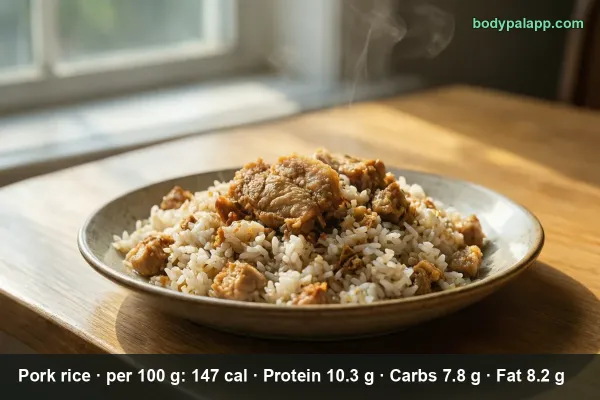
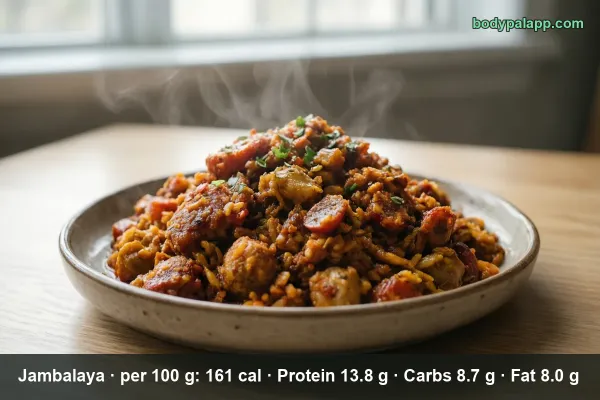
Here is how biryani with meat stacks up against chicken biryani, pork rice and jambalaya, per 100 g and per usual serving.
Verdict: For the fewest calories pick chicken biryani at 104 per 100 g, about 0.7 times this dish. For the most protein per bite, jambalaya leads with 13.8 g per 100 g at 161 calories, though its 379 mg of sodium is the highest in the group.
Most popular biryani brands in the United States
Ranked by popularity in the BodyPal database
# Productkcal / 100 g
1Saffron Road Chicken Biryani10 oz · 283 g163 kcal
2Saffron Road Chicken Biryani With Basmati Rice1 cup · 215 g130 kcal
3Tasty Bite Brown Rice Biryani4.4 oz · 125 g144 kcal
6Deep Indian Kitchen Chicken Biryani1 tray · 255 g149 kcal
Packaged biryanis use their own recipes, so label numbers vary with the meat, rice and oil in each product. Source: manufacturer labels / USDA FoodData Central.
Biryani FAQs
How many calories are in a cup of biryani?
About 284 calories in 1 cup (196 g) of biryani with meat. Per 100 g it is 145 calories.
Is biryani good for weight loss?
Biryani with meat has 145 calories, 8.5 g protein and 6.8 g fat per 100 g. The chicken version is lighter at 104 calories per 100 g.
Biryani vs chicken biryani: which has fewer calories?
Chicken biryani has 204 calories per cup versus 284 for biryani with meat. Fat is 2.4 g per 100 g for chicken and 6.8 g for meat.
How much protein is in biryani?
One cup (196 g) of biryani with meat has 16.7 g protein and 23.9 g carbs, or 8.5 g protein per 100 g.
How many calories are in chicken biryani?
A 196 g cup of chicken biryani has 204 calories, with 14 g of protein, 26.6 g of carbs and 4.7 g of fat. Per 100 g, chicken biryani comes to 104 calories.
How many calories are in a plate of biryani?
Plates vary, so count cups. One cup (196 g) of biryani with meat is 284 calories, and two cups (392 g) come to 568 calories with 33.3 g of protein.
How many calories are in 100 g of biryani?
100 g of biryani with meat has 145 calories, 8.5 g of protein, 12.2 g of carbs and 6.8 g of fat. That is 7% of the daily calorie value.
How many calories are in a full family-size biryani?
Three cups (588 g) of biryani with meat come to 853 calories, and five cups (980 g) reach 1,421 calories with 83.3 g of protein and 960 mg of sodium.