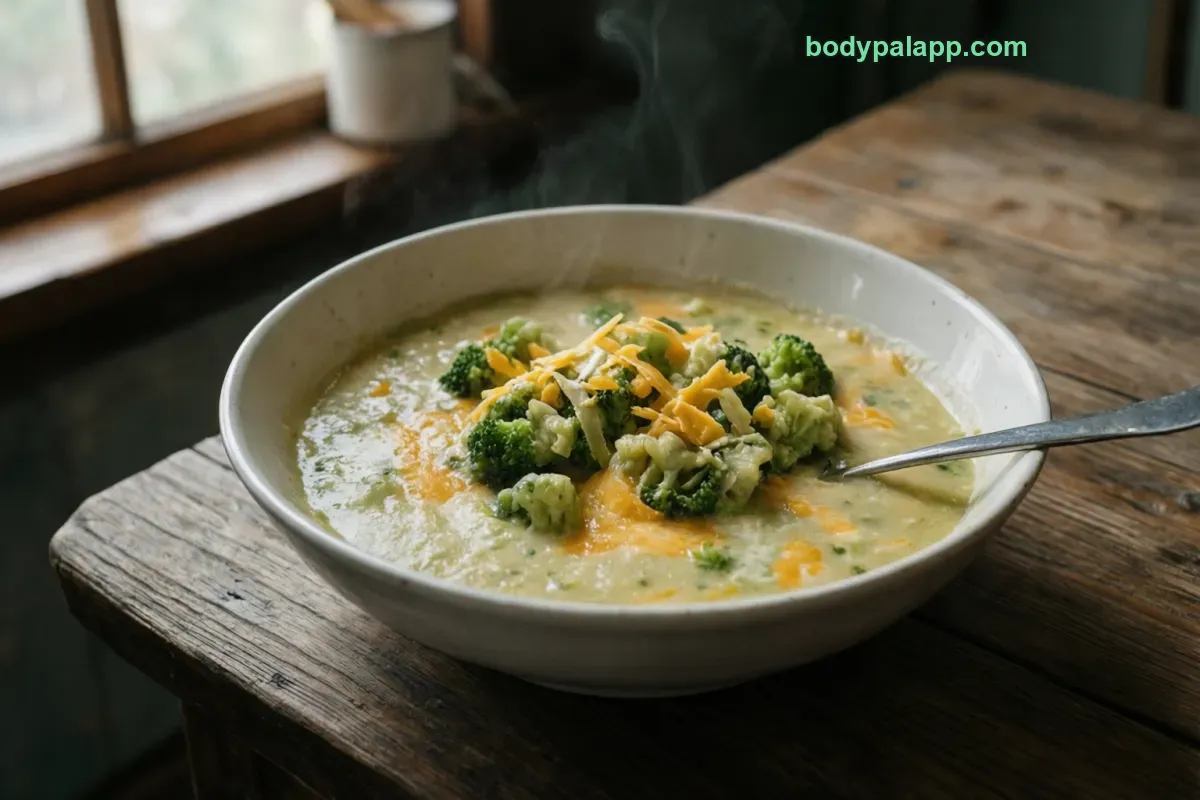
Broccoli and cheese soup calories come to 209 for a 1 cup (255 g) bowl and 82 per 100 g. The thing to notice is fat: it supplies half of all calories. And a single cup already carries 839 mg of sodium, 36% of the daily value, before any second helping.
209kcal
1 cup · 255 g, ready to eat
21%protein
10.9 gProtein
16 gCarbs
11.6 gFat
How to burn off 209 kcal
—Walking, brisk
—Jogging
—Cycling, moderate
—Swimming
Skip the math. BodyPal counts these calories from your steps and workouts automatically.
Nutrition facts
Ready to eat · per 255 g
Calories
209 kcal
Protein
10.9 g
Carbohydrate
15.5 g
Fat
11.6 g
Saturated fat
6 g
Cholesterol
31 mg
Sodium
839 mg
Potassium
411 mg
Iron
1.2 mg
Source: USDA FoodData Central
🛡️
Verified nutrition data
Numbers on this page come from USDA FoodData Central, the U.S. Department of Agriculture’s food composition database, and from manufacturer labels where a branded product is named. Last verified September 2026. How we verify our data →
Broccoli and cheese soup: calories, protein and sodium by serving
Percent of daily value uses the FDA reference of 2,000 kcal a day.
Serving
kcal
Protein
Carbs
Fat
Sodium
% DV kcal
1 cup (255 g)
209
10.9 g
15.5 g
11.6 g
839 mg
10%
Single-serve container (440 g)
361
18.7 g
26.8 g
20 g
1,448 mg
18%
100 g
82
4.3 g
6.1 g
4.5 g
329 mg
4%
3 × 1 cup (255 g)
627
32.6 g
2,517 mg
5 × 1 cup (255 g)
1,046
54.3 g
4,195 mg
A cup is 209 calories, the container is 361
The standard serving is 1 cup (255 g), which lands at 209 calories, or 10% of the daily value for calories. That is a modest number for a lunch bowl. The trouble is that few people stop at one cup of a soup this rich and creamy.
A single-serve container (440 g) holds 361 calories, 18% of the daily value, along with 20 g of fat. Second helpings move the total fast: 2 cups reach 418 calories, 3 cups hit 627, and 5 cups add up to 1,046 calories. That last figure is a big pot shared at the table, but it shows how quickly a light-looking lunch turns into a full day's worth of soup.
Measure the ladle, not the bowl. A wide soup bowl can hold well over a cup without looking full, and the count climbs by 209 calories with every extra cup. If you eat straight from the container, you are eating the 361-calorie portion, not the 209-calorie one.
Half the calories come from fat
The calorie split is 50% fat, 30% carbs and 21% protein. Per 100 g that means 4.5 g of fat, 6.1 g of carbs and 4.3 g of protein. The cheese and the dairy base do most of the work here; the broccoli adds flavor, color and some fiber, but not much energy.
Saturated fat is 2.3 g per 100 g, roughly half of the total fat. A full cup brings 11.6 g of fat in all, and the container brings 20 g. If you track saturated fat, this is the soup's real cost, more than the calorie line itself.
Protein is respectable for a soup: 10.9 g per cup, or 22% of the daily value, and 18.7 g in the container. Carbs stay moderate at 15.5 g per cup, with only 2.6 g of sugars and 3.3 g of fiber. Cholesterol is 12 mg per 100 g, a small number next to the sodium.
Sodium is the row to watch
Per 100 g the soup carries 329 mg of sodium. In a cup that becomes 839 mg, 36% of the daily value, and the single-serve container reaches 1,448 mg, or 63%. Few lunch foods take that big a bite of the day in one sitting.
Seconds push it past the line. 2 cups deliver 1,678 mg, and 3 cups reach 2,517 mg, more than the full daily value from soup alone. At 5 cups the total is 4,195 mg, which is why a pot of this soup is better as a side than as the whole dinner.
If you watch sodium, plan the rest of the day around the bowl: fresh vegetables, unsalted bread, plain grains. Light versions such as Progresso Light Broccoli Cheese Soup aim at calories, so check the sodium line on whatever can or carton you buy, and compare it with Campbell's Condensed Broccoli Cheese Soup or Heinen's before you settle on a favorite.
Turn a cup into a full meal
A cup at 209 calories with 10.9 g of protein is closer to a starter than a meal. On its own it may not keep you full until dinner, and that is when the second bowl happens.
Pair it with something lean and crunchy: a green salad, a turkey sandwich on whole-grain bread, or a plate of raw vegetables. That adds volume and fiber without adding more cheese or more sodium-heavy broth. A piece of fruit after the bowl rounds out the meal with very little effort.
The classic bread bowl is the trap. It adds calories that the soup numbers above do not include, and it invites you to finish every drop. BodyPal can log the soup from a photo, which helps when the bowl size is a guess.
How does broccoli and cheese soup compare?
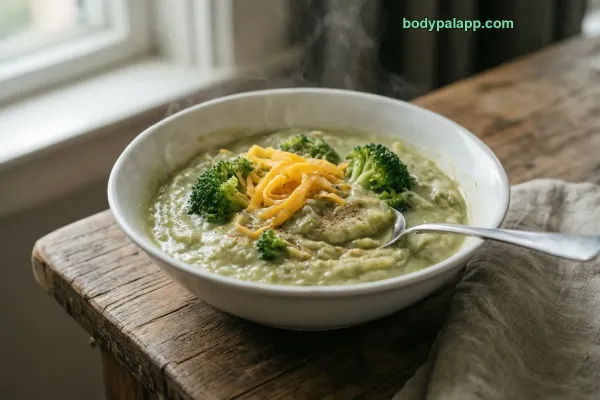
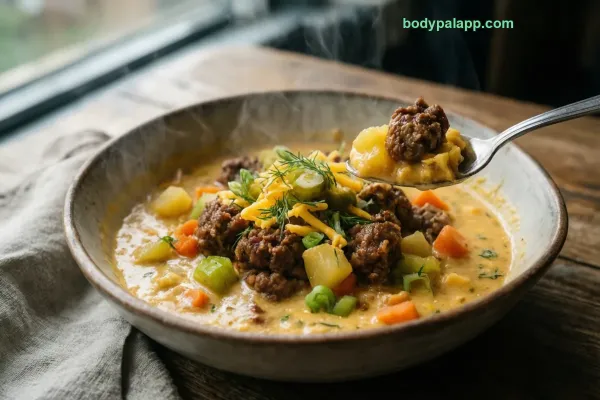
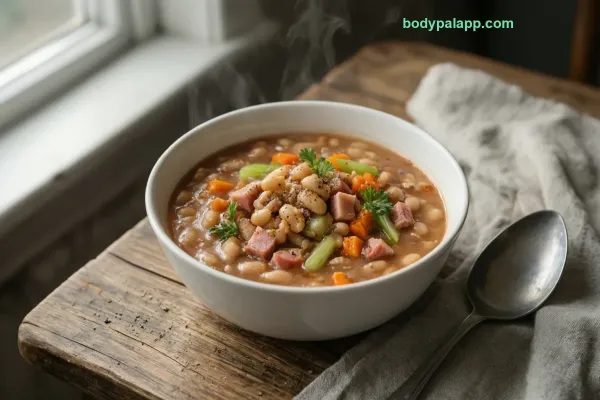
Here is broccoli and cheese soup next to broccoli soup, cheeseburger soup and ham and beans soup, per 100 g and per usual serving.
Verdict: Broccoli and cheese soup and cheeseburger soup are nearly tied at 82 and 83 calories per 100 g, so choose by taste, though broccoli and cheese brings more protein at 4.3 g versus 3.3 g. For staying full, pick ham and beans soup: it costs 231 calories per cup but gives 5.2 g of protein and 11.2 g of carbs per 100 g with less fat, at 3.5 g.
Most popular broccoli and cheese soup brands in the United States
3Progresso Broccoli Cheese Soup1 cup · 238 g71 kcal
4Jason's Deli Broccoli Cheese Soup1 cup · 245 g106 kcal
5Taste Broccoli Cheese Soup1 cup · 227 g53 kcal
6Progresso Light Broccoli Cheese Soup1 cup · 242 g50 kcal
7Heinen's Broccoli Cheese Soup1 cup · 245 g98 kcal
Condensed soups are labeled per undiluted serving, before water or milk is added, so their numbers differ from ready-to-eat soup. Source: manufacturer labels / USDA FoodData Central.
Broccoli and cheese soup FAQs
How many calories are in a cup of broccoli cheese soup?
About 209 calories per cup (255 g). A 440 g single-serve container has 361 calories.
Is broccoli cheese soup good for weight loss?
A cup has 209 calories with 11.6 g fat and 839 mg sodium. Per 100 g it is 82 calories.
Broccoli cheese soup vs broccoli soup: which has fewer calories?
They are about equal: broccoli soup lists 82 calories per 100 g, the same as broccoli cheese soup.
How much protein is in broccoli cheese soup?
A cup has 10.9 g protein, 15.5 g carbs and 11.6 g fat.
How many calories are in 100 grams of broccoli and cheese soup?
Broccoli and cheese soup has 82 calories per 100 g. That portion also gives 4.3 g of protein, 6.1 g of carbs, 4.5 g of fat and 329 mg of sodium.
How many calories are in a single-serve container of broccoli cheese soup?
A single-serve container (440 g) has 361 calories, 18% of the daily value. It also carries 20 g of fat, 18.7 g of protein and 1,448 mg of sodium, 63% of the daily value.
How many calories does cheese soup have?
Cheese-based soups land close together: broccoli and cheese soup has 82 calories per 100 g and cheeseburger soup has 83. A cup of broccoli and cheese soup comes to 209 calories.
How much sodium is in a cup of broccoli cheese soup?
A 1 cup (255 g) serving has 839 mg of sodium, 36% of the daily value. 2 cups reach 1,678 mg, so seconds add up quickly if you watch salt.
How much fat is in broccoli and cheese soup?
A cup holds 11.6 g of fat, and fat supplies 50% of the soup's calories. Per 100 g there is 4.5 g of fat, of which 2.3 g is saturated.