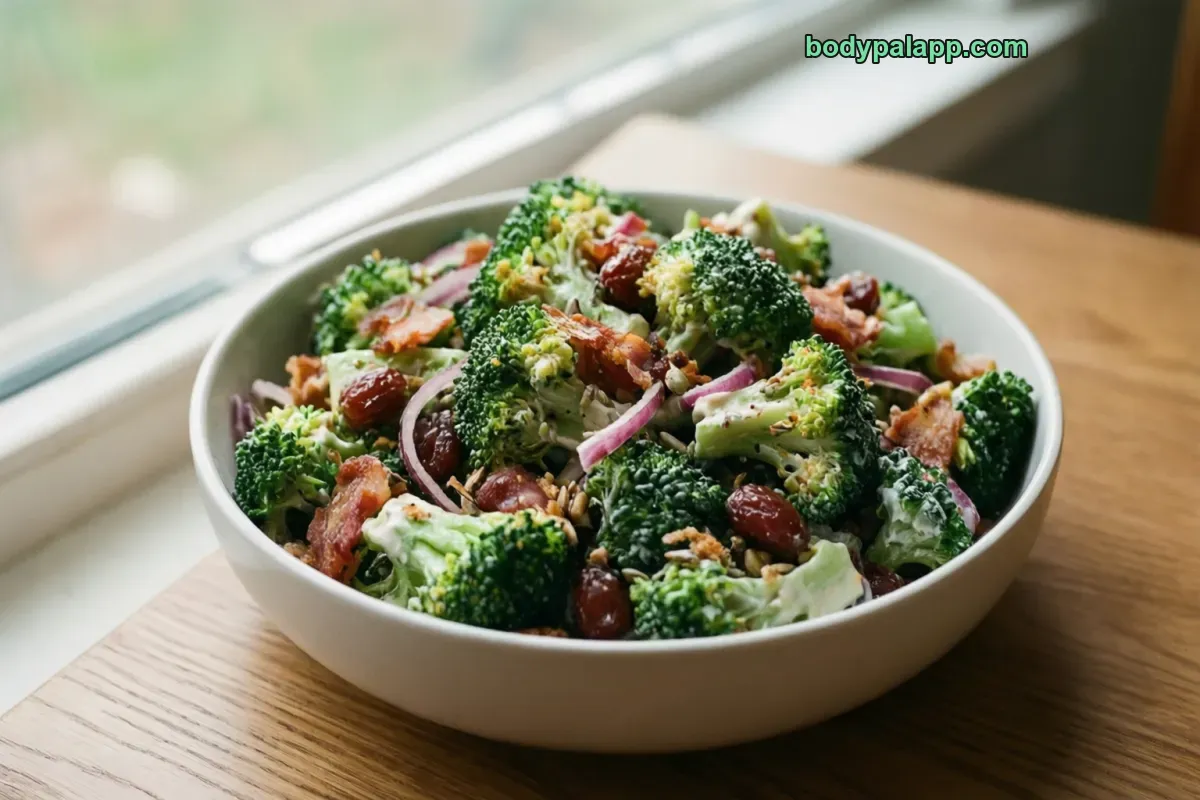
Broccoli salad calories come to 416 for one cup (154 g) and 270 per 100 g, for the classic version with cheese, bacon and dressing. The number to notice is the fat: it supplies 76% of those calories, so the dressing, not the broccoli, decides how heavy your scoop is.
416kcal
1 cup · 154 g, with cheese, bacon and dressing
9%protein
9 gProtein
16 gCarbs
35 gFat
How to burn off 416 kcal
—Walking, brisk
—Jogging
—Cycling, moderate
—Swimming
Skip the math. BodyPal counts these calories from your steps and workouts automatically.
Nutrition facts
With cheese, bacon and dressing · per 154 g
Calories
416 kcal
Protein
9 g
Carbohydrate
16 g
Fat
35 g
Saturated fat
8 g
Cholesterol
32 mg
Sodium
524 mg
Potassium
249 mg
Iron
0.6 mg
Source: USDA FoodData Central
🛡️
Verified nutrition data
Numbers on this page come from USDA FoodData Central, the U.S. Department of Agriculture’s food composition database, and from manufacturer labels where a branded product is named. Last verified September 2026. How we verify our data →
Broccoli salad: calories, protein and sodium by serving
Percent of daily value uses the FDA reference of 2,000 kcal a day.
Serving
kcal
Protein
Carbs
Fat
Sodium
% DV kcal
1 cup (154 g)
416
9 g
16 g
35.1 g
524 mg
21%
Half cup (77 g)
208
4.5 g
8 g
17.6 g
262 mg
10%
Slaw style (186 g)
229
3.7 g
19.4 g
15.1 g
549 mg
11%
100 g
270
5.8 g
10.4 g
22.8 g
340 mg
14%
3 × 1 cup (154 g)
1,247
26.9 g
1,571 mg
5 × 1 cup (154 g)
2,079
44.9 g
2,618 mg
One cup is a 416-calorie side dish
A level cup of broccoli salad weighs 154 g and lands at 416 calories. That is 21% of the daily calorie value, which is a lot for something served next to the main course. The same cup carries 35.1 g of fat and 524 mg of sodium, or 23% of the daily value for sodium.
A half cup (77 g) cuts everything in half: 208 calories, 17.6 g of fat and 262 mg of sodium. That is 10% of the daily calorie value and a far more reasonable side. If you are filling a plate at a cookout or potluck, the half cup is the portion worth aiming for, because nobody measures the second spoonful.
Seconds add up fast. Two cups (308 g) bring 832 calories and 1,047 mg of sodium. Three cups (462 g) reach 1,247 calories and 1,571 mg of sodium, close to a full meal and then some. A whole bowl of 5 cups (770 g) holds 2,079 calories, which is the number to remember before you bring one to share and then pick at it all afternoon.
Fat supplies three quarters of the calories
Per 100 g, broccoli salad has 22.8 g of fat, 10.4 g of carbs and 5.8 g of protein. In calorie terms that splits into 76% fat, 15% carbs and 9% protein. The vegetables themselves contribute little energy; the creamy dressing, cheese and bacon bits do the heavy lifting.
Saturated fat sits at 5.2 g per 100 g, which comes from the cheese and bacon. Sugar reads 6.4 g per 100 g, or 9.9 g in a cup, so the dressing is often on the sweet side. Fiber is modest for a vegetable dish: 1.6 g per 100 g and 2.5 g per cup.
Protein is a supporting player. A cup gives 9 g, which is 18% of the daily value, helpful but not enough to make the salad a filling main. Think of it as a rich, dressed side rather than a light vegetable serving, and portion it the way you would portion potato salad.
Slaw style is lighter per bite, saltier per bowl
Not every broccoli salad is built the same way. The slaw style serving (186 g) comes to 229 calories, even though it weighs more than a cup of the classic version. Fat drops to 15.1 g, carbs climb to 19.4 g and fiber rises to 3.5 g, which suggests more shredded vegetables and less creamy binder.
The catch is sodium and sugar. That slaw style serving has 549 mg of sodium, 24% of the daily value, slightly more than the 524 mg in a classic cup. Sugars reach 11.8 g, the highest on the page, and protein falls to 3.7 g.
So the lighter-looking option is lighter in calories only. If calories are your main concern, the slaw style wins clearly. If you watch sodium or added sweetness, neither version is a free pass, and the portion size matters more than the recipe.
Pair it with lean protein, not more mayo
Because broccoli salad is mostly fat and short on protein, it pairs best with a main that fills the gap: grilled chicken, fish, or beans. A half cup at 208 calories next to a lean entree makes a balanced plate without crowding out the rest of the day.
Skip doubling up on other creamy sides like potato or macaroni salad at the same meal. Each one leans on dressing for its calories, and two together turn a side into the biggest part of the plate. If sodium is a concern, keep the rest of the meal simple, since one cup already uses 23% of the daily value.
Making it at home gives you the most control. Lighter dressing, less cheese and fewer bacon bits pull the fat share down fast. Whatever version you eat, BodyPal can log it from a photo so the portion you actually took is the one that counts.
How does broccoli salad compare?
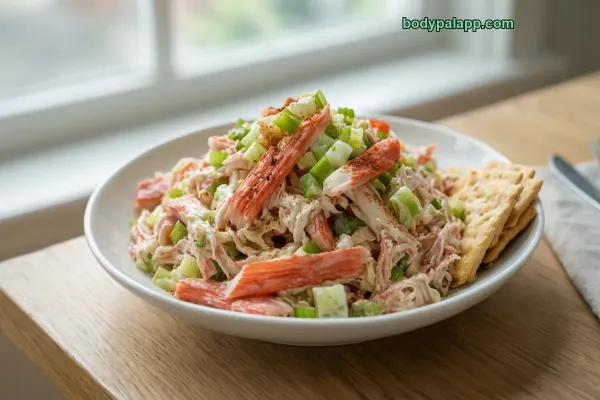
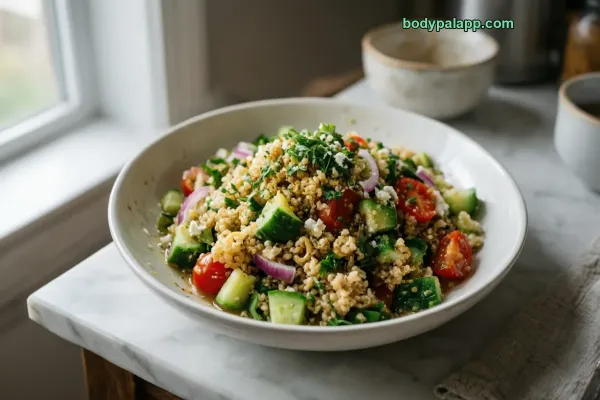
Here is how broccoli salad stacks up against crab salad, quinoa salad and chef salad, per 100 g and per usual serving.
Verdict: For the fewest calories pick chef salad at 71 per 100 g, or quinoa salad at 146, both far below the 270 in broccoli salad. If you want protein from your salad, crab salad gives 9.4 g per 100 g, so keep broccoli salad as a half-cup side rather than the main bowl.
Most popular broccoli salad brands in the United States
Ranked by popularity in the BodyPal database
# Productkcal / 100 g
1Papa John's Broccoli Salad2/3 cup · 140 g243 kcal
2Zina's Pasta Broccoli Salad4 oz · 113 g221 kcal
3Papa John's California Broccoli Salad2/3 cup · 100 g200 kcal
Deli tubs carry less dressing, cheese and bacon per 100 g, so they read lower than the classic recipe above. Source: manufacturer labels / USDA FoodData Central.
Broccoli salad FAQs
How many calories are in a cup of broccoli salad?
One cup (154 g) is about 416 calories, with 35.1 g fat and 9.0 g protein.
Is broccoli salad good for weight loss?
It is heavy for a vegetable dish at 270 calories per 100 g, because 22.8 g of that 100 g is fat from the mayonnaise dressing, cheese and bacon. A half cup (77 g) comes to 208 calories.
Broccoli salad vs coleslaw: which is lighter?
Coleslaw has 159 calories per 100 g against 270 for broccoli salad with cheese, bacon and dressing. A lighter broccoli slaw salad sits at 123 calories per 100 g.
How much fat is in broccoli salad?
There are 22.8 g of fat per 100 g, so a one cup serving (154 g) has about 35.1 g, of which 8.0 g is saturated.
Is broccoli salad fattening?
It is calorie-dense for a vegetable dish: 270 calories per 100 g, with 76% of them from fat. A cup has 416 calories and 35.1 g of fat, so portion size decides whether it fits your day.
What does broccoli salad nutrition look like per cup?
One cup (154 g) has 416 calories, 9 g of protein, 16 g of carbs, 35.1 g of fat, 2.5 g of fiber and 9.9 g of sugars, plus 524 mg of sodium, which is 23% of the daily value.
How many calories are in half a cup of broccoli salad?
Half a cup (77 g) has 208 calories, 10% of the daily value. It also carries 17.6 g of fat and 262 mg of sodium, which makes it a sensible side portion.
How many calories are in 100 g of broccoli salad?
100 g of broccoli salad has 270 calories, with 22.8 g of fat, 10.4 g of carbs and 5.8 g of protein. That is 14% of the daily calorie value.
How much sodium is in broccoli salad?
A cup has 524 mg of sodium, 23% of the daily value, and 100 g has 340 mg. The slaw style serving (186 g) is slightly higher at 549 mg.