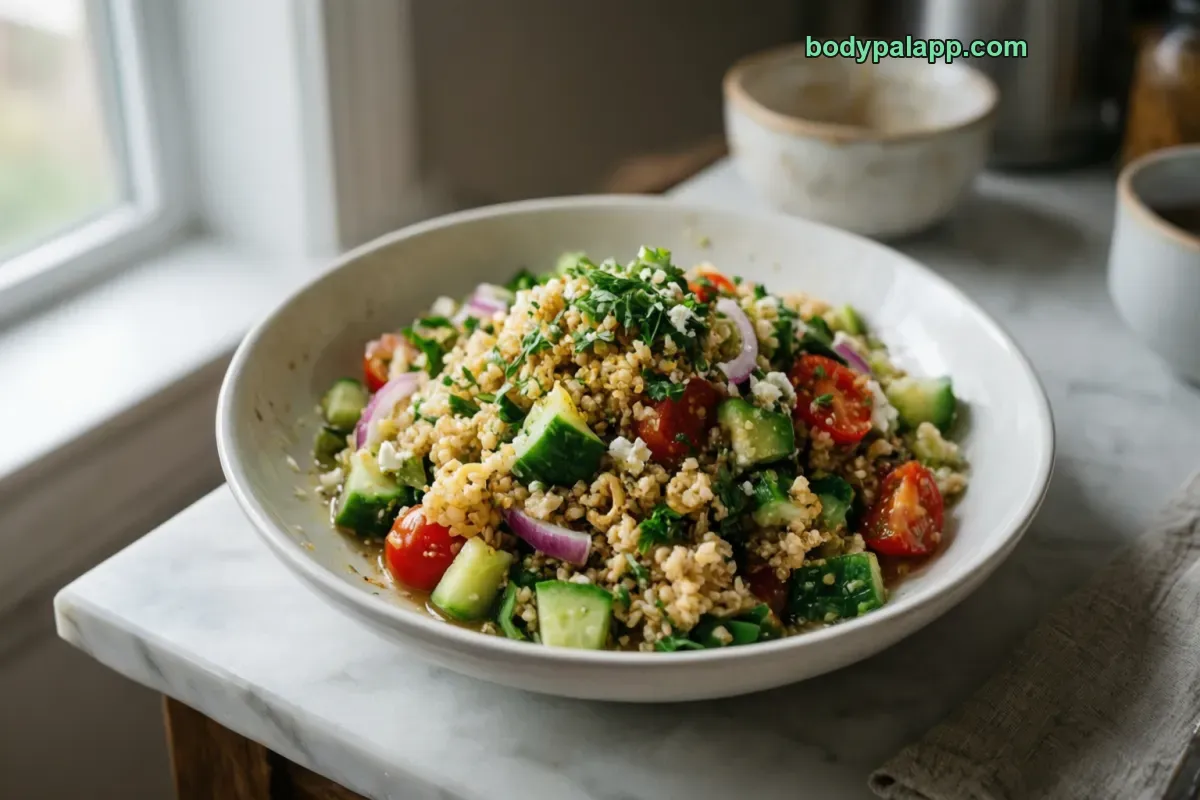
Quinoa salad calories come to 248 for 1 cup (170 g) and 146 per 100 g, based on cooked quinoa with oil added. The thing to notice is the oil: skip the dressing and the same 170 g drops to 204 calories, while fat falls from 9.2 g to 3.2 g. Carbs still supply most of the energy.
248kcal
1 cup · 170 g, cooked quinoa, oil added
11%protein
7.1 gProtein
34 gCarbs
9.2 gFat
How to burn off 248 kcal
—Walking, brisk
—Jogging
—Cycling, moderate
—Swimming
Skip the math. BodyPal counts these calories from your steps and workouts automatically.
Nutrition facts
Cooked quinoa, oil added · per 170 g
Calories
248 kcal
Protein
7.1 g
Carbohydrate
34 g
Fat
9.2 g
Saturated fat
3 g
Cholesterol
12 mg
Sodium
313 mg
Potassium
279 mg
Iron
2.4 mg
Source: USDA FoodData Central
🛡️
Verified nutrition data
Numbers on this page come from USDA FoodData Central, the U.S. Department of Agriculture’s food composition database, and from manufacturer labels where a branded product is named. Last verified September 2026. How we verify our data →
Quinoa salad: calories, protein and sodium by serving
Percent of daily value uses the FDA reference of 2,000 kcal a day.
Serving
kcal
Protein
Carbs
Fat
Sodium
% DV kcal
1 cup (170 g)
248
7.1 g
34.4 g
9.2 g
313 mg
12%
No dressing (170 g)
204
7.4 g
36.1 g
3.2 g
277 mg
10%
100 g
146
4.2 g
20.2 g
5.4 g
184 mg
7%
3 × 1 cup (170 g)
745
21.4 g
938 mg
5 × 1 cup (170 g)
1,241
35.7 g
1,564 mg
One cup is 248 calories, a full bowl is much more
The reference portion here is 1 cup (170 g). That serving carries 248 calories, 7.1 g of protein and 313 mg of sodium, which works out to 12% of the daily value for calories and 14% for sodium. As a side dish next to a main, that is a modest, predictable number.
The trouble is that quinoa salad rarely gets served by the cup. A deli container or a meal-prep bowl often holds two cups (340 g), and that is 496 calories with 626 mg of sodium. Three cups (510 g) reach 745 calories and 938 mg of sodium. A large party bowl of five cups (850 g) adds up to 1,241 calories and 1,564 mg of sodium, so a shared dish goes fast if you go back for seconds.
Because the salad is dense and grainy, it looks smaller on the plate than it is. If you track calories, weigh it once or use a real measuring cup until you can judge a 170 g scoop by eye. Protein climbs along with the portion, from 7.1 g in one cup to 21.4 g in three, but calories rise much faster than protein does.
Carbs supply more than half the calories
Quinoa salad is a carb dish first. Carbohydrates provide 55% of the calories, fat provides 33% and protein only 11%. Per 100 g that means 20.2 g of carbs, 5.4 g of fat and 4.2 g of protein. The fat share is high for a grain salad, and it comes mostly from the oil, not the quinoa.
The carbs are the slow kind. One cup has 34.4 g of carbs with 4.6 g of fiber and just 1.4 g of sugars, so very little of it is sugar. Per 100 g, fiber is 2.7 g against 0.8 g of sugars. That fiber, plus the chewy texture, is a big part of why a cup of quinoa salad feels more filling than a cup of plain pasta salad looks on paper.
Protein is respectable for a grain but not enough to carry a meal. At 7.1 g per cup it covers 14% of the daily value. Quinoa gets a reputation as a protein food, yet in a dressed salad it is a carb-and-fat base with some protein on the side. Treat it as the starch on your plate, not the protein.
The dressing is the swing factor
The main figures on this page use the USDA row "Quinoa, fat added", meaning cooked quinoa with oil mixed in. The same 170 g with no dressing comes to 204 calories instead of 248. Fat drops from 9.2 g to 3.2 g, while protein barely moves, at 7.4 g versus 7.1 g.
Sodium shifts a little too: 277 mg without dressing against 313 mg with it, or 12% versus 14% of the daily value. Carbs stay close, at 36.1 g plain and 34.4 g dressed. In other words, almost the whole calorie gap is oil. Saturated fat in the dressed version is 1.8 g per 100 g, which is moderate.
Homemade versions vary far more than these two rows suggest. A heavy vinaigrette, feta, nuts or avocado all push the number up, while lemon juice, herbs and chopped vegetables add volume for very little. If your salad looks glossy and leaves oil at the bottom of the bowl, assume you are at or above the 248 figure, not below it.
Add protein to turn a side into a meal
With 11% of its calories from protein, quinoa salad works best next to something leaner and more protein-dense. Grilled chicken, fish, eggs, tofu or beans fill the gap that the salad leaves. That combination gives you the fiber and carbs from the quinoa and the staying power from the protein, without simply eating a second cup.
The rest of the label is calm. Per 100 g there are 184 mg of sodium, 7 mg of cholesterol and 164 mg of potassium. Sodium is the only row worth a glance, and mostly when portions grow: two cups already carry 626 mg. If you watch sodium, go easy on salty add-ins like olives, feta or soy-based dressings.
Quinoa salad also keeps well, which makes it a common meal-prep base. Portion it into containers right after mixing so each one holds a known amount, rather than eating from a big shared tub. If you want to log it without weighing, BodyPal can log the food from a photo.
How does quinoa salad compare?
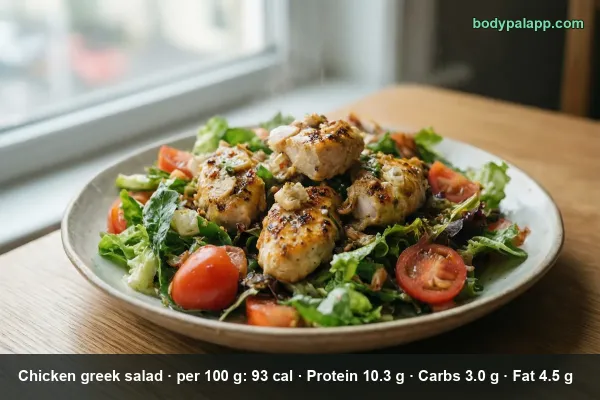
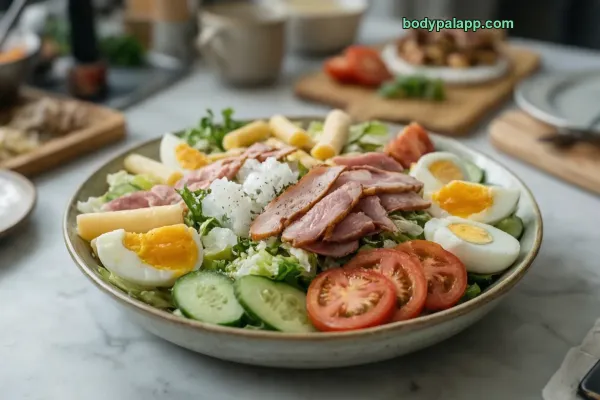
Here is how quinoa salad stacks up against chicken Greek salad, broccoli salad and chef salad, per 100 g and per usual serving.
Verdict: For the fewest calories pick chef salad at 71 per 100 g, or chicken Greek salad at 93 per 100 g with 10.3 g of protein, far more than quinoa salad's 4.2 g. Quinoa salad at 146 per 100 g still beats broccoli salad, which reaches 416 calories per cup on 22.8 g of fat per 100 g.
Most popular quinoa salad brands in the United States
Ranked by popularity in the BodyPal database
# Productkcal / 100 g
1Roland White Quinoa1/4 cup · 45 g356 kcal
2Roland Pre-Washed White Quinoa1/4 cup · 45 g378 kcal
3Yoga Organics Organic Light Brown Rice Plus Quinoa1/4 cup · 45 g378 kcal
4Near East Original Quinoa & Brown Rice Blend1/3 cup · 56 g357 kcal
5Near East Zesty Lemon Quinoa & Brown Rice Blend2.5 oz · 70 g357 kcal
6Roland Black Bean Quinoa1/4 cup dry · 45 g356 kcal
7Wegmans Organic White Quinoa1/4 cup dry · 45 g378 kcal
Packaged quinoa is labeled per dry weight, before it absorbs water, so those numbers read much higher than the cooked salad above. Source: manufacturer labels / USDA FoodData Central.
Quinoa salad FAQs
How many calories are in a cup of quinoa salad?
About 248 calories in a 1 cup serving (170 g) dressed with oil. Made with no added fat it is 204 calories per cup.
Is quinoa salad good for weight loss?
One cup has 248 calories, 7.1 g protein, 9.2 g fat and 4.6 g fiber. Skipping the oil brings it to 204 calories with 3.2 g fat.
Quinoa salad vs chicken Greek salad: which has fewer calories?
Chicken Greek salad has 93 calories per 100 g, against 146 calories per 100 g for quinoa salad.
How much protein is in quinoa salad?
About 7.1 g of protein per cup (170 g), or 4.2 g per 100 g, alongside 34.4 g of carbs per cup.
How many calories are in 100 g of quinoa salad?
There are 146 calories in 100 g of quinoa salad made with oil. That portion also has 20.2 g of carbs, 5.4 g of fat, 4.2 g of protein and 184 mg of sodium.
What are the nutrition facts for a cup of quinoa salad?
One cup (170 g) has 248 calories, 34.4 g of carbs, 9.2 g of fat, 7.1 g of protein, 4.6 g of fiber, 1.4 g of sugars and 313 mg of sodium. That is 12% of the daily value for calories.
How many calories are in quinoa salad without dressing?
Without dressing, 170 g of quinoa salad has 204 calories, compared with 248 when oil is added. Fat drops from 9.2 g to 3.2 g, while protein stays close at 7.4 g.
Is quinoa salad high in fat?
Fat supplies 33% of the calories in quinoa salad, with 5.4 g per 100 g and 9.2 g per cup. Most of it comes from the oil, since the no-dressing version has only 3.2 g per 170 g.