
How many calories are in hibachi chicken?
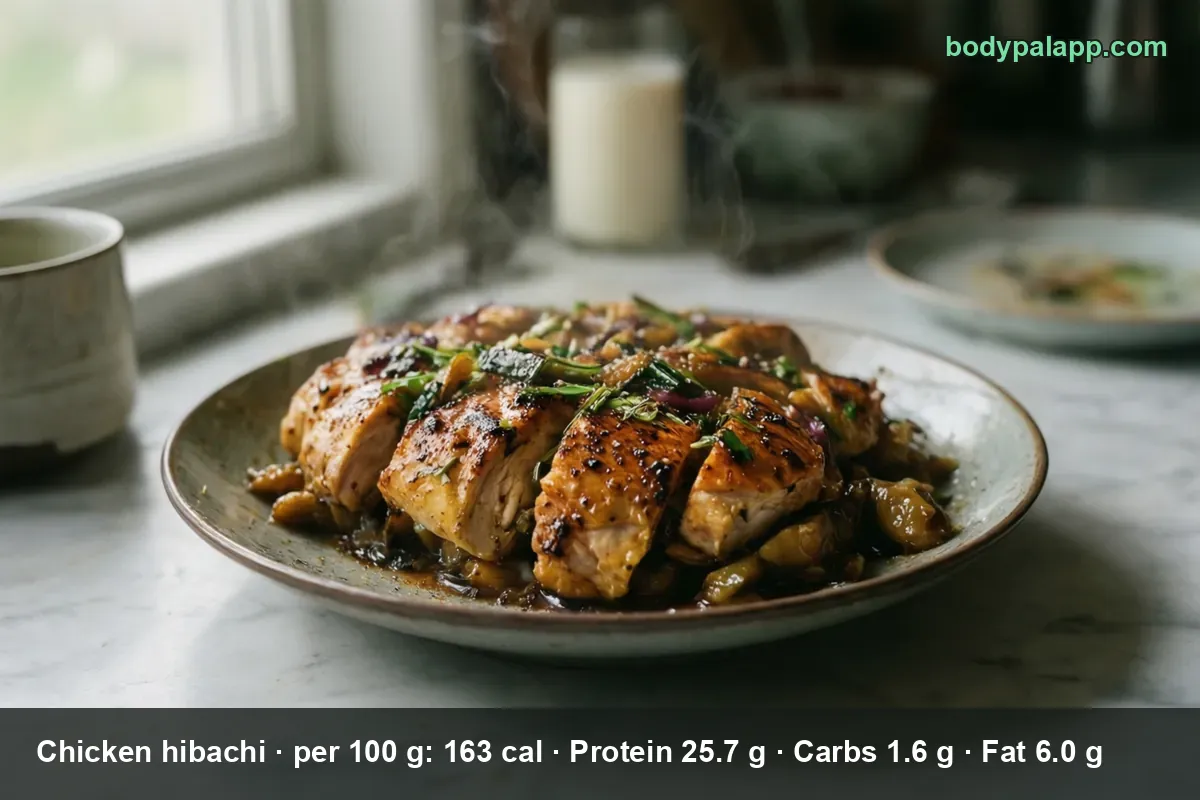
A 1-cup serving of hibachi chicken weighs 244 g and carries 398 calories. Per 100 g the glazed chicken runs 163 calories, with 25.73 g of protein and only 1.62 g of carbohydrate. That is the chicken and its sauce alone, straight off the griddle, before any rice or noodles land next to it.
On this page
- Hibachi chicken quick facts
- US servings, from one ounce to a full cup
- With rice, in a bowl, or in a sub
- Sodium is the row to watch, not fat
- How does hibachi chicken compare?
- Most popular chicken hibachi brands
- FAQ
Hibachi chicken quick facts
USDA does not publish a food called "hibachi." What a US steakhouse serves under that name — chicken seared on a flat-top and finished in a soy-and-sugar glaze — is catalogued as FNDDS 2706433, "Chicken or turkey with teriyaki", from the 2021–2023 survey release. That record is meat plus sauce with no side dish, which is exactly what sits on the plate above.
The other USDA matches are a different food: frozen dinners built around rice, or a sandwich built around bread. Five rows come back for teriyaki-style chicken, but they collapse into only three distinct nutrient profiles, because two pairs are duplicates of each other. Those all get their own section further down rather than being blended into one average.
| Nutrient | Per 100 g | Per 1 cup (244 g) | % Daily Value |
|---|---|---|---|
| Calories | 163 | 398 | — |
| Total fat | 5.96 g | 14.5 g | 19% |
| Saturated fat | 1.48 g | 3.6 g | 18% |
| Carbohydrate | 1.62 g | 4.0 g | 1% |
| Dietary fiber | 0 g | 0 g | 0% |
| Total sugars | 1.47 g | 3.6 g | — |
| Protein | 25.73 g | 62.8 g | 126% |
| Sodium | 723 mg | 1764 mg | 77% |
% Daily Value is based on a 2,000-calorie diet.
Verified nutrition data
Numbers on this page come from USDA FoodData Central, the U.S. Department of Agriculture’s food composition database, and from manufacturer labels where a branded product is named. Last verified September 2026. How we verify our data →
Two label lines are missing on purpose. USDA does not publish added sugars or trans fat for mixed dishes in this FNDDS release, so guessing how much of the 3.6 g of total sugars came from the sauce bottle would be invention, not data. Cholesterol and potassium are published: 105 mg and 285 mg per 100 g, which works out to 256 mg of cholesterol (85% DV) and 695 mg of potassium (15% DV) in a cup.
US servings, from one ounce to a full cup
| Serving | Weight | Calories |
|---|---|---|
| 1 oz | 28.4 g | 46 kcal |
| 1 chicken thigh with sauce | 76 g | 124 kcal |
| 4 oz | 113 g | 184 kcal |
| 1/2 chicken breast with sauce | 128 g | 209 kcal |
| 1 chicken leg with sauce | 145 g | 236 kcal |
| 1 cup, chopped | 244 g | 398 kcal |
| Per 100 g | 100 g | 163 kcal |
The cup, the half breast, the leg and the thigh are all USDA household measures for this record. The 1 oz and 4 oz lines are our own arithmetic from the USDA 100 g figure, not USDA servings — useful, because a hibachi plate is usually described in ounces of chicken rather than cups.
That difference matters more than it looks. A cup of chopped, glazed chicken is 244 g because the pieces pack down against each other, so it lands at 398 calories, nearly twice the 209 in a half breast with sauce. If you log "one cup" when the cook actually slid half a breast onto your plate, you have added around 189 calories that were never there. Weigh it, or count it in ounces, and the gap closes.
With rice, in a bowl, or in a sub
| Version | Per 100 g | Typical serving | Calories |
|---|---|---|---|
| Hibachi chicken, glazed, no sides | 163 kcal | 1 cup (244 g) | 398 kcal |
| Chicken with rice and vegetables, frozen meal | 126 kcal | 1 meal (312 g) | 393 kcal |
| Chicken rice bowl, frozen entree | 126 kcal | 1 bowl (340 g) | 428 kcal |
| Chicken teriyaki sub, 6-inch, white bread | 155 kcal | 1 sub (228 g) | 353 kcal |
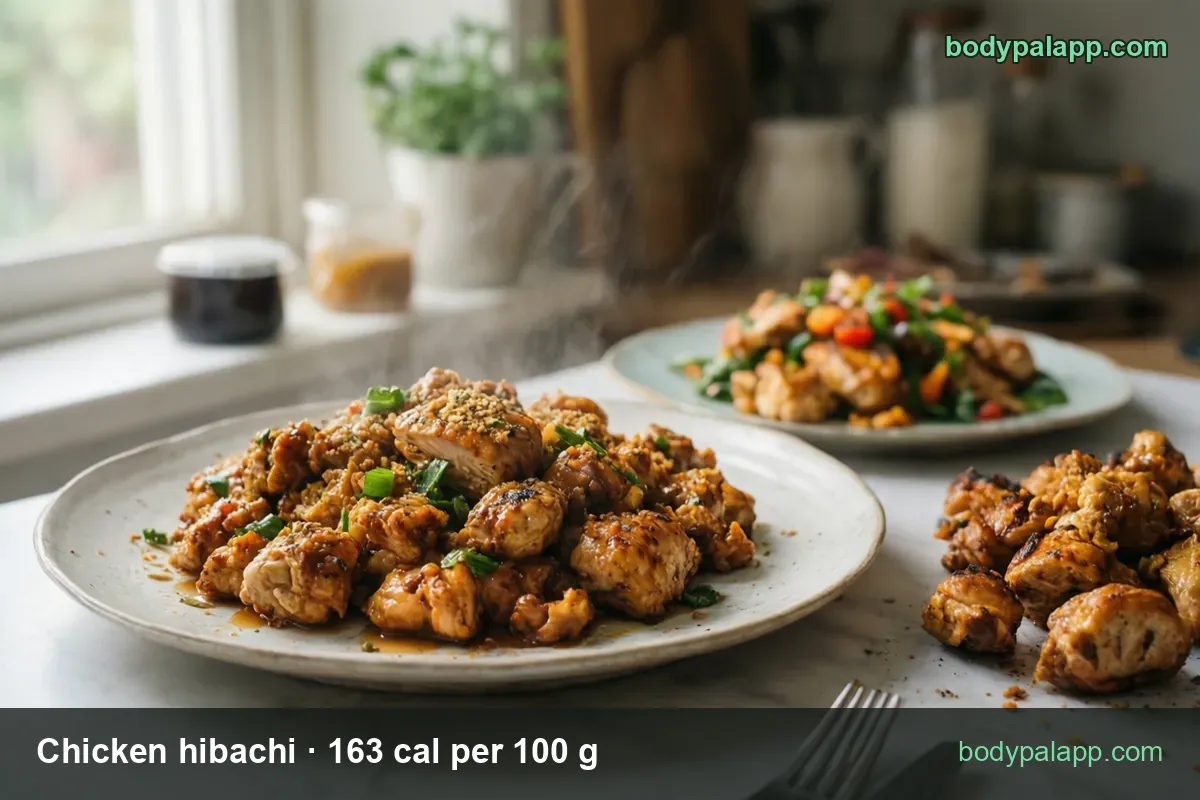
Here is the counter-intuitive part. Adding rice lowers the calories per 100 g, from 163 down to 126, because cooked rice is mostly water and dilutes the dense glazed meat. It raises the total on the plate anyway, because the plate gets heavier: a whole 312 g frozen dinner is 393 calories, five fewer than a cup of chicken by itself weighing 68 g less.
The trade is protein. The glazed chicken alone gives 62.8 g of protein in that cup; the 312 g frozen meal gives about 17.6 g, and the 340 g rice bowl about 19.2 g. The 6-inch teriyaki sub sits in between at roughly 24.9 g, with the bread supplying most of its 22.54 g of carbohydrate per 100 g.
Packaged versions land close to the survey record. USDA's Branded file lists Yangs BBQ Chicken Teriyaki at 167 calories per 100 g, or 251 calories for its 1-cup (150 g) label serving, and Schnucks Chicken Teriyaki at 154 calories per 100 g — the Schnucks label serving is corrupted in the database, so no per-serving figure is quoted for it here.
Sodium is the row to watch, not fat
Most people brace for the oil on the griddle. The number that actually moves is salt. A cup of hibachi chicken delivers 1,764 mg of sodium — 77% of the FDA Daily Value of 2,300 mg — against 19% DV for total fat. The sodium share is four times the fat share, and it comes from the soy-based glaze, not the meat.
In kitchen terms, that is about three-quarters of a teaspoon of table salt in one cup of chicken. The CDC notes that most Americans already exceed the daily limit before dinner, so if you are watching sodium, ask for the sauce on the side and spoon it on yourself. The chicken keeps its calories; the glaze is where the salt lives.
The upside is on the protein line. That same cup carries 62.8 g of protein, 126% of the 50 g Daily Value, which makes it one of the densest protein rows in the USDA mixed-dish file. MyPlate puts most adults near 5 to 6.5 ounce-equivalents of protein foods a day, and a single hibachi portion covers a large share of that in one sitting.
How does hibachi chicken compare?
| Dish | Per 100 g | US serving | Calories |
|---|---|---|---|
| Hibachi chicken, glazed | 163 kcal | 1 cup, 244 g | 398 kcal |
| Teriyaki chicken with rice and vegetable, frozen meal | 126 kcal | 1 meal, 312 g | 393 kcal |
| Rice bowl with chicken, frozen entree | 126 kcal | 1 bowl, 340 g | 428 kcal |
| Sweet onion chicken teriyaki sub, 6-inch | 155 kcal | 1 sub, 228 g | 353 kcal |
Our take: for weight loss, the plain glazed chicken wins, and it is not close. It has the lowest carbohydrate of the four by a wide margin — 1.62 g per 100 g against 22.46, 22.46 and 22.54 — and the highest protein per 100 g at 25.73 g, so it fills you up for the fewest calories per gram of satiety. If you want the cheapest calorie total on the list, the 6-inch sub at 353 is technically lowest, but it buys that with bread rather than chicken. Order the hibachi chicken, take half the rice, and keep the sauce on the side.
Most popular chicken hibachi brands in the United States
Ranked by how widely each product appears among foods sold in the United States, from the BodyPal food database of over 3.3 million products. Calories are the figures printed on each Nutrition Facts label, checked against USDA FoodData Central.
| Product | Calories (per 100 g) |
|---|---|
| Yangs BBQ Chicken Teriyaki | 167 cal |
| Schnucks Chicken Teriyaki | 154 cal |
Brand popularity: BodyPal food database. Nutrition: manufacturer labels / USDA FoodData Central.
Hibachi chicken FAQs
How many calories are in hibachi chicken?
398 calories in a 1-cup (244 g) serving of glazed hibachi chicken, which is 163 calories per 100 g. That figure covers the chicken and its sauce only, with no rice or noodles. A half chicken breast with sauce, 128 g, is 209 calories.
How much protein is in hibachi chicken?
62.8 g of protein in a 1-cup (244 g) serving, or 25.73 g per 100 g. That is 126% of the 50 g Daily Value in a single portion, and the highest protein density of any teriyaki-style chicken record USDA publishes. A half breast with sauce still delivers about 32.9 g.
Is hibachi chicken high in sodium?
Yes: 1,764 mg of sodium in a 1-cup serving, which is 77% of the 2,300 mg Daily Value, or roughly three-quarters of a teaspoon of table salt. Per 100 g it is 723 mg. Nearly all of it comes from the soy-based glaze, so sauce on the side cuts it sharply.
How many calories in 4 oz of hibachi chicken?
About 184 calories in 4 oz (113 g), with roughly 29 g of protein. That is our own arithmetic from the USDA 100 g figure of 163 calories, not a USDA serving size. Four ounces is close to what a steakhouse plates as a single chicken portion before the rice arrives.
How many carbs are in hibachi chicken?
Only 4.0 g of carbohydrate in a 1-cup (244 g) serving, or 1.62 g per 100 g — just 1% of the Daily Value. Total sugars are 3.6 g per cup, essentially all of the carbohydrate, since the glaze is sweetened. USDA does not publish added sugars for this mixed dish.
Is hibachi chicken healthier than teriyaki chicken?
At 163 calories per 100 g they are the same food in USDA's database. There is no record named "hibachi," so the numbers here come from the entry "Chicken or turkey with teriyaki." Any real difference is the cook's hand: extra butter or oil on the griddle raises calories above the published figure.
How many calories in a hibachi chicken dinner with rice?
393 calories for a 312 g chicken, rice and vegetable meal, and 428 calories for a 340 g chicken rice bowl. Both run 126 calories per 100 g, lower than the chicken alone, because rice is mostly water. The plate is heavier, so the total still climbs.
Is hibachi chicken good for weight loss?
It is a strong choice at 163 calories per 100 g with 25.73 g of protein and 1.62 g of carbohydrate. A half breast with sauce, 209 calories, fits inside most lunch budgets. The catch is portion creep: a packed cup nearly doubles it to 398, and sodium reaches 77% of the Daily Value.
Similar foods
- Chicken Potsticker — 46 cal per potsticker
- Orange Rice — 340 cal per serving
- Tofu Pad Thai — 330 cal per cup
- Tofu Scramble — 421 cal per tray
- Beef And Broccoli — 347 cal per cup
- Shrimp Fried Rice — 329 cal per cup
Count it without the math
Point the camera at the plate and BodyPal counts the hibachi chicken for you, glaze and all.


How long does it take to burn off 398 kcal of hibachi chicken?
A 1-cup (244 g) serving is 398 kcal. Enter your weight and the amount you ate to see how long it takes you to burn that off:
lb
| Activity | Time to burn 398 kcal |
|---|---|
| Walking, brisk | 1 hr 20 min |
| Cycling, moderate | 50 min |
| Swimming, moderate | 57 min |
| Jogging | 47 min |
| Weight training, moderate | 1 hr 28 min |
Times are for a 155 lb adult at a steady pace; change the weight to see yours. The amount is set to the portion in the text (244 g); change it to what you actually ate. BodyPal works this out from your steps automatically.
One food is easy to picture; a whole day is harder. See how many calories you need a day and what a deficit actually looks like.