
How many calories are in chicken katsu?
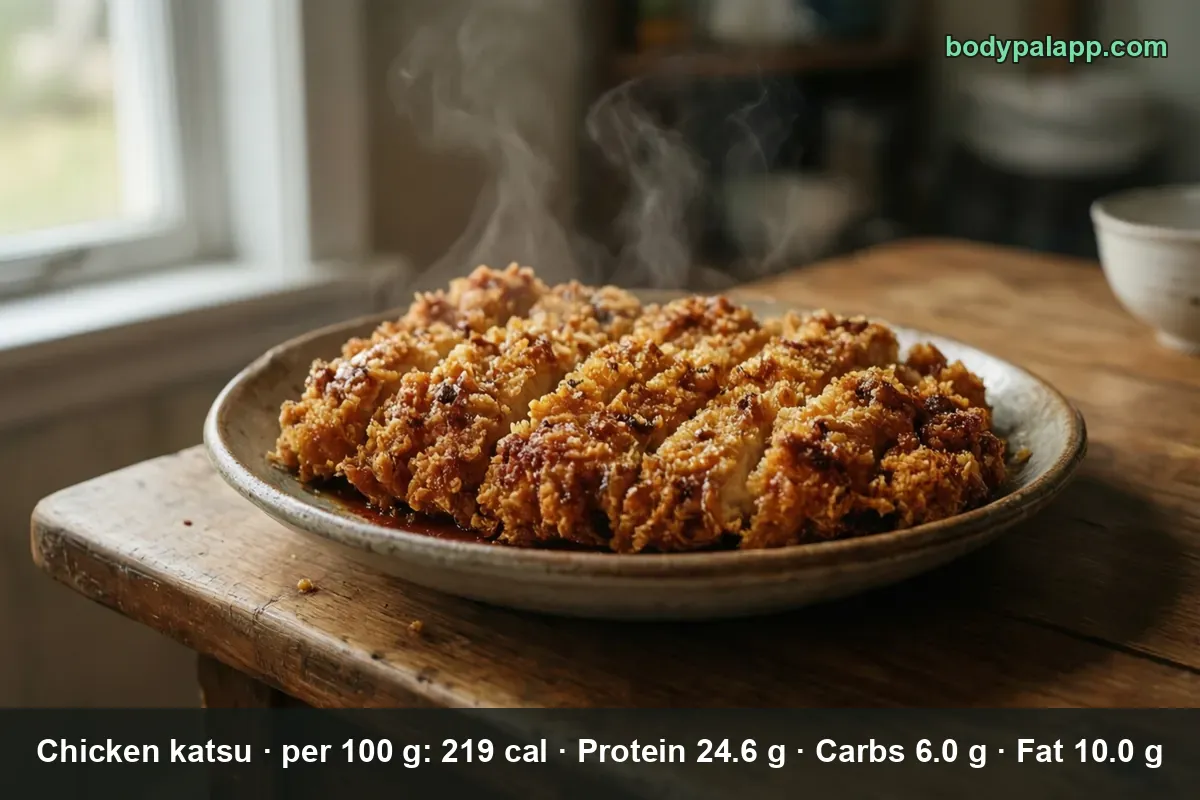
One medium chicken katsu cutlet weighs 165 g and carries 361 calories. Per 100 g the fried, breaded, skinless breast runs 219 calories, with 40.5 g of protein in that cutlet. Rice, cabbage and tonkatsu sauce are all extra — this number is the crumbed chicken on its own, straight from the fryer.
On this page
- Chicken katsu quick facts
- US servings from one ounce to a whole cutlet
- Katsu variants and what each one costs
- Protein is the headline and sodium is the catch
- How does chicken katsu compare?
- Most popular chicken katsu brands
- FAQ
Chicken katsu quick facts
USDA does not publish a record with the word katsu on it. The match that describes the food exactly is FNDDS 2705975, "Chicken breast, fried, coated, prepared skinless, coating eaten, from raw" — a skinless breast, breaded, fried from raw, with the crust eaten. That is katsu in four clauses. The neighboring FNDDS rows read "skin / coating eaten," and the skin is the difference: katsu is cut from a skinless breast, so those rows carry fat that never reaches your plate.
Everything below is the cutlet alone. Sauce, rice and shredded cabbage are not in it.
| Nutrient | Per 100 g | Per 1 medium cutlet (165 g) | % Daily Value |
|---|---|---|---|
| Calories | 219 | 361 | — |
| Total fat | 9.99 g | 16.5 g | 21% |
| Saturated fat | 1.576 g | 2.6 g | 13% |
| Carbohydrate | 6.01 g | 9.9 g | 4% |
| Dietary fiber | 0.2 g | 0.3 g | 1% |
| Total sugars | 0.1 g | 0.2 g | — |
| Protein | 24.56 g | 40.5 g | 81% |
| Sodium | 318 mg | 525 mg | 23% |
% Daily Value is based on a 2,000-calorie diet.
Verified nutrition data
Numbers on this page come from USDA FoodData Central, the U.S. Department of Agriculture’s food composition database, and from manufacturer labels where a branded product is named. Last verified September 2026. How we verify our data →
There is no added-sugars row and no trans-fat row here, because FNDDS does not publish either value for this home-prepared code. Two rows that do exist are worth pulling out of the fine print: cholesterol is 132 mg per cutlet, 44% of the Daily Value, and potassium is 482 mg, about 10%. The cholesterol figure comes from the breast and the egg wash, not the panko.
US servings from one ounce to a whole cutlet
| Serving | Weight | Calories |
|---|---|---|
| 1 oz, cooked | 28.4 g | 62 kcal |
| 1 large or thick slice | 85 g | 186 kcal |
| 1 cup, cooked, diced or sliced | 135 g | 296 kcal |
| 1 medium cutlet | 165 g | 361 kcal |
| 1 large cutlet | 185 g | 405 kcal |
| Per 100 g | 100 g | 219 kcal |
Every weight in that table is a USDA household measure for this record, which is unusually generous — most fried foods only give you the 100 g line.
The cup is the trap. Katsu arrives sliced into strips, so "1 cup" feels like the portion you were served, but a packed cup of sliced cutlet is 135 g and 296 calories — less than the cutlet it came from. If you sliced a whole medium breast and fanned it across the plate, you logged about a cup and a quarter, not a cup.
Weigh it after frying, not before. The 165 g is the finished cutlet: a raw breast loses water in the pan while it picks up coating and oil, so a raw weight and a cooked weight are two different numbers and USDA is quoting the second one. If you only have the raw weight, cook it first and put it back on the scale.
Katsu variants and what each one costs
| Version | Per 100 g | Typical piece | Calories |
|---|---|---|---|
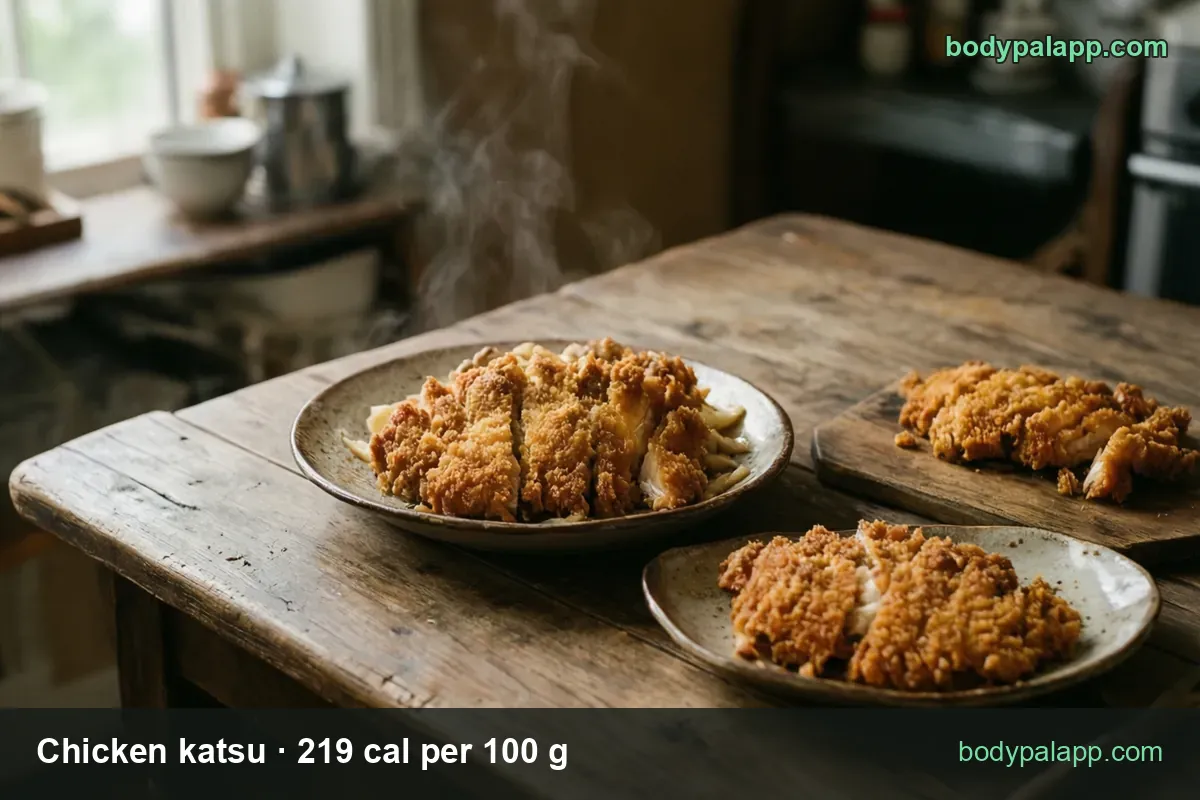
| Home-fried katsu, skinless breast | 219 kcal | 1 medium cutlet, 165 g | 361 kcal |
| Coating scraped off before eating | 176 kcal | 1 cutlet, 120 g | 211 kcal |
| Restaurant or takeout katsu | 273 kcal | 1 breast, 175 g | 478 kcal |
| Fried with the skin left on | 243 kcal | 1 cutlet, 175 g | 425 kcal |
| Chicken thigh katsu | 273 kcal | 1 thigh, 110 g | 300 kcal |
| Frozen breaded chicken fillet | 240 kcal | 1 fillet, 120 g | 288 kcal |
| Packaged katsu bowl with rice | 151 kcal | 1 container, 404 g | 610 kcal |
The piece weights here are typical portions scaled from each USDA 100 g figure — our own arithmetic, not USDA household servings.
The crust is the price of admission. Scale the coating-removed record up to the same 165 g and you get 290 calories, so the panko and the oil it soaked up cost about 71 calories on a medium cutlet. That is a modest fried-food surcharge, and it is why katsu logs better than most breaded chicken.
Restaurant katsu is a different animal: 273 calories per 100 g against 219 at home, on a bigger cutlet. That is 478 calories for a 175 g piece versus 361 for the 165 g one you fry yourself — a 117-calorie gap on what looks like the same lunch. Thicker batter, hotter and older oil, and a heavier hand with the salt.
Thigh katsu reads worse per gram, 273 against 219, but pieces are smaller: a 110 g thigh lands at 300 calories, under a medium breast cutlet. And the packaged bowl looks lightest of all per 100 g at 151, purely because rice and cabbage dilute it — 610 calories for the container is the number that counts.
Protein is the headline and sodium is the catch
One 165 g cutlet delivers 40.5 g of protein, 81% of the Daily Value set by FDA, from a single piece of chicken. Very little fried food does that. MyPlate counts a cutlet this size as roughly five to six ounce-equivalents of protein foods, which for many adults is most of a day in one serving.
Sodium is where it gets expensive. The cutlet alone brings 525 mg, 23% of the Daily Value, or about a quarter teaspoon of table salt — before the tonkatsu sauce, which is poured on and not measured. The takeout version starts at 549 mg per 100 g, which works out to 961 mg in a 175 g cutlet by our own arithmetic from the USDA figure. The Dietary Guidelines put the ceiling at 2,300 mg a day, so a restaurant katsu plate can spend over 40% of it on the chicken.
USDA's branded database has no plain chicken katsu product to check against a label, either. Every katsu entry there is a sauce, a furikake or a noodle pack, so the drizzle on top has no figure in these tables — treat it as extra.
Saturated fat, on the other hand, is quiet: 2.6 g a cutlet, 13% of the Daily Value. Deep frying a skinless breast in vegetable oil adds fat, but not much of the saturated kind. If you are watching saturated fat rather than calories, katsu is a better pick than most fried chicken.
How does chicken katsu compare?
| Version | Per 100 g | US serving | Calories |
|---|---|---|---|
| Chicken katsu | 219 kcal | 1 medium cutlet, 165 g | 361 kcal |
| Breaded breast, coating removed | 176 kcal | 1 cutlet, 120 g | 211 kcal |
| Fried breast, skin and coating eaten | 243 kcal | 1 cutlet, 175 g | 425 kcal |
| Fried chicken thigh, coating eaten | 273 kcal | 1 thigh, 110 g | 300 kcal |
Our take: of the four rows here, only the coating-removed cutlet is lighter per gram than katsu, and it is lighter because you throw away the part you fried. For weight loss, a 165 g home cutlet at 361 calories with 40.5 g of protein is a defensible dinner — pair it with cabbage rather than a second scoop of rice and the plate stays under most people's lunch budget. For fullness per calorie, katsu beats the thigh version outright: same crust, more protein, 54 fewer calories in every 100 g. The version to think twice about is the takeout one, where the cutlet is bigger, the batter is thicker and the sodium nearly doubles.
Most popular chicken katsu brands in the United States
Ranked by how widely each product appears among foods sold in the United States, from the BodyPal food database of over 3.3 million products. Calories are the figures printed on each Nutrition Facts label, checked against USDA FoodData Central. USDA Branded US lists no product named chicken katsu — every katsu row is a sauce, furikake or udon, and the one chicken row is a rice-and-cabbage ready meal. These six are the closest US supermarket equivalent: panko-breaded chicken cutlets, fillets and tenders, 164–269 calories per 100 g.
| Product | Calories (per 100 g) |
|---|---|
| Real Foods Breaded Chicken Cutlet | 177 cal |
| Gold'n Plump Chicken Breast Strips + Seasoned Panko Breadcrumbs | 164 cal |
| Tyson Panko Breaded Chicken Breast Tenderloins | 188 cal |
| Perdue Panko Breaded Chicken Breast Patties | 221 cal |
| Good & Gather Panko & Parmesan Breaded Chicken Breast | 218 cal |
| Smart Chicken Panko-Breaded Chicken Breast Tenders | 269 cal |
Brand popularity: BodyPal food database. Nutrition: manufacturer labels / USDA FoodData Central.
Chicken katsu FAQs
How many calories are in chicken katsu?
A medium homemade cutlet weighing 165 g carries 361 calories, or 219 calories per 100 g. That is the fried, breaded, skinless breast on its own. Sauce, rice and shredded cabbage sit on top of that number, and a restaurant-sized 175 g cutlet pushes it to 478.
How much protein is in chicken katsu?
One 165 g cutlet delivers 40.5 g of protein, or 81% of the Daily Value, from a single piece of chicken. Per 100 g it is 24.56 g. Strip the coating off before eating and the same weight of meat climbs to 29.62 g per 100 g.
Is chicken katsu healthy?
At 361 calories with 40.5 g of protein, a cutlet is lean meat wearing a fried crust. The catch is 525 mg of sodium, 23% of the Daily Value, before any sauce, and 9.99 g of fat per 100 g against 5.45 g when the coating is removed. Vegetables rather than a second starch keep it in range.
How many calories in chicken katsu without the sauce?
361 for a 165 g cutlet, because the USDA record used here is already sauce-free: it covers fried, coated, skinless breast and nothing else. Tonkatsu sauce is extra. USDA's branded database lists katsu sauces but no plain katsu cutlet, so there is no single label figure to add.
Does chicken katsu have a lot of sodium?
One 165 g cutlet has 525 mg, 23% of the 2,300 mg Daily Value, or roughly a quarter teaspoon of table salt. The restaurant version is worse: 549 mg per 100 g, which works out to 961 mg in a 175 g cutlet, before the sauce.
Chicken katsu vs fried chicken breast, which has fewer calories?
Katsu wins, narrowly, by 64 calories a piece. Skinless breaded breast runs 219 calories per 100 g; the same breast fried with the skin left on under the coating runs 243. Per piece that is 361 for a 165 g katsu against 425 for a 175 g skin-on cutlet, a 64-calorie gap.
Is chicken katsu high in carbs?
No — a 165 g cutlet holds 9.9 g of carbohydrate, only 4% of the Daily Value, because the panko layer is thin compared with the meat. Total sugars are 0.2 g. The carbs on a katsu plate come from the rice next to it, not from the cutlet.
How many calories in a chicken katsu bowl with rice?
A packaged katsu bowl with rice and cabbage runs 151 calories per 100 g, which is 610 for a 404 g container. It reads lighter per gram than the cutlet alone only because rice and vegetables dilute it; the plated total is still far above the 361 of a bare cutlet.
Similar foods
- Burrito — 482 cal per burrito
- Burrito Wrap — 482 cal per wrap
- Fajita — 208 cal per fajita
- Mushroom Pizza — 370 cal per serving
- Cheese Tamale — 387 cal per tamale
- Fried Chicken Breast — 218 cal per piece
Count it without the math
Point the camera at the plate and BodyPal counts the cutlet, the rice and the cabbage for you.


How long does it take to burn off chicken katsu?
One medium cutlet (165 g) is 361 kcal. Enter your weight and the amount you ate to see how long it takes you to burn that off:
lb
| Activity | Time to burn 361 kcal |
|---|---|
| Walking, brisk | 1 hr 12 min |
| Cycling, moderate | 45 min |
| Swimming, moderate | 52 min |
| Jogging | 42 min |
| Weight training, moderate | 1 hr 20 min |
Times are for a 155 lb adult at a steady pace; change the weight to see yours. The amount is set to the portion in the text (165 g); change it to what you actually ate. BodyPal works this out from your steps automatically.
This table assumes you know your daily total. If you do not, the daily calorie calculator works it out from five numbers.