
How many calories are in a chicken shawarma plate?
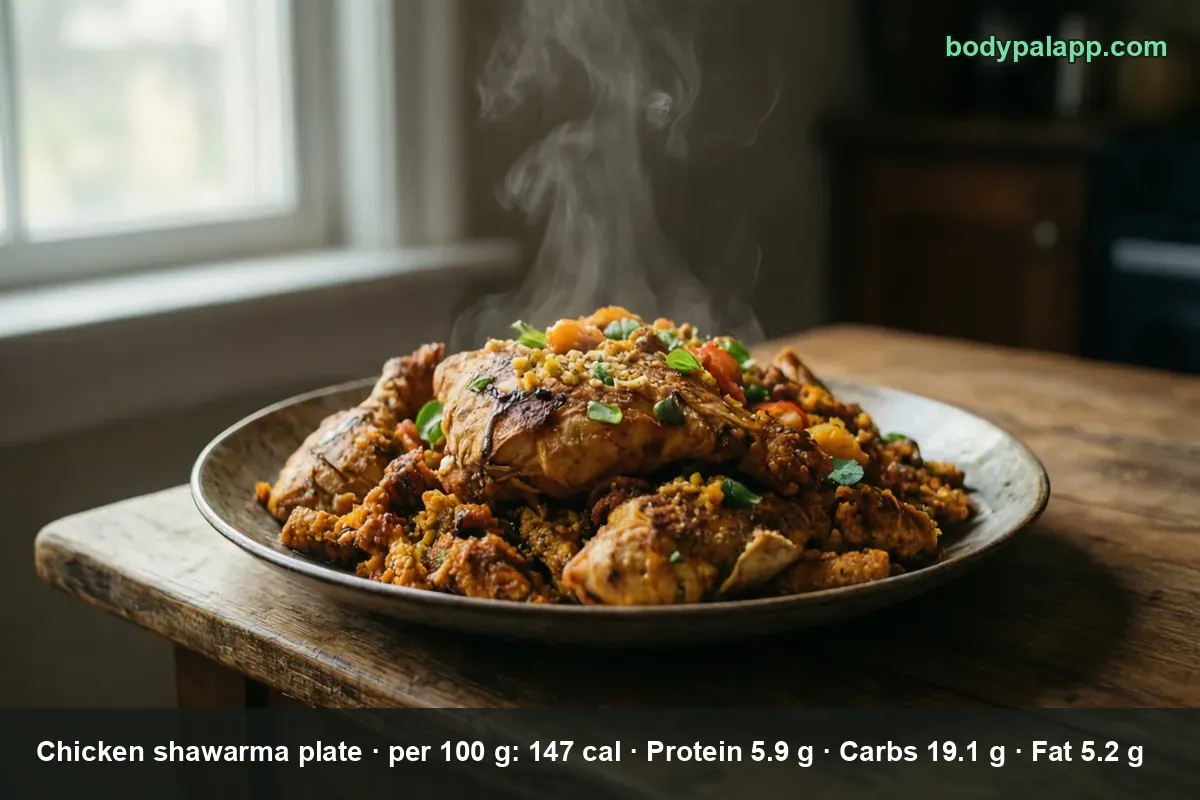
A 1-cup serving of chicken shawarma over rice weighs 136 g and carries 200 calories. Per 100 g the plate runs 147 calories, which is light for a hot lunch. The catch is the size of the plate: a restaurant portion is two or three cups, not one, so the same food lands at 400 to 600.
On this page
- Chicken shawarma plate quick facts
- US servings, from one ounce to a full plate
- Rice bowl, couscous, wrap and plain chicken
- Sodium is the row that scales fastest
- How does a chicken shawarma plate compare?
- Most popular chicken shawarma plate brands
- FAQ
Chicken shawarma plate quick facts
USDA's research databases are no help here. Foundation Foods, SR Legacy and FNDDS do not hold a single shawarma record, so the numbers below come from a retail label that matches what people actually carry to the table: Shawarma Rice Bowl with Chicken, FDC 2600562, a Taylor Farms product built the way a takeout plate is built, seasoned chicken over rice with vegetables mixed through.
That record has one more advantage. Its serving is a household measure a cook can picture, 1 cup at 136 g, instead of an abstract 100 g. Everything in the middle column below is the label itself; the plate-sized numbers later on are that figure multiplied out.
| Nutrient | Per 100 g | Per 1 cup (136 g) | % Daily Value |
|---|---|---|---|
| Calories | 147 | 200 | — |
| Total fat | 5.15 g | 7.0 g | 9% |
| Saturated fat | 1.1 g | 1.5 g | 7% |
| Carbohydrate | 19.12 g | 26.0 g | 9% |
| Dietary fiber | 1.5 g | 2.0 g | 7% |
| Total sugars | 1.47 g | 2.0 g | — |
| Added sugars | 0 g | 0 g | 0% |
| Protein | 5.88 g | 8.0 g | 16% |
| Sodium | 235 mg | 320 mg | 14% |
% Daily Value is based on a 2,000-calorie diet.
Verified nutrition data
Numbers on this page come from USDA FoodData Central, the U.S. Department of Agriculture’s food composition database, and from manufacturer labels where a branded product is named. Last verified September 2026. How we verify our data →
Two rows sit outside the label panel and are worth knowing anyway: cholesterol is 11 mg per 100 g, so 15 mg in a cup, and potassium is 162 mg per 100 g, or 220 mg in a cup. Both are 5% of a day's value. Trans fat is zero, and so are added sugars, which is unusual for a sauced rice dish.
US servings, from one ounce to a full plate
| Serving | Weight | Calories |
|---|---|---|
| 1 oz | 28 g | 41 kcal |
| 1 cup, the label serving | 136 g | 200 kcal |
| 1.5 cups, a modest plate | 204 g | 300 kcal |
| 1 plate, 2 cups | 272 g | 400 kcal |
| 1 large plate, 3 cups | 408 g | 600 kcal |
| Per 100 g | 100 g | 147 kcal |
Only the 1-cup line is a USDA serving. The ounce, the cup and a half, and both plates are our own arithmetic from the USDA 100 g figure, scaled up rather than measured.
Scaling is where most people lose the plot. A cup of cooked rice with chicken and vegetables on it looks small on a dinner plate, and almost nobody stops there. Fill the plate the way a counter service does and you have two cups before the sauce goes on, which doubles every row in the table above: 400 calories, 52.0 g of carbohydrate, 16.0 g of protein. Three cups, the platter version, is 600 calories and 78.0 g of carbohydrate, more than a quarter of the day's carbohydrate value.
There is a second lever nobody counts. The record above is a plain retail bowl. Garlic sauce and tahini at a shawarma counter are poured, not spooned, and they are fat, so a real restaurant plate sits above these numbers rather than on them.
Rice bowl, couscous, wrap and plain chicken
| Version | Per 100 g | Typical portion | Calories |
|---|---|---|---|
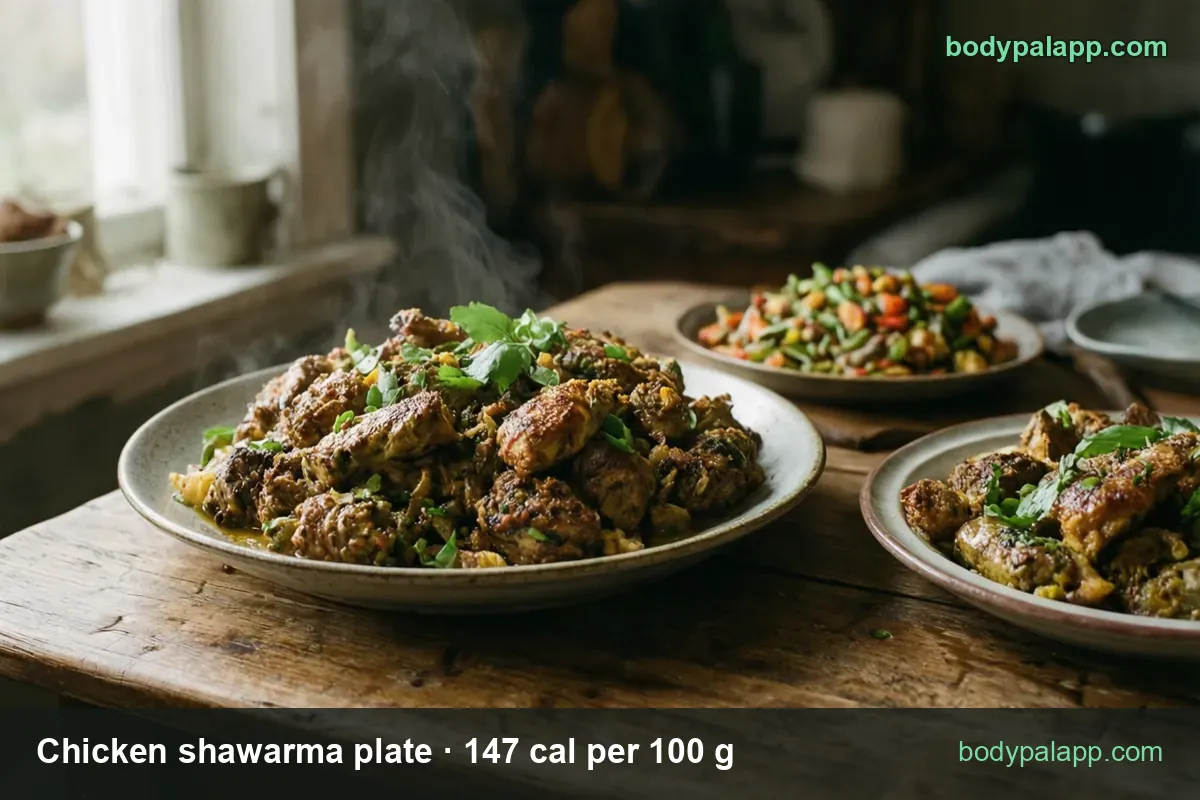
| Shawarma chicken over rice, retail bowl | 147 kcal | 1 cup (136 g) | 200 kcal |
| Shawarma chicken with pearled couscous | 114 kcal | 1 bowl (255 g) | 291 kcal |
| Chicken shawarma lavash wrap | 138 kcal | half a wrap (174 g) | 240 kcal |
| Shawarma bowl with tzatziki, meal kit | 125 kcal | 1 kit (512 g) | 640 kcal |
| Chicken shawarma with naan and tahini | 154 kcal | half a container (573 g) | 882 kcal |
| Chicken breast, roasted, meat only | 165 kcal | 3 oz (85 g) | 140 kcal |
Three of those records are lighter per 100 g than the rice bowl and two are heavier, which tells you the shawarma seasoning is not what moves the number. The base does. Pearled couscous with a heavier load of vegetables comes in at 114 calories per 100 g, the lightest row on the page, while naan and tahini push the same chicken to 154.
Portion size then swamps density all over again. The couscous bowl is lighter per gram than the rice bowl yet lands at 291 calories, because the package holds 255 g instead of 136. The meal kit is lighter per gram than the rice bowl as well, at 125 calories per 100 g, and finishes at 640, because a kit feeds a whole meal. Read grams before you read calories per 100 g.
The wrap deserves its own note, since chicken shawarma wrap is what most people order when they skip the plate. Per 100 g it is 138 calories, under the rice bowl, but a wrap is dense and heavy: half of one is 174 g and 240 calories, so a whole wrap is roughly 480, a fifth above a two-cup plate.
Plain roasted chicken breast is the outlier that explains the protein question. At 165 calories per 100 g it is the densest row here, yet a 3 oz portion is only 140 calories and delivers about 26 g of protein with zero carbohydrate. The plate is not high-protein food; the chicken on it is.
Sodium is the row that scales fastest
Sodium is the one number on this page that gets uncomfortable when the portion grows. One cup is 320 mg, or 14% of the FDA Daily Value of 2,300 mg. A two-cup plate is 640 mg, 28% of the day, from a single lunch, and that is before pickles, olives or a drizzle of garlic sauce. If you are watching sodium, the plate is the wrong shape of meal to double.
Protein runs the other direction. A cup gives 8.0 g, 16% of the Daily Value, which sounds fine until you compare it with the chicken alone. Weight for weight, roasted breast carries 31.02 g of protein per 100 g against 5.88 g here, because most of the plate is rice and vegetables. Asking the counter for extra meat and less rice is the change that matters, and MyPlate's protein guidance is a reasonable yardstick for how much to aim at across the day.
Fiber is the quiet win. At 2.0 g a cup, the vegetables mixed through the rice do more than a plain rice side would, and a two-cup plate reaches 4.0 g, 14% of the day's fiber value. Saturated fat stays low throughout: 1.5 g a cup is 7% of the Daily Value, well under what a gyro or a cheese-topped bowl would cost you.
How does a chicken shawarma plate compare?
| Dish | Per 100 g | US portion | Calories |
|---|---|---|---|
| Chicken shawarma over rice | 147 kcal | 1 cup (136 g) | 200 kcal |
| Shawarma chicken with pearled couscous | 114 kcal | 1 bowl (255 g) | 291 kcal |
| Chicken shawarma lavash wrap | 138 kcal | half a wrap (174 g) | 240 kcal |
| Chicken, rice and vegetables, no sauce | 150 kcal | 1 cup (136 g) | 204 kcal |
Our take: cup for cup, shawarma is not a splurge. The seasoned version is 147 calories per 100 g against 150 for the plainest chicken-and-rice record USDA publishes, a difference of 4 calories over a full cup, which is nothing. If you are cutting calories, order the plate and stop at one and a half cups, around 300 calories with 12.0 g of protein. If you want the meal to hold you until dinner, swap to a cup of the plate plus a 3 oz side of plain chicken, which brings the protein to about 34 g for 340 calories total. The wrap is the trap: it looks like the lighter choice and half of one already costs 240.
Most popular chicken shawarma plate brands in the United States
Ranked by how widely each product appears among foods sold in the United States, from the BodyPal food database of over 3.3 million products. Calories are the figures printed on each Nutrition Facts label, checked against USDA FoodData Central.
| Product | Calories (per 100 g) |
|---|---|
| Taylor Farms Shawarma Rice Bowl with Chicken | 147 cal |
| EVOL Shawarma Style Chicken with Pearled Couscous | 114 cal |
Brand popularity: BodyPal food database. Nutrition: manufacturer labels / USDA FoodData Central.
Chicken shawarma plate FAQs
How many calories are in a chicken shawarma plate?
A 1-cup serving is 200 calories at 136 g, and a full restaurant plate of two cups is about 400. Per 100 g the dish runs 147 calories. The two-cup and three-cup figures are our arithmetic from the USDA 100 g number, not USDA servings.
How much protein is in a chicken shawarma plate?
About 8 g per cup, or 16% of the Daily Value, rising to 16 g on a two-cup plate. That is modest for a chicken dish because rice and vegetables make up most of the weight. Roasted chicken breast alone carries 31.02 g of protein per 100 g.
How many carbs are in a chicken shawarma plate?
A cup holds 26 g of carbohydrate, 9% of the Daily Value, and a two-cup plate holds 52 g. Almost all of it is the rice: the same chicken served on its own has zero carbohydrate. Total sugars are only 2 g a cup, with no added sugars.
How much sodium is in a chicken shawarma plate?
320 mg in one cup, which is 14% of the FDA Daily Value of 2,300 mg. A two-cup plate reaches 640 mg, or 28% of a day, before any sauce or pickles. A no-sauce meal kit version of the same dish measures just 22 mg per 100 g.
Chicken shawarma plate or wrap: which has fewer calories?
Per 100 g the wrap is lighter, 138 calories against 147 for the rice plate, but portions decide it. Half a lavash wrap is 174 g and 240 calories, so a whole wrap runs near 480, roughly the same as a generous two-cup plate.
Is chicken shawarma healthy?
The numbers are reasonable for a hot lunch: 200 calories a cup, 1.5 g of saturated fat, 2 g of fiber and no added sugars. Sodium is the row to watch at 320 mg a cup. Portion size and sauce change the picture far more than the seasoning does.
Is a chicken shawarma plate good for weight loss?
At 147 calories per 100 g it is one of the lighter hot lunches by weight, so a cup and a half at 300 calories fits most days easily. The problem is volume, not density: fill the plate to three cups and you are at 600 calories.
How many calories in chicken shawarma without rice?
Skip the base and you are close to plain roasted chicken: 165 calories per 100 g, so a 3 oz portion is 140 calories with about 26 g of protein and no carbohydrate. Shawarma marinade and a light oil brush add a little fat on top of that.
Similar foods
- Steak Stir Fry — 319 cal per cup
- Lamb Vindaloo — 210 cal per 5 oz serving
- Quinoa Salad — 248 cal per cup
- Steak Dinner — 456 cal per meal
- Chicken And Rice — 292 cal per cup
- Rice With Chicken — 292 cal per cup
Count it without the math
Point the camera at the plate and BodyPal counts the chicken, the rice and the sauce for you.


How long does it take to burn off 200 kcal of chicken shawarma?
A 1-cup (136 g) serving is 200 kcal. Enter your weight and the amount you ate to see how long it takes you to burn that off:
lb
| Activity | Time to burn 200 kcal |
|---|---|
| Walking, brisk | 40 min |
| Cycling, moderate | 25 min |
| Swimming, moderate | 29 min |
| Jogging | 24 min |
| Weight training, moderate | 44 min |
Times are for a 155 lb adult at a steady pace; change the weight to see yours. The amount is set to the portion in the text (136 g); change it to what you actually ate. BodyPal works this out from your steps automatically.
Want the bigger picture? Calculate your daily calorie needs — your maintenance figure, a target for losing or gaining, and the date you get there.