Collard greens calories come to 63 for 1 cup cooked (190 g) and 33 per 100 g, boiled and drained without salt. The number to notice is fiber: that cup carries 7.6 g while fat stays at 1.4 g. Volume is cheap here. What you cook the greens with is where the calories and sodium move.
63kcal
1 cup · 190 g, boiled, drained, no salt
27%protein
5.1 gProtein
11 gCarbs
1.4 gFat
How to burn off 63 kcal
—Walking, brisk
—Jogging
—Cycling, moderate
—Swimming
Skip the math. BodyPal counts these calories from your steps and workouts automatically.
Nutrition facts
Boiled, drained, no salt · per 190 g
Calories
63 kcal
Protein
5.1 g
Carbohydrate
10.7 g
Fat
1.4 g
Saturated fat
0.1 g
Cholesterol
0 mg
Sodium
29 mg
Potassium
222 mg
Iron
2.1 mg
Source: USDA FoodData Central
🛡️
Verified nutrition data
Numbers on this page come from USDA FoodData Central, the U.S. Department of Agriculture’s food composition database, and from manufacturer labels where a branded product is named. Last verified September 2026. How we verify our data →
Collard greens: calories, protein and sodium by serving
Percent of daily value uses the FDA reference of 2,000 kcal a day.
Serving
kcal
Protein
Carbs
Fat
Sodium
% DV kcal
1 cup cooked (190 g)
63
5.1 g
10.7 g
1.4 g
29 mg
3%
With oil (135 g)
82
4.2 g
7.6 g
5.1 g
188 mg
4%
Raw cup (36 g)
12
1.1 g
2 g
0.2 g
6 mg
1%
100 g
33
2.7 g
5.7 g
0.7 g
15 mg
2%
3 × 1 cup cooked (190 g)
188
15.4 g
86 mg
5 × 1 cup cooked (190 g)
314
25.7 g
143 mg
Five cups of collards still come in at 314 calories
One cup of boiled, drained collards weighs 190 g and lands at 63 calories, about 3% of the daily value. That is a generous side by most standards, and the leaves have already lost most of their volume in the pot. A raw cup is a different object: 36 g of loose leaves for 12 calories, which is why raw and cooked numbers look so far apart on labels and in apps.
Scaling up barely moves the total. Two cups come to 125 calories, three cups to 188, and even five cups, a 950 g mountain few people finish in one sitting, reach only 314. Protein climbs alongside, from 10.3 g at two cups to 25.7 g at five. Sodium follows the same gentle slope, from 29 mg per cup to 143 mg at five cups when no salt goes in.
The practical takeaway is simple. With plain collards, portion size is rarely the problem. Eat a full bowl if you want one; the calorie line stays modest as long as the cooking liquid and the fat in the pot do not change the math.
Carbs lead, but fiber does most of the work
Per 100 g, cooked collards hold 5.7 g carbohydrate, 2.7 g protein and 0.7 g fat. By calories, that splits into 57% carbs, 27% protein and 16% fat. For a leafy vegetable, a protein share above a quarter is solid, even if the gram count stays small.
The carb figure deserves a closer look. Of those 5.7 g, 4 g are fiber and only 0.4 g are sugars. In a 190 g cup that becomes 7.6 g fiber against 0.8 g sugars, so the carbohydrate here is mostly the structural kind, not the sweet kind. That is a big reason a cup feels more filling than its 63 calories suggest.
Fat is close to an afterthought at 1.4 g per cup, with saturated fat listed at 0 and no cholesterol. Each cup also contributes 5.1 g protein, about 10% of the daily value. That will not anchor a meal on its own, but it adds up quietly if collards are a regular side on your plate.
Oil and salt change collards more than portion size does
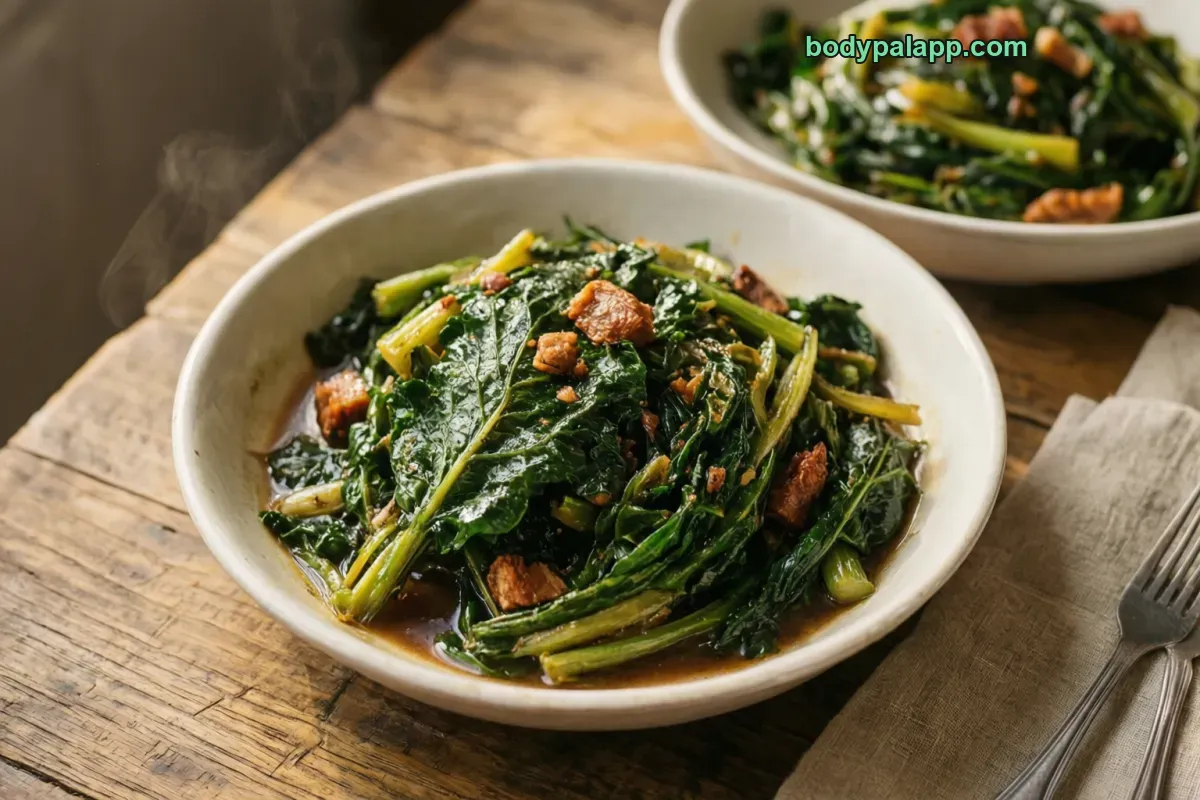
The USDA row behind the main numbers is collards boiled, drained and cooked without salt. That is the leanest version you will meet. Southern-style pots, canned greens and restaurant sides usually carry fat, salt or both, and the nutrition label shifts accordingly.
The card's oil-cooked serving shows how fast it happens. A 135 g portion cooked with oil comes to 82 calories and 5.1 g fat, against 1.4 g fat in a larger 190 g plain cup. Sodium jumps from 29 mg, about 1% of the daily value, to 188 mg, or 8%. Smaller serving, more calories, far more salt.
If you watch sodium, canned and jarred greens are worth checking label by label; brands such as Glory Foods, Kroger and Food Lion all sell versions listed in this page's brand table. If you cook your own, add the fat and salt by measure rather than by pour, and the plain-boiled numbers stay close to the truth.
Collards leave room on the plate for something richer
At 63 calories a cup, collards leave plenty of budget for the rest of the meal. That makes them a natural partner for foods that bring the protein and fat collards lack: beans, eggs, chicken, fish, or a piece of cornbread if that is how your table serves them.
Fiber is where they pull real weight. One cooked cup supplies 7.6 g against a daily value of 28 g, and a second cup doubles that. If your usual day runs low on vegetables, a regular side of greens is one of the cheapest ways, in calories, to close the gap. Potassium comes along too, at 117 mg per 100 g.
Logging is easy when the greens are plain and harder when they arrive swimming in pot liquor or cooked with smoked meat. BodyPal can log collards from a photo, which helps when the portion is a heap rather than a measured cup. Either way, record the cooking fat separately if you can see it.
How does collard greens compare?
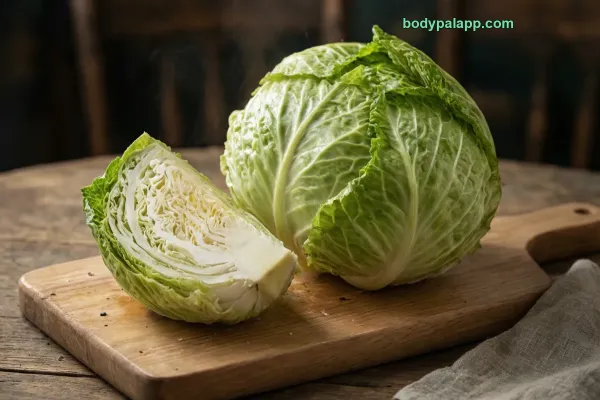
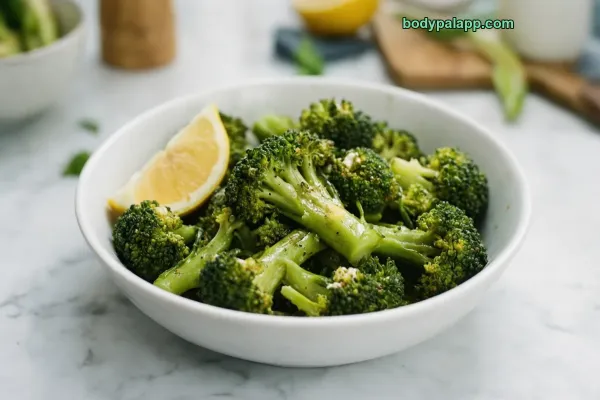
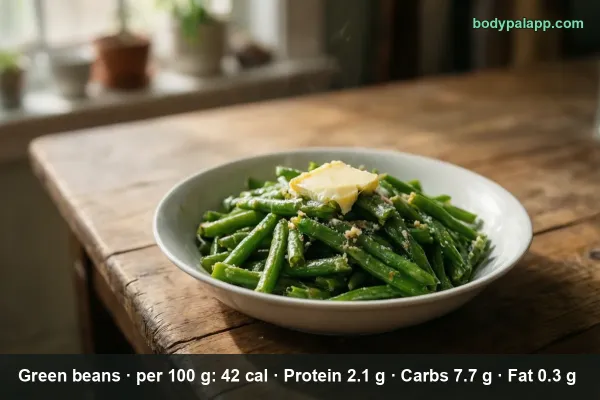
Here is how cooked collard greens stack up against green cabbage, cooked broccoli and green beans, per 100 g and per usual serving.
Verdict: If the lowest calories per 100 g is the goal, green cabbage edges ahead at 31 versus 33 for collards, though the gap is tiny. For the most protein from the same small budget, pick collards at 2.7 g per 100 g; green beans win only on sodium, at 1 mg.
Most popular collard greens brands in the United States
7Schnucks Chopped Collard Greens1/2 cup · 118 g25 kcal
Bagged fresh greens are labeled by raw weight and canned ones by drained weight, so their per-100 g numbers sit a little below the cooked figure above. Source: manufacturer labels / USDA FoodData Central.
Collard greens FAQs
How many calories are in a cup of collard greens?
A cup of cooked collard greens (190 g) has 63 calories. Raw chopped collards weigh less per cup, 36 g, which is 12 calories.
Are collard greens good for weight loss?
Cooked collard greens have 33 calories per 100 g, so a full 190 g cup is 63 calories with 7.6 g of fiber. Cooking them with oil raises the cup to 82 calories.
Collard greens vs green beans: which has fewer calories?
Cooked collard greens have 33 calories per 100 g and green beans 35, so they are almost the same. A 190 g cup of collards is 63 calories.
How much protein and calcium are in collard greens?
Cooked collard greens have 2.71 g of protein per 100 g, so a 190 g cup provides 5.1 g. The same cup has about 268 mg of calcium.
What are the nutrition facts for collard greens per 100 g?
Cooked collard greens have 33 calories per 100 g, with 2.7 g protein, 5.7 g carbs, 0.7 g fat, 4 g fiber and 0.4 g sugars. Sodium is 15 mg and potassium 117 mg when boiled without salt.
Do cooked collard greens have more calories than raw?
Per cup, yes: a cooked cup (190 g) has 63 calories, while a raw cup (36 g) has only 12. The leaves wilt in the pot, so a cooked cup holds far more greens by weight.
Are collard greens fattening?
Not on their own. A cooked cup has 63 calories and 1.4 g fat, and even five cups total 314 calories. Cooking fat is the variable: an oil-cooked 135 g serving reaches 82 calories.
How much fiber and sodium are in 1 cup of cooked collard greens?
One cup of cooked collards (190 g) gives 7.6 g fiber and 29 mg sodium when boiled without salt. That sodium is about 1% of the daily value; cooking with salt raises it quickly.
How many calories are in collard greens cooked with oil?
A 135 g serving of collards cooked with oil has 82 calories, 5.1 g fat and 188 mg sodium. That is more calories than a larger plain cup of 190 g, which has 63.