
How many calories are in cream of wheat?
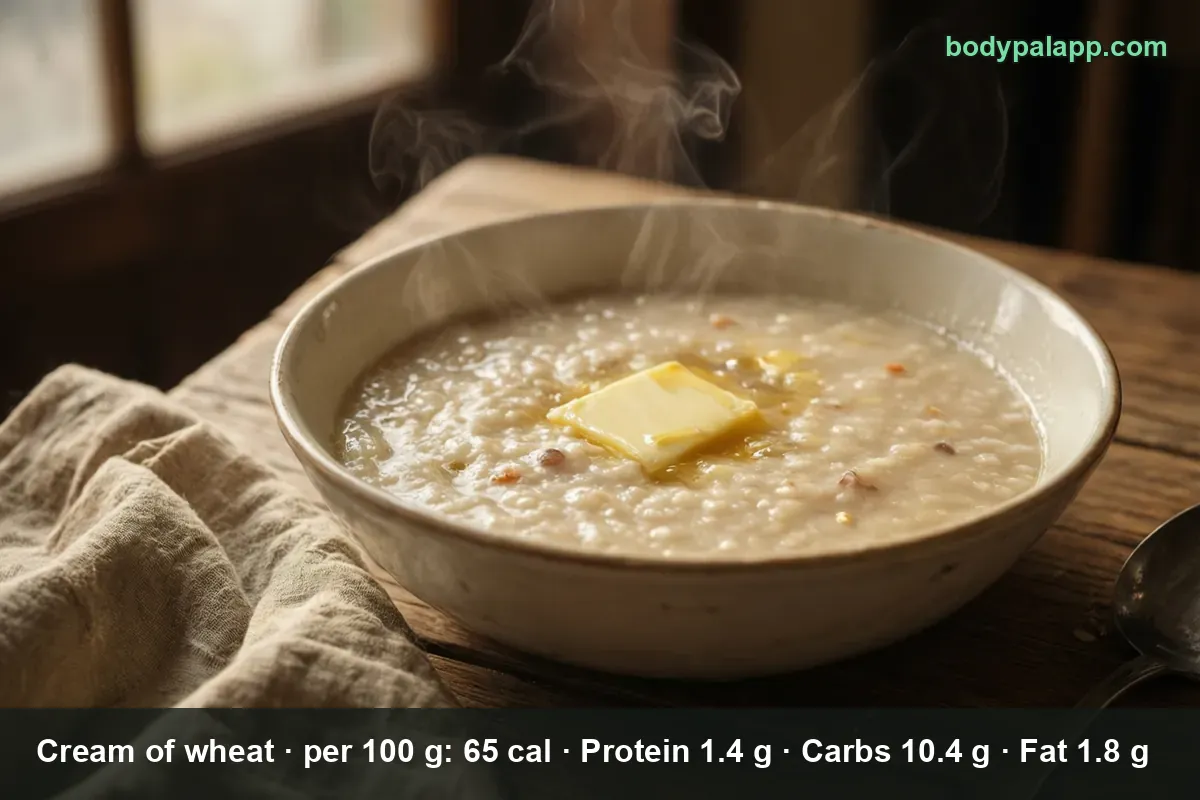
A 1-cup serving of cooked cream of wheat — water, a pat of butter stirred in, the way most American kitchens make it — weighs 240 g and carries 156 calories. Per 100 g the cooked cereal is only 65 calories, so the bowl always looks bigger than the number on the label suggests.
On this page
- Cream of wheat quick facts
- US servings, from an ounce to a full cup
- Butter, instant packets and dry farina
- Sodium and fiber are the rows to watch
- How does cream of wheat compare?
- Most popular cream of wheat brands
- Cream of wheat FAQs
Cream of wheat quick facts
The record used here is FNDDS 2708433, "Cream of wheat, NFS". NFS means "not further specified," and in USDA's survey data that lands on the average American preparation: farina cooked in water with a small amount of fat stirred in at the table. That is the bowl in front of you, not the box in the pantry.
The dry records are a different animal — around 359 calories per 100 g of flour — and they belong in the servings and variants tables further down, not at the top of the page. Nobody eats farina dry, and mixing a dry number into a cooked bowl is the single most common way people overcount this breakfast by a factor of five.
| Nutrient | Per 100 g | Per 1 cup, cooked (240 g) | % Daily Value |
|---|---|---|---|
| Calories | 65 | 156 | — |
| Total fat | 1.8 g | 4.3 g | 6% |
| Saturated fat | 0.72 g | 1.7 g | 9% |
| Carbohydrate | 10.39 g | 24.9 g | 9% |
| Dietary fiber | 0.5 g | 1.2 g | 4% |
| Total sugars | 0.04 g | 0.1 g | — |
| Protein | 1.44 g | 3.5 g | 7% |
| Sodium | 83 mg | 199 mg | 9% |
| Cholesterol | 3 mg | 7 mg | 2% |
| Potassium | 16 mg | 38 mg | 1% |
% Daily Value is based on a 2,000-calorie diet.
Verified nutrition data
Numbers on this page come from USDA FoodData Central, the U.S. Department of Agriculture’s food composition database, and from manufacturer labels where a branded product is named. Last verified September 2026. How we verify our data →
Two rows you would see on a package are missing here on purpose: added sugars and trans fat. USDA does not publish either one for the prepared cereal records, so rather than guess we leave them out. The Daily Values used in the last column come from the FDA's Nutrition Facts label rules; total sugars have no Daily Value, which is why that cell is a dash.
US servings, from an ounce to a full cup
| Serving | Weight | Calories |
|---|---|---|
| 1 oz cooked | 28 g | 18 kcal |
| 1/2 cup, cooked | 120 g | 78 kcal |
| 3/4 cup, cooked | 180 g | 117 kcal |
| 1 cup, cooked | 240 g | 156 kcal |
| 1 oz dry, cooked out | 205 g | 133 kcal |
| Per 100 g | 100 g | 65 kcal |
The 1-cup line and the 1 oz dry line are USDA measures. The half cup, the three-quarter cup and the ounce of cooked cereal are our own arithmetic from the USDA 100 g figure, not USDA servings.
The row worth staring at is the second-to-last one. An ounce of dry farina — a hair under 3 tablespoons — swells to roughly 205 g of cooked cereal, and that is 133 calories. So an ounce of the box and an ounce out of the bowl differ by more than seven times. If you log by weight, weigh the bowl after cooking and use 65 per 100 g. If you log by scoop, measure the dry farina and use the dry number instead. Doing both is how a 156-calorie breakfast turns into a 290-calorie entry.
Butter, instant packets and dry farina
| Version | Per 100 g | Typical serving | Calories |
|---|---|---|---|
| Made with water, no butter | 51 kcal | 1 cup, cooked (240 g) | 122 kcal |
| Made with water, butter added | 65 kcal | 1 cup, cooked (240 g) | 156 kcal |
| Instant, made with water, no fat | 67 kcal | 1 cup, cooked (240 g) | 161 kcal |
| Instant, made with water, fat added | 82 kcal | 1 cup, cooked (240 g) | 197 kcal |
| Dry, 1-minute stovetop | 359 kcal | 3 tbsp dry (33 g) | 118 kcal |
| Instant, dry | 366 kcal | 1 packet dry (28 g) | 102 kcal |
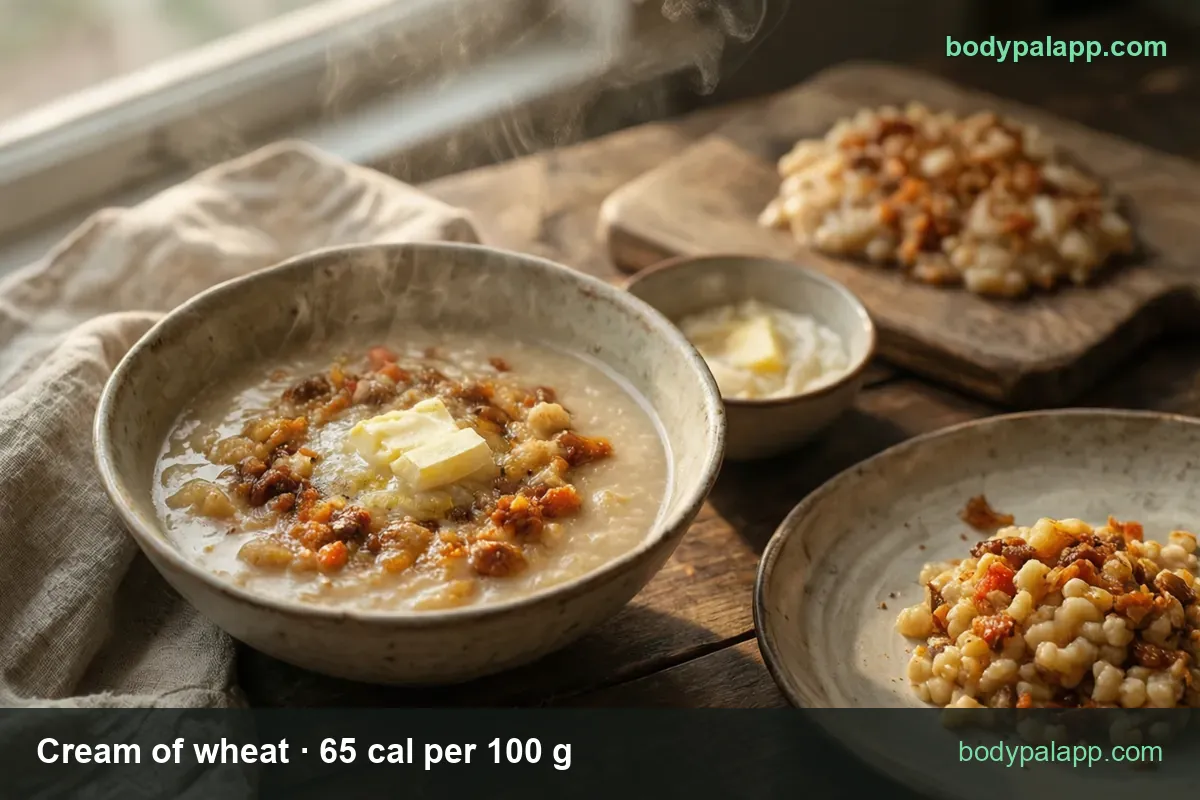
The butter is half the story. The same 240 g cup is 122 calories cooked plain in water and 156 with a pat stirred in — 34 calories for 4.3 g of fat. That is a small tax for a much better bowl, and it is the reason the NFS record sits at 65 per 100 g instead of 51.
Instant is where the arithmetic quietly moves. A cup of prepared instant with no fat is 161 calories, more than the plain stovetop version at 122, because the packets are sweetened. Add fat on top and you are at 197 — a 75-calorie gap from the plain bowl, for the same volume of cereal.
Dry weights change the frame again. Three tablespoons of stovetop farina is 118 calories in the box; one 28 g instant packet is 102. The boxed products land in the same band: USDA's Branded records put the stovetop hot cereal at 110 calories per 33 g scoop, the original instant packet at 100, and the flavored 35 g packets — maple brown sugar, Cinnabon — at 130 each.
Sodium and fiber are the rows to watch
Sodium is the surprise. A plain-looking cup of hot cereal carries 199 mg, 9% of the FDA's 2,300 mg Daily Value — roughly a tenth of a teaspoon of table salt, before anyone reaches for the shaker. Instant packets concentrate it: one 28 g original packet works out to about 170 mg, while 3 tablespoons from the stovetop box carry about 100 mg. Two packets on a workday morning and you have spent about 15% of the day's sodium on breakfast.
Fiber is the other row, and it goes the other way. A cup gives 1.2 g, 4% of the Daily Value, because farina is milled wheat with the bran taken out. MyPlate's grain guidance is to make at least half your grains whole ones, and refined farina is not one of them — the whole-grain version of the boxed cereal exists for exactly that reason. People often ask how the bowl stacks up against oatmeal; that comparison needs oatmeal's own USDA record, which this page does not carry, so we are leaving the number out rather than guessing at it.
Sugar, on the other hand, is a non-issue in the plain version: 0.1 g in a whole cup. Cooked instant is 3.64 g per 100 g, about 8.7 g in a cup — roughly two teaspoons' worth arriving with the convenience.
How does cream of wheat compare?
| Hot cereal | Per 100 g | US serving | Calories |
|---|---|---|---|
| Cream of wheat, cooked | 65 kcal | 1 cup, cooked (240 g) | 156 kcal |
| Cream of rice | 69 kcal | 1 cup, cooked (240 g) | 166 kcal |
| Grits, instant, water, no fat | 65 kcal | 1 cup, cooked (240 g) | 156 kcal |
| Cooked cereal, NFS | 64 kcal | 1 cup, cooked (240 g) | 154 kcal |
The 240 g cup is the household measure from the cream of wheat record, applied to the neighbors as our own arithmetic so the four rows are actually comparable.
Our take: at this level of similarity, calories are not the deciding factor — the whole group lands between 154 and 166 per cup, a spread of 12 calories. Pick on the other columns instead. For weight loss, cream of wheat cooked plain in water is the cheapest bowl on the page at 122 calories, and it beats every entry in this table. If you are watching sodium, cook from the box rather than the packet, since the 100 mg scoop and the 170 mg packet are the same breakfast. And if satiety is the goal, none of these four will get you to lunch on their own — cream of wheat brings 3.5 g of protein and 1.2 g of fiber a cup — add milk, an egg, or a spoon of nut butter and treat the cereal as the base, not the meal.
Most popular cream of wheat brands in the United States
Ranked by how widely each product appears among foods sold in the United States, from the BodyPal food database of over 3.3 million products. Calories are the figures printed on each Nutrition Facts label, checked against USDA FoodData Central.
| Product | Calories (per 100 g) |
|---|---|
| Cream of Wheat Hot Cereal (stovetop) | 333 cal |
| Cream of Wheat Original Hot Cereal | 364 cal |
| Cream of Wheat Original Instant Hot Cereal | 357 cal |
| Cream of Wheat Maple Brown Sugar Instant | 371 cal |
| Cream of Wheat Cinnabon Instant | 371 cal |
| Cream of Wheat Whole Grain Hot Cereal | 333 cal |
Brand popularity: BodyPal food database. Nutrition: manufacturer labels / USDA FoodData Central.
Cream of wheat FAQs
How many calories are in a cup of cream of wheat?
One cup of cooked cream of wheat is 156 calories at 240 g, based on the USDA's NFS record, which assumes a little fat stirred in. Cook it with water and no butter and the same cup falls to 122 calories. Half a cup is 78.
How much protein is in cream of wheat?
A 1-cup serving has 3.5 g of protein, 7% of the Daily Value, from 1.44 g per 100 g. That is modest for a breakfast: milk, eggs or a spoon of peanut butter do most of the work if you want the bowl to hold you until lunch.
How many carbs are in cream of wheat?
A cup of the cooked cereal carries 24.9 g of carbohydrate, 9% of the Daily Value, of which only 0.1 g is sugar and 1.2 g is fiber. Dry farina is far denser: 72.63 g of carbohydrate per 100 g before any water goes in.
Does instant cream of wheat have added sugar?
The sweetened instant records show 3.64 g of total sugars per 100 g cooked, about 8.7 g in a cup, against 0.03 g for regular cream of wheat made with water. USDA does not publish added sugars for these prepared records, so we can only report total sugars.
How many calories are in a packet of instant cream of wheat?
A plain 28 g packet of instant farina is 102 calories dry, and that is all the cereal brings to the bowl, since water adds none. Flavored packets are heavier and sweeter: the maple brown sugar and Cinnabon packets weigh 35 g and label 130 calories each.
Is cream of wheat good for weight loss?
At 65 calories per 100 g cooked, it is one of the cheapest ways to fill a bowl, and a 1-cup serving is 156 calories. The catch is fiber: 1.2 g per cup, 4% of the Daily Value, so pair it with fruit or nuts for staying power.
How much sodium is in cream of wheat?
A 1-cup serving has 199 mg of sodium, 9% of the 2,300 mg Daily Value, which is roughly a tenth of a teaspoon of table salt. Instant packets are saltier per bite: one 28 g original packet carries about 170 mg before you add anything to the bowl.
Is cream of wheat gluten free?
No — cream of wheat is farina milled from wheat, and every USDA record on this page is a wheat cereal, down to the 10.39 g of carbohydrate per 100 g cooked. Cream of rice, at 69 calories per 100 g cooked, is the usual swap in that situation.
Similar foods
- Chocolate Milk — 161 cal per cup
- Yogurt — 104 cal per container (6 oz)
- Milk — 149 cal per cup
- Full-Fat Plain Yogurt — 149 cal per cup
- Plain Yogurt — 149 cal per cup
- Breast Milk — 22 cal per ounce
Count it without the math
Point the camera at the bowl and BodyPal counts it for you, butter and all.


How long does it take to burn off cream of wheat?
A 1-cup (240 g) serving is 156 kcal. Enter your weight and the amount you ate to see how long it takes you to burn that off:
lb
| Activity | Time to burn 156 kcal |
|---|---|
| Walking, brisk | 31 min |
| Cycling, moderate | 20 min |
| Swimming, moderate | 22 min |
| Jogging | 18 min |
| Weight training, moderate | 35 min |
Times are for a 155 lb adult at a steady pace; change the weight to see yours. The amount is set to the portion in the text (240 g); change it to what you actually ate. BodyPal works this out from your steps automatically.
Burning it off is one side of it. The other is knowing your number: work out how many calories you need a day, with macros and a goal date.