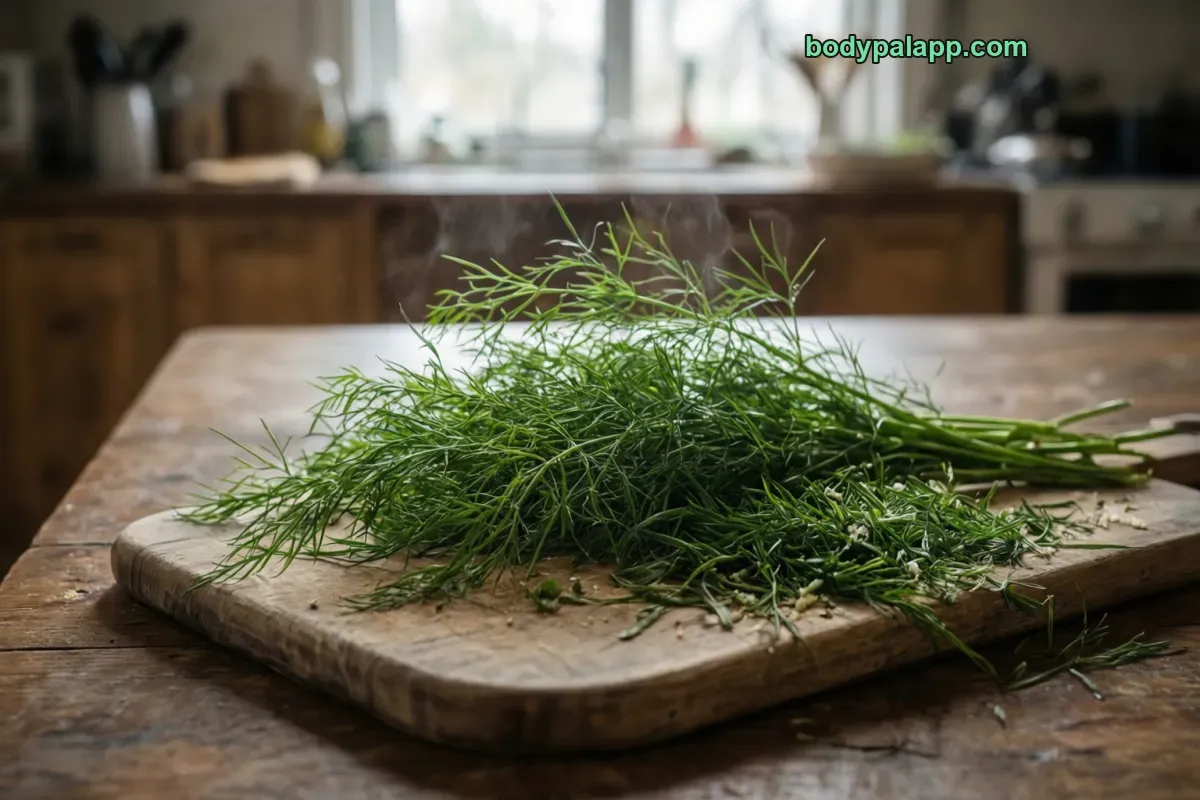
Dill calories come to 4 for 1 cup of fresh sprigs (8.9 g) and 43 per 100 g. Notice the weight first: a full cup of feathery dill weighs under 9 grams, so even a generous handful barely registers. Dried dill is denser, and 1 tbsp (3.1 g) carries 8 calories.
4kcal
1 cup of sprigs · 8 g, fresh dill weed, raw
27%protein
0.3 gProtein
1 gCarbs
0.1 gFat
How to burn off 4 kcal
—Walking, brisk
—Jogging
—Cycling, moderate
—Swimming
Skip the math. BodyPal counts these calories from your steps and workouts automatically.
Nutrition facts
Fresh dill weed, raw · per 8 g
Calories
4 kcal
Protein
0.3 g
Carbohydrate
0.6 g
Fat
0.1 g
Saturated fat
0 g
Cholesterol
0 mg
Sodium
5 mg
Potassium
66 mg
Iron
0.6 mg
Source: USDA FoodData Central
🛡️
Verified nutrition data
Numbers on this page come from USDA FoodData Central, the U.S. Department of Agriculture’s food composition database, and from manufacturer labels where a branded product is named. Last verified October 2026. How we verify our data →
Dill: calories, protein and sodium by serving
Percent of daily value uses the FDA reference of 2,000 kcal a day.
Serving
kcal
Protein
Carbs
Fat
Sodium
% DV kcal
1 cup sprigs (8.9 g)
4
0.3 g
0.6 g
0.1 g
5 mg
0%
1 tbsp dried (3.1 g)
8
0.6 g
1.7 g
0.1 g
6 mg
0%
100 g
43
3.5 g
7 g
1.1 g
61 mg
2%
3 × 1 cup sprigs (8.9 g)
11
0.9 g
16 mg
5 × 1 cup sprigs (8.9 g)
19
1.5 g
27 mg
Even five cups of dill stay under 20 calories
Fresh dill is mostly air and water by volume. One cup of sprigs weighs 8.9 g and adds 4 calories, which is less than a single bite of most foods you would put it on. That is why the 100 g figure of 43 calories looks bigger than it really is: you would need a mountain of sprigs to reach it.
Scale it up and the total still moves slowly. Two cups of sprigs (18 g) come to 8 calories, three cups (27 g) to 11, and five cups (45 g) to 19. Five cups is far more dill than any recipe asks for. A tzatziki, potato salad or salmon dish usually needs a few tablespoons of chopped leaves, so the real contribution sits at the low end of that range.
If you track food, dill is one of the few ingredients where skipping the entry changes almost nothing. Logging it is still easy: BodyPal can pick it up from a photo of the finished plate, but the dressing or sauce around it will matter far more than the herb.
Carbs supply more than half of dill's calories
Per 100 g, dill has 7 g of carbs, 3.5 g of protein and 1.1 g of fat. Measured by calories, that is 54% carbs, 27% protein and 19% fat. A good part of those carbs is fiber: 2.1 g per 100 g, so the digestible share is smaller than the headline carb number suggests.
The protein share is high for a plant, but the grams are tiny in practice. A cup of sprigs gives 0.3 g of protein, which works out to 1% of the daily value. Dill seasons a protein dish; it does not supply one.
Fat is a minor player. Saturated fat is 0.1 g per 100 g and cholesterol is 0, so the herb adds nothing worth counting on those rows. Potassium is the standout figure on the label at 738 mg per 100 g, though at sprig-sized portions that also shrinks to a small amount.
A spoon of dried dill outweighs a cup of fresh
Drying removes water and concentrates everything left behind. One tablespoon of dried dill weighs 3.1 g and carries 8 calories, double the 4 calories in a full cup of fresh sprigs. It also brings 0.6 g of protein, 1.7 g of carbs and 0.4 g of fiber, against 0.3 g, 0.6 g and 0.2 g for the fresh cup.
None of those numbers will change a day of eating, but they explain why dried and fresh are not swapped one for one in recipes. A small pinch of the dried herb delivers the flavor of a much larger pile of fresh leaves, and the calories follow the same pattern.
Sodium stays negligible either way: 5 mg in a cup of fresh sprigs and 6 mg in a tablespoon of dried, both 0% of the daily value. Choose by flavor and texture, not by the label. Fresh dill has the brighter, grassier taste; dried works better in long-cooked dishes and spice rubs.
Dill adds flavor where salt usually does the work
Dill's sodium is low: 61 mg per 100 g, or 3% of the daily value, and only 5 mg in a cup of sprigs. Compare that with ready-made condiments. Salsa verde lists 906 mg per 100 g and corn salsa 500 mg. If you watch sodium, a heavy hand with fresh herbs is one way to keep a dish tasting bold while leaning on fewer salty sauces.
The classic pairings are fish, eggs, cucumbers, potatoes and yogurt sauces. Here dill is never the calorie question. Mayonnaise in a potato salad, butter on salmon or full-fat yogurt in a dip sets the total, so judge the dish by those ingredients.
Treat dill as a free flavor layer. Stir it into plain yogurt for a dressing, scatter it over roasted vegetables, or fold it into scrambled eggs. Each use adds a few calories at most and a lot of taste.
How does dill compare?
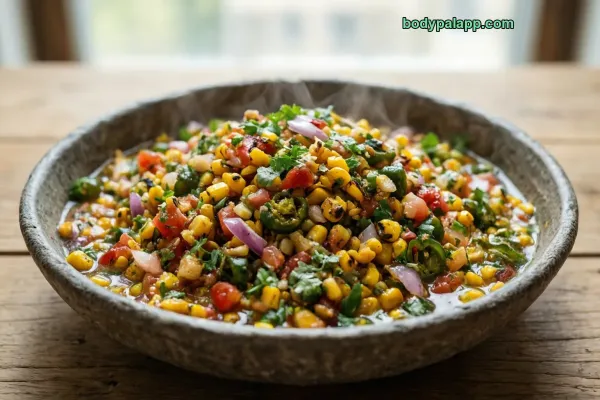
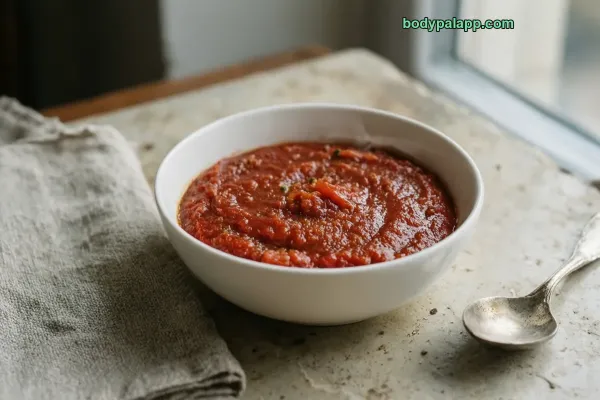
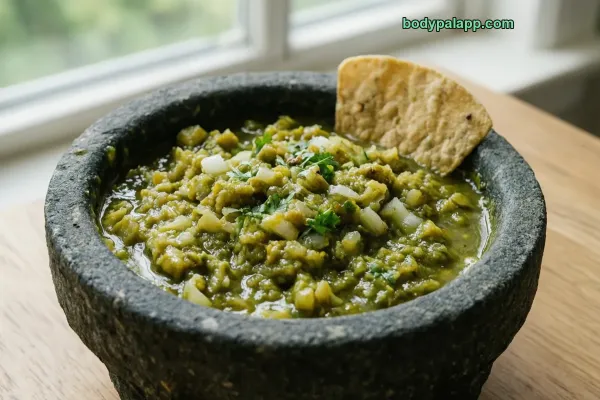
Here is how fresh dill stacks up against corn salsa, tomato puree and salsa verde, per 100 g and per usual serving.
Verdict: Per 100 g the four are close, with dill at 43 calories next to 44 for corn salsa and 38 for tomato puree and salsa verde, but dill wins on sodium by a wide margin at 61 mg against 500 mg and 906 mg for the two salsas. For the lightest, lowest-sodium flavor pick dill; for a sauce with body pick salsa verde at 11 calories per 2 Tbsp, and remember a 1 cup serving of tomato puree reaches 95 calories.
Dill FAQs
How many calories are in a cup of dill?
One cup of fresh dill sprigs (8.9 g) has about 4 calories. Per 100 g, fresh dill has 43 calories.
Is dill good for weight loss?
Fresh dill has 43 calories per 100 g, and a cup of sprigs adds about 4 calories to a dish. It also has 2.1 g of fiber per 100 g.
Dill vs corn salsa: which has fewer calories?
Per 100 g they are close: 43 calories for fresh dill and 44 for corn salsa. Dill is used in much smaller amounts, though, as a cup of sprigs weighs 8.9 g.
How many carbs are in dill?
Fresh dill has 7.02 g of carbs per 100 g, including 2.1 g of fiber. A cup of sprigs has about 0.6 g of carbs.
Are dill pickle calories the same as dill calories?
No. Fresh dill weed has 43 calories per 100 g, and that is what this page covers. A dill pickle is a cucumber cured in brine with dill, so its calories and sodium come mostly from the cucumber and the brine.
How many calories are in a tablespoon of dried dill?
One tablespoon of dried dill (3.1 g) has 8 calories. It also adds 0.6 g of protein, 1.7 g of carbs and 0.4 g of fiber, more than a full cup of fresh sprigs because drying concentrates the herb.
How much protein does dill have?
Dill has 3.5 g of protein per 100 g, which is 27% of its calories. A cup of fresh sprigs gives just 0.3 g, or 1% of the daily value, so it flavors protein dishes rather than supplying protein.
Is dill high in sodium?
No. Fresh dill has 61 mg of sodium per 100 g, 3% of the daily value, and a cup of sprigs has only 5 mg. That is far below salsa verde at 906 mg per 100 g.
How much fiber is in dill?
Dill has 2.1 g of fiber per 100 g. A cup of fresh sprigs supplies 0.2 g and a tablespoon of dried dill 0.4 g, so the amount you actually eat is small.