Egg yolk and white calories come to 78 for one large hard-boiled egg (50 g) and 155 per 100 g. The figure to notice is the split: fat supplies 64% of those calories and protein 33%, while carbs barely register at 3%. Portions are easy to count, because every extra egg adds roughly the same 78.
78kcal
1 large egg · 50 g, whole egg, hard-boiled
33%protein
6.3 gProtein
1 gCarbs
5.3 gFat
How to burn off 78 kcal
—Walking, brisk
—Jogging
—Cycling, moderate
—Swimming
Skip the math. BodyPal counts these calories from your steps and workouts automatically.
Nutrition facts
Whole egg, hard-boiled · per 50 g
Calories
78 kcal
Protein
6.3 g
Carbohydrate
0.6 g
Fat
5.3 g
Saturated fat
1.6 g
Cholesterol
187 mg
Sodium
62 mg
Potassium
63 mg
Iron
0.6 mg
Source: USDA FoodData Central
🛡️
Verified nutrition data
Numbers on this page come from USDA FoodData Central, the U.S. Department of Agriculture’s food composition database, and from manufacturer labels where a branded product is named. Last verified September 2026. How we verify our data →
Egg yolk and white: calories, protein and sodium by serving
Percent of daily value uses the FDA reference of 2,000 kcal a day.
Serving
kcal
Protein
Carbs
Fat
Sodium
% DV kcal
1 large (50 g)
78
6.3 g
0.6 g
5.3 g
62 mg
4%
Raw, 1 large (50 g)
72
6.3 g
0.4 g
4.8 g
71 mg
4%
1 cup chopped (136 g)
211
17.1 g
1.5 g
14.4 g
169 mg
11%
100 g
155
12.6 g
1.1 g
10.6 g
124 mg
8%
3 × 1 large (50 g)
233
18.9 g
186 mg
5 × 1 large (50 g)
388
31.5 g
310 mg
Each large egg adds about 78 calories
One large hard-boiled egg weighs 50 g and brings 78 calories, 6.3 g of protein and 5.3 g of fat. That is 4% of the daily value for calories and 13% of the daily value for protein, a good return for something that fits in your palm. Two large eggs make exactly 100 g, so the pair lands at 155 calories with 12.6 g of protein.
From there the total climbs in a straight line. Three eggs, a typical scramble, come to 233 calories and 18.9 g of protein. Five eggs, the size of a big omelet or a meal-prep batch for the week, reach 388 calories and 31.5 g of protein. There are no hidden jumps here; the only way the number grows is by adding eggs or adding what you cook them in.
Chopped egg is where portions get fuzzy. A cup of chopped egg weighs 136 g and carries 211 calories, 17.1 g of protein and 14.4 g of fat, which is 11% of the daily calorie value and 34% of daily protein. That cup holds more egg than most people picture when they top a salad, so if you are counting closely, count eggs rather than spoonfuls.
Fat supplies nearly two thirds of the calories
By weight, a whole egg looks like a protein food: 100 g holds 12.6 g of protein against 10.6 g of fat. By calories, the picture flips. Fat carries more energy per gram, so it ends up supplying 64% of the calories, protein 33% and carbs only 3%.
Carbs are close to zero. Per 100 g there is 1.1 g of carbohydrate, all of it listed as sugars, and fiber is 0. That makes eggs simple to fit into a low-carb day, but it also means they bring nothing to the fiber column on their own.
Saturated fat is 3.3 g per 100 g, measured against a daily value of 20 g. Two eggs are a moderate share of that, not a heavy one. Read together, the macros say this: eggs are a protein source that comes packaged with a fair amount of fat, and the fat, not the protein, drives most of the calorie count.
Cholesterol is the row to watch
The standout number on the label is cholesterol. 100 g of hard-boiled egg, which is two large eggs, carries 373 mg. The daily value used on this page is 300 mg, so a two-egg breakfast already sits above it before anything else on the plate is counted.
Sodium, by contrast, is mild. One large egg has 62 mg, just 3% of the daily value, and even five eggs come to 310 mg. Any real sodium load in an egg dish usually comes from the salt shaker, cheese or cured meat beside it, not from the egg. Potassium is modest too, at 126 mg per 100 g against a daily value of 4700 mg.
If you track cholesterol for your own reasons, eggs are the line item to log carefully. If you track sodium or calories, eggs are one of the easier foods to account for, since the numbers per egg barely move.
Raw and boiled eggs land within a few calories
A raw large egg of the same 50 g comes to 72 calories, against 78 for hard-boiled. Protein is identical at 6.3 g. Fat reads 4.8 g raw versus 5.3 g boiled, sodium 71 mg versus 62 mg, and sugars 0.2 g versus 0.6 g. These are small differences between two lab rows, not a reason to pick one cooking method over another.
What really changes the total is what goes into the pan. Boiling and poaching add nothing, so the hard-boiled numbers are a clean baseline. Frying or scrambling with butter or oil adds that fat on top, and it can outweigh the gap between raw and boiled many times over.
Because eggs bring protein and fat but 0 fiber, they pair well with foods that fill that gap: vegetables, beans, fruit or whole-grain toast. If you would rather not weigh anything, BodyPal can log a plate of eggs from a photo, and you adjust the count from there.
How does egg yolk and white compare?
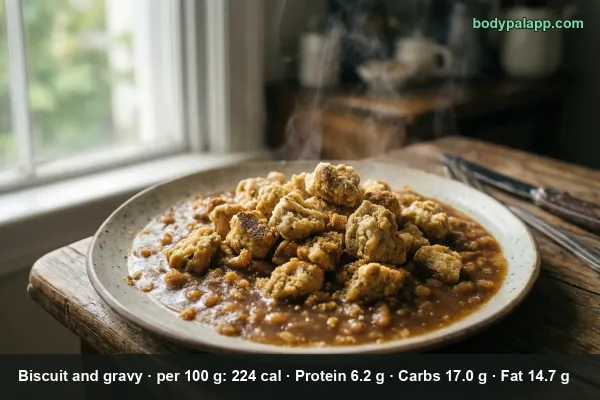
Here is how a hard-boiled egg compares with biscuits and gravy, white flour and white sugar, per 100 g and per usual serving.
Verdict: For weight loss the egg is the clear pick: 155 calories per 100 g against 224 for biscuits and gravy, which also brings 451 mg of sodium. White flour and white sugar are denser still at 364 and 385 per 100 g, and only the egg offers 12.6 g of protein to keep you full.
Egg yolk and white FAQs
How many calories are in one egg with the yolk and white?
About 78 calories in a large hard-boiled egg (50 g), or 72 calories for the same egg raw.
Is a whole egg good for weight loss?
A large hard-boiled egg has 78 calories with 6.3 g of protein and 0.6 g of carbs.
How many calories are in the egg yolk vs the whole egg?
A raw yolk from a large egg (17 g) has 55 calories, while the whole raw large egg has 72. Per 100 g the yolk has 322 calories vs 143 for the whole egg.
How much protein and fat are in a whole egg?
A large hard-boiled egg has 6.3 g of protein and 5.3 g of fat. Per 100 g that is 12.6 g of protein and 10.6 g of fat.
How many calories are in two hard-boiled eggs?
Two large hard-boiled eggs have 155 calories. They weigh 100 g together and provide 12.6 g of protein, 10.6 g of fat and 124 mg of sodium, which makes them a compact, protein-rich breakfast.
How many calories are in three eggs?
Three large hard-boiled eggs come to 233 calories. They weigh 150 g and bring 18.9 g of protein with 186 mg of sodium, before any butter, oil or cheese you cook them with.
Does a raw egg have fewer calories than a boiled egg?
Slightly. A raw large egg lists 72 calories, while a hard-boiled one lists 78. Both have 6.3 g of protein; the boiled row shows 5.3 g of fat against 4.8 g raw.
How many calories are in a cup of chopped egg?
A cup of chopped hard-boiled egg has 211 calories. It weighs 136 g and contains 17.1 g of protein and 14.4 g of fat, about the same as three whole eggs.
How much cholesterol is in eggs?
Hard-boiled egg has 373 mg of cholesterol per 100 g, which equals two large eggs. That is above the 300 mg daily value used on this page, so it is the row worth watching.