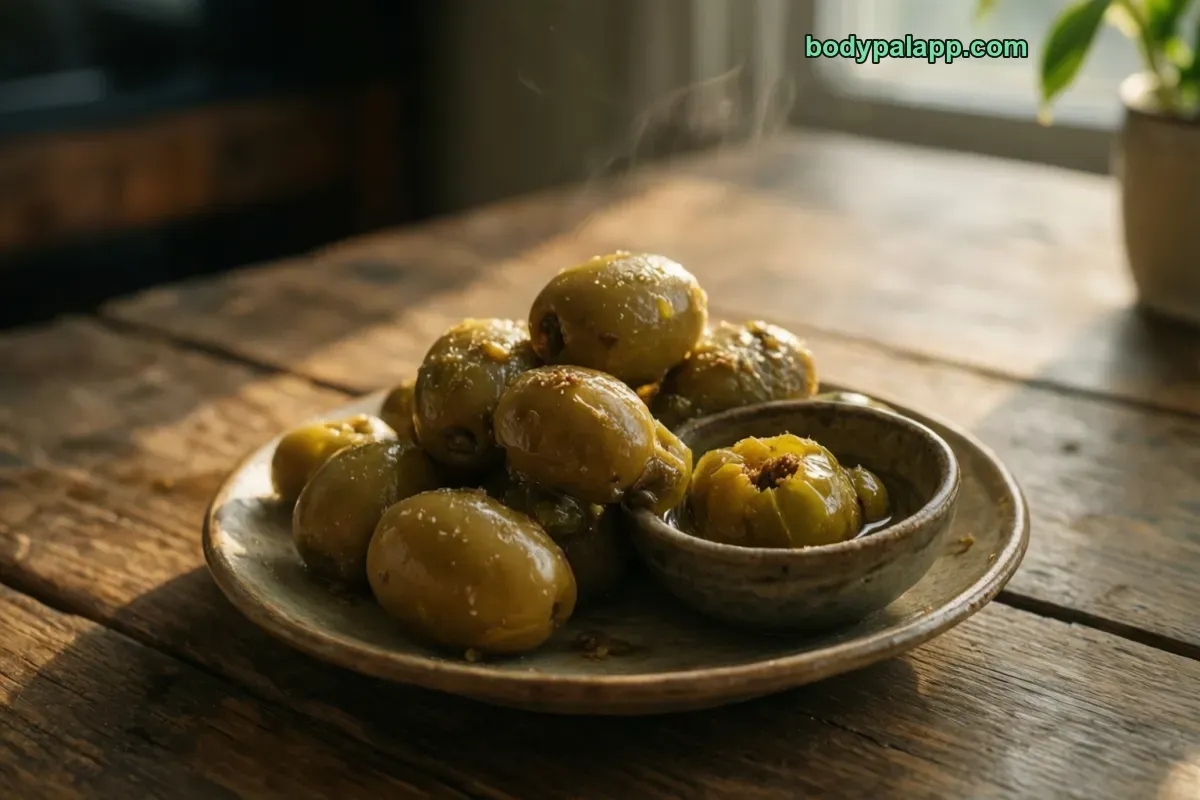
Green olives calories come to 4 for one olive (2.7 g) and 145 per 100 g, pickled, canned or bottled. Calories are not the number to watch. Sodium is: 100 g carries 1,556 mg, or 68% of the daily value. Fat supplies 88% of the energy.
4kcal
1 olive · 2 g, pickled, canned or bottled
3%protein
0 gProtein
0 gCarbs
0.4 gFat
How to burn off 4 kcal
—Walking, brisk
—Jogging
—Cycling, moderate
—Swimming
Skip the math. BodyPal counts these calories from your steps and workouts automatically.
Nutrition facts
Pickled, canned or bottled · per 2 g
Calories
4 kcal
Protein
0 g
Carbohydrate
0.1 g
Fat
0.4 g
Saturated fat
0.1 g
Cholesterol
0 mg
Sodium
42 mg
Potassium
1 mg
Iron
0 mg
Source: USDA FoodData Central
🛡️
Verified nutrition data
Numbers on this page come from USDA FoodData Central, the U.S. Department of Agriculture’s food composition database, and from manufacturer labels where a branded product is named. Last verified October 2026. How we verify our data →
Green olive: calories, protein and sodium by serving
Percent of daily value uses the FDA reference of 2,000 kcal a day.
Serving
kcal
Protein
Carbs
Fat
Sodium
% DV kcal
1 olive (2.7 g)
4
0 g
0.1 g
0.4 g
42 mg
0%
1 cup (135 g)
196
1.4 g
5.2 g
20.7 g
2,101 mg
10%
100 g
145
1 g
3.8 g
15.3 g
1,556 mg
7%
3 × 1 olive (2.7 g)
12
0.1 g
126 mg
5 × 1 olive (2.7 g)
20
0.1 g
210 mg
Five olives are a 20-calorie snack
One green olive of 2.7 g carries 4 calories, which rounds to 0% of a 2000-calorie day. Two olives come to 8 calories, three to 12 and five to 20. Eat a handful and your calorie log barely moves.
The total climbs once you stop counting olives and start counting cups. One cup (135 g) holds 196 calories, about 10% of the daily value, along with 20.7 g of fat. That is what you get when olives go into a bowl for the table or get tossed generously into a salad.
Size matters too. The 2.7 g figure describes a typical olive. Large or stuffed olives weigh more, so if you weigh them, start from 145 per 100 g. BodyPal can log olives from a photo, which helps when you remember the bowl and not the count.
Fat supplies 88% of the calories
Green olives are a fruit that eats like a fat. Fat provides 88% of the calories, carbs 10% and protein 3%. Per 100 g that works out to 15.3 g of fat, 3.8 g of carbs and 1 g of protein.
The carbs are mostly fiber. Of the 3.8 g, 3.3 g is fiber and only 0.5 g is sugar, so the sugar load is close to nothing. A cup adds 4.5 g of fiber and 0.7 g of sugar. Saturated fat is modest at 2 g per 100 g out of 15.3 g of total fat, so most of the fat is the unsaturated kind.
Protein is the weak spot. A full cup gives 1.4 g, about 3% of the daily value, so olives will not get you closer to a protein target. Treat them as a source of flavor and fat, not as a filling main ingredient. Cholesterol is 0.
Sodium is the row to watch
Brine is what makes green olives taste like green olives, and the numbers show it. 100 g holds 1,556 mg of sodium, 68% of the daily value. One cup (135 g) reaches 2,101 mg, or 91% of the daily value, for only 196 calories.
Small counts stay manageable. One olive carries 42 mg, about 2% of the daily value. Three olives add 126 mg and five add 210 mg. The olive itself is not the issue. The issue is how easily five turns into a bowl.
If you watch sodium, count olives instead of eyeballing them, and keep the rest of the day lighter on salty foods. Potassium is low at 42 mg per 100 g, so olives do little to balance the salt. Stuffed versions like Acorsa Spanish Green Olives Stuffed With Minced Pimiento are still olives in brine, so count them the same way.
Olives work best as a garnish, not a side
Each olive is low in calories but high in sodium, so olives work best as an accent. Slice a few into a salad, scatter them on a grain bowl or set them beside cheese on a snack plate. That adds salt and richness for 20 calories or less.
Pair them with foods that bring what olives lack. Lean protein such as chicken, eggs or beans covers the protein gap, and fresh vegetables add volume without much salt. If the meal already has cured meats, feta or a salty dressing, cut back on olives, since sodium stacks up fast.
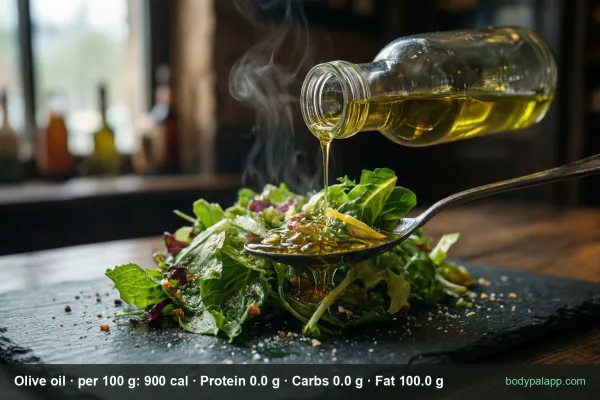
Olives packed in oil need a different count. The oil that clings to them adds calories on top of the olive, and olive oil has 900 calories per 100 g. Drain them well and your intake stays close to the numbers on this page.
How does green olive compare?
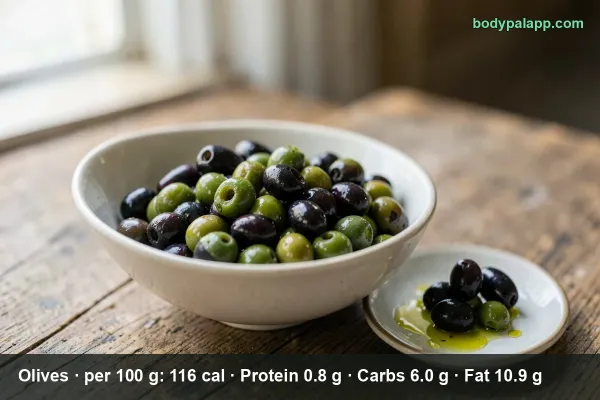
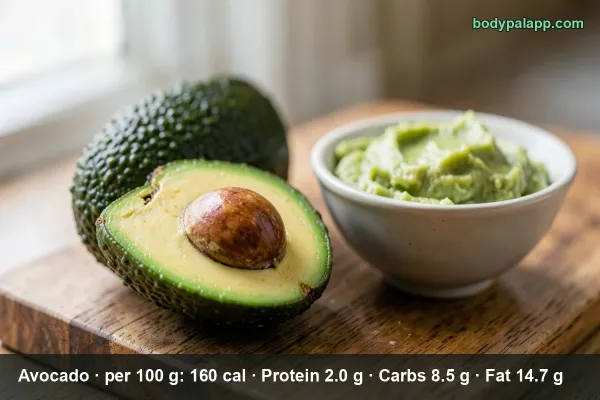
Here is how green olives compare with olives in general, avocado and olive oil, per 100 g and per usual serving.
Verdict: For the fewest calories, choose regular olives: they have 116 per 100 g and 735 mg of sodium, while green olives have 145 calories and 1,556 mg. If sodium worries you, avocado is the better fatty fruit at 7 mg per 100 g, even at 160 calories.
Most popular green olive brands in the United States
Ranked by popularity in the BodyPal database
# Productkcal / 100 g
1Peloponnese Ionian Gourmet Green Olives3 olives · 15 g167 kcal
2Acorsa Spanish Green Olives Stuffed With Minced Pimiento5 olives · 15 g167 kcal
3Gaea Pitted Green Olives Snack4 olives · 15 g100 kcal
4Gaea Pitted Green Olives4 olives · 15 g133 kcal
5Gaea Organic Pitted Green Olives3 olives · 15 g133 kcal
6Mediterranean Bistro Pitted Green Olives2 tbsp · 15 g133 kcal
7Divina Organic Pitted Green Olives3 olives · 15 g133 kcal
8Mediterranean Bistro Stuffed Green Olives2 tbsp · 15 g133 kcal
Labels round calories for a small 15 g serving, so their per-100 g values swing between 100 and 167. Source: manufacturer labels / USDA FoodData Central.
Green olive FAQs
How many calories are in one green olive?
About 4 calories per olive (2.7 g), so 10 olives come to about 39 calories.
Are green olives good for weight loss?
One olive is only 4 calories, but per 100 g green olives have 145 calories, 15.3 g of fat and 3.3 g of fiber.
Green olives vs black olives: which has fewer calories?
Black ripe olives have 116 calories per 100 g, green olives 145. Green olives are also saltier, with 1556 mg of sodium per 100 g versus 735 mg.
How much sodium is in green olives?
Green olives have 1556 mg of sodium per 100 g, about 42 mg per olive.
How many calories are in 5 green olives?
Five green olives (about 14 g) have 20 calories. They also bring 210 mg of sodium and 0.1 g of protein, so the calorie cost is tiny while the salt adds up faster.
How many calories are in a large green olive?
A typical green olive weighs 2.7 g and has 4 calories. Large olives weigh more, so put them on a scale and use 145 calories per 100 g for an accurate count.
Are green olives high in calories?
Not per olive: one has 4 calories. Per 100 g they have 145 calories, and a cup (135 g) has 196, because 88% of their energy comes from fat.
What are the macros of green olives?
Per 100 g, green olives have 15.3 g of fat, 3.8 g of carbs and 1 g of protein. Fat supplies 88% of the calories, carbs 10% and protein 3%, and 3.3 g of the carbs is fiber.
How many calories are in green olives packed in oil?
The olives themselves have 145 calories per 100 g. Any oil that clings to them adds more, since olive oil has 900 calories per 100 g. Drain them well to keep the count close to the olives alone.