
How Many Calories in Hot Wings?
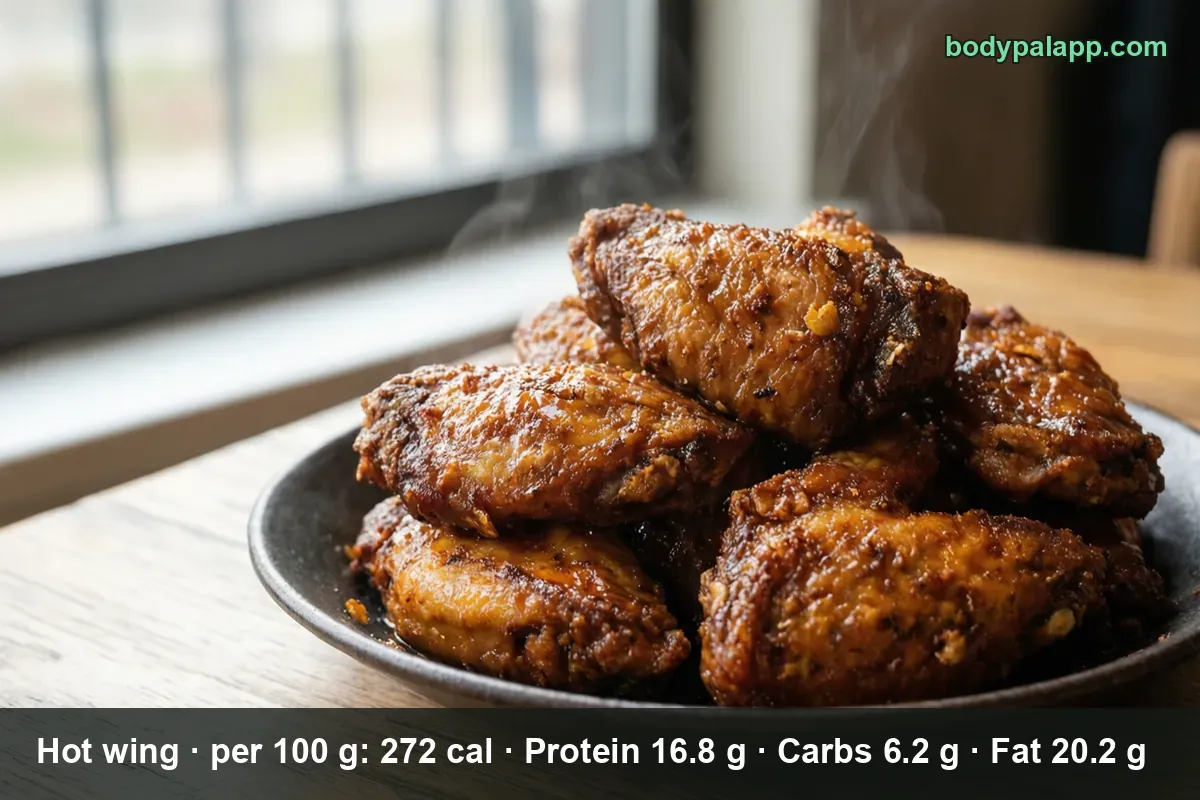
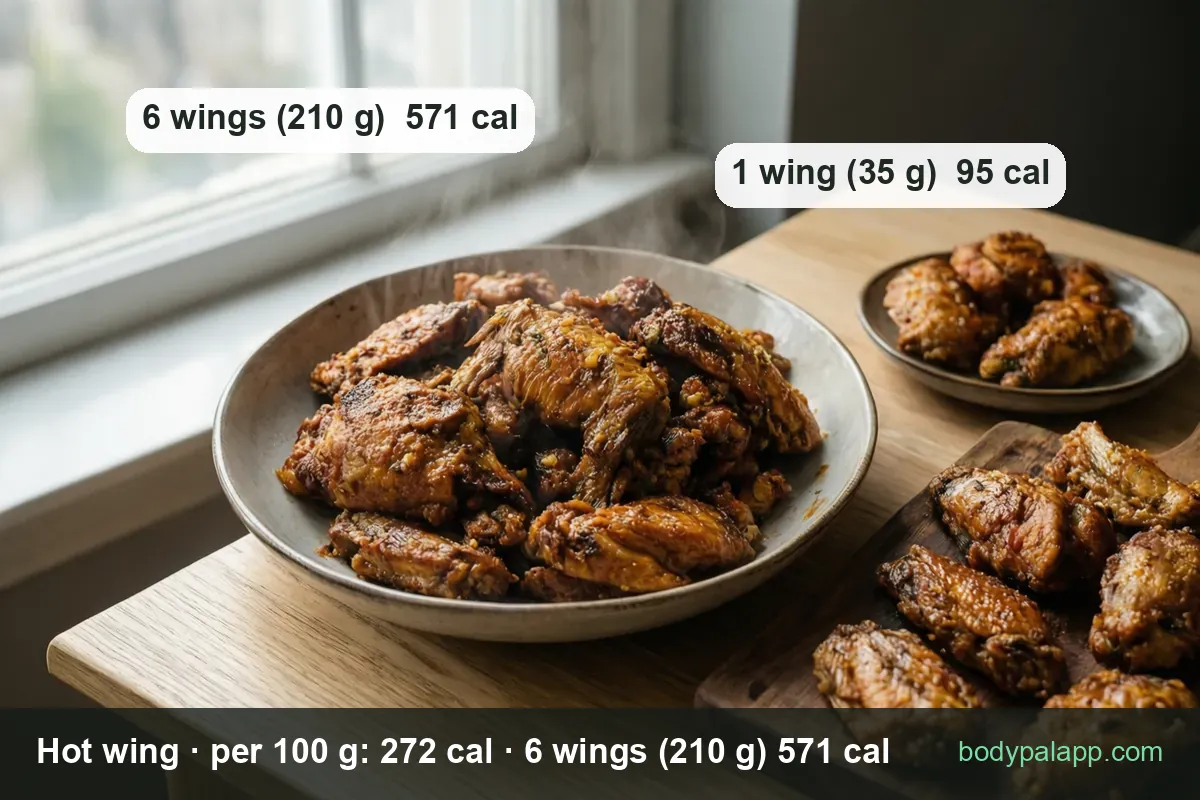
Six hot wings from a bar or a takeout basket, 210 g of meat, skin and sauce, come to 571 calories, or 272 calories per 100 g. One wing on its own is 95 calories. Order ten and the plate is 952 before you touch the ranch, the celery or the fries.
On this page
- Hot wing quick facts
- The sauce brings the sodium, not the chicken
- US portions, wing by wing
- Count the wings, not the bag
- Where the wings came from is worth 38 calories
- Boneless wings are not wings
- Saturated fat runs out before the calories do
- How do hot wings compare?
- Most popular hot wings brands
- FAQ
Hot wing quick facts
The reference below is the wing most people are actually holding: bone-in, fried, tossed in hot sauce, served from a wing joint or a takeout window. That is USDA entry 2706070, and the serving is a standard six-wing order, 210 g of edible wing.
| Nutrient | Per 100 g | Per 6 wings (210 g) | % Daily Value |
|---|---|---|---|
| Calories | 272 kcal | 571 kcal | — |
| Total fat | 20.2 g | 42.4 g | 54% |
| Saturated fat | 6.29 g | 13.2 g | 66% |
| Carbohydrate | 6.18 g | 13.0 g | 5% |
| Dietary fiber | 0.1 g | 0.2 g | 1% |
| Total sugars | 2.26 g | 4.7 g | — |
| Protein | 16.78 g | 35.2 g | 70% |
| Sodium | 842 mg | 1768 mg | 77% |
% Daily Value is based on a 2,000-calorie diet.
Verified nutrition data
Numbers on this page come from USDA FoodData Central, the U.S. Department of Agriculture’s food composition database, and from manufacturer labels where a branded product is named. Last verified September 2026. How we verify our data →
There are no added sugars or trans fat rows here, and that is deliberate rather than an oversight. The USDA survey release that carries the wing entries publishes neither value for any of its five wing records, so there is no figure to quote and the rows have been left out instead of filled with a guess.
Two numbers sit outside the label block and both matter. Cholesterol is 102 mg per 100 g, which puts a six-wing order at 214 mg. Potassium is 213 mg per 100 g, a modest amount for a meat portion this size.
The sauce brings the sodium, not the chicken
Chicken is not a salty food. A plain wing, baked or roasted from raw with nothing on it, carries 404 mg of sodium per 100 g. Toss that same wing in hot sauce and it reads 842 mg per 100 g. The bird did not change. The bath did.
Scaled to a real order, six wings deliver 1,768 mg of sodium, or 77% of the Daily Value. The FDA sets that Daily Value at 2,300 mg for an adult, so a single basket of wings uses better than three quarters of the day's allowance on its own, with the fries and the dipping cup still to come.
This is the pattern CDC describes for sodium in restaurant and packaged food: the salt is rarely in the raw ingredient, it is in what gets done to it. Wings are close to a textbook case, because the sauce is the entire point of the food.
The good news, if you want it, is that the sauce is also the cheapest thing on the wing in calorie terms. A plain baked wing is 252 calories per 100 g and a sauced restaurant wing is 272. Twenty calories per 100 g buys the whole flavor of the dish. It is the sodium that arrives with it, not the fat.
US portions, wing by wing
| Portion | Weight | Calories |
|---|---|---|
| 1 wing, drummette or flat | 35 g | 95 cal |
| 1 oz | 28 g | 76 cal |
| 4 wings | 140 g | 381 cal |
| 6 wings | 210 g | 571 cal |
| 10 wings | 350 g | 952 cal |
| 100 g | 100 g | 272 cal |
Wings are one of the few foods Americans genuinely count rather than weigh, which makes the per-wing number the only one worth memorizing: 95 calories a wing, near enough 100. Six is 571. Ten is 952. A twenty-wing platter shared between two people lands each of them at roughly the ten-wing figure.
The 35 g in that first row is the edible part of one cooked wing, whether it comes to you as a drummette or a flat. USDA lists both under the same weight, so there is no calorie advantage in picking one shape over the other. People who prefer flats are choosing texture, not a lighter wing.
Count the wings, not the bag
Here is the mistake that puts the biggest error into a wing log, and it runs in one direction only.
The 35 g figure is cooked meat, skin and sauce, with the bone already discarded. A whole raw wing straight from the supermarket pack weighs roughly twice that, because you are weighing bone and water you will never eat. Put a pound of raw wings on a kitchen scale, multiply by 272, and you have logged close to double the calories that end up inside you.
The fix is not a better scale. It is the count. Six wings is 571 calories whatever the pack said before it went into the fryer, and no household scale can measure the food that is left after you strip the bone.
That is also why the per-ounce row above is the least useful number on this page. 76 calories an ounce is correct for cooked, boneless-off-the-bone wing meat, and almost nobody weighs wings in that state.
Where the wings came from is worth 38 calories
USDA keeps three separate entries for bone-in hot wings depending on where they were made, plus a fourth for a dry rub instead of sauce, and the spread between them is smaller than the internet assumes.
| Where the wings came from | Per 100 g | 1 wing (35 g) | 6 wings (210 g) |
|---|---|---|---|
| Restaurant or wing bar | 272 cal | 95 cal | 571 cal |
| Made at home from raw | 267 cal | 93 cal | 561 cal |
| Frozen, precooked, reheated | 254 cal | 89 cal | 533 cal |
| Dry rub or other seasoning | 258 cal | 90 cal | 542 cal |
Restaurant wings against a tray of frozen ones out of your own oven is a gap of 18 calories per 100 g, about 7%. Across a full six-wing order that is 38 calories, which is roughly one bite. The idea that the wing bar is punishing you and the freezer aisle is virtuous does not survive contact with the numbers.
Sodium is where the same three entries genuinely separate: 842 mg per 100 g from a restaurant, 812 mg made at home, 741 mg for reheated frozen wings. Still not a small number anywhere, but the ranking is real and it is the one worth acting on if you eat wings often.
The dry rub row is worth its own line, because it is the version in the photo at the top of this page and it is what most grills produce. Rubbed wings run 258 calories per 100 g, 542 for six. A rub is spice and salt, so it costs almost nothing in calories against plain chicken, and it keeps the sauce off your fingers.
Boneless wings are not wings
Read the two boneless entries next to the bone-in one and the food changes shape in front of you.
| Wing type, per 100 g | Calories | Protein | Carbs | Fat | Cholesterol |
|---|---|---|---|---|---|
| Bone-in, hot sauce, restaurant | 272 cal | 16.78 g | 6.18 g | 20.2 g | 102 mg |
| Boneless, hot sauce, restaurant | 282 cal | 12.36 g | 20.03 g | 16.87 g | 45 mg |
| Boneless, hot sauce, other sources | 232 cal | 11.39 g | 19.98 g | 11.82 g | 31 mg |
Carbohydrate jumps from 6.18 g to about 20 g per 100 g. That is breading. Protein falls from 16.78 g to 11–12 g, and cholesterol drops from 102 mg to 31–45 mg, because there is less chicken in the thing and no skin at all. Boneless wings are breaded white-meat nuggets sold under a wing's name.
The calorie surprise is that the restaurant version is not lighter. Six boneless wings from a restaurant come to 592 calories against 571 for bone-in, and ten reach 987. "Boneless" sounds like the sensible order. On a per-piece basis from a chain kitchen, it is the heavier one, and it delivers about a quarter less protein while it does it.
Boneless wings from a grocery pack are the genuinely lighter option at 232 calories per 100 g, or 487 for six. If that is the trade you want, take it knowingly: you are swapping chicken for coating.
Saturated fat runs out before the calories do
A six-wing order is 571 calories, which is 29% of a 2,000-calorie day. That sounds like an ordinary lunch, and by the calorie column alone it is one.
Now look at the other columns in the quick facts table. Saturated fat is 13.2 g, or 66% of the Daily Value. Cholesterol is 214 mg out of 300, about 71%. Sodium is 77%. Three of the four numbers a label tells you to watch are over halfway through the day, and the calorie number is the only one that stayed polite.
That is the real information in a plate of wings, and it is why the Dietary Guidelines for Americans treat saturated fat and sodium as separate ceilings rather than something the calorie count takes care of. You can fit 571 calories into almost any day. Fitting two thirds of your saturated fat into one basket is a different decision.
The protein side is genuinely strong, so it belongs in the same paragraph. Six wings carry 35.2 g of protein, 70% of the Daily Value, which is more than most sit-down entrees deliver and enough to make wings a meal rather than a snack. They sit squarely in the protein foods group MyPlate builds a plate around. Eat them with something green and you have a real dinner; eat them standing at a bar with a second basket on the way and the saturated fat is what gets you.
How do hot wings compare?
Every row below is a cooked chicken wing from the same USDA survey release, measured the same way, so the differences are preparation and nothing else.
| Wing, per 100 g | Calories | Protein | Carbs | Fat |
|---|---|---|---|---|
| Hot sauce, restaurant | 272 cal | 16.78 g | 6.18 g | 20.2 g |
| Dry rub or other seasoning | 258 cal | 17.74 g | 9.42 g | 16.67 g |
| Baked or roasted, no sauce | 252 cal | 23.6 g | 0 g | 16.74 g |
| Grilled with sauce | 250 cal | 19.03 g | 7.28 g | 15.49 g |
| Boneless, breaded, other sources | 232 cal | 11.39 g | 19.98 g | 11.82 g |
Per wing, the ranking shifts because the pieces are not the same size. A plain baked wing is 88 calories, a dry rub wing 90, a hot sauce wing 95, and a grilled sauced wing 138 because USDA weighs that one at 55 g rather than 35 g. A boneless piece is 81.
Our take: the plain baked wing wins this table and it is not close. At 252 calories per 100 g it carries 23.6 g of protein, against 16.78 g for the sauced restaurant version and 11.39 g for the breaded boneless piece. That is more protein per calorie than anything else here, with zero carbohydrate and no sauce sodium riding along. If you want wings often, bake them and sauce them at the table, where you can see how much is going on.
If you are ordering out and want the best of what is available, ask for a dry rub. It costs 14 fewer calories per 100 g than hot sauce, keeps more protein, and reads as a full-flavor wing rather than a diet compromise. The one order to think twice about is boneless from a chain kitchen: 592 calories for six, more than the bone-in basket, with a quarter less protein in it.
Most popular hot wings brands in the United States
Ranked by how widely each product appears among foods sold in the United States, from the BodyPal food database of over 3.3 million products. Calories are the figures printed on each Nutrition Facts label, checked against USDA FoodData Central.
| Product | Calories (per 100 g) |
|---|---|
| Tyson Buffalo Style Hot Wings | 226 cal |
| Tyson Fully Cooked Hot Wings, Buffalo Style | 202 cal |
| Perdue Buffalo Style Chicken Wings | 188 cal |
| Perdue Glazed Chicken Wing Sections, Spicy Buffalo Style | 190 cal |
| Farm Rich Buffalo Style Breaded Chicken Wings | 238 cal |
| Archer Farms Medium Buffalo Recipe Chicken Wings | 214 cal |
Brand popularity: BodyPal food database. Nutrition: manufacturer labels / USDA FoodData Central.
Hot wing FAQs
How many calories in a hot wing?
95 calories for one bone-in wing tossed in hot sauce, 35 g of edible meat, skin and sauce, at 272 calories per 100 g. Six wings come to 571 calories and ten to 952. A dry rub wing is slightly lighter at 90.
How many calories in 6 hot wings?
571 calories for a standard six-wing order, 210 g. That comes with 35.2 g of protein, 42.4 g of fat and 1,768 mg of sodium, which is 77% of the Daily Value. Six wings reheated from frozen are 533 calories.
How many calories in 10 hot wings?
952 calories for ten restaurant wings, 350 g. Ten reheated frozen wings come to 889, and ten boneless wings from a restaurant reach 987. A twenty-wing platter split between two people puts each person at about the ten-wing figure.
How many calories in boneless hot wings?
282 calories per 100 g from a restaurant, so 592 for six pieces, which is more than the 571 of a bone-in order. Grocery-pack boneless wings are lighter at 232 per 100 g, or 487 for six. Both carry about 20 g of carbohydrate per 100 g from breading.
How much protein is in hot wings?
35.2 g in a six-wing order, which is 70% of the Daily Value, at 16.78 g per 100 g. Plain baked wings do better at 23.6 g per 100 g, while boneless breaded wings drop to 11.39 g because breading replaces some of the chicken.
How much sodium is in hot wings?
1,768 mg in six restaurant wings, 77% of the 2,300 mg Daily Value, at 842 mg per 100 g. Almost all of it is the sauce: a plain baked wing carries 404 mg per 100 g. Reheated frozen wings sit in between at 741 mg.
Do hot wings have carbs?
6.18 g per 100 g, so 13.0 g in a six-wing order, and that comes from the sauce rather than the chicken. Plain baked wings have zero. Boneless wings are the exception at about 20 g per 100 g, because they are breaded.
Are hot wings healthy?
They are high in protein and high in three things labels ask you to limit. Six wings give 35.2 g of protein, 70% of the Daily Value, alongside 66% of the saturated fat, 71% of the cholesterol and 77% of the sodium. Baked, unsauced wings change all three of those numbers.
Similar foods
- Margherita Pizza — 358 cal per slice
- Pork Carnitas — 366 cal per cup
- Sicilian Pizza — 358 cal per slice
- Beef Patty — 230 cal per patty
- Broccoli Salad — 416 cal per cup
- Cheesesteak — 392 cal per cheesesteak
Count it without the math
Point the camera at the basket and BodyPal counts the wings, sizes the order and logs the calories, the protein and the sodium in one go.


How long does it take to burn off hot wings?
A 6-wing order (210 g) is 571 kcal. Enter your weight and the amount you ate to see how long it takes you to burn that off:
lb
| Activity | Time to burn 571 kcal |
|---|---|
| Walking, brisk | 1 hr 54 min |
| Cycling, moderate | 1 hr 11 min |
| Swimming, moderate | 1 hr 22 min |
| Jogging | 1 hr 7 min |
| Weight training, moderate | 2 hr 7 min |
Times are for a 155 lb adult at a steady pace; change the weight to see yours. The amount is set to the portion in the text (210 g); change it to what you actually ate. BodyPal works this out from your steps automatically.
This table assumes you know your daily total. If you do not, the daily calorie calculator works it out from five numbers.