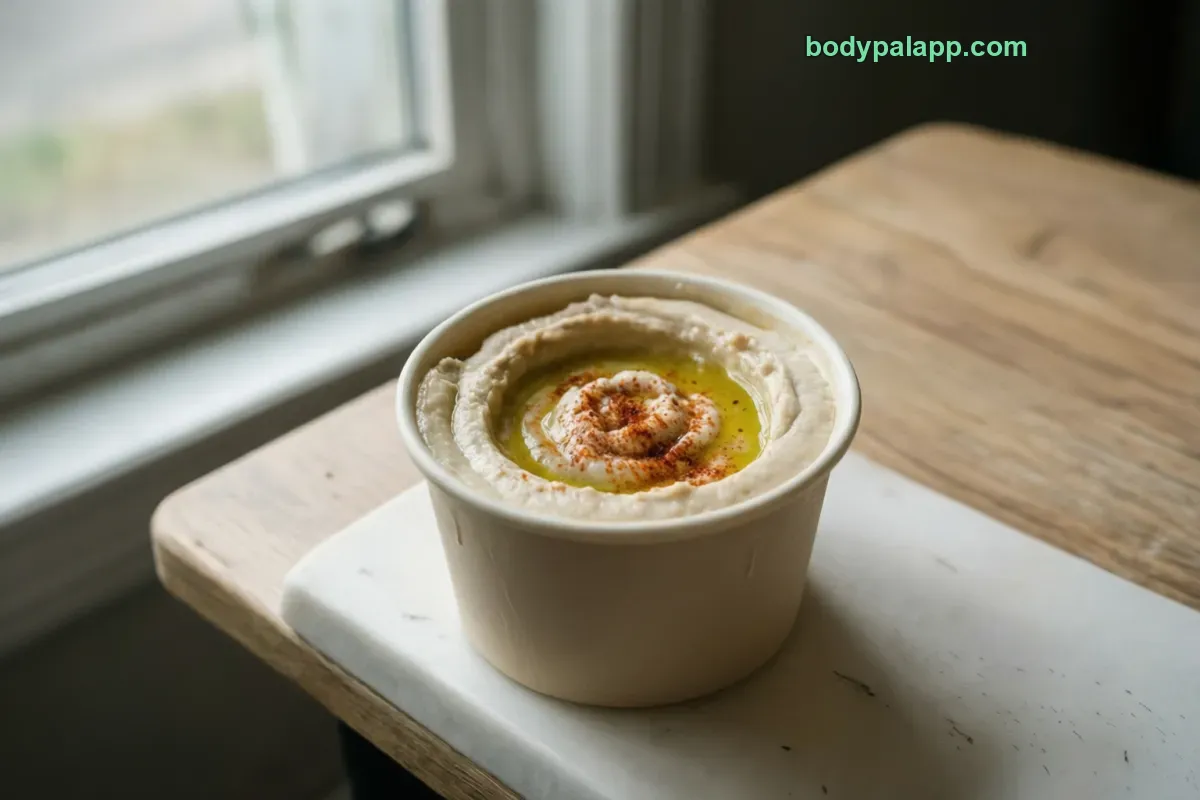
Hummus cup calories come to 140 for a single 57 g cup and 246 per 100 g. The number to notice is the fat: it supplies 69% of the calories, so a cup gives 11 g of fat next to just 3 g of protein. Size matters too, because the 3 oz cup climbs to 209.
140kcal
1 single cup · 57 g, packaged, per label
8%protein
3 gProtein
8 gCarbs
11 gFat
How to burn off 140 kcal
—Walking, brisk
—Jogging
—Cycling, moderate
—Swimming
Skip the math. BodyPal counts these calories from your steps and workouts automatically.
Nutrition facts
Packaged, per label · per 57 g
Calories
140 kcal
Protein
3 g
Carbohydrate
8 g
Fat
11 g
Saturated fat
1 g
Cholesterol
0 mg
Sodium
230 mg
Potassium
70 mg
Source: USDA FoodData Central
🛡️
Verified nutrition data
Numbers on this page come from USDA FoodData Central, the U.S. Department of Agriculture’s food composition database, and from manufacturer labels where a branded product is named. Last verified September 2026. How we verify our data →
Hummus cup: calories, protein and sodium by serving
Percent of daily value uses the FDA reference of 2,000 kcal a day.
Serving
kcal
Protein
Carbs
Fat
Sodium
% DV kcal
Single cup (57 g)
140
3 g
8 g
11 g
230 mg
7%
3 oz cup (85 g)
209
4.5 g
11.9 g
16.4 g
343 mg
10%
100 g
246
5.3 g
14 g
19.3 g
404 mg
12%
3 × Single cup (57 g)
421
9 g
691 mg
5 × Single cup (57 g)
701
15 g
1,151 mg
One small cup is 140 calories, the 3 oz cup is 209
Packaged hummus cups look alike on the shelf, but they do not all hold the same amount. The single cup here weighs 57 g and lands at 140 calories, about 7% of a standard daily value. The 3 oz cup weighs 85 g and comes to 209 calories, or 10% of the daily value. That gap is the whole story of this snack: the label on the lid matters more than the flavor printed on it.
Stacking cups moves the total fast. Two single cups (114 g) reach 280 calories, three (171 g) reach 421, and five (285 g) hit 701. Five cups sounds like a lot until you picture a lunch box packed for a long workday, or a tray of cups set out for a group and picked at all afternoon.
Brands such as Zee Zees sell their cups in more than one size, so check the weight before you log it. If you scoop from the cup with crackers or chips, count those separately. The dip is rarely the only thing on the plate, and the dipper can match or beat the hummus on calories.
Fat is more than two thirds of the calories
Hummus has a reputation as a chickpea food, so many people assume it is mostly protein or starch. The numbers say otherwise. Per 100 g this cup holds 19.3 g of fat, 14 g of carbs and 5.3 g of protein. In calorie terms that is 69% fat, 22% carbs and only 8% protein.
Most of that fat comes from oil and sesame paste, and it is largely unsaturated: saturated fat is just 1.8 g per 100 g. Cholesterol is 0. So the fat here is not a red flag on quality. It is simply dense, and density is why a small tub carries more calories than its size suggests.
Sugar stays low at 1.8 g per 100 g, and fiber reaches 3.5 g. A single cup gives 2 g of fiber and 1 g of sugar. That makes the cup a savory, low-sugar snack. Just do not count on it as a protein source: 3 g per cup covers about 6% of the daily value, and the 3 oz cup reaches only 4.5 g.
Sodium climbs faster than calories
Sodium is the row to watch on any packaged dip, and this one is no exception. A single cup has 230 mg, about 10% of the daily value, while it supplies only 7% of daily calories. The 3 oz cup carries 343 mg, or 15%. Per 100 g the figure is 404 mg, about 18% of the daily value.
The share of sodium runs ahead of the share of calories at every size, and that matters when cups multiply. Two single cups bring 461 mg, three bring 691 mg, and five bring 1,151 mg. Salty dippers like pretzels or pita chips push that further.
If you watch sodium, plain vegetables are the easy fix: they add crunch without adding salt. Homemade hummus is another route, at 242 mg per 100 g against this cup's 404 mg, because you control the salt yourself.
Pair it with crunch that adds fiber or protein
A hummus cup works best as part of a snack, not the whole thing. On its own it is fat-heavy and light on protein, so the pairing decides how filling the snack ends up being. Raw carrots, cucumber, bell pepper strips and snap peas add volume and fiber for very few calories.
If you want the snack to hold you longer, put a protein next to it: a hard-boiled egg, a few slices of turkey, or a cup of Greek yogurt. Whole-grain crackers are a fair middle option. They add fiber, though they also add calories and often salt, so a small handful goes further than a sleeve.
The single cup is a useful built-in portion. It stops at 140 calories without any measuring, which is harder to manage with a large tub and a spoon. If you track your intake, BodyPal can log the cup from a photo, along with whatever you dip into it.
How does hummus cup compare?
Here is how a hummus cup stacks up against tub hummus, homemade hummus and cooked beans, per 100 g and per usual serving.
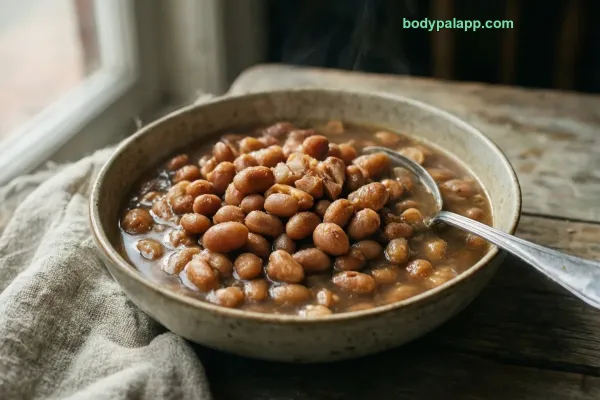
Verdict: For the fewest calories per bite pick cooked beans at 143 per 100 g or homemade hummus at 177, both well under the cup's 246. If you want hummus that keeps you fuller, tub hummus gives 7.4 g of protein per 100 g against 5.3 here, at about 0.9 times the calories.
Most popular hummus cup brands in the United States
Ranked by popularity in the BodyPal database
# Productkcal / 100 g
1Zee Zees Hummus Cup Taco 3 oz3 oz cup · 85 g141 kcal
2Zee Zees Hummus Cup Taco 4.5 oz4.5 oz cup · 128 g141 kcal
3Zee Zees Hummus Cup Original 3 oz3 oz cup · 85 g129 kcal
4Zee Zees Hummus Cup Original 4.5 oz4.5 oz cup · 128 g133 kcal
5Zee Zees Hummus Cup Red Pepper 3 oz3 oz cup · 85 g129 kcal
6Zee Zees Hummus Cup Red Pepper 4.5 oz4.5 oz cup · 128 g133 kcal