
How many calories are in an Idaho potato?
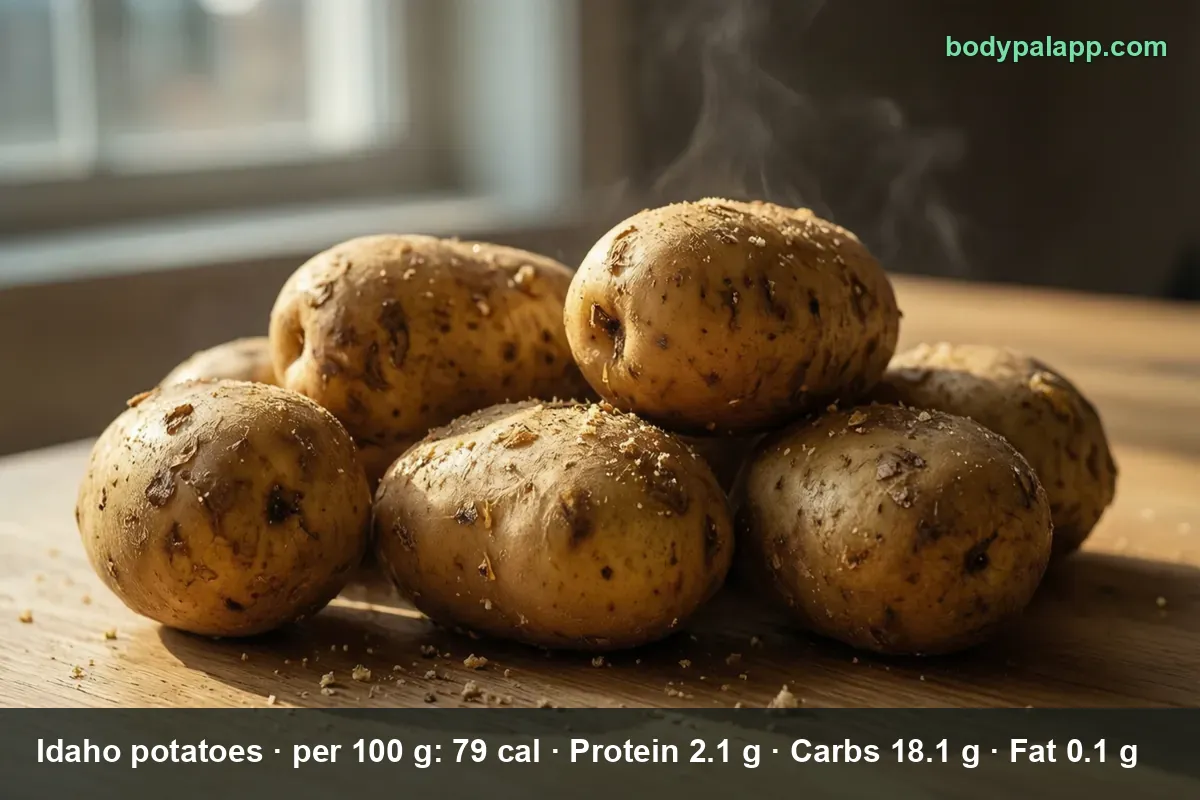
One medium Idaho potato weighs 148 g and carries 117 calories. Raw, with the skin on, it runs 79 calories per 100 g. Nearly all of that is carbohydrate at 18.07 g per 100 g, with 0.08 g of fat and 2.14 g of protein. The bag in the produce aisle will tell you 110.
On this page
- Idaho potato quick facts
- US servings, from one ounce to three potatoes
- Baked, boiled and microwaved Idaho potatoes
- The skin carries the fiber
- Potassium is the row to watch
- How do Idaho potatoes compare?
- Most popular idaho potatoes brands
- Idaho potato FAQs
Idaho potato quick facts
"Idaho potato" is a place and a trademark, not a botanical name. What is actually in the mesh bag is a russet, and that is the record used here: USDA SR Legacy 170027, "Potatoes, russet, flesh and skin, raw". It matches the potato a shopper is holding — whole, unpeeled, uncooked — which is the state the food is bought and weighed in.
The 148 g serving is not invented. It is the NLEA label serving, 5.3 oz, printed on essentially every US bag of Idaho or russet potatoes, so the column below lines up with the panel on the bag rather than with a kitchen guess.
| Nutrient | Per 100 g | Per 1 medium potato (148 g) | % Daily Value |
|---|---|---|---|
| Calories | 79 | 117 | — |
| Total fat | 0.08 g | 0.1 g | 0% |
| Saturated fat | 0.03 g | 0.0 g | 0% |
| Carbohydrate | 18.07 g | 26.7 g | 10% |
| Dietary fiber | 1.3 g | 1.9 g | 7% |
| Total sugars | 0.62 g | 0.9 g | — |
| Protein | 2.14 g | 3.2 g | 6% |
| Sodium | 5 mg | 7 mg | 0% |
| Cholesterol | 0 mg | 0 mg | 0% |
| Potassium | 417 mg | 617 mg | 13% |
% Daily Value is based on a 2,000-calorie diet.
Verified nutrition data
Numbers on this page come from USDA FoodData Central, the U.S. Department of Agriculture’s food composition database, and from manufacturer labels where a branded product is named. Last verified September 2026. How we verify our data →
There is no added sugars row because the SR Legacy edition does not publish that field for fresh vegetables — and a raw potato has none by definition. Total sugars have no Daily Value of their own, which is why that cell is a dash. The 0.62 g of natural sugar per 100 g is trivial either way; the potato is starch, not sweetness.
US servings, from one ounce to three potatoes
| Serving | Weight | Calories |
|---|---|---|
| 1 oz | 28 g | 22 kcal |
| Half a medium potato | 74 g | 58 kcal |
| One medium potato, the 5.3 oz label serving | 148 g | 117 kcal |
| Three medium potatoes | 444 g | 351 kcal |
| Per 100 g | 100 g | 79 kcal |
Only the 148 g line is a real USDA-style household serving. The ounce, the half potato and the three-potato row are our own arithmetic from the USDA 100 g figure, not USDA servings — useful, but scaled by us.
Two of those rows are worth pausing on. Half a potato at 58 calories is the cheapest way to keep a starch on the plate, and three medium potatoes — a normal amount to roast for a family side — reach 351 calories before a drop of oil goes in the pan. That is where potatoes stop being a light food, and it happens through volume, not through the potato getting richer.
Real Idaho potatoes also vary a lot in size. A big baking russet from the loose bin can run well past 148 g, so weigh it once and you will know for good whether your usual potato is one serving or one and a half.
Baked, boiled and microwaved Idaho potatoes
| Version | Per 100 g | Typical serving | Calories |
|---|---|---|---|
| Raw, flesh and skin (this page) | 79 kcal | 148 g | 117 kcal |
| Baked, flesh and skin | 95 kcal | 148 g | 141 kcal |
| Baked medium potato, no salt | 93 kcal | one medium, 173 g | 161 kcal |
| Boiled in the skin, no salt | 87 kcal | 148 g | 129 kcal |
| Microwaved, flesh and skin | 105 kcal | 148 g | 155 kcal |
| Flesh only, no skin, raw | 83.42 kcal | 148 g | 123 kcal |
| Baked skin only, no salt | 198 kcal | 1 oz, 28 g | 55 kcal |
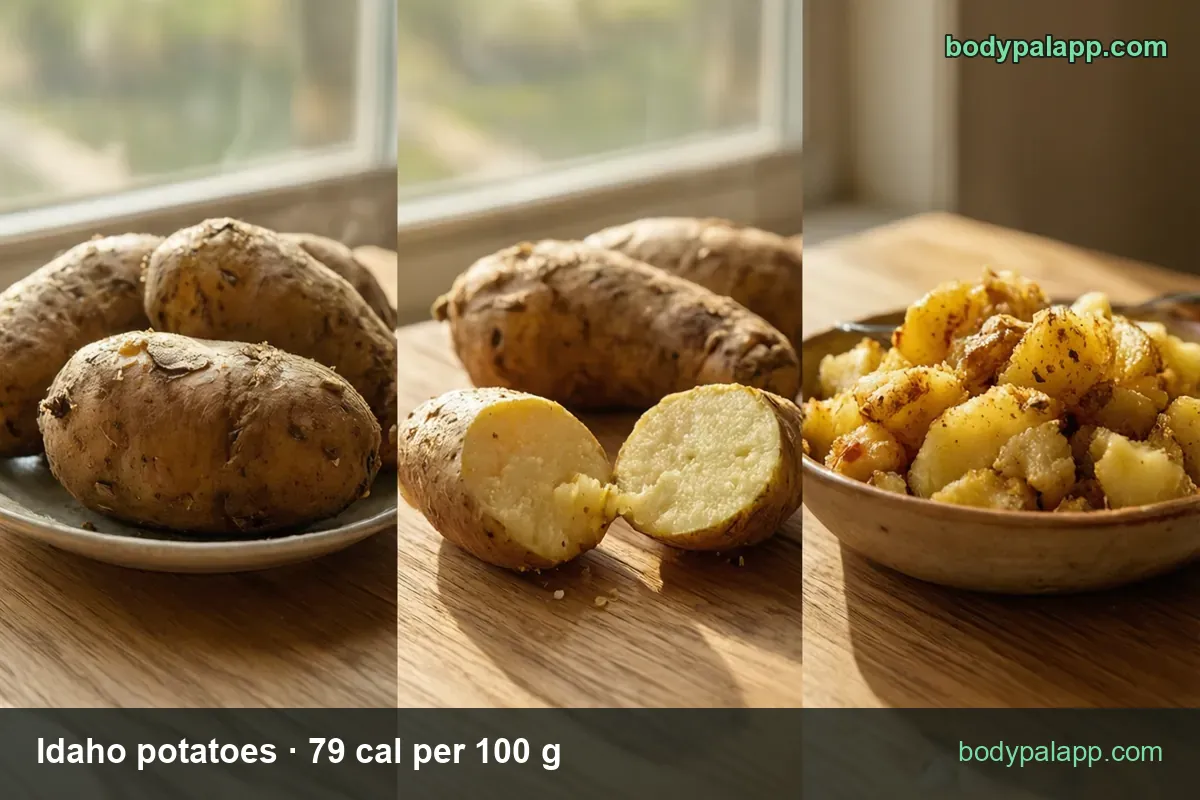
Here is the thing most calorie pages get wrong. Baked russet reads 95 calories per 100 g against 79 raw, and that 20 percent jump is not the oven adding anything. It is water leaving. Weigh a potato before and after baking and it is lighter; the same calories are simply packed into fewer grams. Microwaving dries it out faster still, which is why the microwaved record is the highest of the cooked whole-potato rows at 105 per 100 g, and boiling in the skin holds water in, which is why it is the lowest cooked figure at 87.
So log by the state you actually weighed. If you weighed the raw potato, use 79 per 100 g. If you weighed it hot off the tray, use 95. Mixing the two is the single most common way a baked potato ends up logged 20 percent light.
The flesh-only record is a different animal again: Foundation record 2346401 is calculated with Atwater factors and comes to 83.42 calories per 100 g peeled and raw. Slightly higher per gram than the whole potato, because the skin is bulk without much energy attached to it.
The skin carries the fiber
Among the raw whole potatoes with skin in USDA's tables — russet, red, white and the mixed-variety record — russet has the least fiber, at 1.3 g per 100 g. A medium potato gives you 1.9 g, or 7 percent of the 28 g Daily Value. White potatoes nearly double that at 2.4 g per 100 g.
Baked potato skin on its own is the outlier: 7.9 g of fiber per 100 g and 198 calories per 100 g. An ounce of crisped skin is 55 calories and brings more than 2 g of fiber with it. Peeling a russet costs you most of that for almost no calorie saving, which makes leaving the skin on the easiest upgrade available on this food. MyPlate counts potatoes in the starchy vegetable group, and the Dietary Guidelines put starchy vegetables at about 5 cups a week for a 2,000-calorie pattern — potatoes count toward that, skin included.
Potassium is the row to watch
A medium Idaho potato carries 617 mg of potassium, 13 percent of the 4,700 mg Daily Value set by the FDA, against 7 mg of sodium. That is close to 90 times more potassium than sodium, a ratio very few things on an American dinner plate can match.
It also explains why the potato itself is rarely the problem. Everything that turns a plain baked potato into a salty meal — butter, cheese, bacon bits, a heavy hand with the shaker — arrives after the potato. Half a teaspoon of table salt alone would put roughly 1,160 mg of sodium on top of the potato's 7 mg. If you are watching sodium, the potato is the safe part of the dish.
One more number worth knowing: the bag and the database disagree. Branded Idaho and russet bags declare 74 calories per 100 g and 110 calories per 5.3 oz serving; USDA gives 79 and 117 for the same potato. Seven calories, entirely from the rounding allowances on a Nutrition Facts panel. Neither is wrong, and neither will change your week.
How do Idaho potatoes compare?
| Potato | Per 100 g | US serving | Calories |
|---|---|---|---|
| Idaho (russet), raw | 79 kcal | one medium, 148 g | 117 kcal |
| Red potato, raw | 70 kcal | one medium, 148 g | 104 kcal |
| White potato, raw | 69 kcal | one medium, 148 g | 102 kcal |
| Sweet potato, flesh only, raw | 79 kcal | one medium, 148 g | 117 kcal |
The 148 g weight for the three comparison potatoes is our own arithmetic from each USDA 100 g figure, so the sizes are held equal on purpose.
Our take: the sweet potato reputation does not survive the arithmetic. Gram for gram it lands on the same 79 calories as a russet, and at equal weight both come to 117 — the swap buys you vitamin A, not a calorie saving. If you genuinely want the lightest potato on the plate, it is white or red, and the gap is 13 to 15 calories per potato, which is noise. Pick the potato you like, weigh it, and spend your attention on what goes on top of it.
Most popular idaho potatoes brands in the United States
Ranked by how widely each product appears among foods sold in the United States, from the BodyPal food database of over 3.3 million products. Calories are the figures printed on each Nutrition Facts label, checked against USDA FoodData Central.
| Product | Calories (per 100 g) |
|---|---|
| Alsum Premium Russet Potatoes | 74 cal |
| Nonpareil Idaho Potatoes | 74 cal |
| Sun Harvest Russet Potatoes | 74 cal |
| Harvest Club Russet Potatoes | 74 cal |
| White Russet Idaho Potatoes | 74 cal |
| Green Giant Red Idaho Potatoes | 68 cal |
Brand popularity: BodyPal food database. Nutrition: manufacturer labels / USDA FoodData Central.
Idaho potato FAQs
How many calories are in one medium Idaho potato?
117 calories for a medium potato of 148 g, raw with the skin on, at 79 calories per 100 g. That is the 5.3 oz serving printed on US potato bags. Half a potato is 58 calories, three of them 351, and a single ounce works out to 22.
Are Idaho potatoes and russet potatoes the same thing?
Yes: 79 calories per 100 g covers both. Idaho is a growing region and a trademark; russet is the variety that fills almost all of those bags. USDA's russet record is the right one to use, and a medium 148 g potato is 117 calories either way.
How many calories are in a baked Idaho potato?
141 calories for the same 148 g of potato once baked with flesh and skin, or 95 calories per 100 g. USDA's separate medium baked-potato record, 173 g without salt, comes to 161 calories. Butter, sour cream and cheese all sit on top of those figures.
Do potatoes gain calories when you bake them?
No: raw russet is 79 calories per 100 g and baked is 95, a 20 percent jump that comes entirely from water leaving the potato. Weigh the same potato before and after and the calories are unchanged; the baked figure is just concentrated into fewer grams.
How many carbs are in an Idaho potato?
26.7 g of carbohydrate in a medium 148 g potato, which is 10 percent of the 275 g Daily Value, from 18.07 g per 100 g. Only 0.9 g of that is sugar and 1.9 g is fiber, so the starch itself accounts for about 23.9 g.
How much potassium is in an Idaho potato?
617 mg in a medium 148 g potato, 13 percent of the 4,700 mg Daily Value, against just 7 mg of sodium — close to 90 times more potassium than sodium. Salt, butter and toppings are what shift that balance, not the potato itself.
Why does the bag say 110 calories?
Because label rounding is allowed: branded Idaho and russet bags declare 74 calories per 100 g and 110 per 5.3 oz serving, while USDA's russet record gives 79 per 100 g and 117 per 148 g. Seven calories apart on the same potato, and either is close enough to log.
How much protein is in a russet potato?
3.2 g in a medium 148 g potato, 6 percent of the 50 g Daily Value, from 2.14 g per 100 g. Baked russet reads 2.63 g per 100 g, which is again water leaving rather than protein arriving. Real protein, but not a source you would build a meal around.
Similar foods
- Russet Potato — 168 cal per medium potato
- Tofu — 63 cal for 1/4 block
- Caesar Salad — 61 cal per cup
- Corn Kernels — 134 cal per cup
- Peas — 117 cal per cup
- White Sweet Potato — 115 cal per medium sweet potato
Count it without the math
Point the camera at the plate and BodyPal counts the potato for you, skin, butter and all.


How long does it take to burn off Idaho potatoes?
One medium potato (148 g) is 117 kcal. Enter your weight and the amount you ate to see how long it takes you to burn that off:
lb
| Activity | Time to burn 117 kcal |
|---|---|
| Walking, brisk | 23 min |
| Cycling, moderate | 15 min |
| Swimming, moderate | 17 min |
| Jogging | 14 min |
| Weight training, moderate | 26 min |
Times are for a 155 lb adult at a steady pace; change the weight to see yours. The amount is set to the portion in the text (148 g); change it to what you actually ate. BodyPal works this out from your steps automatically.
This table assumes you know your daily total. If you do not, the daily calorie calculator works it out from five numbers.