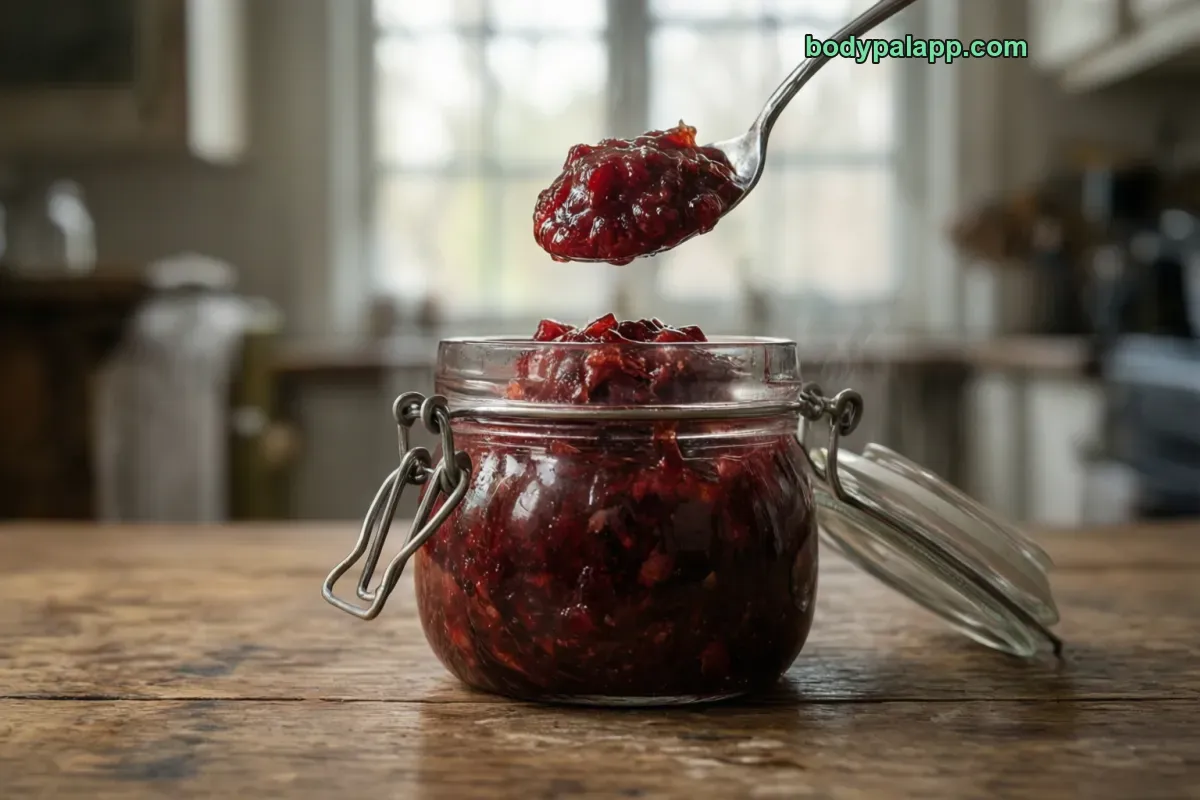
Jam calories come to 56 for one tablespoon (20 g) and 278 per 100 g. The number to notice is the split: 99% of those calories come from carbohydrate, mostly sugar, with almost no protein or fat. The size of the spoon decides the total, so a heaped scoop can quietly double it.
56kcal
1 tablespoon · 20 g, generic, all flavors
1%protein
0.1 gProtein
14 gCarbs
0 gFat
How to burn off 56 kcal
—Walking, brisk
—Jogging
—Cycling, moderate
—Swimming
Skip the math. BodyPal counts these calories from your steps and workouts automatically.
Nutrition facts
Generic, all flavors · per 20 g
Calories
56 kcal
Protein
0.1 g
Carbohydrate
13.8 g
Fat
0 g
Saturated fat
0 g
Cholesterol
0 mg
Sodium
6 mg
Potassium
15 mg
Iron
0.1 mg
Source: USDA FoodData Central
🛡️
Verified nutrition data
Numbers on this page come from USDA FoodData Central, the U.S. Department of Agriculture’s food composition database, and from manufacturer labels where a branded product is named. Last verified September 2026. How we verify our data →
Jam: calories, protein and sodium by serving
Percent of daily value uses the FDA reference of 2,000 kcal a day.
Serving
kcal
Protein
Carbs
Fat
Sodium
% DV kcal
Tablespoon (20 g)
56
0.1 g
13.8 g
0 g
6 mg
3%
Packet (14 g)
39
0.1 g
9.6 g
0 g
4 mg
2%
Sugar-Free (20 g)
24
0.1 g
5.9 g
0 g
1 mg
1%
100 g
278
0.4 g
68.9 g
0.1 g
32 mg
14%
3 × Tablespoon (20 g)
167
0.2 g
19 mg
5 × Tablespoon (20 g)
278
0.4 g
32 mg
A level tablespoon is 56 calories, your spoon may not be
A level tablespoon of jam weighs 20 g and carries 56 calories, about 3% of the daily calorie value. Single-serve packets are smaller at 14 g and 39 calories, which makes them one of the easiest portions to count. A spoonful scooped straight from the jar onto toast is rarely level, though. That is where the total drifts.
The math climbs fast once you stop measuring. 2 tablespoons (40 g) come to 111 calories. 3 tablespoons (60 g) reach 167. 5 tablespoons add up to a full 100 g and 278 calories, or 14% of the daily value, all from a topping most people never think to log.
If you track food, weigh your usual spread once. Set the jar on a kitchen scale, spread your toast the way you normally do, and read the difference. If your habit turns out closer to 2 tablespoons than 1, log 111, not 56. After that, a regular spoon and your eye are good enough.
Nearly every calorie in jam is sugar
Jam is about as single-minded as a food gets. Carbohydrate supplies 99% of its calories, protein 1%, and fat 0. Per 100 g that works out to 68.9 g of carbs, 48.5 g of sugars, 0.4 g of protein and 0.1 g of fat.
Per tablespoon, you get 13.8 g of carbs and 9.7 g of sugars against 0.1 g of protein. Fiber is 1.1 g per 100 g, which shrinks to 0.2 g in a tablespoon. The fruit is there for flavor and color, not for bulk.
The rest of the label is quiet. Sodium is 32 mg per 100 g and just 6 mg per tablespoon, 0% of the daily value. Saturated fat and cholesterol both read 0, and potassium is a modest 77 mg per 100 g. So the one row worth watching is sugar. Jam will not wreck a day of eating, but it adds sweetness and calories without anything that keeps you full.
Sugar-free jam changes more than the calorie line
Sugar-free jam drops a 20 g tablespoon to 24 calories, 1% of the daily value. Calories are the headline, but the macro rows move even more. Carbs fall from 13.8 g to 5.9 g, and sugars go from 9.7 g to 0.7 g in the same tablespoon.
Fiber edges up from 0.2 g to 0.4 g, and sodium sits at 1 mg. Protein stays at 0.1 g in both versions, so neither one does anything for fullness. Brands such as Smucker's Sugar Free Strawberry Jam sit on the shelf right next to the regular Smucker's Strawberry Jam, so the swap costs no extra effort.
Whether it is worth it comes down to how much you use. If jam is a once-a-week spoonful, the regular jar is fine. If you spread 2 or 3 tablespoons every morning, the sugar-free version keeps the habit and trims most of the sugar. Small-batch jams like Jams By Jan Blackberry Jam or Pleasant Acres Blackberry Jam are better treated as regular jam unless the label says otherwise.
Jam works best next to protein and fat
Because jam brings almost nothing but sugar, its partner on the plate does the heavy lifting. Peanut butter, Greek yogurt, cottage cheese or eggs on the side give the meal the protein and fat jam lacks. A PB&J is the classic example: the jam supplies sweetness, the peanut butter supplies staying power.
Jam also stretches further than you would think. A single tablespoon stirred into plain yogurt or oatmeal sweetens the whole bowl for 56 calories, often less than flavored versions of the same foods. A thin layer on whole-grain toast tastes like more than it is if you spread it right to the edges.
If you are logging food, the topping is easy to forget, and that is exactly why it adds up. BodyPal can log jam on toast from a photo, so the spread gets counted along with the bread. Measure the spoon for a week and the guesswork mostly disappears.
How does jam compare?
Here is how jam stacks up against other sweet pantry toppings, per 100 g and per usual serving.
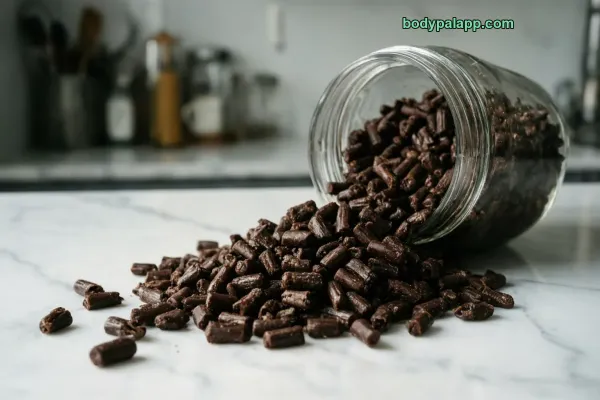
Verdict: Coffee syrup is jam's near twin at 267 calories per 100 g, while chocolate sprinkles run 473 and pudding mix 377 with 1,400 mg of sodium. For the lightest sweet topping pick jam or a measured pour of coffee syrup, and skip pudding mix if you watch sodium.
Branded jams are single-flavor strawberry or blackberry products, so their calories run below the multi-flavor average above, and sugar-free versions vary widely by brand. Source: manufacturer labels / USDA FoodData Central.
Jam FAQs
How many calories are in a tablespoon of jam?
A tablespoon of jam (20 g) is about 56 calories, and an individual packet (14 g) is about 39 calories.
Is jam good for weight loss?
A tablespoon of jam is 56 calories with 9.7 g of sugar and 0.1 g of protein, while 100 g of jam has 278 calories.
Regular jam vs sugar-free jam: what is the calorie difference?
Regular jam is 278 calories per 100 g against 121 for sugar-free, a difference of 157 calories per 100 g, or 56 calories against 24 for a 20 g tablespoon.
How much sugar is in jam?
A tablespoon of jam (20 g) has about 9.7 g of sugar, from 48.5 g per 100 g. Sugar-free jam has just 3.39 g of sugar per 100 g.
How many calories are in a packet of jam?
A 14 g packet of jam has 39 calories, with 9.6 g of carbs and 6.8 g of sugars. That is 2% of the daily calorie value, and the fixed size makes packets an easy way to keep portions honest.
How many calories are in 2 tablespoons of jam?
2 tablespoons of jam (40 g) have 111 calories. Add a third tablespoon and the total reaches 167 calories for 60 g, so a heavy hand on toast adds up quickly.
How many calories are in 100 g of jam?
100 g of jam has 278 calories, with 68.9 g of carbs, 48.5 g of sugars and 0.4 g of protein. That is about 5 tablespoons and 14% of the daily calorie value.
Does jam have fat or sodium?
Jam has almost none: 0.1 g of fat and 32 mg of sodium per 100 g. A tablespoon carries 0 g of fat and 6 mg of sodium, which is 0% of the daily value.
Is jam a source of protein?
Jam has only 0.4 g of protein per 100 g and 0.1 g per tablespoon, so just 1% of its calories come from protein. Pair it with peanut butter, yogurt or eggs if you want a filling meal.