
How many calories are in a Japanese sweet potato?
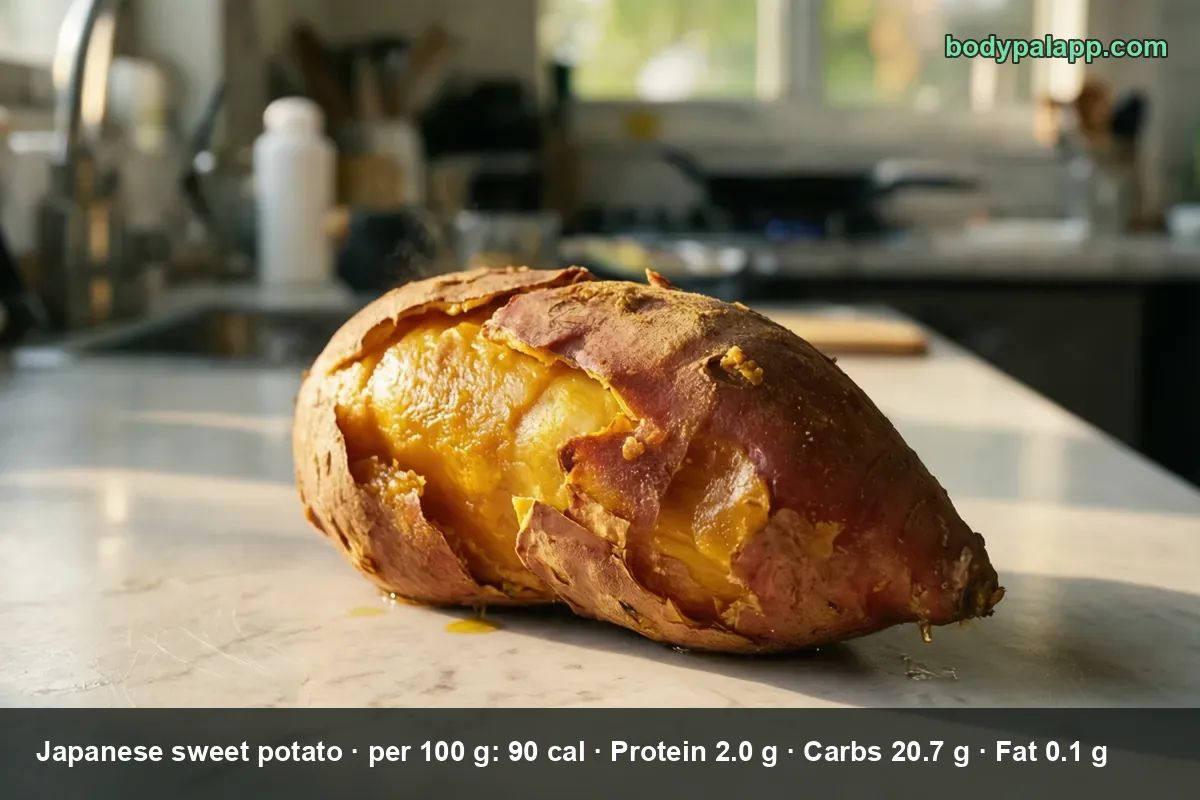
One medium Japanese sweet potato, baked whole in its skin, weighs about 114 g and carries 103 calories. Per 100 g the flesh runs 90 calories. USDA does not publish a separate record for the purple-skinned Japanese variety, so these are the numbers for sweet potato as a species, satsumaimo included.
On this page
- Japanese sweet potato quick facts
- US servings, from one ounce to a full cup
- Raw, boiled, salted and buttered
- Potassium and fiber are the rows that surprise people
- How does a Japanese sweet potato compare?
- Most popular japanese sweet potato brands
- Japanese sweet potato FAQs
Japanese sweet potato quick facts
The number people want is for the potato they are holding: a whole one, roasted until the skin cracks and the flesh goes soft. That is SR Legacy 168483, "Sweet potato, cooked, baked in skin, flesh, without salt", the only complete USDA record for exactly that preparation with nothing added. Other entries exist for raw and boiled potatoes, and they land in different places, but they describe a different food on the plate.
One caveat worth saying out loud. Japanese cultivars are drier and starchier than the orange kind, so a real satsumaimo may sit a little above the species average rather than below it. USDA does not measure the varieties separately, so there is no honest number to put on that difference — treat 90 per 100 g as the floor, not the ceiling.
| Nutrient | Per 100 g | Per 1 medium (114 g) | % Daily Value |
|---|---|---|---|
| Calories | 90 | 103 | — |
| Total fat | 0.15 g | 0.2 g | 0% |
| Saturated fat | 0.05 g | 0.1 g | 0% |
| Carbohydrate | 20.71 g | 23.6 g | 9% |
| Dietary fiber | 3.3 g | 3.8 g | 13% |
| Total sugars | 6.48 g | 7.4 g | — |
| Protein | 2.01 g | 2.3 g | 5% |
| Sodium | 36 mg | 41 mg | 2% |
% Daily Value is based on a 2,000-calorie diet.
Verified nutrition data
Numbers on this page come from USDA FoodData Central, the U.S. Department of Agriculture’s food composition database, and from manufacturer labels where a branded product is named. Last verified September 2026. How we verify our data →
There is no added sugars row and no trans fat row here, because USDA does not publish either value for this record. The 7.4 g of sugar in a medium potato is what the starch turns into in the oven, not something a factory put there. Cholesterol is 0 mg, as it is in every vegetable. Potassium is the standout at 475 mg per 100 g, or 542 mg in a medium potato, and the %DV chart behind those percentages is the FDA Daily Value table.
US servings, from one ounce to a full cup
| Serving | Weight | Calories |
|---|---|---|
| 1 oz | 28 g | 25 kcal |
| 1 small potato | 60 g | 54 kcal |
| 1 medium potato | 114 g | 103 kcal |
| 1 large potato | 180 g | 162 kcal |
| 1 cup, cubed or mashed flesh | 200 g | 180 kcal |
| Per 100 g | 100 g | 90 kcal |
Small, medium, large and the cup are USDA household measures for this record; the medium is defined as roughly 2 inches across and 5 inches long before cooking. The 1 oz line is our own arithmetic from the USDA 100 g figure, not a USDA serving, and it is the one to use when you weigh a piece of a bigger potato.
Here is the trap. A cup of cooked flesh weighs 200 g and comes to 180 calories, which is 75% more than the 103 in a medium potato, yet people call both "one sweet potato." A long, thin satsumaimo the size of your forearm is not a medium. If your potato looks big, weigh it: at 90 calories per 100 g the scale does the work in one step, and the difference between guessing and weighing here is a full snack.
Raw, boiled, salted and buttered
| Version | Per 100 g | Typical piece | Calories |
|---|---|---|---|
| Raw, whole | 86 kcal | 1 medium (114 g) | 98 kcal |
| Boiled, without skin | 76 kcal | 1 medium (151 g) | 115 kcal |
| Baked in skin, salted | 90 kcal | 1 medium (114 g) | 103 kcal |
| Baked, no added fat (survey average) | 82 kcal | 1 medium (114 g) | 93 kcal |
| Baked with butter or oil | 115 kcal | 1 medium (114 g) | 131 kcal |
| Sweet potato fries, frozen | 192 kcal | 3 oz (85 g) | 163 kcal |
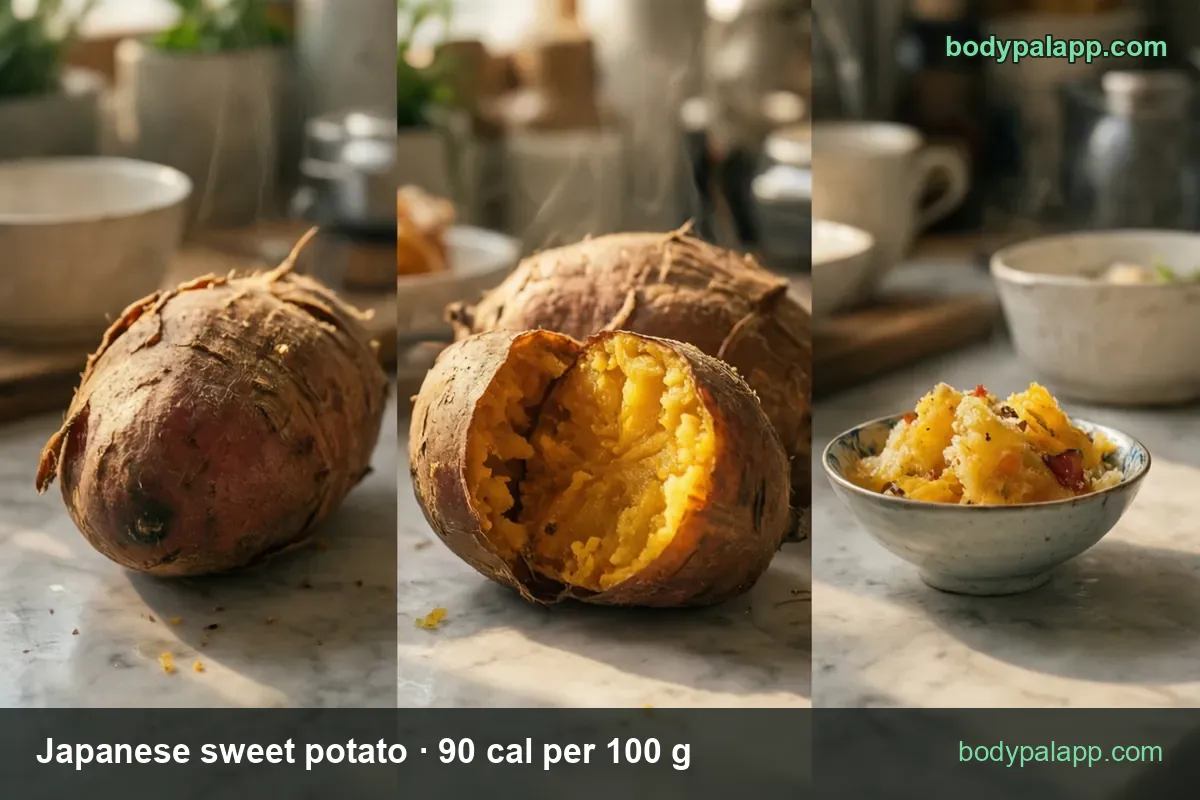
The boiled line is the one that fools people. Boiled and peeled reads 76 calories per 100 g against 90 for baked, so boiling looks like the lighter choice. It is not, really. The potato soaks up water while it cooks, which dilutes every number per gram, and losing the skin drops fiber from 3.3 g to 2.5 g per 100 g. A boiled medium ends up heavier on the scale, at 151 g, and comes to 115 calories — more than the baked one, not less.
Raw sits at 86 per 100 g with only 4.18 g of sugar. Baking pushes that to 6.48 g without adding a thing; the oven converts starch, which is why a roasted satsumaimo tastes like dessert.
Salt changes exactly one row. The salted baked record is identical to the plain one on calories, carbs, fiber and protein, and differs only in sodium: 246 mg per 100 g instead of 36 mg. For a medium potato that works out to about 280 mg by our own arithmetic from the USDA 100 g figure — roughly an eighth of a teaspoon of table salt.
Butter is the real multiplier. The survey record for sweet potato baked with fat added runs 115 calories per 100 g and 4.53 g of fat, so a medium potato lands at 131 calories with saturated fat jumping from 0.05 g to 1.11 g per 100 g. Fries are a different food entirely at 192 per 100 g: a 3 oz side is 163 calories, more than the whole baked potato it came from.
Store-bought versions stay close to the plain baked number as long as nothing is added. Bako Sweet lists 111 calories for a 130 g medium potato, and Good & Gather steam-in-bag cubes come to 90 calories per 110 g cup. Archer Farms roasted chunks run higher, at 106 per 100 g.
Potassium and fiber are the rows that surprise people
A medium baked sweet potato delivers 542 mg of potassium, 12% of the Daily Value, on 103 calories. Very few foods put that much potassium next to that few calories, and potassium is one of the nutrients the Dietary Guidelines for Americans flags as under-consumed in the US.
Fiber is the second one: 3.8 g in a medium potato, 13% of the DV, and most of it depends on you eating the skin. Peel it and you are down to the 2.5 g per 100 g of the boiled record. The skin on a Japanese variety is thin and reddish-purple, and it crisps in the oven rather than turning leathery, so there is no good reason to remove it.
Sodium is the quiet win. Baked without salt, a medium potato is 41 mg, 2% of the DV. If you are watching sodium, the unsalted bake is the pick, and seasoning at the table costs you far less than salting the water or buying a pre-seasoned product. On MyPlate a medium sweet potato counts as about a cup-equivalent of the starchy vegetable group.
How does a Japanese sweet potato compare?
| Food | Per 100 g | US serving | Calories |
|---|---|---|---|
| Japanese sweet potato, baked in skin | 90 kcal | 1 oz (28 g) | 25 kcal |
| White potato, baked, flesh and skin | 92 kcal | 1 oz (28 g) | 26 kcal |
| Burdock root, boiled | 88 kcal | 1 oz (28 g) | 25 kcal |
| Black-eyed peas, immature seeds, raw | 90 kcal | 1 oz (28 g) | 25 kcal |
Our take: the calorie gap between a baked sweet potato and a baked white potato is two calories per 100 g, which is nothing. Of these four, only burdock root is lighter per gram, and black-eyed peas tie exactly at 90. So choose on what else comes with the calories, not on the calories themselves. For fullness on a plate, the sweet potato wins on fiber and potassium and it needs no butter to taste finished. For protein, black-eyed peas at 2.95 g per 100 g beat all three roots. If you are cutting calories, the honest move is not swapping one root for another — it is weighing the potato instead of calling it medium.
Most popular japanese sweet potato brands in the United States
Ranked by how widely each product appears among foods sold in the United States, from the BodyPal food database of over 3.3 million products. Calories are the figures printed on each Nutrition Facts label, checked against USDA FoodData Central.
| Product | Calories (per 100 g) |
|---|---|
| Bako Sweet Sweet Potato | 85 cal |
| Good & Gather Steam-in-Bag Sweet Potato Cubes | 82 cal |
| Archer Farms Roasted Sweet Potato Chunks | 106 cal |
| Farmer's Market Sweet Potato Organic Puree | 76 cal |
| Heinen's Sweet Potato Spiral | 97 cal |
| Whole Foods Market Sweet Potato Noodles | 82 cal |
Brand popularity: BodyPal food database. Nutrition: manufacturer labels / USDA FoodData Central.
Japanese sweet potato FAQs
How many calories are in a medium Japanese sweet potato?
103 calories for a medium potato of 114 g, baked in the skin with nothing added, at 90 calories per 100 g. A small one of 60 g is 54 calories and a large 180 g potato is 162. USDA measures a medium as about 2 inches across and 5 inches long.
How many carbs are in a Japanese sweet potato?
23.6 g of carbohydrate in a medium 114 g potato, which is 9% of the Daily Value, or 20.71 g per 100 g. Of that, 7.4 g is sugar and 3.8 g is fiber. Baking raises the sugar figure because oven heat converts starch, not because anything is added.
Is baking or boiling a Japanese sweet potato lower in calories?
Boiled reads 76 calories per 100 g against 90 for baked, but that is water, not weight loss. A boiled medium potato weighs 151 g and comes to 115 calories, more than the 103 of a baked one. Boiling also strips the skin, dropping fiber from 3.3 g to 2.5 g per 100 g.
How much fiber is in a Japanese sweet potato?
3.8 g in a medium 114 g potato baked in its skin, or 13% of the Daily Value, from 3.3 g per 100 g. Peeling costs you real fiber: the USDA record for boiled potato without skin holds only 2.5 g per 100 g. Eat the skin and the number stays where it is.
How much potassium is in a Japanese sweet potato?
542 mg in a medium 114 g potato, which is 12% of the Daily Value, from 475 mg per 100 g. That much potassium for 103 calories is unusual. The Dietary Guidelines for Americans list potassium among the nutrients most Americans fall short on, so this is the row worth noticing.
How many calories in 100 g of Japanese sweet potato?
90 calories per 100 g baked in the skin without salt, with 2.01 g of protein, 20.71 g of carbohydrate and 0.15 g of fat. Raw is 86 per 100 g, boiled without skin 76, and baked with butter or oil 115. Weighing beats guessing at potato sizes.
Do Japanese sweet potatoes have added sugars?
None — the 6.48 g of sugar per 100 g is all naturally present, and USDA does not publish an added sugars value for this record at all, as it is an unprocessed vegetable. Candied versions, casseroles and pies are different foods with different records and much higher numbers.
Are Japanese sweet potatoes higher in calories than orange sweet potatoes?
USDA publishes one baked sweet potato record at 90 calories per 100 g and does not split it by variety, so there is no measured gap to quote. Japanese cultivars are drier and starchier, which points slightly upward rather than downward, so treat 90 as a floor and weigh yours.
Similar foods
- Sweet Potato — 103 cal per medium, baked
- Bread And Butter Pickles — 7 cal per chip
- Gold Potato — 159 cal per medium potato
- Golden Potato — 159 cal per medium potato
- Cobb Salad — 98 cal per cup
- Potato — 161 cal per medium potato
Count it without the math
Point the camera at the plate and BodyPal counts the potato for you, skin and all.


How long does it take to burn off 103 kcal of Japanese sweet potato?
One medium potato (114 g) is 103 kcal. Enter your weight and the amount you ate to see how long it takes you to burn that off:
lb
| Activity | Time to burn 103 kcal |
|---|---|
| Walking, brisk | 21 min |
| Cycling, moderate | 13 min |
| Swimming, moderate | 15 min |
| Jogging | 12 min |
| Weight training, moderate | 23 min |
Times are for a 155 lb adult at a steady pace; change the weight to see yours. The amount is set to the portion in the text (114 g); change it to what you actually ate. BodyPal works this out from your steps automatically.
Want the bigger picture? Calculate your daily calorie needs — your maintenance figure, a target for losing or gaining, and the date you get there.