
How many calories are in Jimmy Dean sausage?
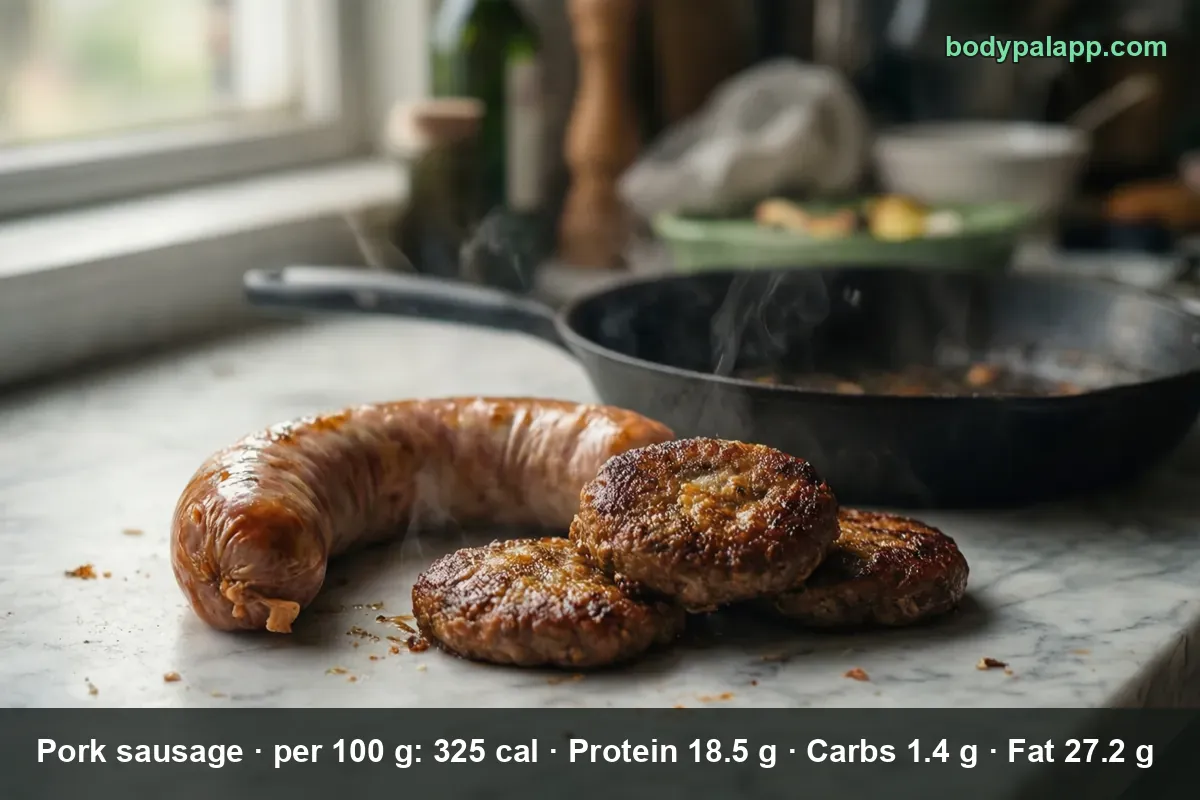
One cooked pork sausage patty weighs 27 g and carries 88 calories. A link is smaller, 23 g and 75 calories. Per 100 g, pan-fried pork sausage runs 325 calories, and roughly three quarters of that comes from fat rather than from the meat protein.
On this page
- Pork sausage quick facts
- US servings, from one link to three
- Raw, pan-fried, fully cooked and reduced fat
- Sodium is the row to watch, not calories
- How does pork sausage compare?
- Most popular jimmy dean sausage brands
- FAQ
Pork sausage quick facts
Jimmy Dean sells the same meat in three shapes: fresh links, patties, and the one-pound roll you slice yourself. The number on this page comes from USDA SR Legacy 174578, "Pork sausage, link/patty, cooked, pan-fried", the generic cooked record. It is the entry that carries household portions for a single patty and a single link, which is what ends up on the breakfast plate.
The branded Jimmy Dean entries are label numbers, most of them for the product before it hits the skillet or for a fixed three-link serving. They land a little either side of this row, and they show up further down the page.
| Nutrient | Per 100 g | Per 1 patty (27 g) | % Daily Value |
|---|---|---|---|
| Calories | 325 | 88 | — |
| Total fat | 27.25 g | 7.4 g | 9% |
| Saturated fat | 8.83 g | 2.4 g | 12% |
| Carbohydrate | 1.42 g | 0.4 g | 0% |
| Dietary fiber | 0 g | 0 g | 0% |
| Total sugars | 1.09 g | 0.3 g | — |
| Protein | 18.53 g | 5.0 g | 10% |
| Sodium | 814 mg | 220 mg | 10% |
% Daily Value is based on a 2,000-calorie diet.
Verified nutrition data
Numbers on this page come from USDA FoodData Central, the U.S. Department of Agriculture’s food composition database, and from manufacturer labels where a branded product is named. Last verified September 2026. How we verify our data →
There is no added sugars row here because USDA does not publish added sugars for this SR Legacy record. Two more numbers worth knowing: one patty carries 23 mg of cholesterol, 8% of the Daily Value, and 92 mg of potassium, which is only 2%. Sausage is a fat-and-sodium food, not a mineral source.
US servings, from one link to three
| Serving | Weight | Calories |
|---|---|---|
| 1 link | 23 g | 75 kcal |
| 1 patty | 27 g | 88 kcal |
| 1 oz | 28.35 g | 92 kcal |
| 1 serving, USDA | 48 g | 156 kcal |
| 3 links | 69 g | 224 kcal |
| Per 100 g | 100 g | 325 kcal |
The link, the patty and the 48 g serving are USDA household measures attached to record 174578. The ounce and the three-link plate are our own arithmetic from the USDA 100 g figure, not USDA servings, because three links is how people actually eat them and no USDA measure covers it.
That gap between a link and a patty is the thing most people log wrong. They look identical on the plate, but a patty is 27 g of cooked meat against 23 g for a link, so two patties and two links differ by 26 calories before anything else lands on the plate. Three links plus a fried egg and a slice of buttered toast is a breakfast around 500 calories, and the sausage is not the biggest part of it.
Jimmy Dean's own package tells a slightly different story, and legitimately so. The fresh Original links are labeled at 180 calories for three cooked links (55 g), and the Regular Premium pork sausage roll is labeled at 210 calories for a 2 oz (56 g) slice. Cooking loss, fat rendered into the pan, and each manufacturer's own recipe explain the spread — the source is the same kind of measurement, the preparation is not.
Raw, pan-fried, fully cooked and reduced fat
| Version | Per 100 g | Typical piece | Calories |
|---|---|---|---|
| Raw, unprepared | 288 kcal | 1 oz (28.35 g) | 82 kcal |
| Pan-fried, cooked | 325 kcal | 1 patty (27 g) | 88 kcal |
| Fully cooked, unheated | 392 kcal | 1 patty (37 g) | 145 kcal |
| Fully cooked, microwaved | 438 kcal | 1 patty (30 g) | 131 kcal |
| Reduced fat, pan-fried | 267 kcal | 1 oz (28.35 g) | 76 kcal |
| Reduced fat, raw | 217 kcal | 3 oz (85 g) | 184 kcal |
| Sausage, egg and cheese biscuit | 328 kcal | 1 biscuit (128 g) | 420 kcal |
Raw pork sausage is 288 calories per 100 g and cooked is 325, which looks backward until you remember what leaves the pan. Water goes first, fat second, so the same meat gets denser as it browns. In real pieces the cooked patty still wins: 88 calories for 27 g cooked against 82 for a raw ounce.
The trap is the fully cooked, heat-and-serve links, the ones that go from freezer to microwave in a minute. Microwaved, they run 438 calories per 100 g and pan-fried fresh sausage runs 325 — a 35% gap in the same category of product, because nothing drains away. The unheated fully cooked record sits at 392. Jimmy Dean's fully cooked Original links carry 290 calories for three links (68 g) on the label, against 180 for three cooked fresh links, and that is the same effect in brand form.
Reduced fat is the only version that moves the number down. At 267 calories per 100 g pan-fried, it also carries more protein than the regular sausage, 20.94 g per 100 g against 18.53 g. Of every pork sausage record on this page the three lightest per 100 g are reduced fat raw at 217, reduced fat pan-fried at 267, and plain raw at 288.
The biscuit sandwich is a different food and worth pricing anyway, since it is the other thing people mean when they search this brand. One frozen Jimmy Dean sausage, egg and cheese biscuit is 420 calories for 128 g. The dough drops the protein to 9.29 g per 100 g and pushes carbohydrate up to 21.07 g, so it eats less like sausage and more like a sandwich with sausage in it.
Sodium is the row to watch, not calories
A single patty is 220 mg of sodium, 10% of the FDA Daily Value of 2,300 mg. That is about a tenth of a teaspoon of table salt in a piece of meat the size of a poker chip. Move to a realistic breakfast portion and it compounds fast: three links at 69 g carry 562 mg by our arithmetic from the 814 mg per 100 g figure, and the Jimmy Dean three-link serving (53 g) is listed at 510 mg, 22% of the day.
Calories are the smaller story here. Two patties and a link is 251 calories, which fits any breakfast budget, but it is well over 600 mg of sodium before the eggs are salted. The CDC puts most American adults over the limit already, mainly from processed and restaurant food rather than the shaker.
Saturated fat is the other line. One patty is 2.4 g, 12% of the Daily Value, so three of them cover more than a third of the day's 20 g. The Dietary Guidelines for Americans put the ceiling at 10% of calories from saturated fat. If sodium or saturated fat is what you are watching, the reduced fat sausage is the better pick at 6.03 g saturated fat and 698 mg sodium per 100 g; if it is calories alone, the difference between one patty and one link matters more than the recipe does.
How does pork sausage compare?
| Sausage | Per 100 g | US serving | Calories |
|---|---|---|---|
| Pork sausage, pan-fried | 325 kcal | 1 oz (28.35 g) | 92 kcal |
| Italian sausage | 317 kcal | 1 oz (28.35 g) | 90 kcal |
| Bratwurst | 333 kcal | 1 oz (28.35 g) | 94 kcal |
| Chorizo | 341 kcal | 1 oz (28.35 g) | 97 kcal |
Our take: these four are the same food wearing different spices. Ounce for ounce they span 90 to 97 calories, a range so tight that swapping breakfast sausage for chorizo changes nothing you could measure on a scale. What moves the number is the piece count and the cooking method, not the sausage you choose — three fully cooked microwaved links can outrun three pan-fried fresh ones by a third. Pick the sausage you like, weigh the pieces, and spend your attention on the sodium column instead.
Most popular jimmy dean sausage brands in the United States
Ranked by how widely each product appears among foods sold in the United States, from the BodyPal food database of over 3.3 million products. Calories are the figures printed on each Nutrition Facts label, checked against USDA FoodData Central.
| Product | Calories (per 100 g) |
|---|---|
| Jimmy Dean Original Fresh Pork Sausage Links | 327 cal |
| Jimmy Dean Original Pork Sausage Links | 321 cal |
| Jimmy Dean Original Fully Cooked Pork Sausage Links | 426 cal |
| Jimmy Dean Regular Premium Pork Sausage | 375 cal |
| Jimmy Dean Hot Premium Pork Sausage | 375 cal |
| Jimmy Dean Regular Pork Sausage | 339 cal |
Brand popularity: BodyPal food database. Nutrition: manufacturer labels / USDA FoodData Central.
Jimmy Dean sausage FAQs
How many calories are in one Jimmy Dean sausage patty?
88 calories for a cooked pork sausage patty of 27 g, at 325 calories per 100 g. A link is smaller and lighter at 75 calories for 23 g. Patties and links look alike on the plate, so weigh one once and you will know which you are eating.
How many calories are in 3 Jimmy Dean sausage links?
224 calories for three cooked links weighing 69 g, our own arithmetic from the USDA 325 per 100 g figure. Jimmy Dean's Original fresh links are labeled lighter, 180 calories for three cooked links at 55 g, because the labeled links are smaller than the USDA measure.
How many calories in a 2 oz serving of Jimmy Dean sausage roll?
210 calories on the label for a 2 oz (56 g) slice of the regular or hot premium pork sausage roll, both of which are listed at 375 calories per 100 g. The roll is denser than the generic cooked USDA record, so slice it thin and weigh it rather than guessing.
Do I log sausage raw or cooked?
Log it cooked, at 325 calories per 100 g, because that is what you eat. Raw pork sausage is 288 per 100 g, but it loses water and some fat in the pan, so the cooked meat is denser. Weighing raw and logging cooked overcounts breakfast.
How much sodium is in pork sausage?
220 mg in one 27 g patty, 10% of the Daily Value, from 814 mg per 100 g. Three links push that to about 562 mg. Sodium, not calories, is what usually makes sausage the limiting item in a breakfast, especially alongside bacon, cheese or a biscuit.
How much protein is in a sausage patty?
5.0 g of protein in one 27 g cooked patty, from 18.53 g per 100 g. That is 10% of the Daily Value for a piece under 90 calories. Reduced fat sausage does better at 20.94 g per 100 g, since less of the weight is fat.
Are fully cooked sausage links higher in calories?
Yes, sharply: fully cooked links run 392 calories per 100 g unheated and 438 microwaved, against 325 for fresh sausage pan-fried. Nothing drains out in the microwave, and the heat-and-serve recipe is fattier to begin with. Three fully cooked links can cost a third more than three fresh ones.
Is reduced fat sausage worth it?
At 267 calories per 100 g against 325, reduced fat pork sausage saves about 31 calories on a two-patty breakfast and carries more protein, 20.94 g per 100 g. The bigger win is elsewhere: 698 mg sodium and 6.03 g saturated fat per 100 g, both meaningfully below the regular recipe.
Similar foods
- Pork Sausage — 150 cal for 2 links
- Pork Sausage Link — 75 cal per cooked link
- Sausage Link — 75 cal per link
- Sausage Patty — 88 cal per patty
- Sausage Patty Breakfast — 88 cal per patty
- Hot Dog Without Bun — 155 cal per hot dog
Count it without the math
Point the camera at the plate and BodyPal counts the links and patties for you.


How long does it take to burn off 88 kcal of Jimmy Dean sausage?
One cooked patty (27 g) is 88 kcal. Enter your weight and the amount you ate to see how long it takes you to burn that off:
lb
| Activity | Time to burn 88 kcal |
|---|---|
| Walking, brisk | 18 min |
| Cycling, moderate | 11 min |
| Swimming, moderate | 13 min |
| Jogging | 10 min |
| Weight training, moderate | 20 min |
Times are for a 155 lb adult at a steady pace; change the weight to see yours. The amount is set to the portion in the text (27 g); change it to what you actually ate. BodyPal works this out from your steps automatically.
Want the bigger picture? Calculate your daily calorie needs — your maintenance figure, a target for losing or gaining, and the date you get there.