
How many calories are in lychee?
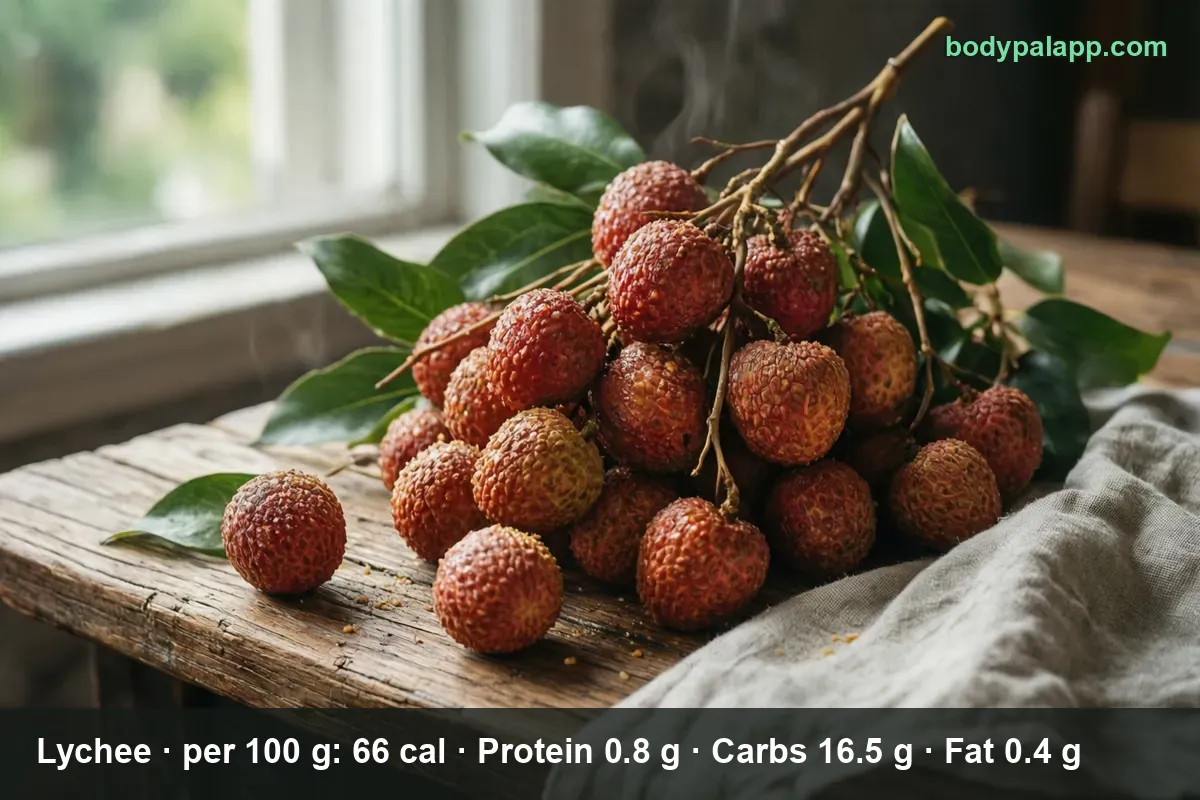
A 1-cup serving of peeled lychees weighs 190 g and carries 125 calories. Per 100 g the fruit runs 66 calories, lighter than cherries and about the same as kiwi. One lychee is small enough that it barely registers: 10 g, 7 calories. The cup is doing all the work.
On this page
- Lychee quick facts
- US servings, from one fruit to a full cup
- Canned, dried and lychee drinks
- Potassium is the row that surprises people
- How does lychee compare?
- Most popular lychee brands
- Lychee FAQs
Lychee quick facts
There is exactly one USDA record for the fruit itself: FNDDS 2709240, "Lychee", from the 2021-2023 survey release. It describes the fruit the way you actually eat it, peeled and pitted, which is the version worth logging. The bumpy red shell and the seed go in the trash, and they are heavy enough that a pound of lychees on the counter is nowhere near a pound of food. Nothing in Foundation Foods or SR Legacy covers fresh lychee separately in the current build, so there is no second raw record to average against, and averaging across sources is a bad habit anyway.
| Nutrient | Per 100 g | Per 1 cup (190 g) | % Daily Value |
|---|---|---|---|
| Calories | 66 | 125 | — |
| Total fat | 0.44 g | 0.8 g | 1% |
| Saturated fat | 0.1 g | 0.2 g | 1% |
| Carbohydrate | 16.53 g | 31.4 g | 11% |
| Dietary fiber | 1.3 g | 2.5 g | 9% |
| Total sugars | 15.23 g | 28.9 g | — |
| Protein | 0.83 g | 1.6 g | 3% |
| Sodium | 1 mg | 2 mg | 0% |
| Cholesterol | 0 mg | 0 mg | 0% |
| Potassium | 171 mg | 325 mg | 7% |
% Daily Value is based on a 2,000-calorie diet.
Verified nutrition data
Numbers on this page come from USDA FoodData Central, the U.S. Department of Agriculture’s food composition database, and from manufacturer labels where a branded product is named. Last verified September 2026. How we verify our data →
Two rows you would see on a packaged label are missing here. USDA does not publish added sugars or trans fat for this FNDDS record, so neither line appears above; fresh fruit has no added sugar to report in any case. Total sugars have no Daily Value assigned by the FDA, which is why that cell shows a dash rather than a percentage.
US servings, from one fruit to a full cup
Lychees are sold loose by the pound and eaten by the handful, which makes them awkward to log. The cup is the honest measure once they are peeled.
| Serving | Weight | Calories |
|---|---|---|
| 1 lychee | 10 g | 7 kcal |
| 5 lychees, a small handful | 50 g | 33 kcal |
| 1 oz | 28 g | 18 kcal |
| About 10 lychees, portion not specified | 95 g | 63 kcal |
| 1 cup, peeled | 190 g | 125 kcal |
| Per 100 g | 100 g | 66 kcal |
The single fruit, the 95 g "quantity not specified" portion and the 190 g cup are USDA household measures. The 50 g handful and the 1 oz line are our own arithmetic from the USDA 100 g figure, not USDA servings.
Here is the part most people get wrong. A cup of peeled lychees is 190 g, and one fruit is 10 g, so the cup is about 19 lychees. That is not a handful; it is most of a small bag. People who log "a few lychees" and picture the cup number are overcounting by a factor of three or four, and people who eat straight from the bowl while watching television usually go the other way. Count the fruits, or weigh the peeled pile once and learn what your bowl holds.
Canned, dried and lychee drinks
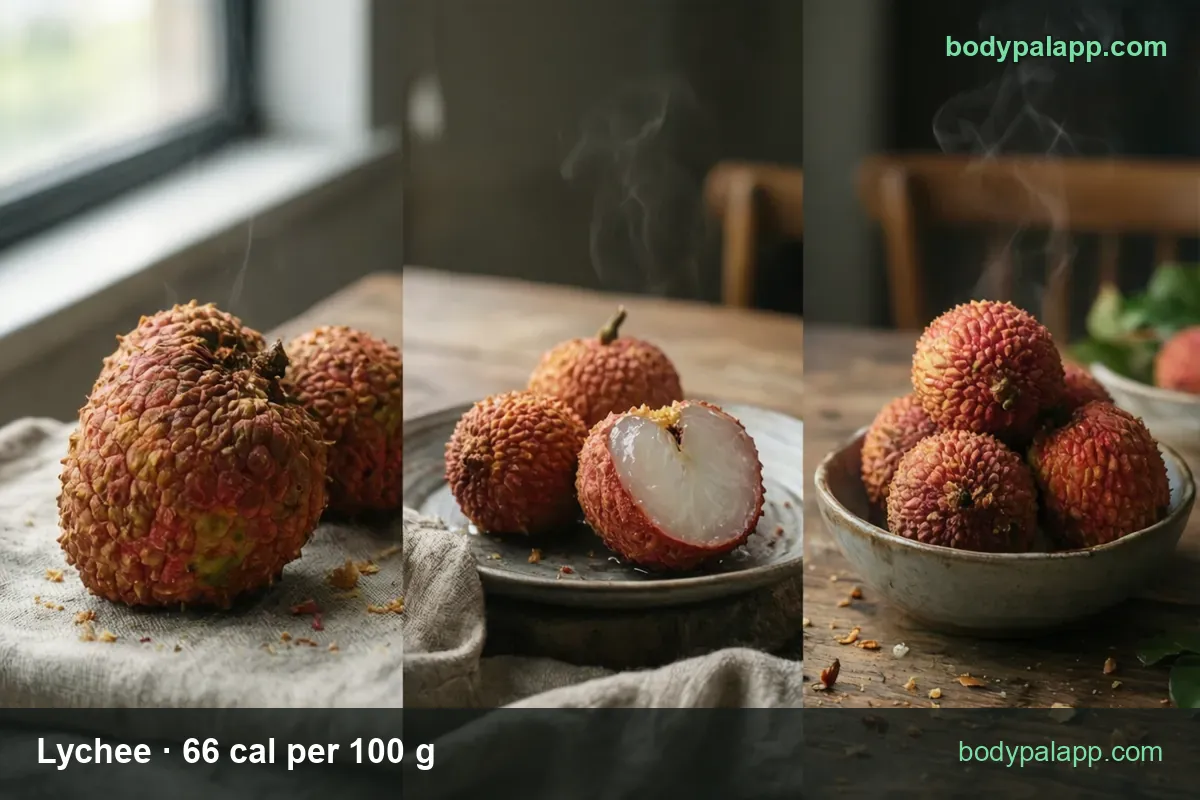
Fresh lychee has a short US season, so most of the year the fruit reaches the cart in a can, a bag or a bottle. The processing changes the math more than the fruit does.
| Version | Per 100 g | Typical serving | Calories |
|---|---|---|---|
| Fresh, peeled | 66 kcal | 1 cup, 190 g | 125 kcal |
| Canned in syrup | 79 kcal | 140 g, about 2/3 cup | 111 kcal |
| Dried | 217 kcal | 60 g, about 1/3 cup | 130 kcal |
| Lychee juice drink, bottled | 53 kcal | 320 ml bottle | 170 kcal |
| Lychee drink, canned | 46 kcal | 350 ml can | 161 kcal |
| Lychee sparkling water | 6 kcal | 355 ml can | 21 kcal |
| Coconut water with lychee | 21 kcal | 330 ml box | 69 kcal |
Canned lychees in syrup are 79 calories per 100 g, about 20% above the fresh fruit, and that gap is entirely the packing liquid. A labeled 140 g serving lands at 111 calories, which is still less than a full cup of fresh fruit simply because the serving is smaller. Dried lychees are the real jump: 217 calories per 100 g, roughly 3.3 times fresh at the same weight, because the water has left and the sugar has not. A 60 g bag serving is 130 calories, more than a whole cup of fresh lychees.
The drinks are their own category. Bottled lychee juice drinks such as Mogu Mogu run 53 calories per 100 g, but the bottle is 320 ml, so it delivers 170 calories, more than any solid serving on this page. Canned versions from FOCO and Yeo's come in at 161 and 129 calories per can. Lychee sparkling water is the outlier in the other direction at 21 calories a can. If you like lychee and you are watching calories, the flavored water is the cheap ticket and the juice drink is the expensive one.
Potassium is the row that surprises people
Lychee reads as a sugar fruit, and it is: 28.9 g of total sugars in a cup, against just 2.5 g of fiber. But the mineral column tells a friendlier story. A cup provides 325 mg of potassium, 7% of the FDA Daily Value of 4,700 mg, while sodium sits at 2 mg, which rounds to 0%. Fat is a rounding error at 0.8 g per cup and cholesterol is zero.
That combination is the useful one. If you are trying to hold sodium down, a cup of lychee costs you nothing on that line and still counts toward the MyPlate fruit target of about 2 cups a day for most adults. The trade is the sugar and the thin fiber: at 9% of the fiber Daily Value per cup, lychee will not keep you full the way an apple or a pear does. Pair it with something with protein if it is standing in for a snack rather than dessert.
How does lychee compare?
The nearest neighbors in the USDA survey data are the other soft, sweet fruits people buy by weight. Per 100 g they are almost indistinguishable.
| Fruit | Per 100 g | US serving | Calories |
|---|---|---|---|
| Lychee | 66 kcal | 1 oz, 28 g | 18 kcal |
| Kiwi fruit, raw | 64 kcal | 1 oz, 28 g | 18 kcal |
| Guava, raw | 68 kcal | 1 oz, 28 g | 19 kcal |
| Cherries, raw | 71 kcal | 1 oz, 28 g | 20 kcal |
Our take: on calories alone this is a four-way tie, and picking kiwi over lychee to save 2 calories per 100 g is not a decision worth making. The differences that matter sit elsewhere. Guava carries 2.55 g of protein per 100 g, three times lychee's 0.83 g, and cherries are the heaviest of the four at 71 calories. For weight loss, choose on volume and satiety, not on this table. For lychee specifically, the choice that actually moves your day is fresh versus dried versus a bottle: 125 calories for a cup of fruit, 130 for a third of a cup of dried, 170 for one juice drink.
Most popular lychee brands in the United States
Ranked by how widely each product appears among foods sold in the United States, from the BodyPal food database of over 3.3 million products. Calories are the figures printed on each Nutrition Facts label, checked against USDA FoodData Central.
| Product | Calories (per 100 g) |
|---|---|
| Mogu Mogu Lychee Juice | 53 cal |
| FOCO Lychee Drink | 46 cal |
| Yeo's Lychee Drink | 43 cal |
| Calpico Lychee | 46 cal |
| Dynasty Lychees (canned) | 79 cal |
| Richin Lychees (dried) | 217 cal |
Brand popularity: BodyPal food database. Nutrition: manufacturer labels / USDA FoodData Central.
Lychee FAQs
How many calories are in one lychee?
One peeled lychee weighs about 10 g and carries 7 calories. That is the smallest unit anyone logs, which is why five of them, 50 g, come to 33 calories by our own arithmetic from the USDA figure of 66 calories per 100 g. A bowl adds up quickly.
How many calories in a cup of lychee?
A 1-cup serving of peeled lychees, 190 g, is 125 calories. That is a USDA household measure rather than a scaled estimate, and it works out to about 19 individual fruits. The same cup carries 31.4 g of carbohydrate, 2.5 g of fiber and 1.6 g of protein.
Is lychee high in sugar?
Lychee has 15.23 g of total sugars per 100 g, or 28.9 g in a 190 g cup. That is high for a fresh fruit and close to its total carbohydrate of 16.53 g per 100 g. All of it occurs naturally in the fruit; USDA does not publish added sugars for this record.
How many carbs are in lychee?
Lychee carries 16.53 g of carbohydrate per 100 g, so a 190 g cup delivers 31.4 g, which is 11% of the Daily Value. Fiber is only 1.3 g per 100 g and 2.5 g per cup, so most of the carbohydrate here is sugar rather than fiber.
Are canned lychees more caloric than fresh?
Yes: canned lychees in syrup run 79 calories per 100 g against 66 for fresh, about 20% more, and a labeled 140 g serving is 111 calories. The gap is the packing syrup rather than the fruit, so draining the can before you eat brings the number back down.
How many calories in dried lychee?
Dried lychees are 217 calories per 100 g, roughly 3.3 times fresh fruit at the same weight, because the water is gone and the sugar is not. A labeled 60 g serving, about a third of a cup, is 130 calories, slightly more than a full cup of fresh lychees at 125.
Is lychee good for weight loss?
At 66 calories per 100 g, lychee is a reasonable pick, but it is not the lightest fruit on the shelf: raw kiwi is 64. A cup at 125 calories is a real snack, not a freebie, and its 2.5 g of fiber will not hold you long. Portion it out rather than grazing.
How much potassium is in lychee?
Lychee has 171 mg of potassium per 100 g, so a 190 g cup provides 325 mg, or 7% of the 4,700 mg Daily Value. Sodium is the mirror image at 1 mg per 100 g and 2 mg per cup, which rounds to 0% of the Daily Value. Cholesterol is zero.
Similar foods
- Bosc Pear — 120 cal per medium pear
- Dragon Fruit — 122 cal per cup
- Fruit — 126 cal per piece
- Guava — 37 cal per guava
- Bartlett Pear — 112 cal per medium pear
- Bing Cherries — 97 cal per cup without pits
Count it without the math
Point the camera at the bowl and BodyPal counts the lychees for you, peeled or canned.


How long does it take to burn off lychee?
A 1-cup (190 g) serving is 125 kcal. Enter your weight and the amount you ate to see how long it takes you to burn that off:
lb
| Activity | Time to burn 125 kcal |
|---|---|
| Walking, brisk | 25 min |
| Cycling, moderate | 16 min |
| Swimming, moderate | 18 min |
| Jogging | 15 min |
| Weight training, moderate | 28 min |
Times are for a 155 lb adult at a steady pace; change the weight to see yours. The amount is set to the portion in the text (190 g); change it to what you actually ate. BodyPal works this out from your steps automatically.
Want the bigger picture? Calculate your daily calorie needs — your maintenance figure, a target for losing or gaining, and the date you get there.