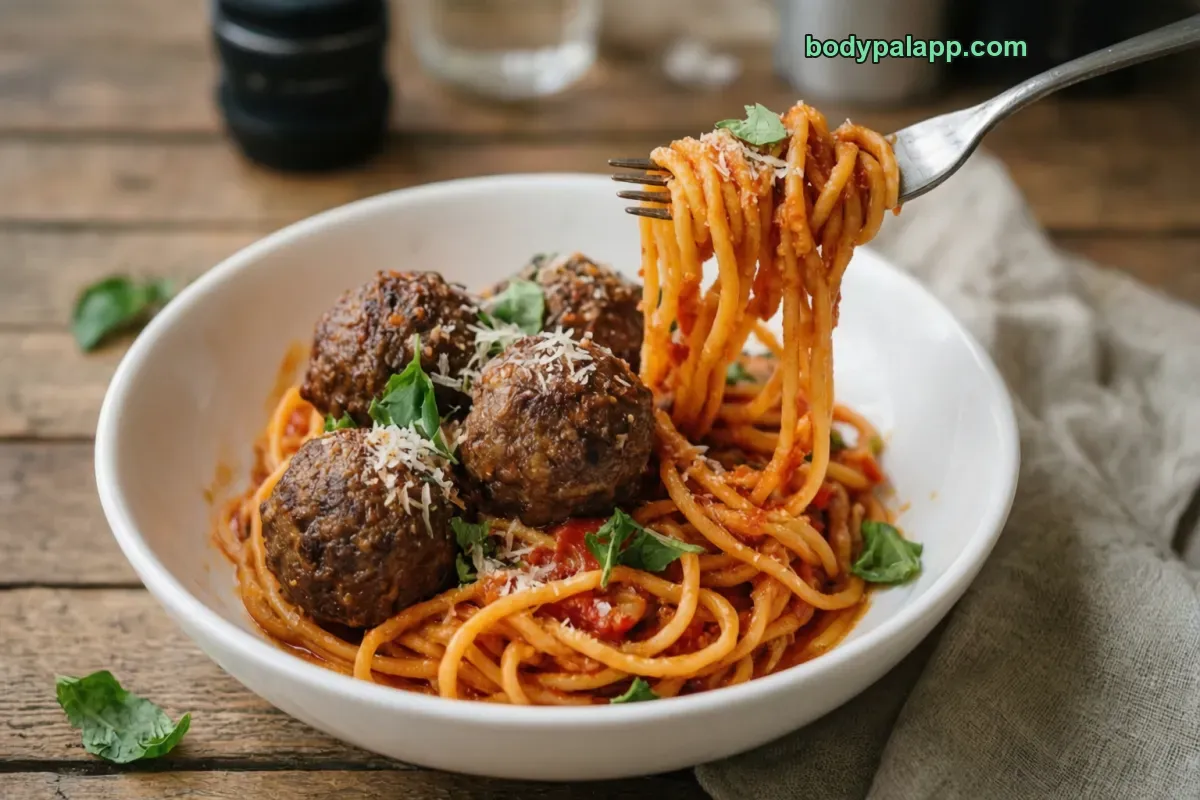
Meatballs and pasta calories come to 228 for a 1 cup (134 g) serving and 170 per 100 g, based on the USDA row for restaurant, family style spaghetti and meatballs in sauce. Watch the portion: a full restaurant plate of 565 g lands at 961 calories and 1,983 mg of sodium.
228kcal
1 cup · 134 g, restaurant style, in sauce
18%protein
10.5 gProtein
21 gCarbs
11.4 gFat
How to burn off 228 kcal
—Walking, brisk
—Jogging
—Cycling, moderate
—Swimming
Skip the math. BodyPal counts these calories from your steps and workouts automatically.
Nutrition facts
Restaurant style, in sauce · per 134 g
Calories
228 kcal
Protein
10.5 g
Carbohydrate
21 g
Fat
11.4 g
Saturated fat
4.2 g
Cholesterol
25 mg
Sodium
470 mg
Potassium
276 mg
Iron
1.7 mg
Source: USDA FoodData Central
🛡️
Verified nutrition data
Numbers on this page come from USDA FoodData Central, the U.S. Department of Agriculture’s food composition database, and from manufacturer labels where a branded product is named. Last verified September 2026. How we verify our data →
Meatballs and pasta: calories, protein and sodium by serving
Percent of daily value uses the FDA reference of 2,000 kcal a day.
Serving
kcal
Protein
Carbs
Fat
Sodium
% DV kcal
1 cup (134 g)
228
10.5 g
20.8 g
11.4 g
470 mg
11%
Restaurant plate (565 g)
961
44.3 g
87.6 g
48.1 g
1,983 mg
48%
Frozen meal (354 g)
400
19.8 g
53.3 g
12 g
1,044 mg
20%
100 g
170
7.8 g
15.5 g
8.5 g
351 mg
9%
3 × 1 cup (134 g)
683
31.5 g
1,411 mg
5 × 1 cup (134 g)
1,139
52.5 g
2,352 mg
A restaurant plate is 961 calories, not 228
The cup is the reference serving, but few people stop at one. A single 1 cup (134 g) portion gives 228 calories and 10.5 g of protein, about 11% of a daily calorie budget. That is a reasonable side or a light lunch. The trouble starts when the bowl gets bigger.
Two cups (268 g) bring 456 calories, and three cups (402 g) reach 683. A family-style restaurant plate weighs about 565 g and carries 961 calories, which is 48% of the daily value on the label. Five cups (670 g) push the total to 1,139. Pasta is dense and easy to pile high, so the scoop you serve matters more than almost anything else on this page.
Frozen meals sit in the middle. A 354 g tray comes to 400 calories with 19.8 g of protein, a fixed portion that removes the guesswork. If you cook at home, weigh one serving once so you know what a cup actually looks like in your bowl.
Fat supplies nearly half the calories
Most people think of this dish as a carb meal. The numbers say otherwise. Fat provides 45% of the calories, carbs 36% and protein 18%. Per 100 g that is 8.5 g of fat, 15.5 g of carbs and 7.8 g of protein, and 3.1 g of the fat is saturated.
The meatballs and the sauce do the heavy lifting. Plain pasta has just 0.9 g of fat per 100 g, so the extra fat here comes from ground meat, cheese and oil. That is also why the protein is respectable: a cup delivers 21% of the daily value for protein, and a restaurant plate covers 89%.
Fiber is modest at 1.5 g per 100 g, and sugars stay low at 2 g, mostly from the tomato sauce. A cup gives 2 g of fiber against a daily value of 28 g, so the dish will not do much for that row on its own.
Sodium climbs fast with bigger portions
Each 100 g carries 351 mg of sodium. A single cup adds 470 mg, or 20% of the daily value. That is noticeable but manageable for one serving.
Scale it up and the picture changes. Two cups reach 941 mg, three cups 1,411 mg, and the restaurant plate hits 1,983 mg, which is 86% of the daily value in one meal. Five cups would pass the full day at 2,352 mg. The frozen tray is lower than the restaurant plate but still sits at 1,044 mg, 45% of the daily value.
If you watch sodium, keep the portion to a cup or two and let the rest of the day carry less salt. Making the sauce at home gives you the most control, since jarred sauce and seasoned meatballs both add to the total.
Pair a cup with vegetables, not more pasta
A cup of meatballs and pasta works best as the anchor of a plate rather than the whole thing. Add a big green salad or roasted vegetables and you get volume and fiber without adding much to the 228 calories you started with.
Keep an eye on the extras. Garlic bread, a heavy pour of grated cheese or a second helping can quietly turn a light dinner into a plate closer to 961 calories. Ordering out, consider splitting the dish or boxing half before you start.
Canned versions from brands like Chef Boyardee or store labels such as Meijer and Hy-Vee vary by recipe, so check the label for the portion you eat. If you would rather skip the weighing, BodyPal can log the dish from a photo.
How does meatballs and pasta compare?
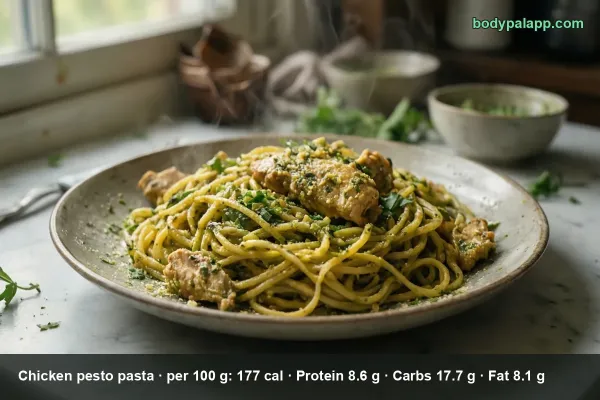
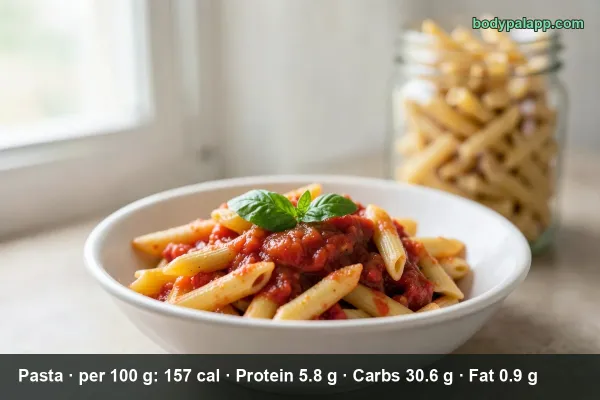
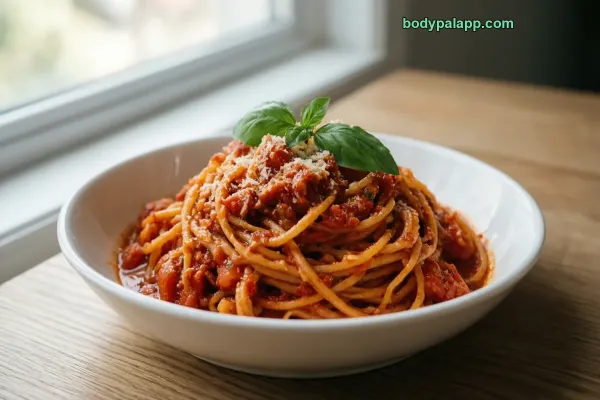
Here is how meatballs and pasta stacks up against chicken pesto pasta, plain pasta and tomato pasta, per 100 g and per usual serving.
Verdict: For the fewest calories pick tomato pasta at 120 per 100 g, or plain pasta at 157 if you want almost no fat. For staying full, meatballs and pasta at 170 per 100 g with 7.8 g of protein holds up well, though chicken pesto pasta offers a bit more protein at 8.6 g and far less sodium at 182 mg.
Most popular meatballs and pasta brands in the United States
Ranked by popularity in the BodyPal database
# Productkcal / 100 g
1Spartan Spaghetti Rings & Meatballs in Tomato Sauce1 cup · 252 g91 kcal
2Hy-Vee Spaghetti Rings with Meatballs in Tomato Sauce1 cup · 252 g91 kcal
3Meijer Spaghetti with Meatballs in Tomato Sauce1 cup · 255 g98 kcal
4Harris Teeter Spaghetti Rings with Meatballs in Tomato Sauce1 cup · 252 g91 kcal
5Chef Boyardee ABCs and Meatballs1 bowl · 205 g102 kcal
6Chef Boyardee Rings and Meatballs1 bowl · 205 g98 kcal
7Chef Boyardee Spaghetti & Meatballs1 can · 411 g61 kcal
Canned products are mostly tomato sauce with small pasta shapes, so they read lower per 100 g than the restaurant plate above. Source: manufacturer labels / USDA FoodData Central.
Meatballs and pasta FAQs
How many calories are in one cup of meatballs and pasta?
About 228 calories in a cup (134 g) of restaurant-style meatballs and pasta. A 12.5 oz frozen meal (354 g) has about 400.
Is meatballs and pasta good for weight loss?
Restaurant-style meatballs and pasta has 170 calories and 8.5 g of fat per 100 g. The frozen meal version is lighter at 113 calories per 100 g.
Meatballs and pasta vs chicken pesto pasta: which has fewer calories?
Meatballs and pasta has 170 calories per 100 g, chicken pesto pasta has 177.
How much protein is in meatballs and pasta?
A cup (134 g) has 10.5 g of protein and 20.8 g of carbs. Per 100 g that is 7.8 g of protein.
How many calories are in a restaurant plate of spaghetti and meatballs?
A family-style restaurant plate of about 565 g has 961 calories. That is 48% of the daily value for calories, along with 44.3 g of protein and 1,983 mg of sodium.
How many calories are in a frozen spaghetti and meatballs meal?
A 354 g frozen meal comes to 400 calories. It provides 19.8 g of protein, 53.3 g of carbs and 12 g of fat, with 1,044 mg of sodium, or 45% of the daily value.
How much sodium is in meatballs and pasta?
One cup (134 g) has 470 mg of sodium, 20% of the daily value. Per 100 g it is 351 mg, and a full restaurant plate reaches 1,983 mg.
How many carbs are in a cup of meatballs and pasta?
A 1 cup (134 g) serving has 20.8 g of carbs, with 2 g of fiber and 2.7 g of sugars. Carbs supply about 36% of the dish's calories.