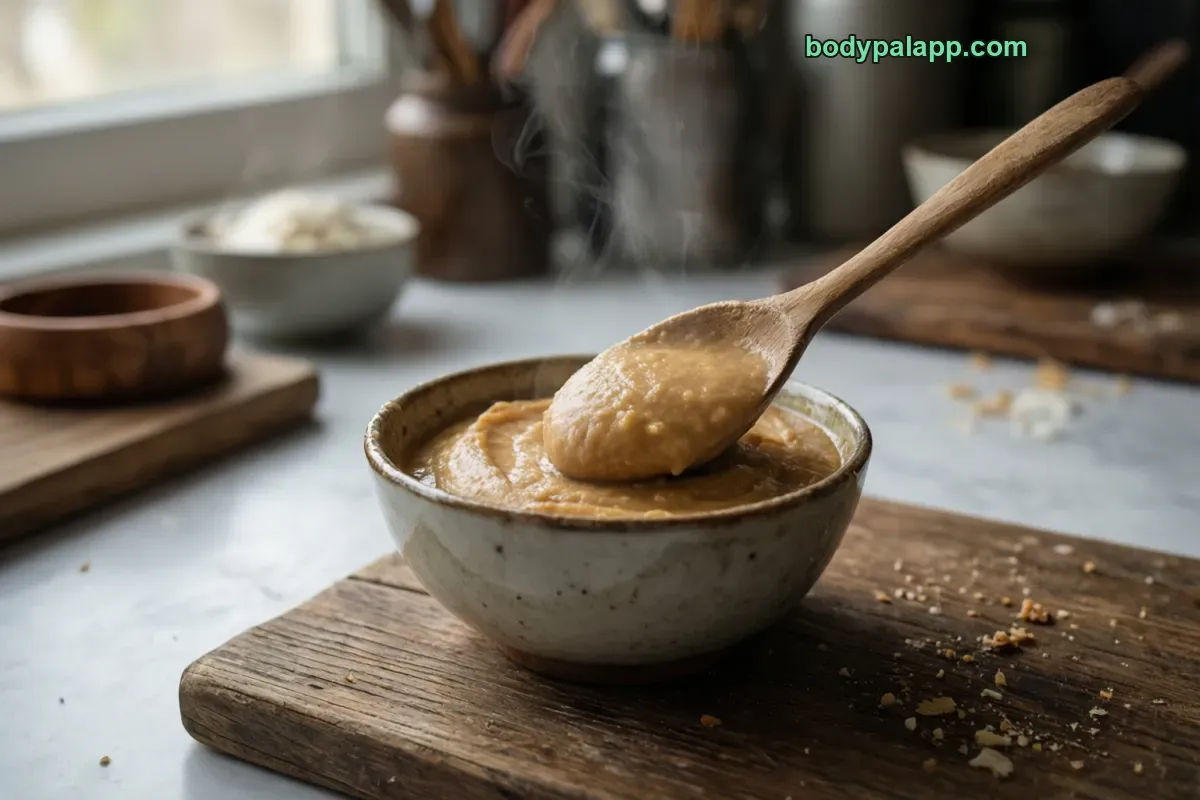
Miso calories come to 34 for 1 tbsp (17 g) of paste and 198 per 100 g. The number to notice is not the calories but the sodium: that one tablespoon carries 634 mg, 28% of the daily value, so how much paste you stir in matters far more for salt than for energy.
34kcal
1 tablespoon · 17 g, paste, ready to use
25%protein
2.2 gProtein
4 gCarbs
1 gFat
How to burn off 34 kcal
—Walking, brisk
—Jogging
—Cycling, moderate
—Swimming
Skip the math. BodyPal counts these calories from your steps and workouts automatically.
Nutrition facts
Paste, ready to use · per 17 g
Calories
34 kcal
Protein
2.2 g
Carbohydrate
4.3 g
Fat
1 g
Saturated fat
0.2 g
Cholesterol
0 mg
Sodium
634 mg
Potassium
36 mg
Iron
0.4 mg
Source: USDA FoodData Central
🛡️
Verified nutrition data
Numbers on this page come from USDA FoodData Central, the U.S. Department of Agriculture’s food composition database, and from manufacturer labels where a branded product is named. Last verified October 2026. How we verify our data →
Miso: calories, protein and sodium by serving
Percent of daily value uses the FDA reference of 2,000 kcal a day.
Serving
kcal
Protein
Carbs
Fat
Sodium
% DV kcal
1 tbsp (17 g)
34
2.2 g
4.3 g
1 g
634 mg
2%
100 g
198
12.8 g
25.4 g
6 g
3,728 mg
10%
1 cup (275 g)
545
35.2 g
69.8 g
16.5 g
10,252 mg
27%
3 × 1 tbsp (17 g)
101
6.5 g
1,901 mg
5 × 1 tbsp (17 g)
168
10.9 g
3,169 mg
A tablespoon is 34 calories, five is 168
Miso is sold as a dense paste, and the 1 tbsp (17 g) spoonful is the realistic unit. That spoonful holds 34 calories, just 2% of the daily value, along with 2.2 g protein and 4.3 g carbs. On calories alone, a single spoon barely registers.
Totals climb in step with the spoon. Two tablespoons (34 g) come to 67 calories, three (51 g) to 101, and five (85 g) to 168. Protein moves from 4.3 g to 6.5 g to 10.9 g across those same amounts, so a big batch of glaze or marinade adds a little protein along with its calories.
The 1 cup (275 g) row is there for scale, not for a meal. It lands at 545 calories and 35.2 g protein, but nobody eats paste by the cup; you would only meet that number when splitting a whole tub across recipes. If you log a cooked dish, count the tablespoons that actually went into it.
Carbs supply half of every calorie
Per 100 g, miso carries 198 calories from 25.4 g carbs, 12.8 g protein and 6 g fat. Turned into calorie shares, carbs make up 49%, fat 26% and protein 25%. No single macro dominates.
The protein is real but small in practice. A tablespoon gives 2.2 g, 4% of the daily value; the 100 g row reaches 12.8 g, or 26%. Getting meaningful protein from miso would mean eating amounts that carry more than a full day's sodium, so treat it as flavor, not as a protein source.
Fiber is the quiet plus: 5.4 g per 100 g and 0.9 g per tablespoon. Sugars sit at 6.2 g per 100 g, about 1.1 g a spoon. Saturated fat is 1 g per 100 g and cholesterol is 0, so the fat side of the label gives little to think about.
Sodium is the row to watch
Sodium is the number that defines miso: 3,728 mg per 100 g, which is 162% of the daily value. A single tablespoon brings 634 mg, 28% of the day's allowance, for only 34 calories. That ratio is the whole story of this food.
The multiples show how fast it adds up. Two tablespoons reach 1,268 mg, three hit 1,901 mg, and five carry 3,169 mg, more than the full daily value on their own. A recipe that looks light at 168 calories can still use up the entire day's sodium budget.
If you watch sodium, measure miso instead of eyeballing it, and count it alongside any other salty ingredients in the same dish. Milder white misos from brands like Hikari or Miso Master deserve a look at their own labels; the figures on this page come from the USDA miso row.
Use it as a seasoning, not a side
Miso earns its place by delivering a lot of savory flavor per calorie. A tablespoon at 34 calories can season a soup, glaze or dressing meant for several people, which keeps the cost per plate low on both calories and salt.
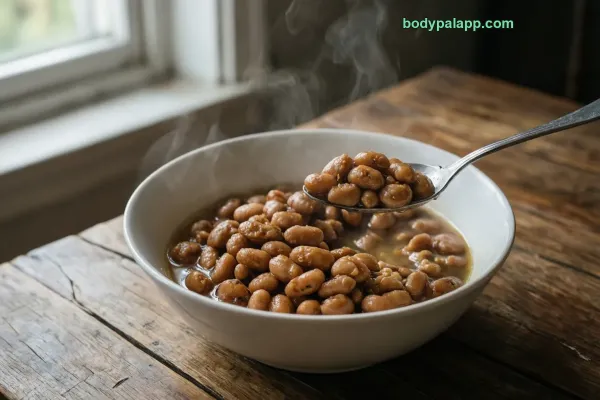
Low-sodium partners make the most sense around it. Tofu block brings 17.3 g protein per 100 g with only 14 mg sodium, and boiled beans add 9 g protein at 238 mg. Plain grains and unsalted vegetables round out the plate without piling on more salt.
When you log a miso dish, record the paste separately from the broth and toppings so the sodium line stays honest. BodyPal can log the food from a photo, and you can then adjust the tablespoons to match what went into the pot.
How does miso compare?
Here is how miso paste stacks up against tofu block, hummus cup and boiled beans, per 100 g and per usual serving.
Verdict: For protein with almost no salt, pick tofu block: 17.3 g protein and 14 mg sodium per 100 g, against miso's 3,728 mg. Miso belongs in the seasoning role; at 198 calories per 100 g it sits between boiled beans at 143 and hummus cup at 246, but you eat it by the spoon, not by the cup.
Most popular miso brands in the United States
Ranked by popularity in the BodyPal database
# Productkcal / 100 g
1Hikari Miso0.75 tbsp · 12 g208 kcal
2Hikari Organic Miso0.75 tbsp · 12 g208 kcal
3Hikari Organic Original Miso1 tbsp · 18 g139 kcal
One tablespoon of miso paste (17 g) has about 34 calories, with 2.2 g protein, 4.3 g carbs and 1.0 g fat.
Is miso good for weight loss?
A tablespoon adds only 34 calories, so it flavors dishes at a low calorie cost. The same tablespoon carries about 634 mg of sodium.
Miso vs tofu: which has more calories?
Miso has 198 calories per 100 g, while a tofu block has 144 per 100 g. Miso is usually eaten by the tablespoon (34 calories), not by the block.
How much sodium is in miso?
Miso has 3,728 mg of sodium per 100 g, which is about 634 mg in one tablespoon (17 g).
How many calories are in miso soup?
The miso itself adds 34 calories per tablespoon of paste stirred in. Broth, tofu, seaweed and other add-ins bring their own calories, so count the paste by the spoon and log the toppings separately.
How much sodium is in miso soup?
Each tablespoon of miso paste in the pot adds 634 mg sodium, 28% of the daily value. Two tablespoons bring 1,268 mg, so the amount of paste decides how salty the bowl turns out.
How many carbs are in miso soup?
Miso paste adds 4.3 g carbs per tablespoon, including 1.1 g sugars and 0.9 g fiber. Any carbs beyond that come from what else goes into the bowl, such as noodles or rice.
What are the macros of miso?
Per 100 g, miso paste has 12.8 g protein, 25.4 g carbs and 6 g fat. By calories that is 49% carbs, 26% fat and 25% protein; a tablespoon gives 2.2 g protein, 4.3 g carbs and 1 g fat.
How many calories are in a bowl of miso soup?
If the bowl uses 2 tablespoons of paste, the miso contributes 67 calories and 1,268 mg sodium. With 1 tablespoon it is 34 calories; toppings like tofu add their own calories on top.