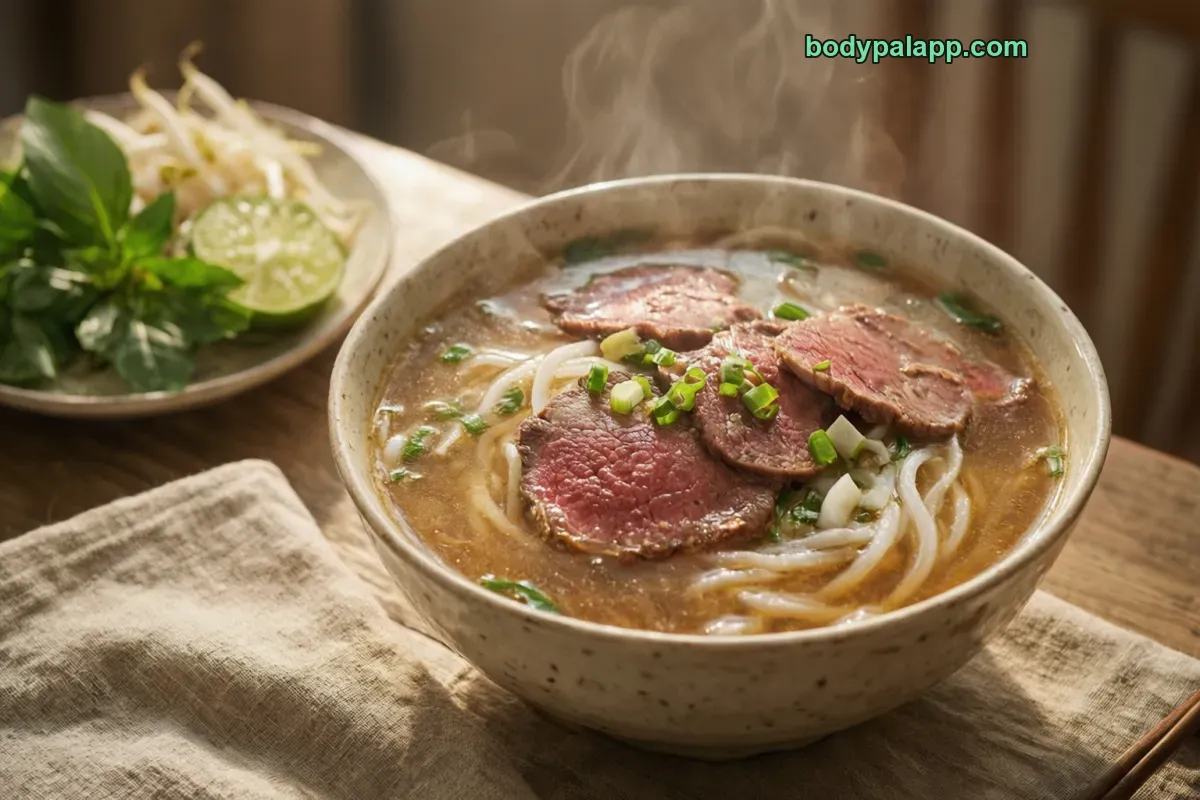
Pho tai calories come to 189 for 1 cup (245 g) and 77 per 100 g of the soup with beef, broth and noodles. The number to notice is not calories but sodium: that same cup carries 894 mg, or 39% of the daily value, while its calories cover only 9% of a day.
189kcal
1 cup · 245 g, with beef, broth and noodles
31%protein
14.2 gProtein
14 gCarbs
8.2 gFat
How to burn off 189 kcal
—Walking, brisk
—Jogging
—Cycling, moderate
—Swimming
Skip the math. BodyPal counts these calories from your steps and workouts automatically.
Nutrition facts
With beef, broth and noodles · per 245 g
Calories
189 kcal
Protein
14.2 g
Carbohydrate
13.7 g
Fat
8.2 g
Saturated fat
3.1 g
Cholesterol
44 mg
Sodium
894 mg
Potassium
191 mg
Iron
1.4 mg
Source: USDA FoodData Central
🛡️
Verified nutrition data
Numbers on this page come from USDA FoodData Central, the U.S. Department of Agriculture’s food composition database, and from manufacturer labels where a branded product is named. Last verified September 2026. How we verify our data →
Pho tai: calories, protein and sodium by serving
Percent of daily value uses the FDA reference of 2,000 kcal a day.
Serving
kcal
Protein
Carbs
Fat
Sodium
% DV kcal
1 cup (245 g)
189
14.2 g
13.7 g
8.2 g
894 mg
9%
Large bowl (454 g)
350
26.4 g
25.4 g
15.1 g
1,657 mg
17%
Without meat (245 g)
91
3.5 g
14.5 g
2.3 g
875 mg
5%
100 g
77
5.8 g
5.6 g
3.3 g
365 mg
4%
3 × 1 cup (245 g)
566
42.7 g
2,683 mg
5 × 1 cup (245 g)
943
71.2 g
4,471 mg
A large bowl is 350 calories, not 189
Nobody orders pho by the measuring cup. The 189-calorie figure covers 1 cup (245 g), which is a modest ladle of broth, noodles and rare beef. A restaurant large bowl runs closer to 454 g, and at that size the total climbs to 350 calories, 26.4 g of protein and 15.1 g of fat.
That large bowl still lands at only 17% of a 2,000-calorie day. For a full meal in one dish, that is a reasonable number. The protein side looks even better: 53% of the daily value from a single bowl.
Where the totals really move is when you keep refilling or finish a family-size order. Two cups (490 g) come to 377 calories, three cups (735 g) reach 566, and five cups (1,225 g) hit 943. Calories scale gently with soup because most of the weight is broth. Sodium does not scale gently, which is the next problem.
Fat edges out protein and carbs for the calories
Pho tai splits its calories almost evenly three ways: 31% from protein, 30% from carbs and 40% from fat. Per 100 g that works out to 5.8 g protein, 5.6 g carbs and 3.3 g fat, with 1.3 g of that fat saturated. Few soups deliver this much protein relative to their calories.
The fat and protein mostly ride in with the beef. Compare the cup with meat to the same cup without it: fat drops from 8.2 g to 2.3 g, and protein falls from 14.2 g to 3.5 g. The noodles supply the carbs, which is why carbs barely change between the two versions.
Sugar and fiber hardly register. A cup holds 1.1 g of sugars and 1 g of fiber, and per 100 g those rows read 0.5 g and 0.4 g. If you want the bowl to keep you full longer, the protein is doing that job, not the fiber.
Sodium is the row to watch
At 365 mg per 100 g, pho tai is a salty soup. One cup brings 894 mg, which is 39% of the 2,300 mg daily value. The large bowl carries 1,657 mg, or 72% of the day in one sitting.
The broth is the source, not the beef. A cup without meat still holds 875 mg of sodium, 38% of the daily value, almost the same as the full version. Three cups reach 2,683 mg and five cups 4,471 mg, both past a full day's daily value.
If you watch sodium, the simplest move is to eat the beef, noodles and herbs and leave a good share of the broth in the bowl. The figures here also cover only the soup itself. Any sauces you squeeze in at the table are not counted, so log them separately.
The beef earns its calories
Dropping the meat cuts a cup from 189 calories to 91, but it also takes protein from 28% of the daily value down to 7%. That leaves mostly broth and noodles, with 14.5 g of carbs. For staying power, the meat version is the better buy per calorie.
Pho tai fits easily into a day of eating because one cup covers so little of the calorie budget. The trade-off is sodium, so the rest of the day's meals can lean toward lower-salt foods. Fresh herbs, lime and bean sprouts on the side add volume without moving the numbers much.
Cholesterol sits at 18 mg per 100 g against a 300 mg daily value, and potassium is low at 78 mg per 100 g. If you want to track a bowl quickly, BodyPal can log pho from a photo, and you can adjust the portion to match what you actually ate.
How does pho tai compare?
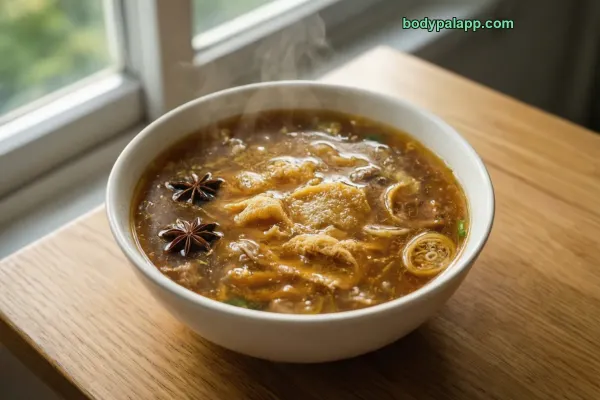
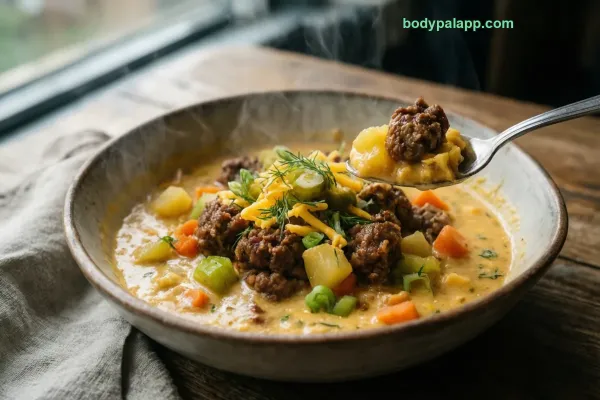
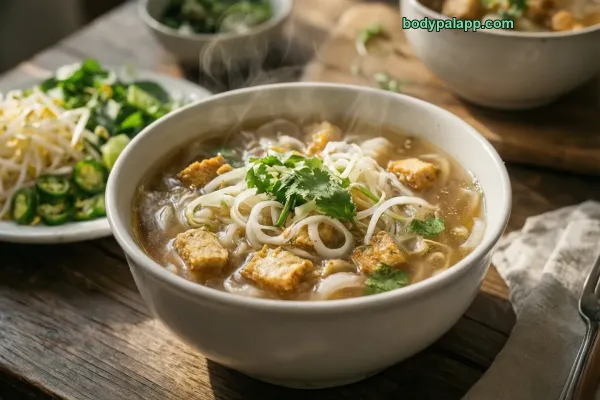
Here is how pho tai stacks up against pho broth, tofu pho and cheeseburger soup, per 100 g and per usual serving.
Verdict: For the fewest calories pick tofu pho at 91 per cup, or simply sip pho broth at 13 per cup; for staying full, pho tai wins with 5.8 g of protein per 100 g against 1.4 g for tofu pho. Cheeseburger soup is the weakest trade here, with more calories at 83 per 100 g and only 3.3 g of protein.
Pho tai FAQs
How many calories are in a bowl of pho tai?
One cup is 189 calories, and a large 16 oz bowl is 350 calories. Per 100 g the soup is 77 calories.
Is pho tai good for weight loss?
A cup is 189 calories with 14.2 g protein and 8.2 g fat, which is light for a noodle soup serving. The same cup carries 894 mg sodium.
Pho tai vs pho broth: which has fewer calories?
Pho broth on its own is 6 calories per 100 g, about 15 per cup, against 77 per 100 g for pho tai with beef and noodles.
How much protein is in pho tai?
It has 5.8 g of protein per 100 g, so a cup gives 14.2 g and a 16 oz bowl gives 26.4 g.
How much sodium is in pho tai?
One cup (245 g) of pho tai has 894 mg of sodium, 39% of the daily value. A large bowl (454 g) carries 1,657 mg, or 72%, and most of it comes from the broth.
How many calories are in pho without the meat?
A cup (245 g) of pho without meat has 91 calories, compared with 189 for pho tai. It also drops to 3.5 g of protein and 2.3 g of fat, while sodium stays high at 875 mg.
How many carbs are in pho tai?
Pho tai has 13.7 g of carbs per cup (245 g) and 25.4 g in a large bowl. Per 100 g that is 5.6 g, almost all from the rice noodles, with just 0.5 g of sugars.
How much fat is in pho tai?
A cup of pho tai has 8.2 g of fat, and a large bowl has 15.1 g. Fat supplies 40% of the calories, and per 100 g there is 1.3 g of saturated fat.
Is pho tai high in cholesterol?
No, pho tai has 18 mg of cholesterol per 100 g, measured against a 300 mg daily value. Even several cups add up to a modest share, so sodium is the more important row to watch.