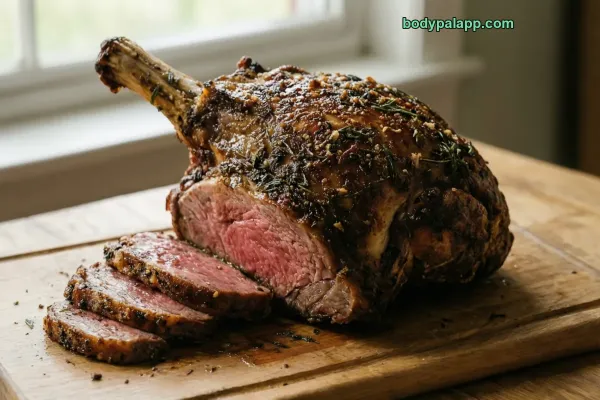
Pork leg calories come to 232 for a 3 oz portion (85 g) of roasted lean and fat, and 273 per 100 g. Trim the visible fat and the same 3 oz drops to 179. That gap is the real story: fat supplies 60% of the calories in the untrimmed cut, so your knife matters as much as your portion.
232kcal
1 3 oz portion · 85 g, roasted, lean and fat
40%protein
23 gProtein
0 gCarbs
15 gFat
How to burn off 232 kcal
—Walking, brisk
—Jogging
—Cycling, moderate
—Swimming
Skip the math. BodyPal counts these calories from your steps and workouts automatically.
Nutrition facts
Roasted, lean and fat · per 85 g
Calories
232 kcal
Protein
23 g
Carbohydrate
0 g
Fat
15 g
Saturated fat
5.5 g
Cholesterol
80 mg
Sodium
51 mg
Potassium
299 mg
Iron
0.9 mg
Source: USDA FoodData Central
🛡️
Verified nutrition data
Numbers on this page come from USDA FoodData Central, the U.S. Department of Agriculture’s food composition database, and from manufacturer labels where a branded product is named. Last verified October 2026. How we verify our data →
Pork leg: calories, protein and sodium by serving
Percent of daily value uses the FDA reference of 2,000 kcal a day.
Serving
kcal
Protein
Carbs
Fat
Sodium
% DV kcal
3 oz portion (85 g)
232
22.8 g
0 g
15 g
51 mg
12%
Lean only, 3 oz (85 g)
179
25 g
0 g
8 g
54 mg
9%
1 cup diced (135 g)
369
36.2 g
0 g
23.8 g
81 mg
18%
100 g
273
26.8 g
0 g
17.6 g
60 mg
14%
3 × 3 oz portion (85 g)
696
68.4 g
153 mg
5 × 3 oz portion (85 g)
1,160
114 g
255 mg
One 3 oz portion is 232 calories, two are 464
A 3 oz portion (85 g) of roasted pork leg, lean and fat together, carries 232 calories and 22.8 g of protein. That is 12% of the daily calorie value and 46% of the daily protein value in one modest slice. It is roughly the size of a deck of cards. Most dinner plates hold a lot more.
Totals climb fast once you go back for seconds. Two 3 oz portions (170 g) reach 464 calories, three (255 g) reach 696, and a 425 g holiday-sized helping hits 1,160. A 1 cup diced serving (135 g), the amount you might fold into a hash or fried rice, lands at 369 calories, or 18% of the daily value.
Protein scales just as quickly: 45.6 g in two portions and 68.4 g in three. If you track intake, weigh the meat once so you know what your usual slice really looks like. BodyPal can log pork leg from a photo, but a kitchen scale settles whether that slice is 85 g or 170 g.
Fat supplies 60% of the calories, protein the other 40%
Pork leg has no carbs, no sugar and no fiber. Every calorie comes from protein or fat, and per 100 g that means 26.8 g of protein against 17.6 g of fat. Gram for gram there is more protein than fat. Because fat packs more calories per gram, though, it ends up supplying 60% of the energy while protein covers 40%.
Saturated fat is 6.5 g per 100 g, measured against a daily value of 20 g. Cholesterol is 94 mg per 100 g, against a daily value of 300 mg. Neither number is unusual for a roast, but both rise in step with the portion, so a heaping plate moves them more than the calories alone suggest.
For a zero-carb or low-carb plan, pork leg fits without any adjustment. For a calorie budget, the fat share is the lever worth pulling, and the next section shows how much it moves.
Trimming the fat cuts 3 oz from 232 to 179 calories
USDA lists two versions of roasted leg. With lean and fat together, 3 oz (85 g) is 232 calories and 15 g of fat. Lean only, the same weight is 179 calories with 8 g of fat, and protein actually goes up, from 22.8 g to 25 g.
That is the easiest calorie cut on the plate. You eat the same amount of meat, get more protein and save about a quarter of the calories. The daily calorie share falls from 12% to 9%, while the protein share rises from 46% to 50%.
The practical move: roast the leg with its fat cap on for moisture and flavor, then slice the cap away before serving. If you dice leftovers for another meal, trim first and measure after, since the diced cup values here include the fat.
Fresh pork leg is low in sodium until you season it
Fresh roasted leg is not cured ham. It carries only 60 mg of sodium per 100 g and 51 mg in a 3 oz portion, which is 2% of the daily value. Even a 1 cup diced serving stays at 81 mg, or 4%. It also brings 352 mg of potassium per 100 g.
Nearly all the sodium on your plate will come from what you add: rubs, brines, glazes, gravy and the salt shaker. If you watch sodium, season with herbs, garlic, mustard or citrus and keep salty sauces on the side.
Because the meat has zero fiber and zero carbs, it needs company. Roasted vegetables, a green salad, beans or a whole grain round out the plate. A lean 3 oz portion at 179 calories leaves plenty of room for those sides in most meals.
How does pork leg compare?
Here is pork leg next to pork shoulder, pork shoulder roast and lamb leg, compared per 100 g and per usual serving.
Verdict: Lamb leg is the lighter roast at 225 calories and 12.5 g of fat per 100 g, while pork shoulder roast is the heaviest at 292 calories and 21.4 g of fat. If you want pork, pick leg over shoulder: calories are close, but shoulder gives only 23.1 g of protein per 100 g.
Most popular pork leg brands in the United States
Ranked by popularity in the BodyPal database
# Productkcal / 100 g
1Farmer John Boneless Premium Pork Leg4 oz · 112 g170 kcal
Packaged pork leg is labeled per raw weight, so it reads lower than the roasted numbers above. Source: manufacturer labels / USDA FoodData Central.
Pork leg FAQs
How many calories are in pork leg?
A 3 oz (85 g) serving of roasted pork leg with lean and fat has 232 calories, and a cup of diced meat (135 g) has 369.
Is pork leg good for weight loss?
Lean-only roasted pork leg has 211 calories and 29.4 g protein per 100 g, compared with 273 calories and 17.6 g fat when the fat is left on.
Pork leg vs pork shoulder: which has fewer calories?
They are close: roasted pork leg has 273 calories per 100 g and pork shoulder has 269.
How much protein is in pork leg?
A 3 oz (85 g) serving of roasted pork leg has 22.8 g protein and 0 g carbs, or 25.0 g protein when only the lean meat is eaten.
How many calories are in a cup of diced pork leg?
A 1 cup diced serving (135 g) of roasted pork leg has 369 calories, with 36.2 g of protein and 23.8 g of fat. That covers 18% of the daily calorie value and 72% of the protein value.
How many calories are in lean pork leg?
Lean-only roasted pork leg has 179 calories per 3 oz (85 g), with 25 g of protein and 8 g of fat. The same portion with the fat left on comes to 232 calories.
Does pork leg have any carbs?
No. Roasted pork leg has 0 g of carbs, 0 g of sugar and 0 g of fiber per 100 g. All of its calories come from protein and fat, which makes it an easy fit for low-carb eating.
How much fat is in pork leg?
Roasted pork leg with lean and fat has 17.6 g of fat per 100 g, including 6.5 g saturated. A 3 oz portion holds 15 g of fat, or 8 g if you eat the lean only.
Does pork leg or lamb leg have fewer calories?
Lamb leg has fewer: 225 calories per 100 g against 273 for pork leg. Protein is nearly the same, with 26.4 g in lamb leg and 26.8 g in pork leg, so the difference is mostly fat.