
How many calories are in a pork schnitzel?
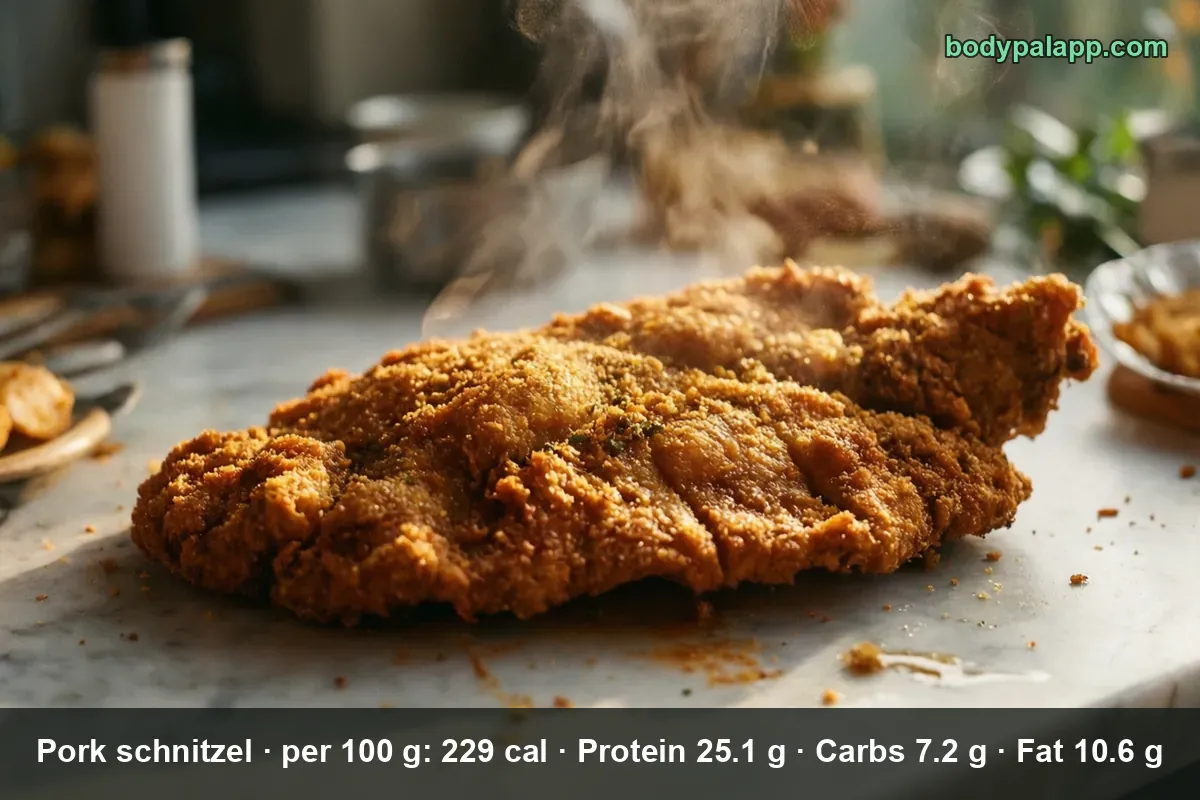
A regular breaded pork schnitzel weighs 120 g and carries 275 calories. Per 100 g the cooked, coated cutlet runs 229 calories. That plate also brings 30.1 g of protein, which is 60% of a day's worth, and 491 mg of sodium, most of it locked in the crust rather than the meat.
On this page
- Pork schnitzel quick facts
- US servings, from one ounce to a thick cutlet
- Trimmed, breaded steak, chicken and no breading
- Sodium is the row to watch, not the carbs
- How does pork schnitzel compare?
- Most popular pork schnitzel brands
- FAQ
Pork schnitzel quick facts
Schnitzel is a pounded pork cutlet, breaded and fried, and it is eaten crust and all. The record that matches that plate is FNDDS 2705870, "Pork, chop, coated, lean and fat eaten", from the 2021-2023 survey cycle. It already includes the flour, egg and crumb coating, plus the oil the cutlet picks up in the pan, so nothing has to be added on top.
The alternative records are all a step away from what people actually order. SR Legacy has plain pan-fried pork chops with no coating at all, and the Foundation database has no prepared dish. Those bare-chop numbers still matter, and they show up further down as the yardstick for what the breading costs.
| Nutrient | Per 100 g | Per 1 regular schnitzel (120 g) | % Daily Value |
|---|---|---|---|
| Calories | 229 | 275 | — |
| Total fat | 10.58 g | 12.7 g | 16% |
| Saturated fat | 3.18 g | 3.8 g | 19% |
| Carbohydrate | 7.16 g | 8.6 g | 3% |
| Dietary fiber | 0.4 g | 0.5 g | 2% |
| Total sugars | 0.62 g | 0.7 g | — |
| Protein | 25.06 g | 30.1 g | 60% |
| Sodium | 409 mg | 491 mg | 21% |
% Daily Value is based on a 2,000-calorie diet.
Verified nutrition data
Numbers on this page come from USDA FoodData Central, the U.S. Department of Agriculture’s food composition database, and from manufacturer labels where a branded product is named. Last verified September 2026. How we verify our data →
Two label rows are missing here on purpose. USDA does not publish added sugars or trans fat for mixed survey dishes like this one, so guessing them would be worse than leaving them out. Cholesterol and potassium do exist: a 120 g cutlet holds 76 mg of cholesterol, 25% of the daily value, and 468 mg of potassium, about 10%. The daily values used throughout are the current FDA figures for a 2,000-calorie diet.
US servings, from one ounce to a thick cutlet
| Serving | Weight | Calories |
|---|---|---|
| 1 oz | 28 g | 65 kcal |
| One thin schnitzel | 90 g | 206 kcal |
| One regular schnitzel | 120 g | 275 kcal |
| One thick schnitzel | 180 g | 412 kcal |
| 1 cup, cooked and diced | 135 g | 309 kcal |
| Per 100 g | 100 g | 229 kcal |
The thin, regular and thick sizes and the diced cup are USDA household measures for this record, so they are the safest ones to log. The 1 oz line is our own arithmetic from the USDA 100 g figure, not a USDA serving, and it is there for people weighing leftovers.
One thing worth noticing before you pick a line: thickness swings the number harder than anything else on this page. A thick 180 g cutlet is 412 calories, a thin 90 g one is 206, and the gap between them, 206 calories, is exactly a second thin schnitzel. Restaurant Wiener-style cutlets are often pounded out to 150-200 g, which is above the 120 g USDA regular, so if the piece hangs over the edge of the plate, log the thick line instead.
The diced cup is a trap in the other direction. A cup of cubed schnitzel is 135 g and 309 calories, more than the whole regular cutlet it came from, because cubes pack tighter than a flat piece looks like it should. Weigh it if the salad matters.
Trimmed, breaded steak, chicken and no breading
| Version | Per 100 g | Typical piece | Calories |
|---|---|---|---|
| Pork schnitzel, lean and fat eaten | 229 kcal | 1 regular schnitzel (120 g) | 275 kcal |
| Pork schnitzel, fat portion not specified | 219 kcal | 1 regular schnitzel (120 g) | 263 kcal |
| Trimmed pork schnitzel, lean only | 208 kcal | 1 regular schnitzel (120 g) | 250 kcal |
| Breaded pork steak | 275 kcal | 1 steak (120 g) | 330 kcal |
| Chicken schnitzel | 243 kcal | 1 medium breast (175 g) | 425 kcal |
| Pan-fried pork chop, no breading | 196 kcal | 1 chop (142 g) | 278 kcal |
Leaving the fat rim on the edge of the plate is the cheapest edit on the list: 250 calories instead of 275 for the same 120 g cutlet, a saving of 25. Saturated fat falls from 3.8 g to 2.6 g and protein nudges up to 31.2 g, both scaled by us from the USDA 100 g figures for that record. If you have no idea whether the rim went down or not, the middle record at 219 calories per 100 g, 263 for a cutlet, is the honest hedge.
Breaded pork steak is a different animal, cut from the shoulder or neck rather than pounded loin. At 275 calories per 100 g it is the fattiest option here, 15.8 g of fat against 10.58 g, and a same-size 120 g piece lands at 330 calories. It is the version you get at a fair or a diner where the cutlet was never trimmed.
Chicken schnitzel is the interesting one, because most people assume it is the light choice. Gram for gram it is not: 243 calories per 100 g against 229 for pork, with less protein and more fat. It only reads lighter when the portion happens to be smaller.
Baked schnitzel does come in below fried, since the coating absorbs far less oil in the oven, but USDA does not split its coated records by cooking method. There is no separate number to quote, so anything you see elsewhere is somebody's estimate rather than a measurement.
Sodium is the row to watch, not the carbs
People counting carbs tend to flinch at anything breaded. On this plate that reflex is aimed at the wrong row: the coating contributes 7.16 g of carbohydrate per 100 g, 8.6 g in a whole cutlet, which is 3% of the daily value and less than a slice of sandwich bread.
Sodium is the row that actually moves. Compared gram for gram with the same cut pan-fried bare, the breading adds 33 calories per 100 g and 323 mg of sodium, 409 mg against 86 mg. In a 120 g cutlet that is 491 mg, 21% of the 2,300 mg daily value, or about a fifth of a teaspoon of table salt, before any pickle, gravy or fries land next to it. The Dietary Guidelines for Americans put the same 2,300 mg ceiling on adults, and one schnitzel dinner with sides gets there faster than most people expect.
The upside sits two rows above. At 30.1 g of protein a cutlet, pork schnitzel is 60% of the daily value in one piece of meat, the largest percentage on its own label, and comfortably inside the range MyPlate treats as a full protein serving for a meal. If you are watching sodium, the trimmed record is only marginally better on salt, so the real lever is what goes beside it rather than the cutlet itself.
How does pork schnitzel compare?
| Cutlet | Per 100 g | US serving | Calories |
|---|---|---|---|
| Pork schnitzel | 229 kcal | 1 regular schnitzel, 120 g | 275 kcal |
| Trimmed pork schnitzel | 208 kcal | 1 regular schnitzel, 120 g | 250 kcal |
| Breaded pork steak | 275 kcal | 1 steak, 120 g | 330 kcal |
| Chicken schnitzel | 243 kcal | 1 medium breast, 175 g | 425 kcal |
Our take: for weight loss, order the pounded pork cutlet and leave the fat rim, which puts dinner at 250 calories of meat with 31.2 g of protein. For fullness on a training day, the regular 275-calorie cutlet is still the better protein-per-calorie buy than the chicken version, which costs 425 calories a breast for less protein per gram. The one to skip is the breaded pork steak at 330 calories for the same 120 g, since you pay 55 extra calories for shoulder fat rather than for more meat.
Most popular pork schnitzel brands in the United States
Ranked by how widely each product appears among foods sold in the United States, from the BodyPal food database of over 3.3 million products. Calories are the figures printed on each Nutrition Facts label, checked against USDA FoodData Central.
| Product | Calories (per 100 g) |
|---|---|
| AdvancePierre Red Label Fully Cooked Breaded Pork Patty | 335 cal |
| Quik-To-Fix Super Crispy Breaded Pork Fritter | 308 cal |
| AdvancePierre Fully Cooked Breaded Pork Steak | 298 cal |
| Pierre Zartic Thick Cut Whole Muscle Breaded Pork Loin Fritter | 297 cal |
| Custom Made Meals Breaded Pork Chops | 292 cal |
| JTM Breaded Pork Patty | 274 cal |
Brand popularity: BodyPal food database. Nutrition: manufacturer labels / USDA FoodData Central.
Pork schnitzel FAQs
How many calories are in one pork schnitzel?
One regular breaded pork schnitzel of 120 g carries 275 calories, based on the USDA figure of 229 calories per 100 g. That single cutlet also brings 30.1 g of protein, 12.7 g of fat and 491 mg of sodium, which is 21% of the daily value for sodium.
How many calories in 100 g of pork schnitzel?
100 g of breaded, pan-fried pork schnitzel is 229 calories, with 25.06 g of protein, 10.58 g of fat and 7.16 g of carbohydrate from the coating. A regular 120 g cutlet works out to 275 calories, and a thin 90 g one to 206.
Is pork schnitzel high in protein?
Yes, one 120 g cutlet delivers 30.1 g of protein, 60% of the 50 g daily value, more than any other row on its label. Per 100 g the figure is 25.06 g. Even breaded and fried, pork loin stays one of the denser protein foods on a dinner plate.
How much sodium is in a pork schnitzel?
A 120 g pork schnitzel carries 491 mg of sodium, 21% of the 2,300 mg daily value and about a fifth of a teaspoon of table salt. Almost all of it sits in the seasoned coating: the same pork chop pan-fried without breading holds only 86 mg per 100 g.
Is pork schnitzel healthier than chicken schnitzel?
Per 100 g pork schnitzel is lighter: 229 calories against 243 for a fried breaded chicken breast, with more protein (25.06 g versus 21.46 g) and less fat (10.58 g versus 14.11 g). Chicken still ends up higher per serving, since a medium breast runs 175 g and 425 calories.
How many calories does the breading add?
Compared gram for gram with the same cut pan-fried bare, the coating is worth 33 calories per 100 g: 229 against 196. It also brings 7.16 g of carbohydrate the plain chop does not have, and 323 mg more sodium, 409 mg against 86 mg per 100 g.
How many calories in a thin vs thick schnitzel?
A thin 90 g schnitzel is 206 calories, a regular 120 g one 275, and a thick 180 g cutlet 412. The thick one costs 206 calories more than the thin, the same as eating a second thin schnitzel. Thickness moves the number more than the breading does.
Does trimming the fat lower schnitzel calories?
Yes, by 25 calories a cutlet. USDA logs the same breaded chop two ways: 275 calories per 120 g when the fat rim is eaten, 250 when only the lean is. Saturated fat drops from 3.8 g to 2.6 g, and protein barely moves, 30.1 g to 31.2 g.
Similar foods
- Turkey Wing — 426 cal per wing
- Steak — 368 cal per regular steak
- Beef brisket — 208 cal per thick slice
- Brisket — 196 cal for 3 oz cooked
- Pork Egg Roll — 193 cal per egg roll
- Beef Chuck Roast — 262 cal for 4 oz
Count it without the math
Point the camera at the plate and BodyPal counts the schnitzel for you, crust and all.


How long does it take to burn off pork schnitzel?
One regular schnitzel (120 g) is 275 kcal. Enter your weight and the amount you ate to see how long it takes you to burn that off:
lb
| Activity | Time to burn 275 kcal |
|---|---|
| Walking, brisk | 55 min |
| Cycling, moderate | 34 min |
| Swimming, moderate | 39 min |
| Jogging | 32 min |
| Weight training, moderate | 1 hr 1 min |
Times are for a 155 lb adult at a steady pace; change the weight to see yours. The amount is set to the portion in the text (120 g); change it to what you actually ate. BodyPal works this out from your steps automatically.
Want the bigger picture? Calculate your daily calorie needs — your maintenance figure, a target for losing or gaining, and the date you get there.