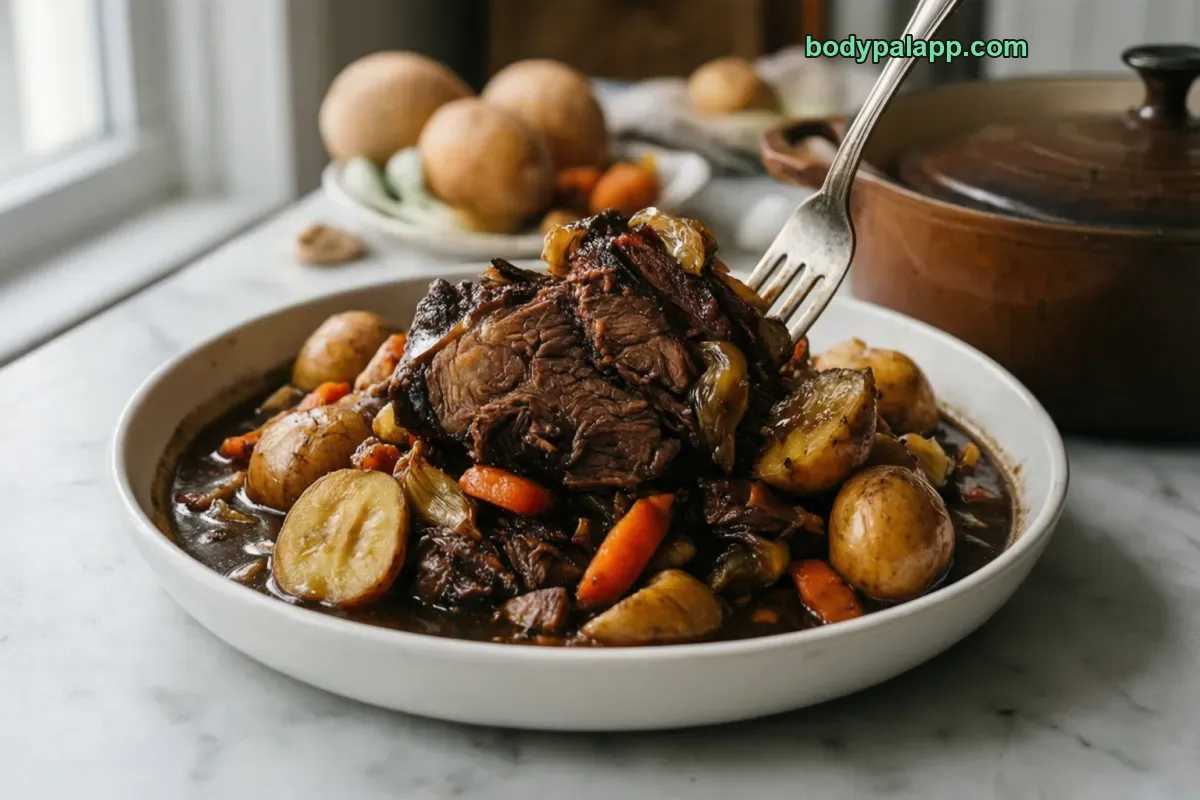
Pot roast calories come to 257 for a 3 oz portion (85 g) and 302 per 100 g of braised chuck, lean and fat together. There are no carbs at all, so fat supplies 59% of the calories and protein the other 41%. Portion size drives the total, because a typical dinner plate holds more than one serving.
257kcal
1 3 oz portion · 85 g, braised, lean and fat
41%protein
26 gProtein
0 gCarbs
16.3 gFat
How to burn off 257 kcal
—Walking, brisk
—Jogging
—Cycling, moderate
—Swimming
Skip the math. BodyPal counts these calories from your steps and workouts automatically.
Nutrition facts
Braised, lean and fat · per 85 g
Calories
257 kcal
Protein
26 g
Carbohydrate
0 g
Fat
16.3 g
Saturated fat
6.5 g
Cholesterol
102 mg
Sodium
43 mg
Potassium
206 mg
Iron
2.2 mg
Source: USDA FoodData Central
🛡️
Verified nutrition data
Numbers on this page come from USDA FoodData Central, the U.S. Department of Agriculture’s food composition database, and from manufacturer labels where a branded product is named. Last verified September 2026. How we verify our data →
Pot roast: calories, protein and sodium by serving
Percent of daily value uses the FDA reference of 2,000 kcal a day.
Serving
kcal
Protein
Carbs
Fat
Sodium
% DV kcal
3 oz portion (85 g)
257
25.6 g
0 g
16.3 g
43 mg
13%
4 oz portion (113 g)
341
34 g
0 g
21.7 g
57 mg
17%
100 g
302
30.1 g
0 g
19.2 g
50 mg
15%
3 × 3 oz portion (85 g)
770
76.8 g
128 mg
5 × 3 oz portion (85 g)
1,284
128 g
213 mg
One 3 oz slice is 257 calories, a full plate is double
The USDA reference serving is a 3 oz portion, about 85 g, and it lands at 257 calories with 25.6 g of protein. That is roughly the size of a deck of cards, smaller than what most people lift out of a Dutch oven. A 4 oz portion (113 g) comes to 341 calories, or 17% of the daily calorie value.
Sunday dinner plates tend to run bigger. Two 3 oz portions, 170 g of meat, total 513 calories and 51.2 g of protein. Three portions, 255 g, reach 770 calories. A family roast of 425 g, five portions, carries 1,284 calories before anyone touches the potatoes or the gravy.
Shredded pot roast is the hardest version to eyeball, because it packs down in a bowl and hides its weight. Weigh one serving once and remember how it looks on your usual plate. BodyPal can also log it from a photo when a scale is not handy, which is useful for leftovers and sandwiches.
Fat supplies 59% of the calories, protein the rest
Pot roast has 0 g of carbs, 0 g of sugars and 0 g of fiber, so every calorie comes from protein or fat. Per 100 g that is 30.1 g of protein and 19.2 g of fat. Fat carries more calories per gram, so it ends up with 59% of the total while protein takes 41%.
That split surprises people who think of a beef roast as lean protein. Chuck is a marbled working cut, and slow braising keeps the melted fat in and around the meat. This USDA row counts lean and fat together, which is how most home cooks actually serve it.
Protein is still the headline. A 3 oz portion covers 51% of the protein daily value, and a 4 oz portion covers 68%. If you want the split to lean further toward protein, trim the visible fat at the table and skim the braising liquid before you turn it into gravy.
Saturated fat is the row to watch, not sodium
Per 100 g, pot roast carries 7.6 g of saturated fat against a daily value of 20 g. That is a sizable share from a single piece of meat, and a second helping pushes it higher still. Cholesterol sits at 120 mg per 100 g, compared with a daily value of 300 mg.
Sodium tells the opposite story. Plain braised chuck has just 50 mg per 100 g, and a 3 oz portion holds 43 mg, only 2% of the daily value. Even five portions stay at 213 mg. The salt in a real pot roast comes from what goes into the pot: seasoning, broth, onion soup mix and gravy, none of which are in these numbers.
So the advice splits in two. If you track sodium, count the braising liquid and gravy as their own entries. If you watch saturated fat, portion size matters far more than the recipe, because the fat lives in the meat itself.
Let the vegetables in the pot fill the plate
The meat brings no carbs and no fiber, so the sides decide what kind of meal this becomes. Carrots, onions, celery and potatoes braised alongside the roast add fiber and volume. A smaller slice of beef with a big scoop of vegetables still reads as a full, satisfying plate.
Gravy and mashed potatoes are where a modest dinner turns heavy. Neither is counted here, so log them separately. Leftovers stretch well shredded over greens or tucked into a sandwich, where 3 oz of meat goes further than it does as a slab on a dinner plate.
If you are building a higher-protein day, pot roast does a lot of the work: a 4 oz portion delivers 34 g of protein with no sugar at all. Packaged versions such as Wellsley Farms Beef Pot Roast or Shady Brook Farms Turkey Breast and Thigh Pot Roast have their own labels, so use those instead of this braised chuck data.
How does pot roast compare?
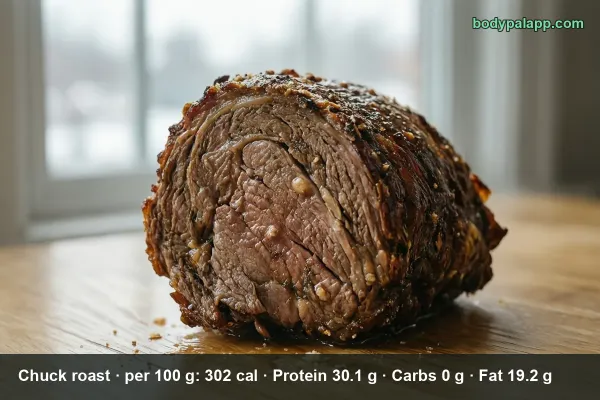
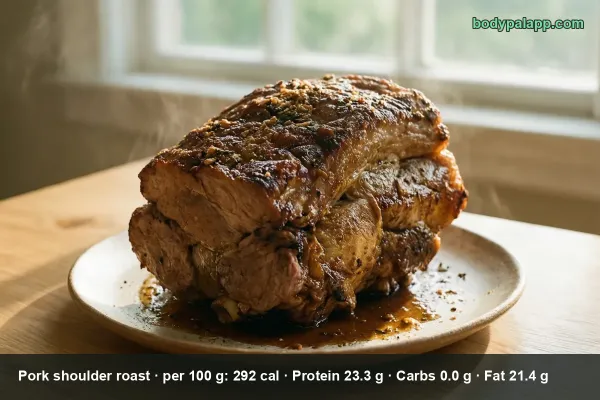
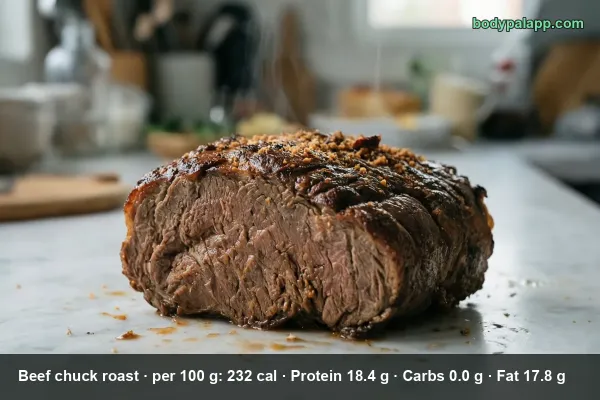
Here is how pot roast stacks up against chuck roast and pork shoulder roast, per 100 g and per usual serving.
Verdict: Pot roast and chuck roast are the same braised cut at 302 calories and 30.1 g of protein per 100 g, so choose by recipe, not by numbers. Pork shoulder roast is slightly lower at 292 calories but gives only 23.3 g of protein with 21.4 g of fat, so for staying full the beef is the better pick.
Most popular pot roast brands in the United States
Ranked by popularity in the BodyPal database
# Productkcal / 100 g
1Wellsley Farms Beef Pot Roast5 oz · 140 g179 kcal
2Shady Brook Farms Turkey Breast and Thigh Pot Roast3.55 oz · 99 g131 kcal
These packaged pot roasts include gravy or broth and, for the turkey version, a leaner meat, so their calories per 100 g run below the plain braised beef chuck roast figures above. Source: manufacturer labels / USDA FoodData Central.
Pot roast FAQs
How many calories are in a pot roast?
A 3 oz (85 g) portion of pot roast is about 257 calories, and a 4 oz portion is about 341. Per 100 g it is 302 calories.
Is pot roast good for weight loss?
A 3 oz portion of pot roast has 257 calories with 25.6 g protein and 16.3 g fat, so it is fairly high in protein for its calorie count.
Pot roast vs chuck roast: are the calories different?
Barely. Pot roast is 302 calories per 100 g and chuck roast is also 302, since pot roast is typically braised chuck.
How much protein is in pot roast?
A 3 oz (85 g) portion of pot roast has 25.6 g protein and 16.3 g fat. Per 100 g that is 30.1 g protein.
Is pot roast high in calories?
At 302 calories per 100 g, pot roast is on the dense side, though a 3 oz portion is 257 calories, 13% of the daily value. The total climbs quickly with bigger plates, potatoes and gravy.
What is a serving size of pot roast?
The standard serving is 3 oz, or 85 g, which gives 257 calories and 25.6 g of protein. Many home plates are closer to a 4 oz portion (113 g), which comes to 341 calories.
What are the macros in pot roast?
Per 100 g, pot roast has 30.1 g of protein, 19.2 g of fat and 0 g of carbs. By calories that works out to 41% protein and 59% fat, with no sugar or fiber.
How many calories are in a bowl of pot roast?
A generous bowl with 170 g of meat, two standard portions, holds 513 calories from the beef alone. Vegetables, potatoes and gravy add more, so log them separately to capture the whole bowl.
Is pot roast fattening?
Pot roast is rich rather than lean: 59% of its calories come from fat, including 7.6 g of saturated fat per 100 g. How it fits your day depends mostly on how much lands on the plate.