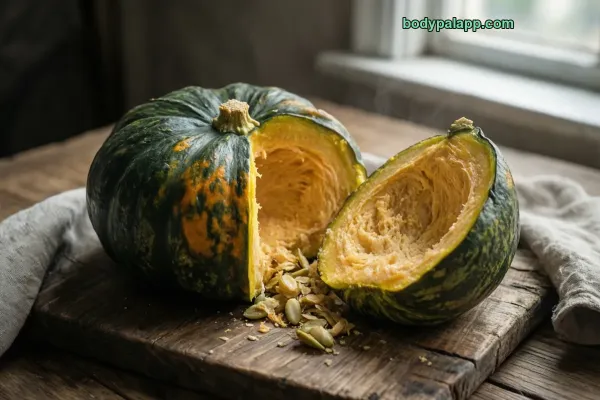
Pumpkin calories come to 49 for 1 cup mashed (245 g) of boiled, unsalted pumpkin, and 20 per 100 g. Carbs supply 85 percent of those calories, yet the total stays small: a full cup is only 2 percent of the daily value for calories. What you stir into it usually matters more than the pumpkin itself.
49kcal
1 cup of mashed pumpkin · 245 g, cooked, boiled, unsalted
12%protein
1.8 gProtein
12 gCarbs
0.2 gFat
How to burn off 49 kcal
—Walking, brisk
—Jogging
—Cycling, moderate
—Swimming
Skip the math. BodyPal counts these calories from your steps and workouts automatically.
Nutrition facts
Cooked, boiled, unsalted · per 245 g
Calories
49 kcal
Protein
1.8 g
Carbohydrate
12 g
Fat
0.2 g
Saturated fat
0.1 g
Cholesterol
0 mg
Sodium
2 mg
Potassium
564 mg
Iron
1.4 mg
Source: USDA FoodData Central
🛡️
Verified nutrition data
Numbers on this page come from USDA FoodData Central, the U.S. Department of Agriculture’s food composition database, and from manufacturer labels where a branded product is named. Last verified September 2026. How we verify our data →
Pumpkin: calories, protein and sodium by serving
Percent of daily value uses the FDA reference of 2,000 kcal a day.
Serving
kcal
Protein
Carbs
Fat
Sodium
% DV kcal
1 cup mashed (245 g)
49
1.8 g
12 g
0.2 g
2 mg
2%
1 cup raw cubes (116 g)
30
1.2 g
7.5 g
0.1 g
1 mg
2%
100 g
20
0.7 g
4.9 g
0.1 g
1 mg
1%
3 × 1 cup mashed (245 g)
147
5.3 g
7 mg
5 × 1 cup mashed (245 g)
245
8.8 g
12 mg
A cup of mashed pumpkin is a 49-calorie side
The standard reference is 1 cup mashed, which weighs 245 g and lands at 49 calories. That is 2 percent of the daily value for energy, which puts plain pumpkin among the lightest foods you can put on a plate. Raw pumpkin cut into cubes packs less into a cup: 1 cup raw cubes (116 g) comes to 30 calories, because cubes leave air between the pieces while mash fills the cup solid.
Doubling up barely moves the needle. Two cups mashed (490 g) total 98 calories, three cups (735 g) reach 147, and even five cups, a hefty 1,225 g, add up to only 245 calories. Few people eat that much in one sitting, but the math shows how forgiving plain pumpkin is.
The catch is that pumpkin rarely arrives plain. Soups, pies, breads and lattes build on it with cream, butter, sugar or flour, and those extras can outweigh the pumpkin many times over. If you track a pumpkin dish, log the add-ins separately. The numbers on this page describe boiled, drained pumpkin with no salt and nothing else.
Carbs supply 85 percent of the calories
Pumpkin is mostly water, and what little energy it carries comes from carbohydrate. The calorie split is 85 percent carbs, 12 percent protein and 3 percent fat. Per 100 g that works out to 4.9 g of carbs, 0.7 g of protein and 0.1 g of fat, with 0 g of saturated fat and 0 mg of cholesterol.
Within those carbs, 2.1 g per 100 g are sugars and 1.1 g are fiber. A cup of mash brings 12 g of carbs, 5.1 g of sugars and 2.7 g of fiber, measured against a daily value of 28 g for fiber. The sugar is the vegetable's own, which is why plain pumpkin tastes only faintly sweet.
Protein is a minor player. One cup mashed gives 1.8 g, or 4 percent of the 50 g daily value, so pumpkin will not anchor a meal on its own. Think of it as volume and flavor, then build the protein from something else on the plate.
Potassium stands out, sodium barely registers
The most notable row in the table is potassium. Pumpkin carries 230 mg per 100 g, set against a daily value of 4700 mg. For a food with only 20 calories per 100 g, that is a fair amount of mineral for very little energy.
Sodium sits at the other extreme. Boiled pumpkin without salt has 1 mg per 100 g and 2 mg in a full cup of mash, which rounds to 0 percent of the 2300 mg daily value. Even the five-cup total in the portion table reaches just 12 mg.
That low baseline means any sodium in a pumpkin dish comes from the cook. Canned soups, seasoned purees and savory bakes can carry far more than the vegetable itself. If you watch sodium, plain pumpkin gives you a clean starting point, and you decide how much salt goes in.
Pair pumpkin with protein and a little fat
Because pumpkin is so light, it works best as a base or a side rather than a whole meal. Roasted or mashed, it fills a large share of the plate for few calories, which helps if you want bigger-looking portions without a big total. Add a protein such as chicken, beans, eggs or Greek yogurt to round out what pumpkin lacks.
A small amount of fat also earns its place. Pumpkin itself has just 0.1 g per 100 g, so a drizzle of olive oil, a few toasted seeds or some grated cheese adds flavor and staying power. Measure these, since they carry most of the calories once they hit the bowl.
For breakfast, plain pumpkin puree stirs easily into oatmeal or yogurt with spices instead of sugar. For dinner, it thickens soups and sauces in place of cream. If you would rather skip the weighing, BodyPal can log a pumpkin dish from a photo, which is handy for mixed recipes where the add-ins are the real story.
How does pumpkin compare?
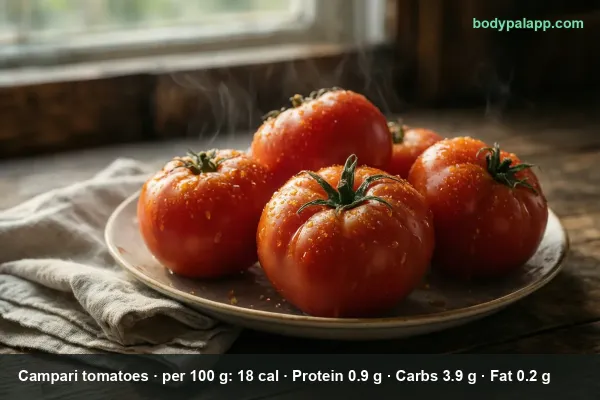
Here is how boiled pumpkin stacks up against acorn squash, spaghetti squash and campari tomatoes, per 100 g and per usual serving.
Verdict: For the fewest calories per bite, pumpkin at 20 per 100 g and campari tomatoes at 18 are nearly tied, while spaghetti squash sits close behind at 27. Acorn squash runs about 2.8 times higher at 56 per 100 g and 115 per cup, so pick it when you want a denser, more filling side and pumpkin when you want volume on a small budget.
Pumpkin FAQs
How many calories are in a cup of pumpkin?
One cup of mashed cooked pumpkin (245 g) is 49 calories. A cup of raw 1-inch cubes (116 g) is 30 calories.
Is pumpkin good for weight loss?
Cooked pumpkin has 20 calories per 100 g with 1.1 g fiber, so a full cup of mashed pumpkin comes to 49 calories.
Is canned pumpkin pie mix the same as plain pumpkin?
No. Canned pumpkin pie mix is sweetened and has 104 calories per 100 g, or 281 calories per cup (270 g), against 20 calories per 100 g for plain cooked pumpkin.
How many carbs are in pumpkin?
Cooked pumpkin has 4.9 g carbs per 100 g, including 2.08 g sugars. A cup of mashed pumpkin (245 g) has 12.0 g carbs, 2.7 g fiber and 1.8 g protein.
How many calories are in raw pumpkin?
One cup of raw pumpkin cubes (116 g) has 30 calories. It also brings 7.5 g of carbs, 1.2 g of protein and 0.1 g of fat. Cooked and mashed, a cup weighs more and comes to 49 calories.
How much sugar is in pumpkin?
Boiled pumpkin has 2.1 g of sugars per 100 g and 5.1 g in 1 cup mashed. That sugar is naturally present in the vegetable. Sweetened pie fillings and pumpkin drinks add much more.
How much fiber does pumpkin have?
One cup of mashed pumpkin provides 2.7 g of fiber, or 1.1 g per 100 g. The daily value for fiber is 28 g, so a cup gives a modest contribution for just 49 calories.
Is pumpkin high in sodium?
No. Boiled pumpkin without salt has 1 mg of sodium per 100 g and 2 mg per cup mashed, which is 0 percent of the daily value. Any meaningful sodium comes from salt or canned add-ins.
How much protein is in a cup of pumpkin?
A cup of mashed pumpkin has 1.8 g of protein, about 4 percent of the daily value. Per 100 g it is 0.7 g, so pair pumpkin with a protein food if you want a filling meal.