Raisins calories come to 120 for a 1/4 cup (40 g) and 299 per 100 g. Carbs supply 95% of those calories, most of it as sugar, so the size of the scoop matters far more than anything else on the label. A snack box is a light treat; a full cup is closer to a meal.
120kcal
1 quarter cup · 40 g, dried
4%protein
1.3 gProtein
32 gCarbs
0.1 gFat
How to burn off 120 kcal
—Walking, brisk
—Jogging
—Cycling, moderate
—Swimming
Skip the math. BodyPal counts these calories from your steps and workouts automatically.
Nutrition facts
Dried · per 40 g
Calories
120 kcal
Protein
1.3 g
Carbohydrate
32 g
Fat
0.1 g
Saturated fat
0 g
Cholesterol
0 mg
Sodium
10 mg
Potassium
298 mg
Iron
0.7 mg
Source: USDA FoodData Central
🛡️
Verified nutrition data
Numbers on this page come from USDA FoodData Central, the U.S. Department of Agriculture’s food composition database, and from manufacturer labels where a branded product is named. Last verified September 2026. How we verify our data →
Raisins: calories, protein and sodium by serving
Percent of daily value uses the FDA reference of 2,000 kcal a day.
Serving
kcal
Protein
Carbs
Fat
Sodium
% DV kcal
1/4 cup (40 g)
120
1.3 g
31.7 g
0.1 g
10 mg
6%
Small box (43 g)
129
1.4 g
34.1 g
0.1 g
11 mg
6%
1 cup (160 g)
478
5.3 g
126.9 g
0.4 g
42 mg
24%
100 g
299
3.3 g
79.3 g
0.3 g
26 mg
15%
3 × 1/4 cup (40 g)
359
4 g
31 mg
5 × 1/4 cup (40 g)
598
6.6 g
52 mg
A 1/4 cup is 120 calories; a full cup is 478
The label serving is a 1/4 cup, roughly 40 g, and it costs 120 calories, about 6% of the daily calorie value. A small snack box of 43 g lands at 129, so the lunchbox carton and the measuring cup are close enough to log the same way. At that size raisins are a light, sweet snack and nothing more.
The trouble starts when the portion grows. Raisins are small, dense and easy to pour, and the total climbs fast: two quarter-cups (80 g) reach 239 calories, three (120 g) reach 359, and a full cup of 160 g lands at 478, or 24% of the daily value. A 200 g heap for baking or a big batch of trail mix runs to 598.
Because the pieces are so small, eyeballing almost always runs high. Use the measuring cup or the snack box as your unit and the numbers stay honest. If you tend to graze straight from a big bag, pour a 1/4 cup into a bowl first and put the bag back in the pantry.
Carbs supply 95% of every calorie
Raisins are close to a pure carbohydrate food. Per 100 g they carry 79.3 g of carbs, 3.3 g of protein and just 0.3 g of fat, which works out to 95% of the calories from carbs, 4% from protein and 1% from fat. There is almost nothing else in the mix.
Most of that carbohydrate is sugar: 65.2 g per 100 g, or 26.1 g in a 1/4 cup. It is fruit sugar concentrated by drying rather than sugar added in a factory, but the calories count the same either way. The quarter cup also brings 31.7 g of total carbs, which is why raisins work as quick fuel before a workout, a hike or a long afternoon.
Protein is a rounding error. A 1/4 cup holds 1.3 g, just 3% of the daily value, and even a full cup has only 5.3 g. Raisins on their own are unlikely to keep you full for long, so treat them as fuel or flavor rather than as a meal.
Fiber and potassium are the upside; sodium barely registers
Raisins are not just sugar. Per 100 g they deliver 4.5 g of fiber, and a 1/4 cup gives 1.8 g against a daily value of 28 g. A full cup reaches 7.2 g, a meaningful share, though it arrives packaged with 478 calories.
Potassium is the standout mineral at 744 mg per 100 g. That is a real contribution from a small amount of dried fruit, and it is the clearest nutritional reason to reach for raisins instead of candy with a similar sugar load.
Sodium is a non-issue. A 1/4 cup has 10 mg, 0% of the daily value, and even a full cup has only 42 mg, or 2%. Fat and cholesterol are just as quiet: 0.1 g of fat per quarter cup and 0 mg of cholesterol. If you watch salt or saturated fat, raisins are an easy fit; the only number you really have to manage is the calorie total.
Raisins work best as a topping, not the whole snack
Since raisins bring plenty of sugar and very little protein, they shine next to foods that cover the gap. A spoonful stirred into plain yogurt, oatmeal or cottage cheese adds sweetness without syrup or sugar, and the protein in the base helps the snack last longer.
Trail mix is the classic pairing with nuts, but watch the ratio. Nuts add fat and raisins add sugar, so a big bowl climbs quickly; keep the raisins near a 1/4 cup and the total stays easy to read. In salads, a scattering of raisins against bitter greens and a sharp cheese gives a sweet note without much of a calorie cost.
Brands like Sun-Maid, Sun Valley and Smart Way sell raisins in boxes and bags, and golden versions sit next to the dark ones on the shelf. Whatever you buy, the useful habit is the same: measure once, then log. BodyPal can log raisins from a photo of your bowl, which helps when they are mixed into something else.
How does raisins compare?
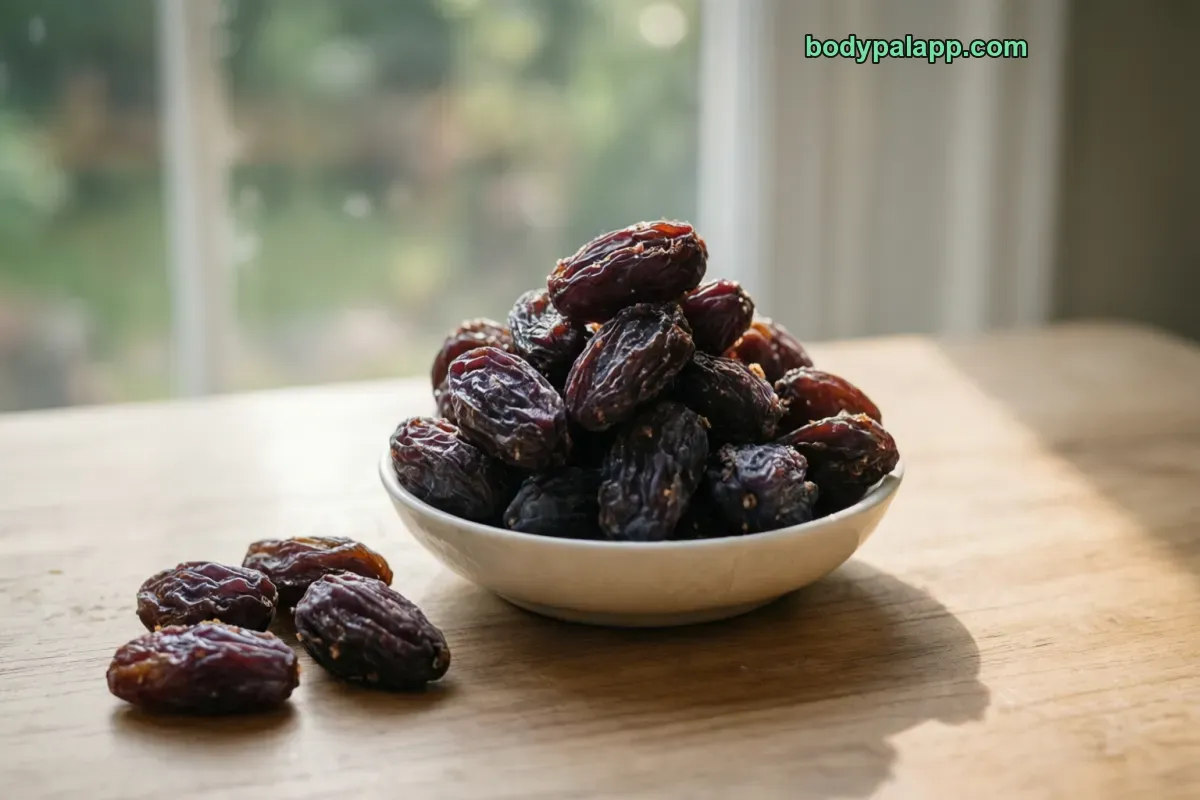
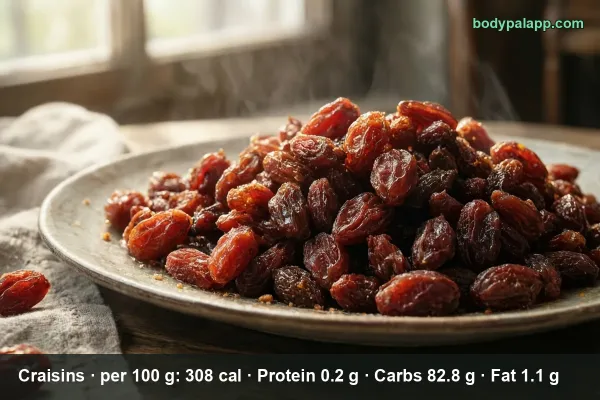
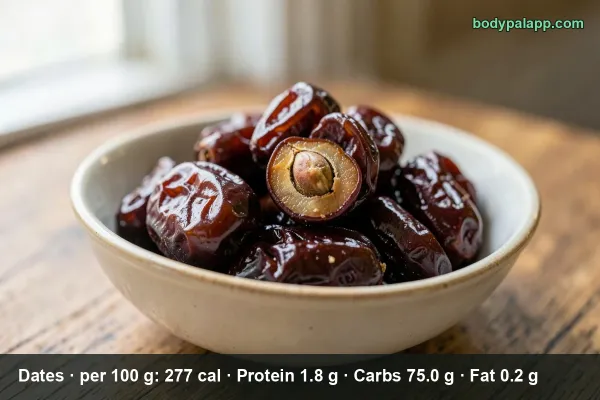
Here is how raisins stack up against craisins, dates and chocolate raisins, per 100 g and per usual serving.
Verdict: If you want the lightest dried fruit here, dates win at 277 calories per 100 g against 299 for raisins, while craisins land at 308 with almost no protein. Skip chocolate raisins if you count calories: at 390 per 100 g and 14.8 g of fat, they turn a fruit snack into candy.
How many calories are in a quarter cup of raisins?
About 120 calories in a 1/4 cup (40 g). A small 1.5 oz box (43 g) is 129 calories and a full cup (160 g) is 478.
Are raisins good for weight loss?
Raisins are calorie dense at 299 calories per 100 g, so the portion decides: 40 g is 120 calories while a full cup (160 g) reaches 478. The same 40 g carries 1.8 g of fiber.
Raisins or dates: which has more calories?
Raisins have 299 calories per 100 g and dates 277, so raisins are slightly higher for the same weight.
How much sugar is in raisins?
Raisins have 65.2 g of sugar per 100 g, which is about 26.1 g in a 1/4 cup (40 g).
How many calories are in 100 g of raisins?
There are 299 calories in 100 g of raisins. That amount carries 79.3 g of carbs, including 65.2 g of sugar, plus 4.5 g of fiber and 3.3 g of protein, with only 0.3 g of fat.
How many calories are in kismis or dry grapes?
Kismis and dry grapes are other names for raisins, so the numbers are the same: 120 calories per 1/4 cup (40 g) and 299 per 100 g. A small 43 g snack box comes to 129 calories.
Are raisins high in calories?
By weight, yes: raisins have 299 calories per 100 g because drying concentrates the sugar. A 1/4 cup is a modest 120 calories, but a full cup reaches 478, or 24% of the daily value.
How many calories are in a cup of raisins?
A full cup of raisins (160 g) has 478 calories, 24% of the daily calorie value. It also carries 5.3 g of protein and 7.2 g of fiber, but most of the total is sugar, so a cup works better split across several snacks.