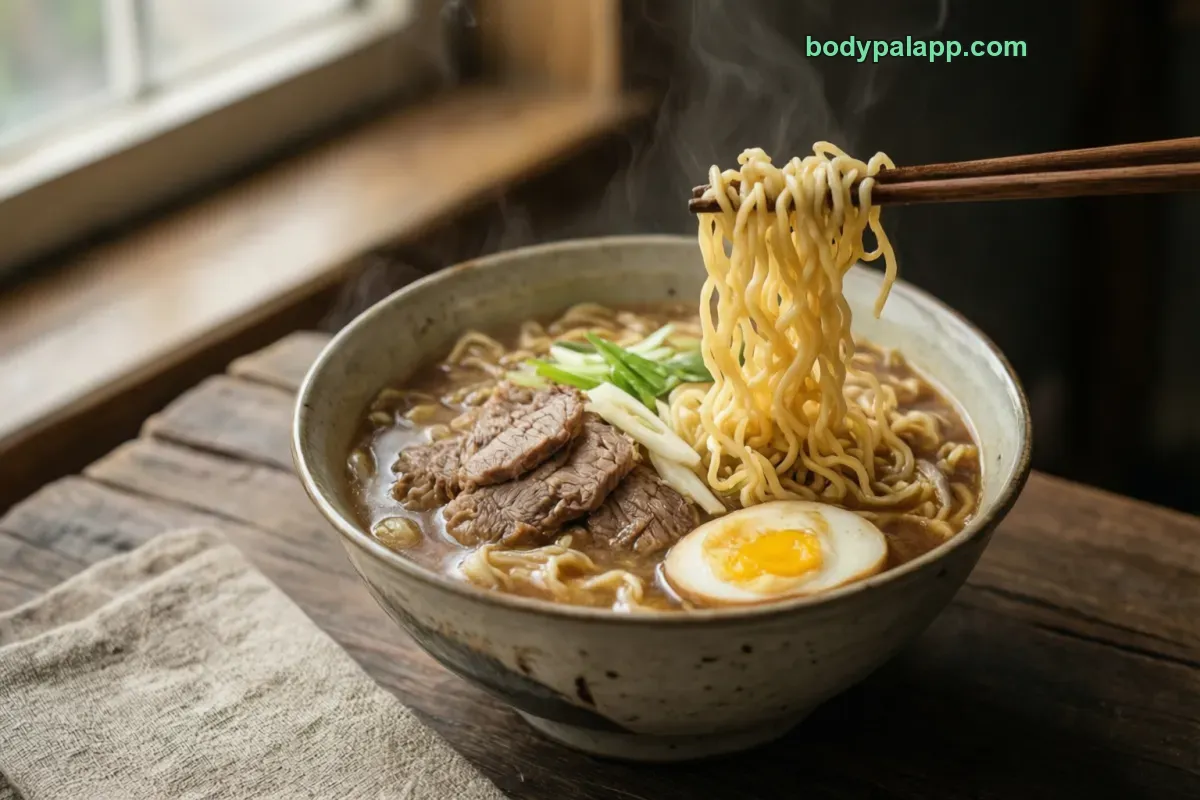
Beef ramen noodles calories come to 362 for one 82 g package of dry noodles and 441 per 100 g. Calories are only half the story. That same package carries 1,416 mg of sodium, 62% of the daily value, and just 8.2 g of protein. The block is easy to eat in one sitting, so the totals add up fast.
362kcal
1 package without the flavor packet · 82 g, dry, beef flavor
9%protein
8.2 gProtein
49 gCarbs
14.5 gFat
How to burn off 362 kcal
—Walking, brisk
—Jogging
—Cycling, moderate
—Swimming
Skip the math. BodyPal counts these calories from your steps and workouts automatically.
Nutrition facts
Dry, beef flavor · per 82 g
Calories
362 kcal
Protein
8.2 g
Carbohydrate
49 g
Fat
14.5 g
Saturated fat
6.7 g
Sodium
1416 mg
Potassium
145 mg
Iron
3.2 mg
Source: USDA FoodData Central
🛡️
Verified nutrition data
Numbers on this page come from USDA FoodData Central, the U.S. Department of Agriculture’s food composition database, and from manufacturer labels where a branded product is named. Last verified September 2026. How we verify our data →
Beef ramen noodles: calories, protein and sodium by serving
Percent of daily value uses the FDA reference of 2,000 kcal a day.
Serving
kcal
Protein
Carbs
Fat
Sodium
% DV kcal
1 package, no packet (82 g)
362
8.2 g
49.5 g
14.5 g
1,416 mg
18%
Nissin label serving (42 g)
190
5 g
27 g
7 g
760 mg
9%
100 g
441
10.1 g
60.3 g
17.7 g
1,727 mg
22%
3 × 1 package, no packet (82 g)
1,085
24.7 g
4,248 mg
5 × 1 package, no packet (82 g)
1,808
41.2 g
7,081 mg
One package is 362 calories, and most people eat the whole thing
The figures here are for the dry beef-flavor noodle block as USDA lists it, 82 g without the packet. That package delivers 362 calories, 18% of a 2,000-calorie daily value. The 42 g label serving printed on the package is 190 calories, about half the block. Few people cook half a block and save the rest, so the full package is the honest number to log.
Doubling up changes the picture quickly. Two packages come to 723 calories and 16.5 g of protein, which is a full dinner's worth of energy with less protein than a single chicken breast would bring. Three packages reach 1,085 calories. At 5 packages you are at 1,808 calories, close to an entire day's daily value from noodles alone.
If you buy ramen by the case for convenience, decide on the portion before the water boils. Cooking one block and building around it keeps the meal predictable. Cooking two because the first felt small is how a cheap snack turns into a 723-calorie meal with very little to show for it in protein or fiber.
Fat supplies more than a third of the calories
Instant ramen looks like a pure carb food, and carbs do lead: 55% of the calories come from them, with 60.3 g per 100 g. The surprise is fat. It supplies 36% of the calories, at 17.7 g per 100 g, because the noodles are typically fried before they are dried. Protein trails far behind at 9%.
Of that fat, 8.2 g per 100 g is saturated. Measured against the 20 g daily value for saturated fat, that is a meaningful share for a food most people think of as plain noodles. One package carries 14.5 g of total fat, which is why the calorie count is higher than a plate of boiled pasta of similar weight would suggest.
Protein is the weak spot. One package gives 8.2 g, 16% of the daily value, and fiber is only 2.5 g. Sugar is low at 1.6 g per package, so sweetness is not the issue here. The combination of fried starch, little protein and little fiber explains why a bowl can feel light an hour later despite the calories.
Sodium is the row to watch
Per 100 g, beef ramen carries 1,727 mg of sodium, 75% of the 2,300 mg daily value. One package brings 1,416 mg, or 62% of the daily value, before anything else on your plate. Even the smaller 42 g label serving lists 760 mg, a third of the day's allowance.
Eat two packages and the sodium reaches 2,832 mg, more than the full daily value in a single meal. Three packages climb to 4,248 mg. This is the number that separates ramen from other quick carbs, and it matters more than the calories if you are watching your salt intake.
If sodium is a concern, the simplest lever is portion size: one block instead of two. Using less of the flavoring, draining some broth instead of drinking it all, and keeping the rest of the day's meals lower in salt all help. Potassium, at 177 mg per 100 g, is low, so the noodles offer little to balance that sodium load.
Add protein and vegetables to make one block a real meal
A single package at 362 calories leaves room to build a proper meal around it. The gaps are clear from the label: protein and fiber. An egg dropped into the broth, leftover shredded beef or chicken, or a handful of tofu cubes fixes the protein side. Frozen spinach, bok choy, scallions or shredded cabbage add bulk and fiber for few calories.
Building the bowl this way is a better move than cooking a second block. You get more food volume and more staying power while the sodium stays at the one-package level rather than doubling. The noodles become the base rather than the whole meal.
Ramen also works as an occasional quick lunch rather than a daily staple, given how much of the sodium budget it takes. If you track your intake, BodyPal can log a bowl from a photo, which helps when you have added toppings and the package label no longer tells the full story.
How does beef ramen noodles compare?
Here is how beef ramen noodles stack up against other filling savory dishes, per 100 g and per usual serving.
Verdict: If you want the most food for your calories, pad thai noodles at 154 per 100 g or taco salad with ground beef at 179 per 100 g beat dry ramen at 441, and both carry far less sodium per 100 g. For more protein per bite, the beef empanada at 12.1 g per 100 g edges past ramen, though a regular one still costs 433 calories.
Beef ramen noodles FAQs
How many calories are in one package of beef ramen noodles?
About 362 calories for the 82 g noodle block, dry, without the flavor packet.
Is beef ramen good for weight loss?
One 82 g package has 362 calories, 14.5 g fat and 49.5 g carbs, with 8.2 g protein.
Beef ramen vs chicken ramen: which has more calories?
They are nearly the same: beef flavor is 441 calories per 100 g dry, chicken flavor 439.
How much sodium is in beef ramen noodles?
1,727 mg per 100 g dry, or about 1,416 mg in an 82 g package.
How many calories are in 100 grams of dry beef ramen?
Dry beef ramen noodles have 441 calories per 100 g, with 60.3 g of carbs, 17.7 g of fat and 10.1 g of protein. That is 22% of a 2,000-calorie daily value.
How many calories are in half a package of beef ramen?
The 42 g label serving, about half a block, has 190 calories, 7 g of fat and 5 g of protein. It also carries 760 mg of sodium, 33% of the daily value.
How much protein is in a package of beef ramen?
One 82 g package of beef ramen has 8.2 g of protein, 16% of the daily value. Protein supplies only 9% of the calories, so adding an egg or meat makes the bowl more filling.
How much fat is in beef ramen noodles?
A package of beef ramen has 14.5 g of fat, and fat supplies 36% of the calories. Per 100 g there is 17.7 g of fat, of which 8.2 g is saturated.
How many calories are in two packs of beef ramen?
Two packages of beef ramen come to 723 calories, with 16.5 g of protein and 2,832 mg of sodium. That sodium total is above the 2,300 mg daily value.