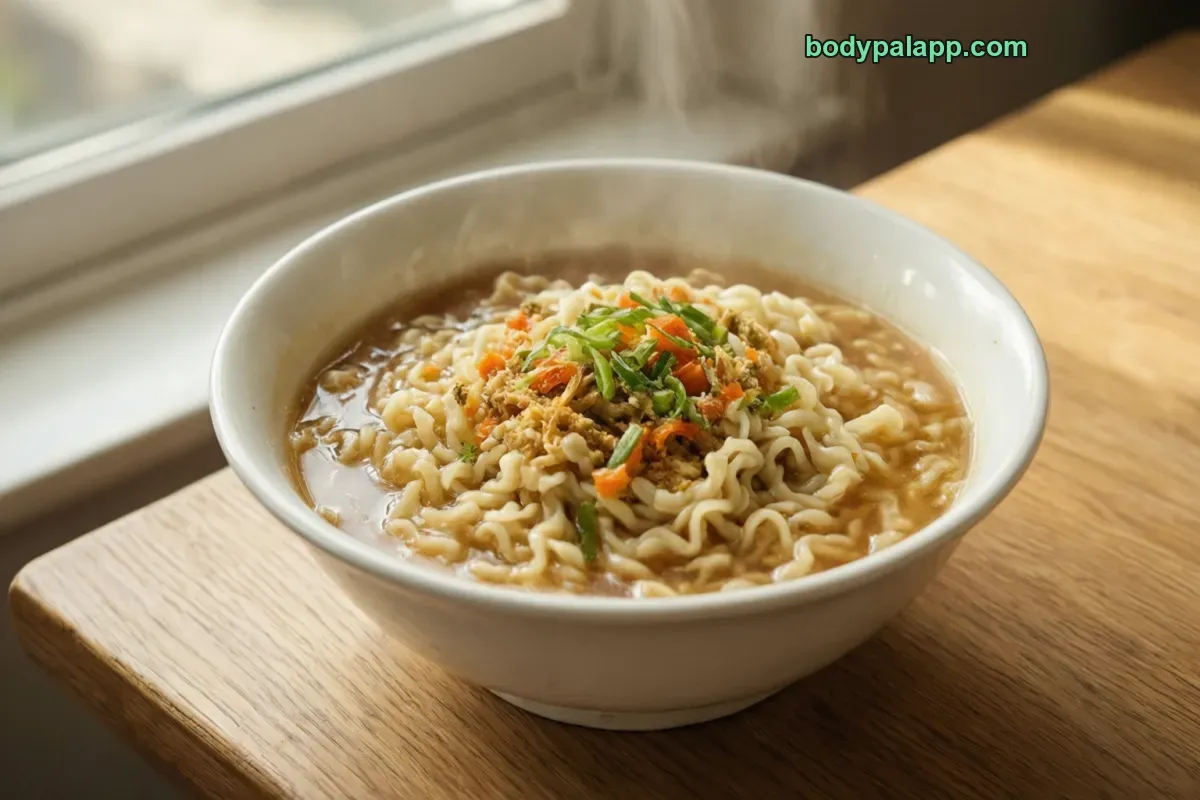
Maruchan ramen noodles calories come to 280 per cup (61 g) and 459 per 100 g, based on the package label. The number to notice is sodium, not calories: one cup already carries 660 mg, or 29% of the daily value. Fat also supplies 39% of the calories, which is high for a noodle dish.
280kcal
1 cup · 61 g, packaged, per label
10%protein
7 gProtein
36 gCarbs
12 gFat
How to burn off 280 kcal
—Walking, brisk
—Jogging
—Cycling, moderate
—Swimming
Skip the math. BodyPal counts these calories from your steps and workouts automatically.
Nutrition facts
Packaged, per label · per 61 g
Calories
280 kcal
Protein
7 g
Carbohydrate
36 g
Fat
12 g
Saturated fat
6 g
Cholesterol
5 mg
Sodium
660 mg
Source: USDA FoodData Central
🛡️
Verified nutrition data
Numbers on this page come from USDA FoodData Central, the U.S. Department of Agriculture’s food composition database, and from manufacturer labels where a branded product is named. Last verified September 2026. How we verify our data →
Maruchan ramen: calories, protein and sodium by serving
Percent of daily value uses the FDA reference of 2,000 kcal a day.
Serving
kcal
Protein
Carbs
Fat
Sodium
% DV kcal
1 cup (61 g)
280
7 g
36 g
12 g
660 mg
14%
100 g
459
11.5 g
59 g
19.7 g
1,082 mg
23%
3 × 1 cup (61 g)
840
21 g
1,980 mg
5 × 1 cup (61 g)
1,400
35 g
3,300 mg
Two cups make a 560-calorie meal
One cup of Maruchan ramen weighs 61 g dry and delivers 280 calories, about 14% of a 2,000-calorie daily value. That is a light snack on paper. The trouble is that a single cup rarely feels like a meal, and many people reach for a second one.
Two cups (122 g) come to 560 calories with 1,320 mg of sodium and 14 g of protein. Three cups (183 g) reach 840 calories and 1,980 mg of sodium, which is close to the full 2,300 mg daily value. Five cups (305 g), the kind of total a hungry teenager or a late-night batch can hit, land at 1,400 calories and 3,300 mg of sodium.
Calories climb in a straight line, but sodium climbs faster against its limit than calories do against theirs. By the time you have eaten enough cups to feel full, sodium has usually passed the daily value while protein is still modest. If you log ramen, log the number of cups honestly, because the gap between one and two is the gap between a snack and a full meal.
Fat supplies nearly four in ten calories
Instant noodles look like a carb food, and carbs do lead: they supply 51% of the calories. But fat supplies 39%, and protein only 10%. Per 100 g, that works out to 59 g of carbs, 19.7 g of fat and 11.5 g of protein.
The fat comes largely from the way instant noodles are made, and much of it is saturated. Per 100 g there are 9.8 g of saturated fat, roughly half of the 20 g daily value. Per cup, total fat is 12 g. That is why a 61 g serving of dry noodles carries more calories than its size suggests.
Fiber and sugar barely register. One cup gives 2 g of fiber and 3 g of sugars, so the carbs here are mostly refined starch. Cholesterol is low at 8 mg per 100 g. The macro picture is simple: lots of energy from starch and fat, little protein, little fiber, which explains why a cup tends to leave you hungry again soon after.
Sodium is the row to watch
Each cup carries 660 mg of sodium, 29% of the 2,300 mg daily value. Per 100 g, the figure is 1,082 mg, or 47% of the daily value. Few packaged foods pack this much sodium into so few calories.
Compare the two percentages on a single cup: 14% of your daily calories against 29% of your daily sodium. Sodium runs at about twice the pace of calories. If the rest of your day includes bread, cheese, deli meat or restaurant food, a cup of ramen can push the total past the daily value without much effort.
The label figure assumes you eat the noodles with their seasoning. If you watch sodium, the practical levers are portion size and how much of the broth you drink. Stick to one cup, skip finishing the liquid, and fill the bowl out with ingredients that add volume without adding salt.
Add protein and vegetables to make it a meal
On its own, one cup gives 7 g of protein, 14% of the 50 g daily value. That is not much for 280 calories, and it is the main reason instant ramen does not hold you for long. Adding a protein source turns it from a snack into something closer to a balanced meal.
Good additions are an egg, leftover chicken, tofu or shrimp, plus whatever vegetables you have: spinach, frozen peas, cabbage, scallions or mushrooms. Vegetables add bulk and fiber for very few calories, which helps one cup feel like enough instead of reaching for a second.
If you eat ramen often, plan the rest of the day around it: lower-sodium choices at other meals and more fresh produce. BodyPal can log the bowl from a photo, add-ins included, so the extras count toward your totals too.
How does Maruchan ramen compare?
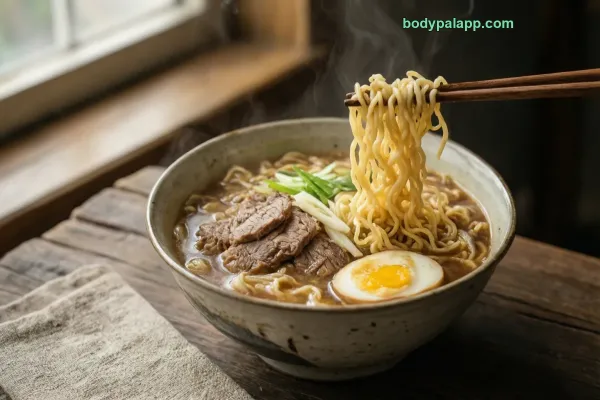
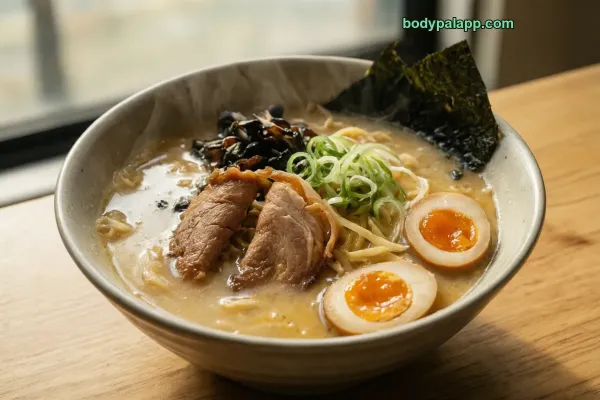
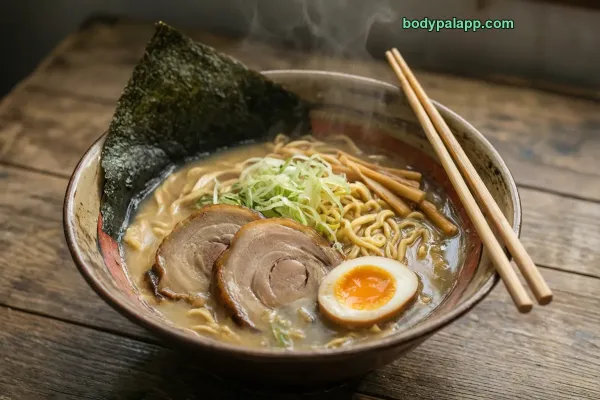
Here is how Maruchan ramen stacks up against beef instant ramen, tonkotsu ramen and a restaurant-style ramen bowl, per 100 g and per usual serving.
Verdict: For the fewest calories per bite, the ramen bowl wins at 127 per 100 g against 459 for Maruchan, and its 333 mg of sodium per 100 g is far lower too. For protein, tonkotsu ramen leads with 18.6 g per 100 g, while beef instant ramen is the saltiest option at 1,727 mg per 100 g.
Most popular Maruchan ramen brands in the United States
How many calories are in one cup of Maruchan ramen?
One Maruchan Instant Lunch chicken cup (61 g) has 280 calories, with 36.0 g carbs and 12.0 g fat.
Is Maruchan ramen good for weight loss?
A cup has 280 calories but only 7.0 g protein and 2.0 g fiber, along with 660 mg sodium.
Maruchan ramen vs tonkotsu ramen: which has more calories?
Maruchan ramen has 459 calories per 100 g as packaged, while tonkotsu ramen has 386 per 100 g.
How much sodium is in Maruchan ramen?
One cup has 660 mg of sodium, which is 1082 mg per 100 g.
How many calories are in 100 g of Maruchan ramen?
There are 459 calories in 100 g of Maruchan ramen, with 59 g of carbs, 19.7 g of fat and 11.5 g of protein. That is about 23% of a 2,000-calorie daily value.
How much protein does a cup of Maruchan ramen have?
One cup (61 g) has 7 g of protein, about 14% of the daily value. Protein supplies only 10% of the calories, so adding an egg, chicken or tofu makes the bowl more filling.
How much fat is in Maruchan ramen?
One cup has 12 g of fat, and fat supplies 39% of its calories. Per 100 g there are 19.7 g of fat, of which 9.8 g is saturated, roughly half the 20 g daily value.
How many calories are in two cups of Maruchan ramen?
Two cups (122 g) of Maruchan ramen come to 560 calories, with 1,320 mg of sodium and 14 g of protein. Three cups reach 840 calories and 1,980 mg of sodium.
Does Maruchan ramen have much sugar or fiber?
Not much of either. One cup has 3 g of sugars and 2 g of fiber. Per 100 g the figures are 4.9 g of sugars and 3.3 g of fiber, so most carbs are refined starch.