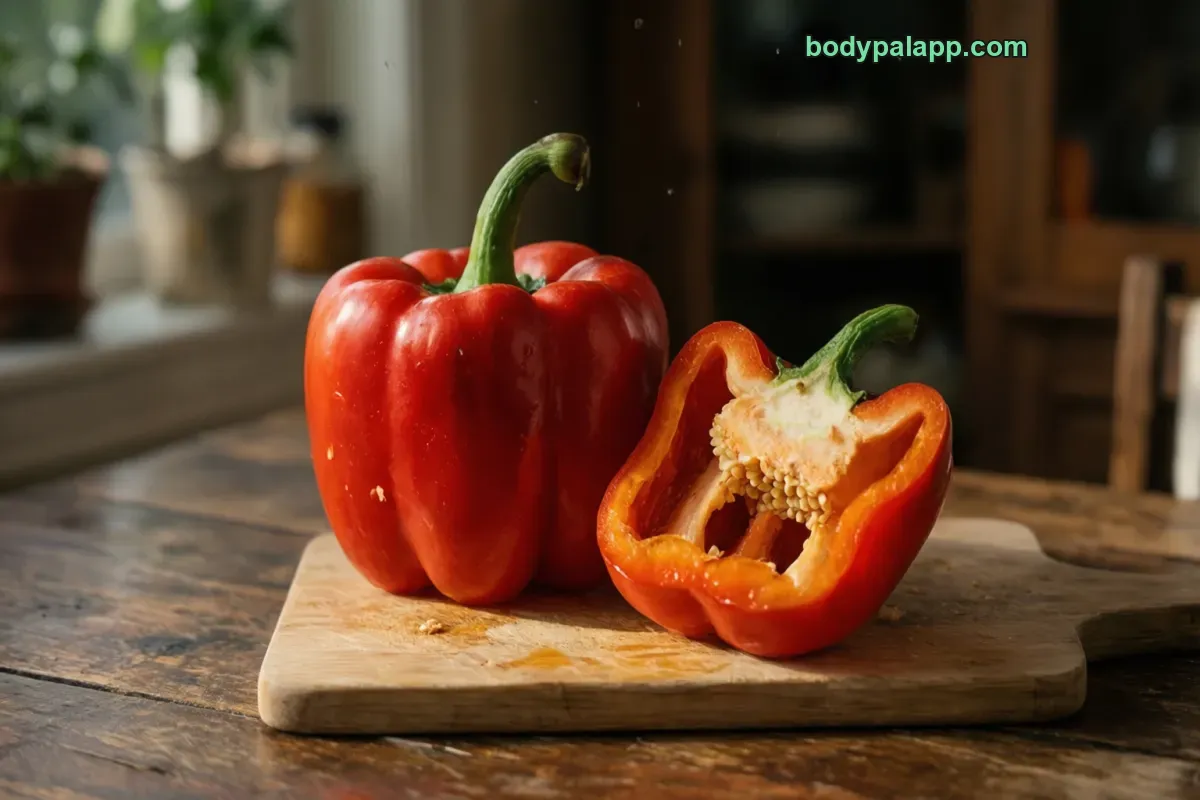
Red pepper calories come to 37 for one medium pepper (120 g) and 31 per 100 g. Carbs supply 85 percent of those calories, mostly natural sugar, and sodium sits at 0 mg. What moves your total is the portion: a mini pepper adds 9 calories, a cup of slices adds 47.
37kcal
1 medium pepper · 120 g, raw, sweet red variety
11%protein
1.1 gProtein
8 gCarbs
0.2 gFat
How to burn off 37 kcal
—Walking, brisk
—Jogging
—Cycling, moderate
—Swimming
Skip the math. BodyPal counts these calories from your steps and workouts automatically.
Nutrition facts
Raw, sweet red variety · per 120 g
Calories
37 kcal
Protein
1.1 g
Carbohydrate
8 g
Fat
0.2 g
Saturated fat
0.1 g
Cholesterol
0 mg
Sodium
0 mg
Potassium
256 mg
Iron
0.4 mg
Source: USDA FoodData Central
🛡️
Verified nutrition data
Numbers on this page come from USDA FoodData Central, the U.S. Department of Agriculture’s food composition database, and from manufacturer labels where a branded product is named. Last verified September 2026. How we verify our data →
Red pepper: calories, protein and sodium by serving
Percent of daily value uses the FDA reference of 2,000 kcal a day.
Serving
kcal
Protein
Carbs
Fat
Sodium
% DV kcal
1 medium (120 g)
37
1.1 g
8 g
0.2 g
0 mg
2%
1 cup sliced (150 g)
47
1.4 g
10 g
0.2 g
0 mg
2%
Mini pepper (30 g)
9
0.3 g
2 g
0 g
0 mg
0%
100 g
31
0.9 g
6.7 g
0.1 g
0 mg
2%
3 × 1 medium (120 g)
112
3.2 g
0 mg
5 × 1 medium (120 g)
186
5.4 g
0 mg
Five medium peppers add up to just 186 calories
One medium red pepper weighs about 120 g and carries 37 calories, which is 2 percent of a 2000-calorie daily value. Slice it into a cup and you are looking at 150 g and 47 calories. The snack-bag mini peppers are tiny by comparison: 30 g each and 9 calories, so a handful barely registers.
Scaling up does not change the picture much. Two medium peppers come to 74 calories, three come to 112, and five, a full 600 g of vegetable, total 186. Few foods let you eat that much volume for that little energy. If you stuff, roast or fajita a whole tray, the peppers are rarely the part of the dish that pushes the number up.
That makes red pepper an easy place to be generous. The calories that matter on the plate usually come from what goes with it: oil in the pan, cheese in the filling, dip on the side. Weigh or count those, and treat the pepper itself as close to a free addition.
Carbs are 85 percent of every calorie
Per 100 g, red pepper has 6.7 g of carbs, 0.9 g of protein and 0.1 g of fat. Because there is so little of anything, the calorie split tilts hard toward carbs: 85 percent from carbohydrate, 11 percent from protein and 4 percent from fat.
Most of those carbs are sugar. Of the 6.7 g, 4.2 g are sugars and 1.2 g are fiber. That is why ripe red peppers taste sweet in a way green ones do not. The sugar is natural to the vegetable, not added, and in absolute terms it is small: about 5 g in a medium pepper.
Protein and fat are almost absent. A medium pepper gives 1.1 g of protein, 2 percent of the daily value, and 0.2 g of fat. Red pepper adds color, crunch and volume to a meal, but it does not supply the protein or fat that keep you full for long. Plan those from somewhere else.
Zero sodium, modest fiber, a bit of potassium
If you watch sodium, raw red pepper is about as clean as a food gets: 0 mg per 100 g and 0 mg per medium pepper, 0 percent of the 2300 mg daily value. Saturated fat is 0.1 g per 100 g and cholesterol is 0 mg. None of these rows needs attention.
Fiber is the row that sounds better than it is. A medium pepper has 1.4 g and a cup of slices has 1.8 g, against a daily value of 28 g. It helps, but a pepper alone will not carry your fiber for the day. Potassium is similar: 213 mg per 100 g, a small share of the 4700 mg daily value.
One caveat on sodium. These numbers describe a raw, fresh pepper. Jarred roasted peppers, such as Mezzetta Mild Roasted Red Bell Peppers, are packed in brine and carry their own label, so check that before you assume the 0 mg figure carries over.
Pair it with protein and watch the dip
Red pepper works best as the bulk of a meal rather than the center of it. Strips next to eggs, slices in a chicken stir-fry, chunks in a bean salad: the pepper adds volume for a few dozen calories while the other ingredient brings the protein the pepper lacks.
As a snack, raw slices are a lighter vehicle for dip than chips or crackers. The trap is the dip itself. A cup of slices at 47 calories can easily be outweighed by a few spoonfuls of ranch or hummus, so portion the dip, not the pepper.
Cooking changes little about the pepper but a lot about the dish. Roasting in oil or sauteing in butter adds fat that the pepper simply soaks up. If you are tracking, log the oil separately. BodyPal can log red pepper from a photo, which makes it easy to keep the vegetable and the extras apart.
How does red pepper compare?
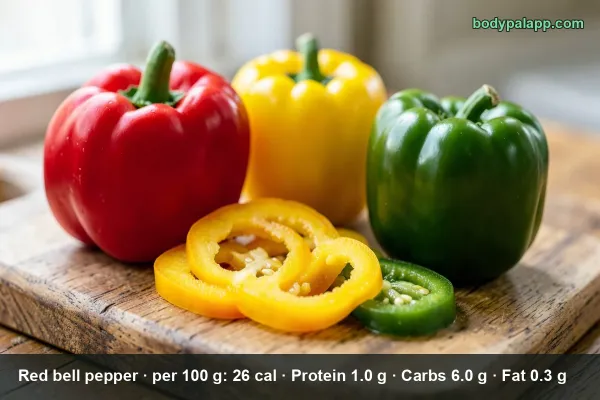
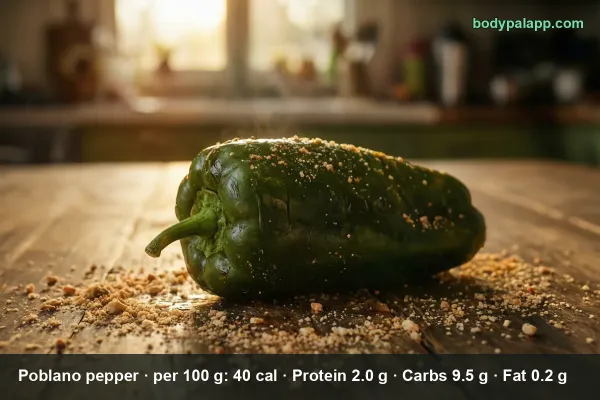
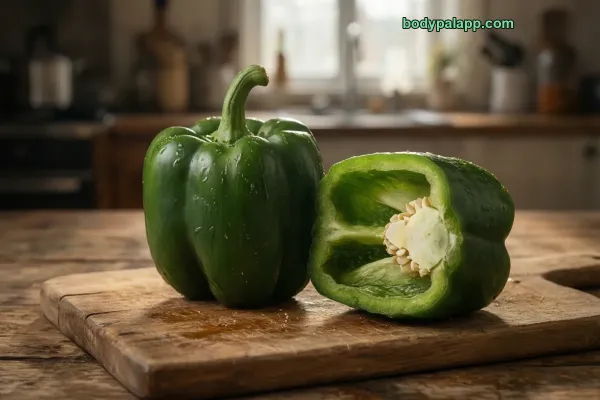
Here is how red pepper stacks up against regular pepper, poblano pepper and green pepper, per 100 g and per usual serving.
Verdict: For the fewest calories pick green pepper at 26 per 100 g and 19 per medium, but if you watch sodium, red pepper's 0 mg beats green pepper's 238 mg per 100 g. Poblano is the richest at 40 per 100 g against red pepper's 31, a gap small enough that flavor should decide.
Most popular red pepper brands in the United States
Ranked by popularity in the BodyPal database
# Productkcal / 100 g
1Mezzetta Mild Roasted Red Bell Peppers1.5 tbsp · 30 g17 kcal
Jarred roasted peppers are packed in brine and drained, so their label numbers read lower than fresh raw pepper. Source: manufacturer labels / USDA FoodData Central.
Red pepper FAQs
How many calories are in one red pepper?
A raw red pepper of 120 g has about 37 calories. A mini sweet pepper of 30 g has about 9 calories.
Is red pepper good for weight loss?
Raw red pepper is 31 calories per 100 g with 0.13 g fat and 1.2 g fiber, so a whole 120 g pepper adds only 37 calories to a meal.
Red pepper vs green pepper: which has fewer calories?
Boiled and drained without salt, both are 28 calories per 100 g. The difference is sugar: 4.4 g in red against 3.2 g in green.
How much sugar is in a red pepper?
Raw red pepper has 4.2 g of sugar per 100 g, about 5.0 g in a 120 g pepper, out of 8.0 g total carbs.
How many calories are in a cup of sliced red pepper?
A cup of sliced red pepper (150 g) has 47 calories. It also gives 1.4 g of protein, 10 g of carbs, 1.8 g of fiber and 0 mg of sodium, so it is one of the lightest cups of food you can eat.
How many calories are in a mini red pepper?
A mini red pepper of about 30 g has 9 calories. It carries roughly 2 g of carbs and 1.3 g of sugars, so even a handful of snack peppers stays low in calories.
How much protein does a red pepper have?
A medium red pepper has 1.1 g of protein, 2 percent of the daily value. Protein supplies only 11 percent of its calories, so pair it with eggs, chicken or beans if you want a filling meal.
Does red pepper contain sodium?
Raw red pepper has 0 mg of sodium per 100 g and per medium pepper, which is 0 percent of the 2300 mg daily value. Jarred roasted peppers can differ, so check their label.
How much fiber is in a red pepper?
A medium red pepper has 1.4 g of fiber and a cup of slices has 1.8 g. Against a daily value of 28 g that is a modest contribution, so count on other foods for most of your fiber.