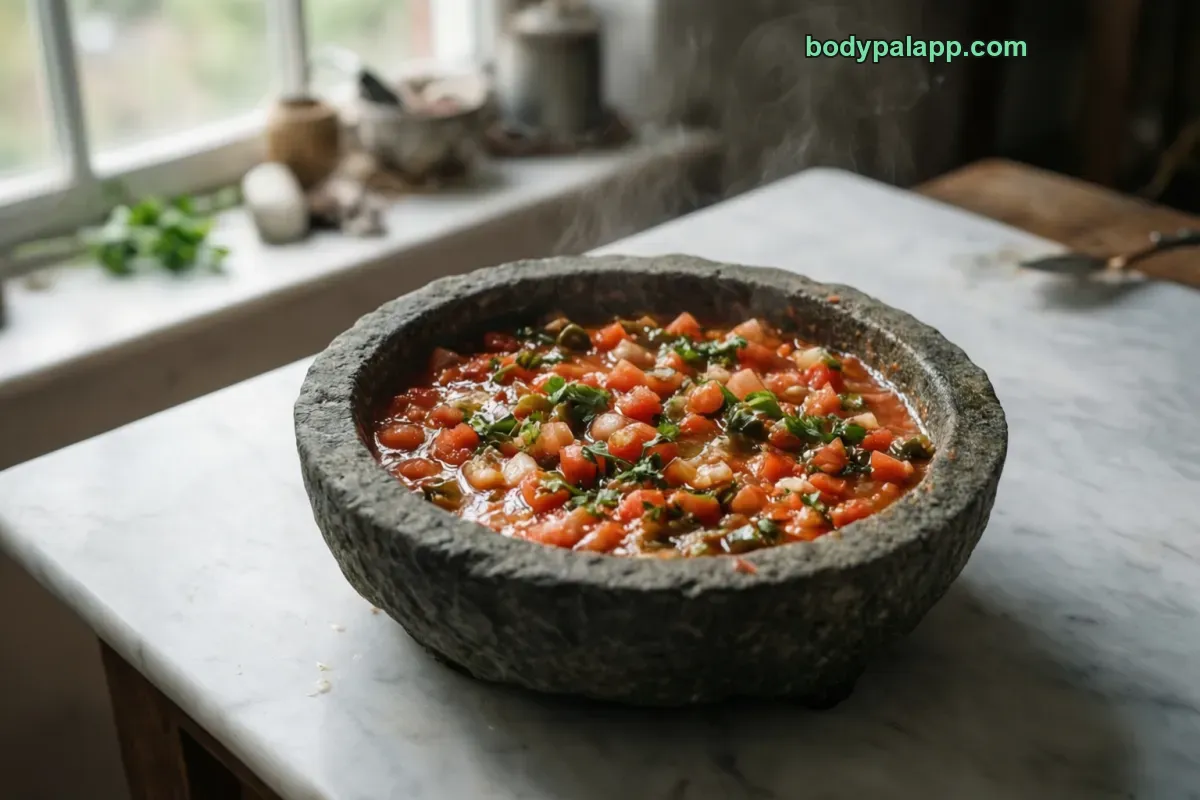
Salsa calories come to 10 for 2 tablespoons (36 g) and 29 per 100 g of ready-to-serve sauce. Calories are almost a non-issue here. Sodium is the number to notice: those same 2 tablespoons carry 256 mg, 11% of the daily value, and a half cup reaches 924 mg.
10kcal
1 2 tablespoons · 36 g, ready-to-serve
18%protein
0.5 gProtein
2 gCarbs
0.1 gFat
How to burn off 10 kcal
—Walking, brisk
—Jogging
—Cycling, moderate
—Swimming
Skip the math. BodyPal counts these calories from your steps and workouts automatically.
Nutrition facts
Ready-to-serve · per 36 g
Calories
10 kcal
Protein
0.5 g
Carbohydrate
2.4 g
Fat
0.1 g
Saturated fat
0 g
Cholesterol
0 mg
Sodium
256 mg
Potassium
99 mg
Iron
0.2 mg
Source: USDA FoodData Central
🛡️
Verified nutrition data
Numbers on this page come from USDA FoodData Central, the U.S. Department of Agriculture’s food composition database, and from manufacturer labels where a branded product is named. Last verified September 2026. How we verify our data →
Salsa: calories, protein and sodium by serving
Percent of daily value uses the FDA reference of 2,000 kcal a day.
Serving
kcal
Protein
Carbs
Fat
Sodium
% DV kcal
2 tablespoons (36 g)
10
0.5 g
2.4 g
0.1 g
256 mg
1%
Half cup (130 g)
38
2 g
8.6 g
0.2 g
924 mg
2%
1 cup (259 g)
75
3.9 g
17.2 g
0.4 g
1,841 mg
4%
100 g
29
1.5 g
6.6 g
0.2 g
711 mg
1%
3 × 2 tablespoons (36 g)
31
1.6 g
768 mg
5 × 2 tablespoons (36 g)
52
2.7 g
1,280 mg
A half cup is still only 38 calories
The label serving is 2 tablespoons (36 g), and at 10 calories it barely registers. Few people stop there with a bag of chips open. Three scoops of that size, 108 g, come to 31 calories, and five scoops, 180 g, reach 52.
Go bigger and the total still moves slowly. A half cup (130 g) lands at 38 calories, and a full cup (259 g) at 75, which is 4% of a 2000-calorie day. Two scoops sit at 21 calories for 72 g. Salsa is one of the few toppings where a heavy hand hardly changes your energy intake.
What the chips add is a different story, and this page does not count them. Log the salsa and the dipping vehicle separately, so the small number here does not hide the bigger one on the plate. The salsa is rarely the problem; the basket next to it often is.
Carbs supply 78% of the calories
Per 100 g, salsa has 6.6 g of carbohydrate, 1.5 g of protein and 0.2 g of fat. In calorie terms that is 78% carbs, 18% protein and 4% fat. Fat is close to zero, and saturated fat and cholesterol both read 0.
About 4 g of that carbohydrate per 100 g is sugar, and 1.9 g is fiber. Tomatoes, onions and peppers explain both. A half cup gives 2.5 g of fiber and 5.2 g of sugars; a full cup gives 4.9 g of fiber, a modest slice of the 28 g daily value.
Protein is small in absolute terms: 2 g in a half cup, 4% of the daily value. Salsa flavors protein foods; it does not replace them. Potassium comes in at 275 mg per 100 g, a pleasant extra rather than a reason to eat more of it.
Sodium is the row to watch
At 711 mg per 100 g, salsa is a salty food that happens to be low in calories. Two tablespoons hold 256 mg, 11% of the daily value. A half cup carries 924 mg, or 40%, and a full cup hits 1,841 mg, which is 80% of the day's sodium in one bowl.
The multiples show how quickly it stacks. Three scoops of 2 tablespoons add 768 mg, and five scoops reach 1,280 mg. That is the same snacking pattern that kept calories at a harmless 52. If you watch sodium, measure salsa the way you would measure salad dressing.
Jarred versions differ in style and heat, from Herdez Salsa Verde to Pace Chunky Salsa Medium and Mrs. Renfro's Hot Habanero Salsa, so read the label on the jar you actually buy. Homemade salsa puts the salt shaker in your hands.
Use it to replace heavier sauces
Salsa earns its place as a swap. Spooned over eggs, grilled chicken, a baked potato or a burrito bowl, it adds moisture and flavor for 10 calories per 2 tablespoons, where creamy sauces and melted cheese add far more.
Pair it with foods that bring what salsa lacks: protein from beans, eggs, fish or lean meat, and some fat from avocado if the meal is otherwise very lean. On days when the rest of your menu is already salty, keep the scoop near the label serving.
BodyPal can log salsa from a photo, which helps when it is spread across tacos rather than sitting in a measured bowl. Tracking it honestly mostly matters for the sodium line, not the calorie line.
How does salsa compare?
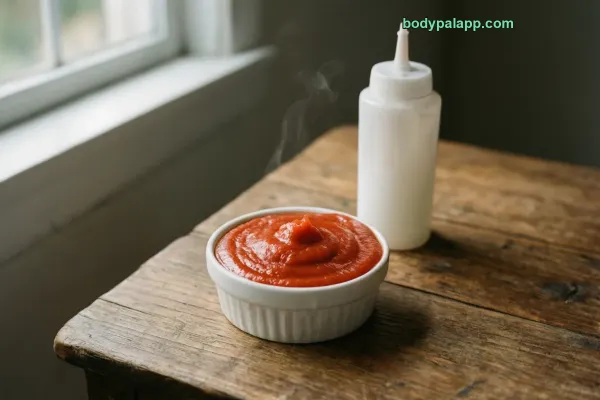
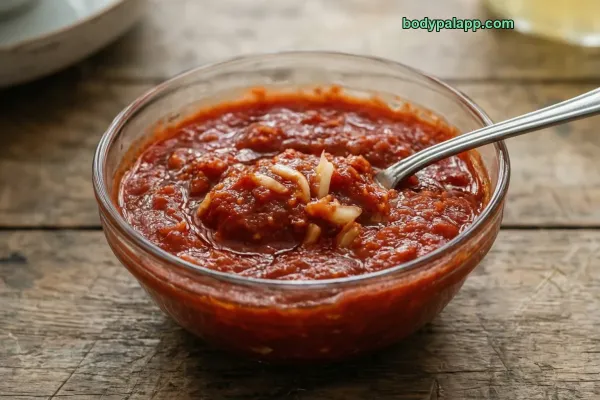
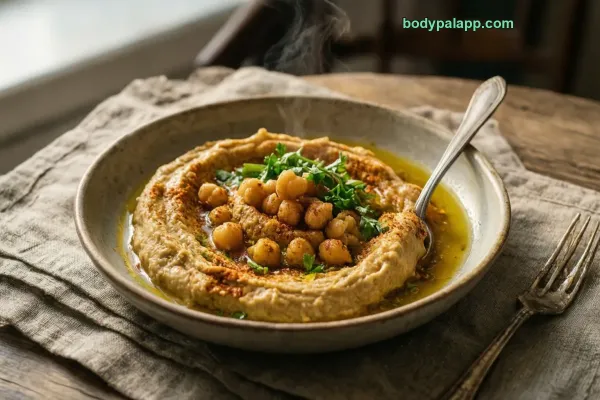
Here is how salsa stacks up against ketchup, cocktail sauce and hummus, per 100 g and per usual serving.
Verdict: For the fewest calories pick salsa: 29 per 100 g against 101 for ketchup and 128 for cocktail sauce, which also carry more sodium at 907 mg and 1,262 mg. Hummus has 229 calories and 7.4 g of protein per 100 g, so choose it when you want a dip that fills you up, and salsa when you want volume for almost nothing.
Most popular salsa brands in the United States
Ranked by popularity in the BodyPal database
# Productkcal / 100 g
1Herdez Salsa Verde2 Tbsp · 31 g16 kcal
2Herdez Mild Salsa Verde2 Tbsp · 31 g32 kcal
3Herdez Medium Salsa Verde2 Tbsp · 31 g32 kcal
4Herdez Medium Roasted Salsa Verde2 Tbsp · 30 g33 kcal
6Mrs. Renfro's Hot Habanero Salsa2 Tbsp · 38 g39 kcal
7Pace Chunky Salsa Medium2 Tbsp · 30 ml33 kcal
Most jars are green salsa verde or chunky recipes rather than the generic red salsa above, so their per-100 g numbers land anywhere from 16 to 48 calories. Source: manufacturer labels / USDA FoodData Central.
Salsa FAQs
How many calories are in salsa?
Two tablespoons (36 g) is about 10 calories and a half cup (130 g) is 38. Per 100 g salsa has 29 calories.
Is salsa good for weight loss?
Salsa is 29 calories per 100 g with 0.2 g of fat and 1.9 g of fiber, so two tablespoons add about 10 calories. The same weight of salsa con queso is 143 calories per 100 g.
Salsa vs ketchup: which has fewer calories?
Salsa has 29 calories per 100 g and ketchup 109, so 36 g of salsa is about 10 calories against roughly 39 for the same weight of ketchup.
How much sodium is in salsa?
Ready-to-serve salsa has 711 mg of sodium per 100 g, which is about 256 mg in a 2 tablespoon serving (36 g).
How many calories are in a cup of salsa?
A cup of salsa (259 g) has 75 calories, about 4% of a 2000-calorie day. The same cup holds 1,841 mg of sodium, 80% of the daily value, so the salt adds up much faster than the calories.
How many calories are in a half cup of salsa?
A half cup of salsa (130 g) has 38 calories, with 8.6 g of carbs and 2.5 g of fiber. It also carries 924 mg of sodium, which is 40% of the daily value.
How many carbs are in salsa?
Two tablespoons of salsa have 2.4 g of carbs, including 1.4 g of sugars and 0.7 g of fiber. Per 100 g the numbers are 6.6 g of carbs, 4 g of sugars and 1.9 g of fiber.
Does salsa have any fat?
Barely. Salsa has 0.2 g of fat per 100 g and 0.1 g in 2 tablespoons, with 0 g of saturated fat and 0 mg of cholesterol. Fat supplies only 4% of its calories.
How much protein is in salsa?
Salsa has 1.5 g of protein per 100 g, so a half cup gives 2 g and a full cup 3.9 g. Protein makes up 18% of its calories, but the amount is too small to count on.