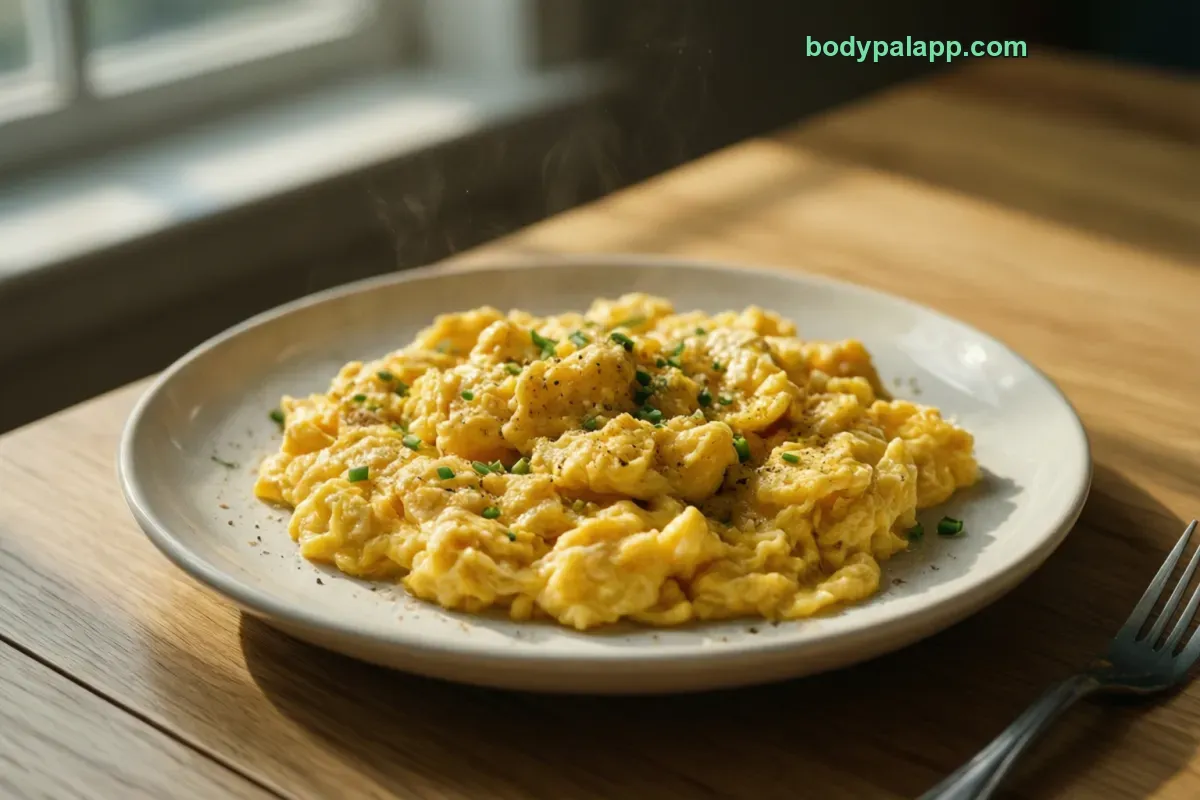
Scrambled egg calories come to 102 for one egg (55 g) and 185 per 100 g. The figure that matters most is the 73% of calories that come from fat. That means the butter or oil in the pan moves your total almost as much as the number of eggs you crack.
102kcal
1 egg · 55 g, cooked, fat not specified
25%protein
6.4 gProtein
1 gCarbs
8.2 gFat
How to burn off 102 kcal
—Walking, brisk
—Jogging
—Cycling, moderate
—Swimming
Skip the math. BodyPal counts these calories from your steps and workouts automatically.
Nutrition facts
Cooked, fat not specified · per 55 g
Calories
102 kcal
Protein
6.4 g
Carbohydrate
0.5 g
Fat
8.2 g
Saturated fat
2.5 g
Cholesterol
213 mg
Sodium
136 mg
Potassium
68 mg
Iron
0.9 mg
Source: USDA FoodData Central
🛡️
Verified nutrition data
Numbers on this page come from USDA FoodData Central, the U.S. Department of Agriculture’s food composition database, and from manufacturer labels where a branded product is named. Last verified September 2026. How we verify our data →
Scrambled egg: calories, protein and sodium by serving
Percent of daily value uses the FDA reference of 2,000 kcal a day.
Serving
kcal
Protein
Carbs
Fat
Sodium
% DV kcal
1 egg (55 g)
102
6.4 g
0.5 g
8.3 g
136 mg
5%
2 eggs (110 g)
204
12.7 g
1 g
16.5 g
273 mg
10%
No added fat (50 g)
72
6.2 g
0.5 g
5 g
122 mg
4%
100 g
185
11.6 g
0.9 g
15 g
248 mg
9%
3 × 1 egg (55 g)
305
19.1 g
409 mg
5 × 1 egg (55 g)
509
31.8 g
682 mg
Two eggs make a 204-calorie breakfast
One scrambled egg weighs about 55 g and lands at 102 calories with 6.4 g of protein. Most people scramble more than one. Two eggs (110 g) come to 204 calories, which is 10% of a 2,000-calorie daily value. They also bring 12.7 g of protein, 25% of the daily value. For a plate that cheap in calories, that is a solid protein return.
The total climbs in a straight line from there. Three eggs (165 g) reach 305 calories and 19.1 g of protein. A five-egg diner scramble (275 g) hits 509 calories and 31.8 g of protein, about a quarter of a 2,000-calorie day before toast, hash browns or cheese go on the plate.
Sodium follows the same path: 136 mg for one egg, 273 mg for two, 409 mg for three and 682 mg for five. Counting eggs is the easiest way to keep this dish in check. Each extra egg adds roughly another 102 calories, so deciding between two and three makes a bigger difference than most toppings.
Fat supplies nearly three quarters of the calories
Eggs have a reputation as a protein food, and the grams back that up: 11.6 g per 100 g. The calorie split tells a different story. Fat supplies 73% of the energy, protein 25% and carbohydrates just 2%. Per 100 g that works out to 15 g of fat against 0.9 g of carbs.
Saturated fat is 4.5 g per 100 g, so a 100 g portion uses a meaningful slice of the 20 g daily value. Some of that fat comes from the yolk itself and some from whatever goes into the pan. The USDA entry behind these numbers is listed as fat not specified, so it sits somewhere between a dry nonstick scramble and a buttery restaurant one.
Carbs and sugar barely register. There is 0.5 g of carbohydrate in one egg and 0.2 g of sugar per 100 g, which makes scrambled eggs an easy fit for low-carb eating. Fiber is 0, though, so the plate needs something else if you want any.
Skipping the butter cuts the count to 72
The serving table includes a USDA row for eggs scrambled with no added fat. A 50 g portion comes to 72 calories with 5 g of fat and 6.2 g of protein. The standard egg (55 g, cooked with fat not specified) carries 102 calories and 8.3 g of fat. The protein barely changes. The fat and calories do.
That gap is the cooking fat. A nonstick pan, a light spray or a splash of water lets you keep almost all the protein while dropping a real share of the calories. Adding cream, cheese or a big pat of butter pushes the total the other way, and none of those extras show up in the base numbers here.
If you track food, log how you actually cooked the eggs instead of picking a generic entry. Sodium also dips a little without added fat, to 122 mg for the 50 g portion. BodyPal can log your scramble from a photo, but picking the right preparation is still what makes the number trustworthy.
Cholesterol is the row to watch
Scrambled eggs carry 388 mg of cholesterol per 100 g. That is more than the full 300 mg daily value in a single 100 g portion, and no other row on the label comes close to its daily target. If you track cholesterol, this is the number that limits how many eggs fit your day, more than calories do.
Sodium is moderate by comparison. One egg has 136 mg, 6% of the 2,300 mg daily value, and 100 g has 248 mg, or 11%. Salt added at the stove or at the table is extra, and so are ham, bacon and cheese, which usually add more sodium than the eggs.
Potassium is low at 124 mg per 100 g against a 4,700 mg daily value, and fiber is 0. The plate rounds out well with vegetables folded into the eggs, fruit on the side or whole-grain toast. Those add fiber and potassium for relatively few calories.
How does scrambled egg compare?
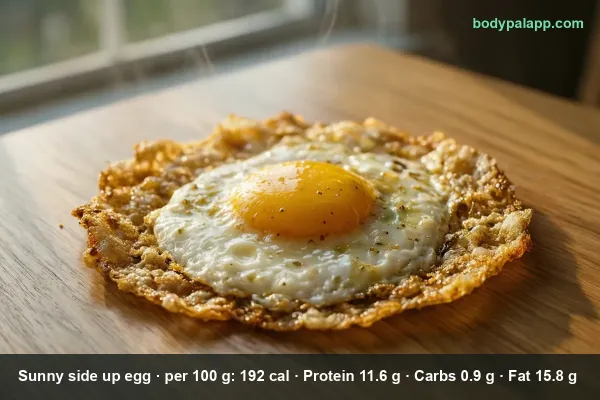
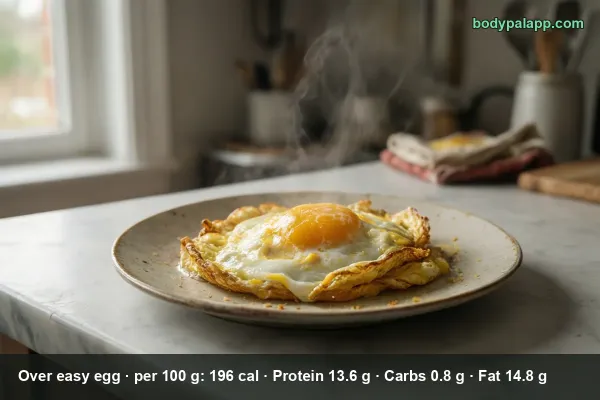
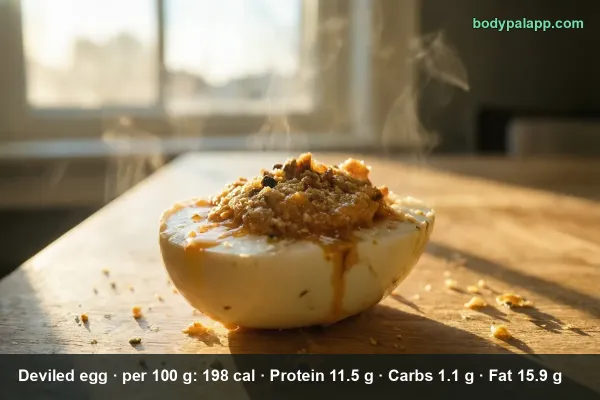
Here is how scrambled eggs compare with sunny side up, over easy and deviled eggs, per 100 g and per usual serving.
Verdict: For the fewest calories scrambled wins at 185 per 100 g, though sunny side up at 192 and over easy at 196 are close enough that cooking fat matters more than style. Pick over easy if you want the most protein at 13.6 g per 100 g, and skip deviled eggs if you watch sodium, since they carry 430 mg per 100 g against 248 mg here.
Most popular scrambled egg brands in the United States
Packaged scrambled eggs and egg patties are mixed with milk or egg white and cooked with little fat, so their labels read 113 to 143 calories per 100 g instead of 185. Source: manufacturer labels / USDA FoodData Central.
Scrambled egg FAQs
How many calories are in one scrambled egg?
One scrambled egg (55 g) is about 102 calories, and two eggs come to 204.
Are scrambled eggs good for weight loss?
At 102 calories per egg they are a moderate-calorie breakfast, and cooking with no added fat brings one egg down to 72 calories.
Scrambled egg vs sunny side up egg: which has fewer calories?
Per 100 g a scrambled egg is 185 calories and a sunny side up egg 192, so the difference comes mostly from the fat used in the pan.
How much protein is in scrambled eggs?
One scrambled egg (55 g) has 6.4 g of protein and 8.3 g of fat; per 100 g that is 11.6 g of protein.
How many calories are in three scrambled eggs?
Three scrambled eggs (165 g) have about 305 calories. You also get 19.1 g of protein and 409 mg of sodium. Any butter, milk or cheese you add is extra.
How many calories are in scrambled eggs made without butter or oil?
A 50 g portion scrambled with no added fat has 72 calories and 5 g of fat. The standard 55 g egg with fat not specified has 102 calories, so skipping the cooking fat saves a noticeable share.
How much fat is in scrambled eggs?
One scrambled egg has 8.3 g of fat and two eggs have 16.5 g. Per 100 g there is 15 g of fat, including 4.5 g saturated, and fat supplies 73% of the calories.
How much cholesterol is in scrambled eggs?
Scrambled eggs contain 388 mg of cholesterol per 100 g. That is above the 300 mg daily value in a single 100 g portion, which makes cholesterol the most notable row on the label.
Are scrambled eggs high in sodium?
Not by themselves. One egg has 136 mg of sodium, 6% of the daily value, and two eggs have 273 mg, or 12%. Added salt, ham or cheese can raise that quickly.
Are scrambled eggs low in carbs?
Yes. One scrambled egg has 0.5 g of carbohydrate, and 100 g has 0.9 g with 0.2 g of sugar. Carbs supply only 2% of the calories.