
How many calories are in a sunny side up egg?
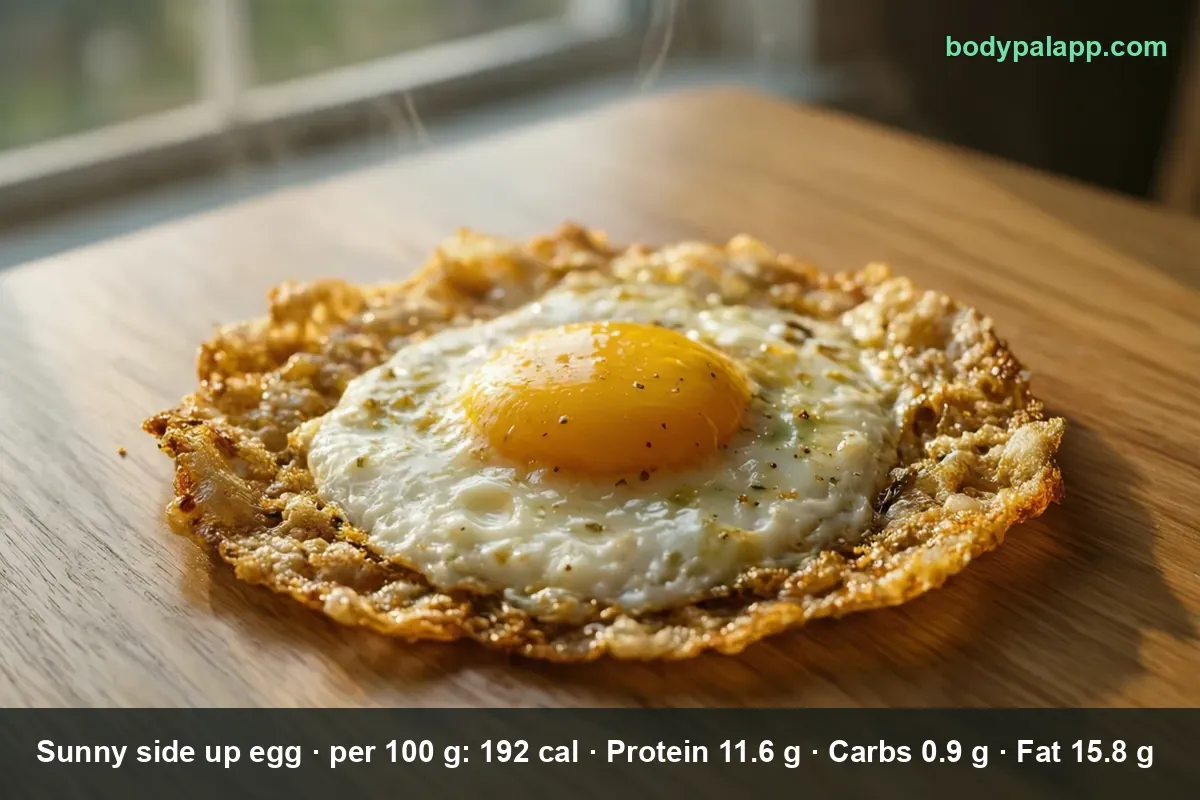
One large egg cooked sunny side up in oil weighs 55 g and carries 106 calories. Per 100 g the same egg runs 192 calories. Two of them, the standard American breakfast plate, come to 211. Almost all of that is fat and protein: the carbohydrate row is under a gram.
On this page
- Sunny side up egg quick facts
- US servings from one ounce to two eggs
- What the pan does to the calorie count
- Cholesterol is the row that jumps
- How does a sunny side up egg compare?
- Most popular sunny side up egg brands
- FAQ
Sunny side up egg quick facts
Sunny side up is a fried egg that never gets flipped, and USDA files it with the rest of the fried eggs rather than under its own name. The row that matches what most people actually eat is FNDDS 2707158, "Egg, whole, fried with oil". That crisp lacy edge on the white is what oil in a hot skillet does, so this is the record for the egg you are looking at on your plate.
The other fried-egg records are the same food cooked in a different fat, and they show up further down. The difference between them is the pan, not the source of the data, so there is nothing to average.
| Nutrient | Per 100 g | Per 1 large fried egg (55 g) | % Daily Value |
|---|---|---|---|
| Calories | 192 | 106 | — |
| Total fat | 15.81 g | 8.7 g | 11% |
| Saturated fat | 3.85 g | 2.1 g | 11% |
| Carbohydrate | 0.9 g | 0.5 g | 0% |
| Dietary fiber | 0 g | 0.0 g | 0% |
| Total sugars | 0.19 g | 0.1 g | — |
| Protein | 11.56 g | 6.4 g | 13% |
| Sodium | 228 mg | 125 mg | 5% |
| Cholesterol | 383 mg | 211 mg | 70% |
| Potassium | 123 mg | 68 mg | 1% |
% Daily Value is based on a 2,000-calorie diet.
Verified nutrition data
Numbers on this page come from USDA FoodData Central, the U.S. Department of Agriculture’s food composition database, and from manufacturer labels where a branded product is named. Last verified September 2026. How we verify our data →
There is no added sugars row and no trans fat row on this page, because this edition of FNDDS does not publish either value for prepared dishes. The two rows that do carry weight are cholesterol at 70% of the Daily Value for a single egg, and protein at 13% for something that takes three minutes to cook.
One more thing worth knowing about the sodium: 125 mg per egg is not what the shell brings to the pan. It is the fried record, salt and all, which is closer to how a breakfast egg is really made than a bare raw figure would be.
US servings from one ounce to two eggs
Eggs are counted, not weighed, which is why the useful serving here is a piece rather than a cup. A large egg lands at 55 g once it has been cracked and fried; two is the default order at any diner counter.
| Serving | Weight | Calories |
|---|---|---|
| 1 oz | 28 g | 54 kcal |
| One large fried egg | 55 g | 106 kcal |
| Two fried eggs | 110 g | 211 kcal |
| 1 cup, chopped | 135 g | 259 kcal |
| Per 100 g | 100 g | 192 kcal |
The single egg and the chopped cup are USDA household measures for this record. The ounce and the two-egg plate are our own arithmetic from the USDA 100 g figure, not USDA servings — useful because nobody fries one and a half eggs, and because two is what most breakfasts look like.
The chopped-cup line is the one to watch if you build breakfast bowls or hashes. A cup of chopped fried egg is 135 g, more than two whole eggs, and 259 calories. That cup slips past people who scoop rather than count.
What the pan does to the calorie count
Here is the number that surprises most people: the egg is not the variable. The fat under it is. Same egg, same yolk, same protein, and a swing of 34 calories depending on what you heat the skillet with.
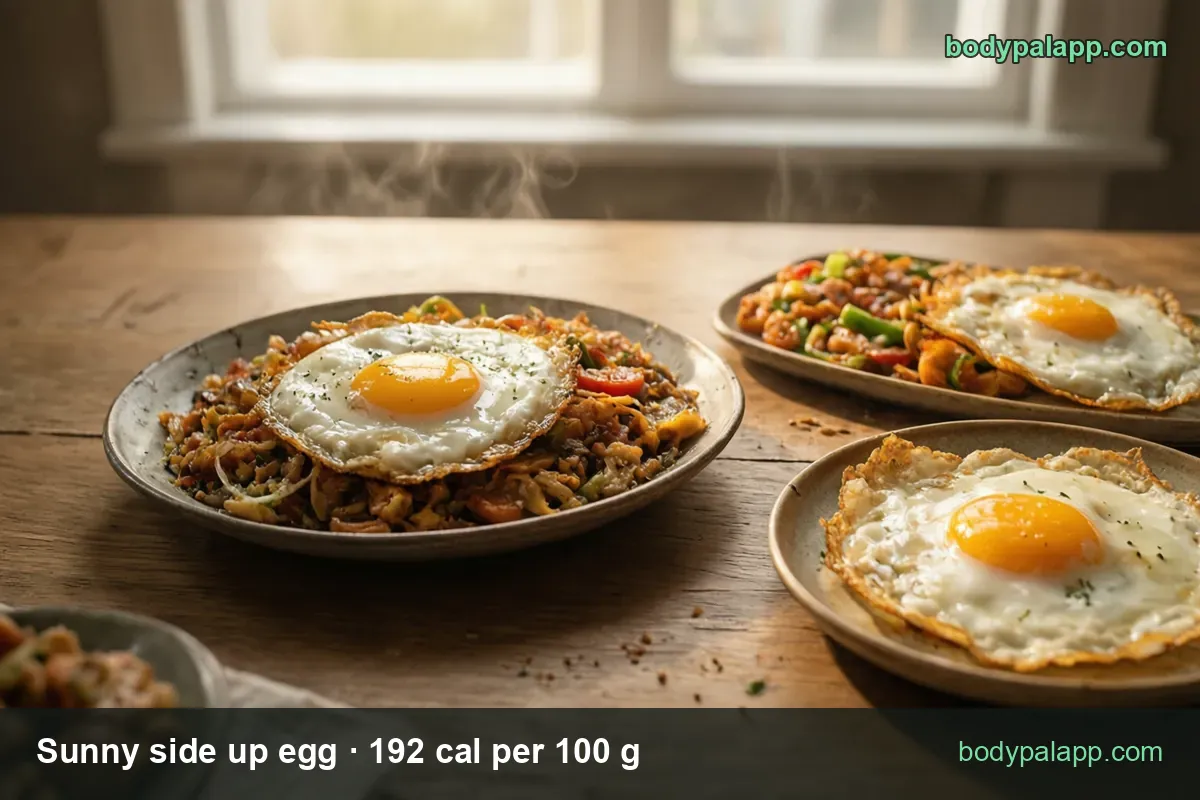
| Version | Per 100 g | Typical piece | Calories |
|---|---|---|---|
| Fried in oil, classic sunny side up | 192 kcal | 1 egg, 55 g | 106 kcal |
| Fried in butter | 182 kcal | 1 egg, 55 g | 100 kcal |
| Fried in margarine | 171 kcal | 1 egg, 55 g | 94 kcal |
| Cooking spray only | 149 kcal | 1 egg, 50 g | 75 kcal |
| No added fat, nonstick pan | 143 kcal | 1 egg, 50 g | 72 kcal |
| Fat not specified, weighted average | 185 kcal | 1 egg, 55 g | 102 kcal |
Oil is the heaviest version in the set at 192 calories per 100 g; nothing in the FNDDS fried-egg group runs higher, and the record for a restaurant fried egg is coded identically. That last detail matters when you eat out: a diner egg is priced the same as your own oil-fried one, so there is no penalty to log for eating breakfast at a counter.
Butter reads lighter on paper, 182 against 192 per 100 g, which is a real quirk rather than a rounding artifact — butter carries water that oil does not. The trade is in the saturated fat row, and that trade is not small.
At the other end, a nonstick pan with nothing in it gives you a 72-calorie egg. It will not give you the lacy brown edge, since that edge is fried, but it will cut a two-egg breakfast from 211 to 144 calories with zero change to the protein you get.
Sunny side up eggs do not exist as a packaged retail product in the USDA branded database — searching it returns meal kits, breakfast sandwiches and, oddly, an egg-shaped candy, but no shelf-stable fried egg. Every number on this page is a food someone cooked in a pan.
Cholesterol is the row that jumps
Most breakfast foods get flagged for sodium or saturated fat. The sunny side up egg gets flagged for neither. Sodium is 5% of the Daily Value per egg and saturated fat is 11%, both modest. Cholesterol is 211 mg, or 70% of the FDA Daily Value of 300 mg — and the classic two-egg plate takes it to 422 mg, which is 141%. It is the only nutrient on this page that clears 100% of a Daily Value from a single normal serving.
That figure needs context rather than alarm. The current Dietary Guidelines for Americans advise keeping dietary cholesterol as low as practical within a healthy eating pattern, and they do not set a hard numeric cap the way the old guidance did. If your doctor has told you to watch cholesterol intake, the two-egg plate is the number to know. If not, the more interesting row is protein.
Two eggs deliver 12.8 g of protein for 211 calories, which is dense for breakfast and puts eggs squarely in the MyPlate protein group. Saturated fat runs just over a fifth of the day at two eggs fried in oil: 4.2 g against the 20 g Daily Value. Fry the same two in butter and that row climbs by half.
How does a sunny side up egg compare?
| Version | Per 100 g | US serving | Calories |
|---|---|---|---|
| Sunny side up, fried in oil | 192 kcal | one large egg, 55 g | 106 kcal |
| Fried in butter | 182 kcal | one egg, 55 g | 100 kcal |
| Fried with cooking spray | 149 kcal | one egg, 50 g | 75 kcal |
| Fried with no added fat | 143 kcal | one egg, 50 g | 72 kcal |
Our take: if you are counting calories, cook it dry or with spray and pocket 30-plus calories per egg without touching the protein. If you want the crisp edge and the runny yolk that make the dish worth ordering, use oil rather than butter — the calorie gap between the two is six per egg, but the saturated fat gap is real, 16% of the Daily Value per egg with butter against 11% with oil. Two sunny side up eggs in oil at 211 calories is a genuinely efficient breakfast; it is the bread, bacon and hash browns around it that decide whether the plate lands at 250 calories or 800.
Most popular sunny side up egg brands in the United States
Ranked by how widely each product appears among foods sold in the United States, from the BodyPal food database of over 3.3 million products. Calories are the figures printed on each Nutrition Facts label, checked against USDA FoodData Central.
| Product | Calories (per 100 g) |
|---|---|
| Eggland's Best Large Brown Eggs | 120 cal |
| Kirkland Signature Cage Free Large Eggs | 140 cal |
| Pete and Gerry's Fresh Large Brown Eggs | 140 cal |
| The Happy Egg Co Brown Eggs | 140 cal |
| Organic Valley Omega-3 Organic Large Brown Eggs | 120 cal |
| Member's Mark Grade A Large Cage Free Brown Eggs | 140 cal |
Brand popularity: BodyPal food database. Nutrition: manufacturer labels / USDA FoodData Central.
Sunny side up egg FAQs
How many calories are in one sunny side up egg?
106 calories for one large egg fried in oil, 55 g on the plate, which works out to 192 calories per 100 g. The egg supplies the protein and the cholesterol; the oil in the skillet accounts for roughly a third of the total calories, since the same egg cooked dry is 72.
How many calories in 2 sunny side up eggs?
211 calories for two large eggs fried in oil, 110 g together. That is our own arithmetic from the USDA 100 g figure, not a USDA serving. The pair gives you 12.8 g of protein, 17.4 g of fat and 422 mg of cholesterol, which is 141% of the 300 mg Daily Value.
Is sunny side up healthier than scrambled?
The oil-fried egg is 106 calories, and USDA publishes no scrambled record in the set behind this page, so we will not put a number on scrambled. What the data does show is that the cooking fat moves a single egg from 72 to 106 calories. Scrambled eggs follow the same rule: butter, cream or milk decide the total.
How much protein is in a sunny side up egg?
6.4 g of protein in one 55 g sunny side up egg, or 13% of the 50 g Daily Value. Per 100 g the fried egg carries 11.56 g. Two eggs bring 12.8 g, about a quarter of the day's protein, which is why eggs sit in the MyPlate protein group alongside meat and beans.
How much cholesterol is in a sunny side up egg?
211 mg in one sunny side up egg, 70% of the 300 mg Daily Value and the largest percentage on this page. Two eggs push it to 422 mg, or 141%. Nothing else in the egg comes close: sodium is 5% of the Daily Value per egg and saturated fat 11% when you fry in oil.
Does frying an egg in butter add calories?
Butter actually lands slightly lower, 100 calories per egg against 106 for oil, because the USDA butter record runs 182 calories per 100 g versus 192. The catch is saturated fat: 5.96 g per 100 g with butter against 3.85 g with oil, which is 16% of the Daily Value per egg instead of 11%.
How many calories in a sunny side up egg without oil?
72 calories for one egg fried with no added fat in a nonstick pan, 50 g, at 143 calories per 100 g. Cooking spray comes in at 75 calories. Either way you save 31 to 34 calories against the oil version, and per 100 g the protein reads higher, 12.36 g against 11.56 g.
Sunny side up vs over easy calories - any difference?
No difference: an over easy egg cooked in oil is the same 106 calories for 55 g, since USDA codes both under the same fried-egg records. Flipping the egg firms the yolk; it does not change the fat the white absorbed. Adding a splash more oil to the pan for the flip does count.
Similar foods
- Omelet — 305 cal for 3-egg omelet
- Crepe — 179 cal per crepe
- Egg — 72 cal per large egg
- Pancake — 423 cal for 3 medium pancakes
- Toast with butter — 100 cal per slice with butter
- Shrimp Tempura Roll — 432 cal per roll, 8 pieces
Count it without the math
Point the camera at the plate and BodyPal counts the eggs and the pan they came out of.


How long does it take to burn off 106 kcal of sunny side up egg?
One large fried egg (55 g) is 106 kcal. Enter your weight and the amount you ate to see how long it takes you to burn that off:
lb
| Activity | Time to burn 106 kcal |
|---|---|
| Walking, brisk | 21 min |
| Cycling, moderate | 13 min |
| Swimming, moderate | 15 min |
| Jogging | 12 min |
| Weight training, moderate | 24 min |
Times are for a 155 lb adult at a steady pace; change the weight to see yours. The amount is set to the portion in the text (55 g); change it to what you actually ate. BodyPal works this out from your steps automatically.
Want the bigger picture? Calculate your daily calorie needs — your maintenance figure, a target for losing or gaining, and the date you get there.