
How many calories are in a pancake?
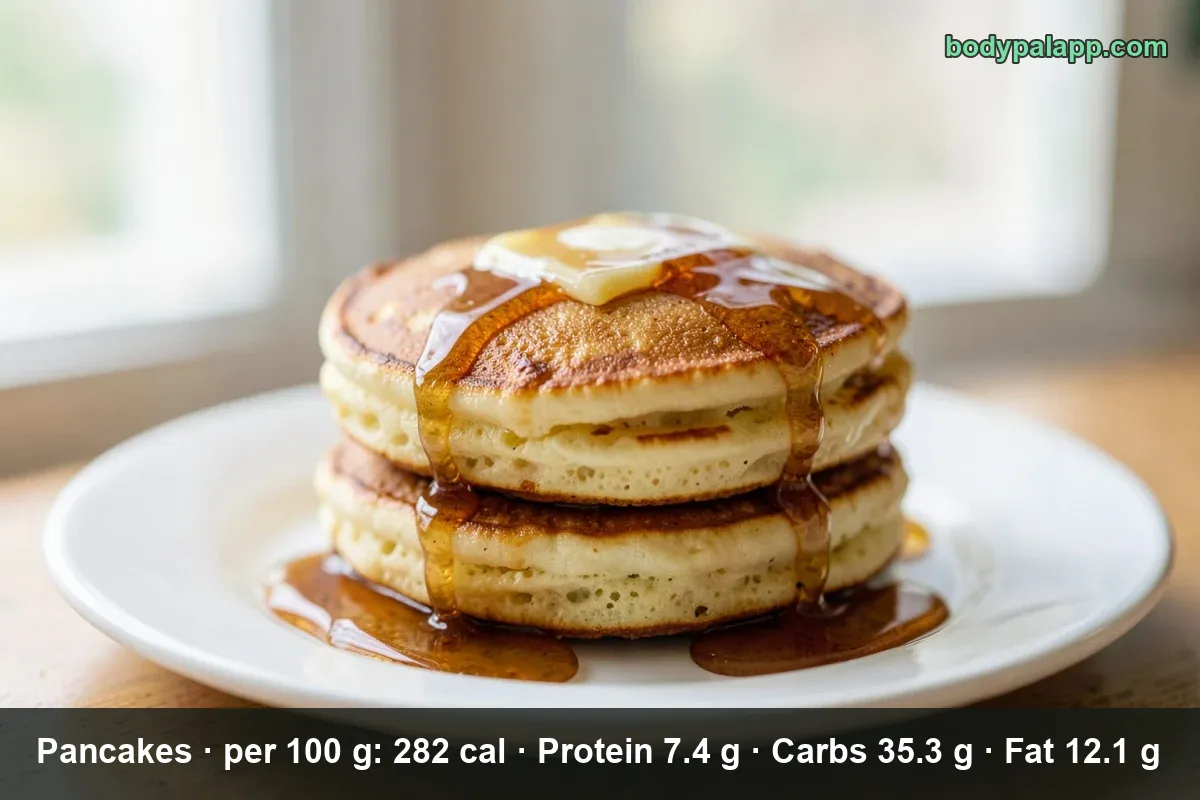
One medium pancake weighs 50 g and carries 141 calories. Plain pancakes run 282 calories per 100 g, so the size of the stack decides the meal: two is 282, three is 423, and a single large 90 g pancake on its own is 254. None of that counts the butter or the syrup on top.
On this page
- Pancake quick facts
- US servings, from a silver dollar to a stack of three
- Blueberry, chocolate chip and the freezer aisle
- Restaurant pancakes, home batter and box mix
- Sodium is the row to watch
- How do pancakes compare?
- Most popular pancakes brands
- FAQ
Pancake quick facts
The row used here is FNDDS 2708304, "Pancakes, plain" from the USDA's 2021-2023 survey data. That is the pancake as it reaches an American plate: batter cooked on a greased griddle, fat and all. The generic "Pancakes, NFS" record (2708294) carries identical numbers, so nothing is lost by picking the plain one.
| Nutrient | Per 100 g | Per 1 medium pancake (50 g) | % Daily Value |
|---|---|---|---|
| Calories | 282 | 141 | — |
| Total fat | 12.07 g | 6.0 g | 8% |
| Saturated fat | 3.01 g | 1.5 g | 8% |
| Carbohydrate | 35.32 g | 17.7 g | 6% |
| Dietary fiber | 2.1 g | 1.1 g | 4% |
| Total sugars | 7.05 g | 3.5 g | — |
| Protein | 7.41 g | 3.7 g | 7% |
| Sodium | 508 mg | 254 mg | 11% |
| Cholesterol | 66 mg | 33 mg | 11% |
| Potassium | 174 mg | 87 mg | 2% |
% Daily Value is based on a 2,000-calorie diet.
Verified nutrition data
Numbers on this page come from USDA FoodData Central, the U.S. Department of Agriculture’s food composition database, and from manufacturer labels where a branded product is named. Last verified September 2026. How we verify our data →
Two rows you would see on a boxed mix are missing here: added sugars and trans fat. USDA does not publish either value for its survey foods, so they are left out rather than guessed. Percent Daily Values follow the FDA's reference amounts for the Nutrition Facts label.
US servings, from a silver dollar to a stack of three
| Serving | Weight | Calories |
|---|---|---|
| 1 silver dollar pancake | 20 g | 56 kcal |
| 1 oz | 28.4 g | 80 kcal |
| 1 medium pancake | 50 g | 141 kcal |
| 1 large pancake, diner size | 90 g | 254 kcal |
| 3 medium pancakes, one stack | 150 g | 423 kcal |
| Per 100 g | 100 g | 282 kcal |
The medium pancake is the household size behind the USDA record. The silver dollar, the ounce, the large diner pancake and the three-stack are our own arithmetic from the USDA 100 g figure, not USDA servings.
The gap that trips people up is size, not recipe. A short stack at a diner is usually three large pancakes, not three mediums, and at 90 g each that is 762 calories of pancake before a drop of syrup lands. Measuring the plate once with a kitchen scale is worth more than switching brands of mix.
Blueberry, chocolate chip and the freezer aisle
| Version | Per 100 g | 1 medium pancake (50 g) | Note |
|---|---|---|---|
| Plain | 282 kcal | 141 kcal | the baseline |
| Blueberry or fruit | 232 kcal | 116 kcal | fruit displaces batter |
| Chocolate chip | 341 kcal | 171 kcal | the heaviest version |
| Whole grain | 273 kcal | 137 kcal | 3.2 g fiber, 722 mg sodium |
| Gluten-free | 215 kcal | 108 kcal | only 3.31 g protein |
| Frozen, reheated | 233 kcal | 117 kcal | 6.83 g fat, no griddle grease |
Per-pancake numbers for the variants are our own arithmetic from each record's 100 g figure.
Blueberries are the cheapest upgrade on the list. Folding fruit into the batter pushes the record down to 232 calories per 100 g, because juicy berries weigh a lot and carry little energy. Chocolate chips do the opposite: 341 per 100 g, 55 calories more per medium pancake than the blueberry version.
Whole grain is where expectations and numbers part company. At 273 per 100 g it is barely lighter than plain, buys you 1.1 g more fiber per 100 g, and costs 722 mg of sodium against 508. Gluten-free is the lightest of the six at 215, but its protein falls to 3.31 g per 100 g, less than half the plain record, so it leaves you hungry sooner.
Frozen pancakes surprise people. They are not fried in the pan, only reheated, and the fat drops to 6.83 g per 100 g against 12.07 g. That is why the freezer box beats the skillet on calories. Store brands land near the same place: USDA's branded database lists Eggo Buttermilk Pancakes at 238 calories per 100 g and De Wafelbakkers Buttermilk Mini Pancakes at 218, with Eggo's three-pancake label serving at 250 calories.
Restaurant pancakes, home batter and box mix
Three different USDA records describe three different kitchens, and the spread is bigger than any topping.
| Where it was made | Per 100 g | 1 medium pancake (50 g) |
|---|---|---|
| Restaurant or fast food | 307 kcal | 154 kcal |
| Home, as served | 282 kcal | 141 kcal |
| Home batter from scratch, before griddle fat | 227 kcal | 114 kcal |
| Complete dry mix, made with water only | 194 kcal | 97 kcal |
The griddle explains most of it. A restaurant plate cooks in a pool of butter or oil and lands at 307 calories per 100 g with 15.48 g of fat, against 12.07 g at home. The scratch-recipe record of 227 measures the batter itself, so the 55-calorie gap per 100 g between it and the as-served figure is essentially the fat the pan adds. If you cook on a nonstick surface with a light brush of oil, your real number sits between the two.
The dry "complete" mix that only needs water is the lightest of all at 194 per 100 g, because it skips the egg and the oil. It also carries 628 mg of sodium per 100 g, the highest in this group. The per-pancake numbers in the table are our own arithmetic from each 100 g figure.
Sodium is the row to watch
Pancakes read as a sweet breakfast, so the salt rarely gets checked. One medium pancake is 254 mg of sodium, 11% of the FDA Daily Value of 2,300 mg. A stack of three is 762 mg, or 33% of the day's allowance, before the bacon on the side. That is about a third of a teaspoon of table salt.
The Dietary Guidelines for Americans keep the 2,300 mg ceiling for adults, and breakfast is not usually where people expect to spend a third of it. If you are watching sodium, plain beats whole grain here: 508 mg per 100 g against 722 mg. The gluten-free record is the lowest of the set at 331 mg.
The rest of the label is unremarkable. A medium pancake is 6% of the day's carbohydrate, 7% of protein and 4% of fiber, which is why pancakes sit in the grains group on MyPlate without doing much for satiety. Toppings, not batter, decide whether breakfast lands at 300 calories or 900.
How do pancakes compare?
| Breakfast | Per 100 g | US serving | Calories |
|---|---|---|---|
| Pancakes, plain | 282 kcal | 1 oz, 28.4 g | 80 kcal |
| French toast | 273 kcal | 1 oz, 28.4 g | 77 kcal |
| French toast sticks | 278 kcal | 1 oz, 28.4 g | 79 kcal |
| Waffle, whole grain, frozen | 289 kcal | 1 oz, 28.4 g | 82 kcal |
The ounce servings in this table are our own arithmetic from each 100 g figure, since these records carry no household weight in the index.
Our take: by weight these four breakfasts are nearly interchangeable, and the 16-calorie spread per 100 g between the lightest and the heaviest is noise next to how much you serve. French toast is the pick if you care about staying full, since it carries 10.36 g of protein per 100 g against 7.41 g in pancakes, the only real nutritional difference in the group. Choose pancakes because you want pancakes, then control the count and the syrup.
Most popular pancakes brands in the United States
Ranked by how widely each product appears among foods sold in the United States, from the BodyPal food database of over 3.3 million products. Calories are the figures printed on each Nutrition Facts label, checked against USDA FoodData Central.
| Product | Calories (per 100 g) |
|---|---|
| Aunt Jemima Mini Pancakes | 301 cal |
| Aunt Jemima Oatmeal Pancakes | 219 cal |
| Aunt Jemima Homestyle Pancakes | 248 cal |
| Aunt Jemima Buttermilk Pancakes | 248 cal |
| De Wafelbakkers Buttermilk Mini Pancakes | 218 cal |
| Eggo Buttermilk Pancakes | 238 cal |
Brand popularity: BodyPal food database. Nutrition: manufacturer labels / USDA FoodData Central.
Pancake FAQs
How many calories are in one pancake?
141 calories for a medium 50 g pancake, at 282 calories per 100 g. A small silver dollar pancake of 20 g is 56 calories, and a large diner-size pancake of 90 g is 254. The USDA record covers the pancake only, cooked in griddle fat, with no butter or syrup added.
How many calories in a stack of 3 pancakes?
423 calories for three medium pancakes weighing 150 g together, using the USDA figure of 282 per 100 g. If the pancakes are the large diner size of 90 g each, the same stack of three weighs 270 g and reaches 762 calories. Size, not count, drives the total.
How many calories in a pancake with butter and syrup?
The 141 calories in a medium pancake cover the pancake alone, since the USDA record includes no toppings. Pancake syrup is a separate record at 265 calories per 100 g, so a generous pour can carry more calories than the pancake under it. Butter and syrup have to be logged separately.
Are pancakes or waffles healthier?
They are near-identical by weight: 282 calories per 100 g for plain pancakes against 289 for a whole grain frozen waffle. The 7-calorie gap is meaningless next to portion size and toppings. The waffle version here is whole grain, which is the only real edge; otherwise pick whichever you will eat less of.
How many carbs are in a pancake?
17.7 g of carbohydrate in one medium 50 g pancake, from 35.32 g per 100 g. That is 6% of the Daily Value. A stack of three medium pancakes carries about 53 g of carbohydrate, of which 10.6 g is sugar, and only 3.2 g is fiber. Syrup adds more on top.
How much protein is in pancakes?
3.7 g of protein in a medium 50 g pancake, or 7.41 g per 100 g. A stack of three gives 11.1 g, about 22% of the 50 g Daily Value. That is modest for a breakfast, which is why eggs alongside change how long the meal holds you far more than the pancake recipe does.
Are frozen pancakes lower in calories than homemade?
Yes, meaningfully: 233 calories per 100 g frozen against 282 as cooked at home. The reason is fat, 6.83 g against 12.07 g per 100 g, because a reheated pancake never sits in griddle grease. Per medium 50 g pancake that is 117 calories against 141, and sodium is slightly lower too.
How many calories in IHOP-style restaurant pancakes?
USDA's restaurant pancake record runs 307 calories per 100 g, against 282 for the home version, so a medium 50 g pancake is 154. The extra comes from the plate: 15.48 g of fat per 100 g against 12.07 g. Diner pancakes are also larger, which matters more than the recipe.
Similar foods
- Crepe — 179 cal per crepe
- Toast with butter — 100 cal per slice with butter
- Omelet — 305 cal for 3-egg omelet
- Egg — 72 cal per large egg
- Syrian Bread — 157 cal per medium pita
- French Bread — 174 cal per medium slice
Count it without the math
Point the camera at the plate and BodyPal counts the stack for you, syrup included.


How long does it take to burn off pancakes?
One medium pancake (50 g) is 141 kcal. Enter your weight and the amount you ate to see how long it takes you to burn that off:
lb
| Activity | Time to burn 141 kcal |
|---|---|
| Walking, brisk | 28 min |
| Cycling, moderate | 18 min |
| Swimming, moderate | 20 min |
| Jogging | 17 min |
| Weight training, moderate | 31 min |
Times are for a 155 lb adult at a steady pace; change the weight to see yours. The amount is set to the portion in the text (50 g); change it to what you actually ate. BodyPal works this out from your steps automatically.
This table assumes you know your daily total. If you do not, the daily calorie calculator works it out from five numbers.