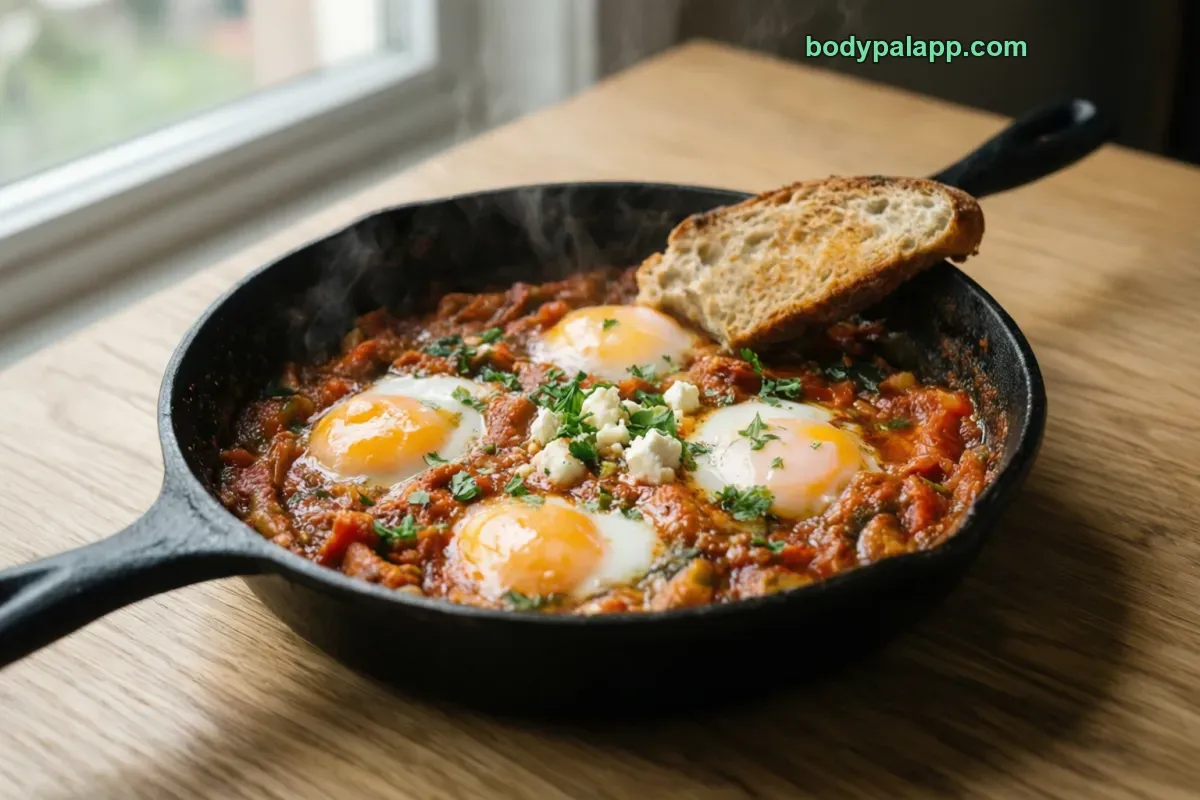
Shakshuka calories come to 289 for one bowl (241 g) and 120 per 100 g, going by a packaged breakfast bowl's label. The number to notice is sodium, not calories. One bowl carries 860 mg, which is 37% of the daily value, while its calories use only 14% of a day's budget.
289kcal
1 bowl · 241 g, packaged, per label
16%protein
12 gProtein
31 gCarbs
14 gFat
How to burn off 289 kcal
—Walking, brisk
—Jogging
—Cycling, moderate
—Swimming
Skip the math. BodyPal counts these calories from your steps and workouts automatically.
Nutrition facts
Packaged, per label · per 241 g
Calories
289 kcal
Protein
12 g
Carbohydrate
31 g
Fat
14 g
Saturated fat
1.5 g
Cholesterol
0 mg
Sodium
860 mg
Potassium
870 mg
Source: USDA FoodData Central
🛡️
Verified nutrition data
Numbers on this page come from USDA FoodData Central, the U.S. Department of Agriculture’s food composition database, and from manufacturer labels where a branded product is named. Last verified September 2026. How we verify our data →
Shakshuka: calories, protein and sodium by serving
Percent of daily value uses the FDA reference of 2,000 kcal a day.
Serving
kcal
Protein
Carbs
Fat
Sodium
% DV kcal
1 bowl (241 g)
289
12 g
31 g
14 g
860 mg
14%
100 g
120
5 g
12.9 g
5.8 g
357 mg
6%
Sauce base, 1/2 cup (126 g)
79
2 g
9 g
4 g
270 mg
4%
3 × 1 bowl (241 g)
868
36 g
2,581 mg
5 × 1 bowl (241 g)
1,446
60 g
4,302 mg
One bowl is a 289-calorie breakfast, and seconds add up fast
A single bowl of 241 g lands at 289 calories with 12 g of protein, 31 g of carbs and 14 g of fat. That is a moderate breakfast or a light lunch. It covers 14% of the daily value for calories and 24% for protein, so it does real work without crowding the rest of the day.
The trouble starts when the pan is shared at the table and the bread keeps coming. Two bowls, 482 g, reach 578 calories and 24 g of protein. Three bowls climb to 868 calories. A big brunch portion equal to five bowls, 1,205 g, hits 1,446 calories, which is more than most people eat in a full dinner.
Sodium scales even harder than calories. Two bowls bring 1,721 mg, three bowls 2,581 mg, and five bowls 4,302 mg. If you plan a second helping, the salt is what goes over the line first, well before the calories do.
Carbs and fat split the calories evenly
The calorie split is 42% carbs, 42% fat and 16% protein. That balance comes from what shakshuka is: a tomato and pepper sauce, which supplies the carbs, cooked with oil, which supplies the fat. Protein is the smallest share by a clear margin.
Per 100 g you get 5 g of protein, 12.9 g of carbs and 5.8 g of fat. The fat is mostly the unsaturated kind, with saturated fat at just 0.6 g per 100 g. Sugars are low at 2.1 g per 100 g, and fiber is a respectable 2.5 g, which reflects all those cooked vegetables.
Across a full bowl that means 6 g of fiber and only 5 g of sugars. For a dish built on tomatoes, that is a modest sugar count. The cholesterol row on this label reads 0, so this packaged version is not built around whole eggs. A homemade pan with eggs cracked into the sauce would shift the protein share up and add cholesterol, but the card does not give numbers for that version.
Sodium is the row to watch
At 357 mg per 100 g, shakshuka is a salty dish by any measure. One bowl delivers 860 mg, or 37% of the daily value, which is far higher than its 14% share of calories. Put simply, you hit your salt budget about two and a half times faster than your calorie budget.
Much of that salt is in the sauce. Half a cup of sauce base (126 g) carries 270 mg of sodium, 12% of the daily value, for only 79 calories. Jarred sauces from brands such as Mina, Osem or 365 Whole Foods Market vary, so the label on your jar is the one to check.
If you watch sodium, keep it to one bowl and skip salty sides like feta or cured meats. The upside: potassium sits at 361 mg per 100 g, a reasonable amount that comes from the tomatoes and peppers.
Bread makes or breaks the meal
Shakshuka is rarely eaten alone. The sauce begs for something to mop it up, and that side can easily match the bowl's calories. A thick slice of bread or a pita adds carbs to a dish that is already 42% carbs, so portion the bread before you sit down.
Because protein is only 16% of the calories, pairing adds the most value on that side. Greek yogurt, cottage cheese or an extra egg on top pushes the meal past the 12 g of protein in the bowl and makes it more filling. A side of greens adds volume for very few calories.
As a lunch, one bowl at 289 calories leaves plenty of room for dinner. As a breakfast, it is lighter than many diner plates. If you cook it at home, BodyPal can log the pan from a photo so you do not have to weigh each ladle.
How does shakshuka compare?
Here is how shakshuka stacks up against other savory and breakfast bowls on our site, per 100 g and per usual serving.
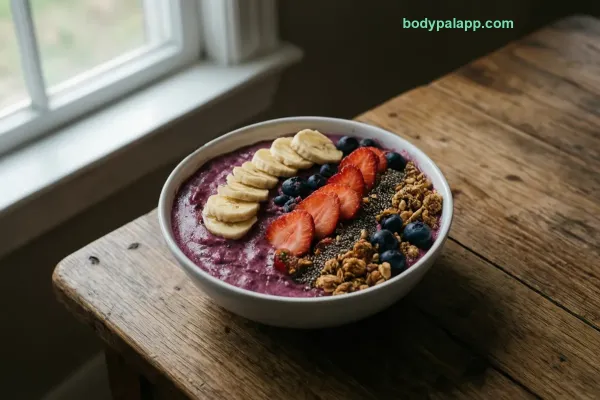
Verdict: For the fewest calories pick the smoothie bowl at 66 per 100 g, or pho tai at 189 per serving if you want something savory. For staying full, the egg omelette wins with 7.5 g of protein per 100 g against shakshuka's 5 g, at 241 calories per serving.
Most popular shakshuka brands in the United States
Ranked by popularity in the BodyPal database
# Productkcal / 100 g
1Osem Shakshuka Omelette Sauce1/2 cup · 125 g56 kcal
2Cook House Shakshuka Breakfast Mild Sauce1/4 cup · 63 g40 kcal
A 241 g shakshuka breakfast bowl is 289 calories, which works out to 120 calories per 100 g.
Is shakshuka good for weight loss?
One bowl is 289 calories with 12 g protein and 6 g fiber, a moderate breakfast portion. The tomato sauce base on its own is only 63 calories per 100 g.
How many calories are in shakshuka sauce?
Jarred shakshuka sauces run from 40 to 80 calories per 100 g, so a 1/2 cup (126 g) of the heirloom style is 79 calories.
How much protein is in shakshuka?
A 241 g bowl has 12 g protein, along with 31 g carbs and 14 g fat.
How much sodium is in a bowl of shakshuka?
One bowl (241 g) has 860 mg of sodium, which is 37% of the daily value. Per 100 g it is 357 mg, so a large portion gets salty quickly.
How many calories are in two bowls of shakshuka?
Two bowls (482 g) come to 578 calories with 24 g of protein. Sodium for that amount reaches 1,721 mg, which is the bigger concern than the calories.
Is shakshuka high in fat?
One bowl has 14 g of fat, and fat makes up 42% of the calories. Saturated fat is low, at only 0.6 g per 100 g, so most of the fat comes from the cooking oil.
How much fiber and sugar does shakshuka have?
A bowl has 6 g of fiber and 5 g of sugars. Per 100 g that is 2.5 g of fiber and 2.1 g of sugars, which is modest for a tomato-based dish.
Does shakshuka have cholesterol?
The packaged bowl behind these numbers lists 0 mg of cholesterol. Shakshuka made with whole eggs at home would contain cholesterol, so check how your version is made.