
How many calories are in shrimp and broccoli?
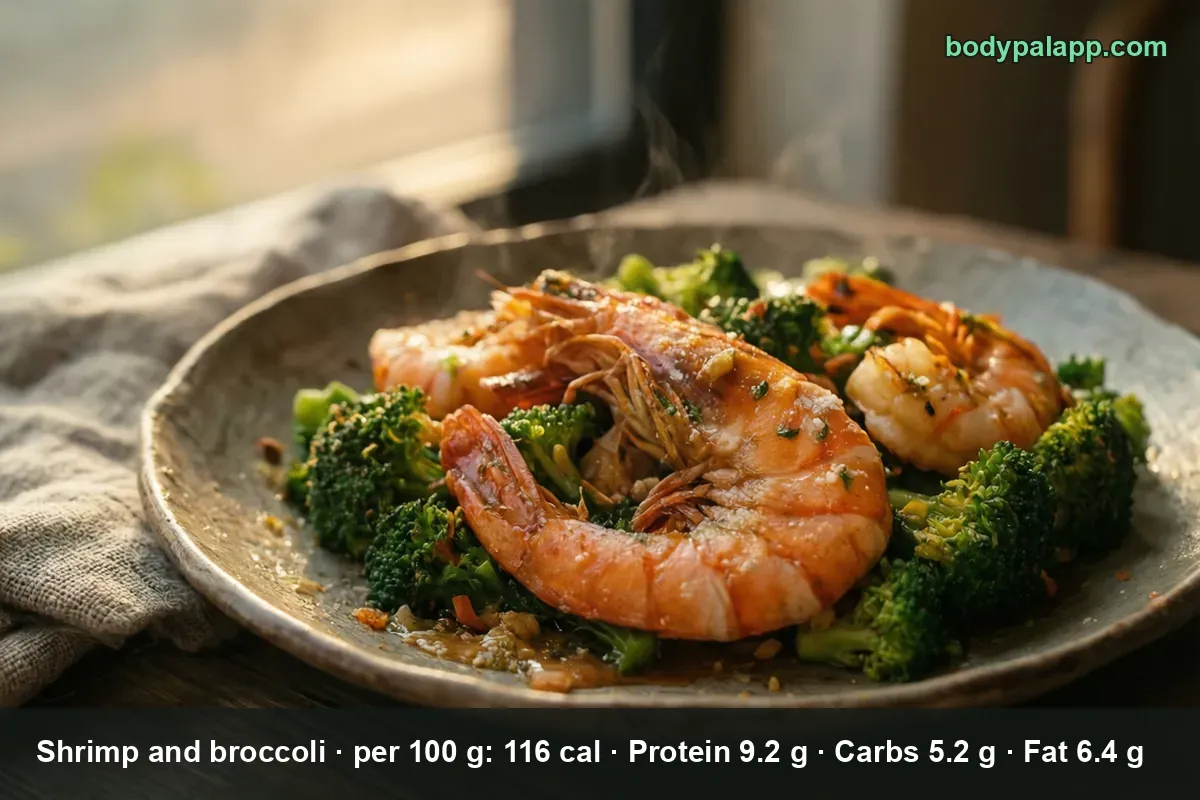
A 1-cup serving of shrimp and broccoli in a soy-based sauce weighs 217 g and carries 252 calories. Per 100 g the dish runs 116 calories, which makes it one of the lightest hot entrees you can build around a protein. Almost 20 g of that cup is protein, and the sauce supplies most of the sodium.
On this page
- Shrimp and broccoli quick facts
- US servings, from one ounce to a full cup
- Four USDA versions of the same plate
- Cholesterol is the biggest number on the panel
- How does shrimp and broccoli compare?
- Most popular shrimp and broccoli brands
- Shrimp and broccoli FAQs
Shrimp and broccoli quick facts
The record behind every number here is FNDDS 2706853, "Shrimp and vegetables including carrots, broccoli, and/or dark-green leafy; no potatoes, soy-based sauce". It is the only USDA entry that has both the broccoli and the glossy soy-based sauce, which is exactly what lands on the plate when you order shrimp with broccoli or stir-fry it at home. Three related entries exist, and each one removes something: the broccoli, the sauce, or both. Those live further down the page.
Read it as a mixed dish, not as shrimp weighed on its own. A cup of it is shrimp, florets and sauce together, so the calorie density is far lower than a plate of shrimp alone would suggest.
| Nutrient | Per 100 g | Per 1 cup (217 g) | % Daily Value |
|---|---|---|---|
| Calories | 116 | 252 | — |
| Total fat | 6.4 g | 13.9 g | 18% |
| Saturated fat | 0.97 g | 2.1 g | 11% |
| Carbohydrate | 5.15 g | 11.2 g | 4% |
| Dietary fiber | 1.2 g | 2.6 g | 9% |
| Total sugars | 1.5 g | 3.3 g | — |
| Protein | 9.16 g | 19.9 g | 40% |
| Sodium | 247 mg | 536 mg | 23% |
% Daily Value is based on a 2,000-calorie diet.
Verified nutrition data
Numbers on this page come from USDA FoodData Central, the U.S. Department of Agriculture’s food composition database, and from manufacturer labels where a branded product is named. Last verified September 2026. How we verify our data →
Two label rows are missing on purpose. This edition of FNDDS does not publish added sugars or trans fat for composite dishes, so there is nothing honest to put in those cells. Cholesterol and potassium are published: a cup carries 156 mg of cholesterol and 471 mg of potassium, which work out to 52% and 10% of the FDA Daily Values.
US servings, from one ounce to a full cup
| Serving | Weight | Calories |
|---|---|---|
| 1 oz | 28 g | 33 kcal |
| 4 oz | 113 g | 131 kcal |
| Half a cup | 109 g | 126 kcal |
| USDA typical portion | 163 g | 189 kcal |
| 1 cup | 217 g | 252 kcal |
| Per 100 g | 100 g | 116 kcal |
Two of those weights come straight from USDA: the 217 g cup and the 163 g "typical portion, quantity not specified" that the survey uses when a person could not name a measure. That 163 g portion is worth knowing, because it is what people actually described eating: 189 calories, roughly three quarters of a full cup.
The ounce lines and the half cup are our own arithmetic from the USDA 100 g figure, not USDA servings. They scale cleanly because the dish is a uniform mix, so 4 oz on a kitchen scale really is 131 calories, 10.4 g of protein and 279 mg of sodium.
One warning about restaurant plates. A takeout container of shrimp with broccoli is often two to three cups before rice enters the picture, which puts it at 504 to 756 calories and 1,072 to 1,608 mg of sodium. The cup is the honest unit for logging; the container rarely is.
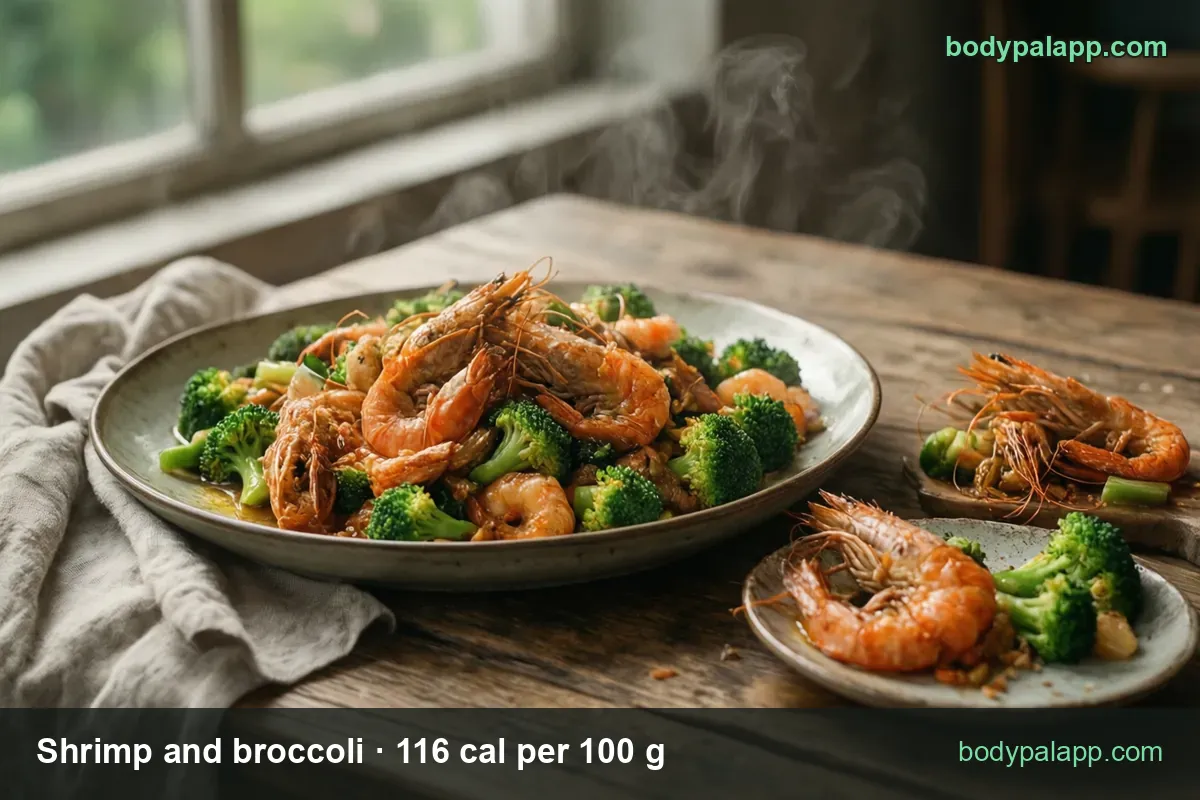
Four USDA versions of the same plate
| Version | Per 100 g | Typical serving | Calories |
|---|---|---|---|
| With broccoli, soy-based sauce | 116 kcal | 1 cup, 217 g | 252 kcal |
| With broccoli, no sauce | 118 kcal | 1 cup, 162 g | 191 kcal |
| No broccoli, soy-based sauce | 118 kcal | 1 cup, 217 g | 256 kcal |
| No broccoli, no sauce | 124 kcal | 1 cup, 162 g | 201 kcal |
Without the sauce. Shrimp and vegetables with broccoli and no sauce is 118 calories per 100 g, marginally denser than the sauced version. The cup, though, weighs only 162 g because nothing is filling the gaps between the florets, so it lands at 191 calories. Sodium is where the real gap opens: 59 mg per 100 g, about 96 mg in that cup, against 536 mg in the sauced cup.
Without the broccoli. Swap the broccoli for peppers, onions or bean sprouts and keep the sauce, and you get 118 calories per 100 g and 256 calories a cup. Fiber slips from 2.6 g to 2.2 g per cup. It is a small loss on paper, but broccoli is the reason this dish counts as a vegetable serving at all under MyPlate.
Neither. Shrimp and vegetables with no broccoli and no sauce is the densest of the four at 124 calories per 100 g, because more of the weight is shrimp and oil rather than water-heavy florets and thin sauce. A 162 g cup is 201 calories with only 66 mg of sodium.
Half a cup. If shrimp and broccoli is the side rather than the entree, half a cup is 126 calories, 9.9 g of protein and 268 mg of sodium. That is our own scaling from the 100 g figure.
Here is the counterintuitive part. The version people assume is the heaviest, the one swimming in sauce with broccoli in it, has the lowest calorie density of all four at 116 per 100 g. Sauce is mostly water, soy and a little sugar. It adds salt, not calories.
Cholesterol is the biggest number on the panel
Scan the percentages in the quick-facts table and protein looks like the headline at 40% of the Daily Value. It is not the largest figure. Cholesterol is: 156 mg in a cup, or 52% of the 300 mg Daily Value, and shrimp are the reason. Shellfish carry more cholesterol per gram than almost any other lean protein.
That number matters less than it used to. The current Dietary Guidelines for Americans dropped the hard 300 mg daily ceiling and instead advise keeping dietary cholesterol as low as practical while eating a healthy pattern, and shrimp sit comfortably inside that pattern because the saturated fat is so low. A cup delivers only 2.1 g of saturated fat, 11% of the Daily Value. Compare that to almost any beef or pork stir-fry of the same size and the gap is large.
Sodium is the row worth acting on. At 536 mg a cup, 23% of the Daily Value, a two-cup takeout portion clears 1,000 mg before rice or an egg roll. If you are watching sodium, ask for the sauce on the side, or make the same dish at home with half the soy sauce. The USDA record for the unsauced version shows what that swap is worth: roughly 96 mg a cup instead of 536.
Protein deserves a fair hearing too. Just under 20 g in a 252-calorie cup is a strong ratio, and it comes almost entirely from the shrimp. The broccoli contributes the fiber, the potassium and the volume that makes a modest portion feel like a full plate.
How does shrimp and broccoli compare?
| Dish | Per 100 g | US serving | Calories |
|---|---|---|---|
| Shrimp and broccoli, soy-based sauce | 116 kcal | 1 cup, 217 g | 252 kcal |
| Shrimp and vegetables with broccoli, no sauce | 118 kcal | 1 cup, 162 g | 191 kcal |
| Shrimp and vegetables, no broccoli, soy-based sauce | 118 kcal | 1 cup, 217 g | 256 kcal |
| Shrimp and vegetables, no broccoli, no sauce | 124 kcal | 1 cup, 162 g | 201 kcal |
Our take: for weight loss, the plain broccoli version at 191 calories a cup is the pick, 61 calories under the sauced cup and more than 400 mg lower in sodium. For satiety at a normal dinner, take the sauced dish with broccoli. It gives you the most food per calorie of the four, close to 20 g of protein, and the sauce buys flavor for almost no energy. The only version with nothing to recommend it is shrimp and vegetables with no broccoli and no sauce: the densest per gram, the least fiber, and no compensating taste.
Most popular shrimp and broccoli brands in the United States
Ranked by how widely each product appears among foods sold in the United States, from the BodyPal food database of over 3.3 million products. Calories are the figures printed on each Nutrition Facts label, checked against USDA FoodData Central.
| Product | Calories (per 100 g) |
|---|---|
| Lean Cuisine Lemon Garlic Shrimp Stir Fry | 74 cal |
| Scott & Jon's Shrimp & Vegetable Stir Fry | 75 cal |
Brand popularity: BodyPal food database. Nutrition: manufacturer labels / USDA FoodData Central.
Shrimp and broccoli FAQs
How many calories are in shrimp and broccoli?
A 1-cup serving is 252 calories, and 100 g of the dish is 116. That cup is 217 g of shrimp, broccoli and a soy-based sauce, and it carries 19.9 g of protein and 11.2 g of carbohydrate. The USDA record is a mixed dish, not shrimp weighed on its own.
How many calories in 1 cup of shrimp and broccoli?
252 calories for the USDA cup, which weighs 217 g. Half a cup is 126 calories, our own arithmetic from the 100 g figure. Cups vary: the same dish made without sauce fills a 162 g cup and lands at 191 calories, so the measure alone does not fix the number.
How much protein is in shrimp and broccoli?
19.9 g of protein in a 1-cup serving, which is 40% of the Daily Value. Per 100 g the dish gives 9.16 g. That is a strong share for 252 calories, and it comes almost entirely from the shrimp; the broccoli adds fiber and potassium rather than protein.
How many carbs are in shrimp and broccoli stir fry?
11.2 g of carbohydrate in a 1-cup serving, 4% of the Daily Value, with 2.6 g of that as fiber and 3.3 g as sugars. Take the sauce away and the dish drops to 3.8 g per 100 g, so roughly a quarter of the carbohydrate rides in with the sauce.
Why is Chinese shrimp with broccoli so high in sodium?
536 mg of sodium sits in a 1-cup serving, 23% of the Daily Value, and the soy-based sauce is the reason. The same shrimp and vegetables cooked without sauce run 59 mg per 100 g, about 96 mg a cup. The shrimp are not the problem; the seasoning is.
How many calories in shrimp and broccoli without sauce?
191 calories for a 1-cup, 162 g serving of shrimp and vegetables with broccoli and no sauce, at 118 calories per 100 g. It is slightly denser per gram than the sauced version, but the cup weighs less, so the plate is lighter. Sodium falls to about 96 mg.
Is shrimp and broccoli good for weight loss?
252 calories a cup with 19.9 g of protein and 2.6 g of fiber makes this an easy fit inside a 350 to 450 calorie lunch. If you are watching sodium, cook it or order it with less sauce; that single change takes a cup from 536 mg down to roughly 96 mg.
How much cholesterol is in shrimp and broccoli?
156 mg of cholesterol in a 1-cup serving, 52% of the Daily Value and the highest percentage anywhere on the panel, above the 40% for protein. Shrimp are naturally rich in cholesterol. The Dietary Guidelines no longer set a hard daily cap and instead advise keeping intake as low as practical.
Similar foods
- Smoked Salmon — 99 cal per 3 oz
- Steamed Shrimp Dumplings — 170 cal for 6 steamed dumplings
- Halibut — 176 cal per Cooked fillet
- Mahi Mahi — 173 cal per cooked fillet
- Raw Tuna — 93 cal per 3 oz
- Tuna Sashimi — 31 cal per piece
Count it without the math
Point the camera at the plate and BodyPal counts the shrimp, the broccoli and the sauce for you.


How long does it take to burn off 252 kcal of shrimp and broccoli?
A 1-cup (217 g) serving is 252 kcal. Enter your weight and the amount you ate to see how long it takes you to burn that off:
lb
| Activity | Time to burn 252 kcal |
|---|---|
| Walking, brisk | 50 min |
| Cycling, moderate | 32 min |
| Swimming, moderate | 36 min |
| Jogging | 30 min |
| Weight training, moderate | 56 min |
Times are for a 155 lb adult at a steady pace; change the weight to see yours. The amount is set to the portion in the text (217 g); change it to what you actually ate. BodyPal works this out from your steps automatically.
This table assumes you know your daily total. If you do not, the daily calorie calculator works it out from five numbers.