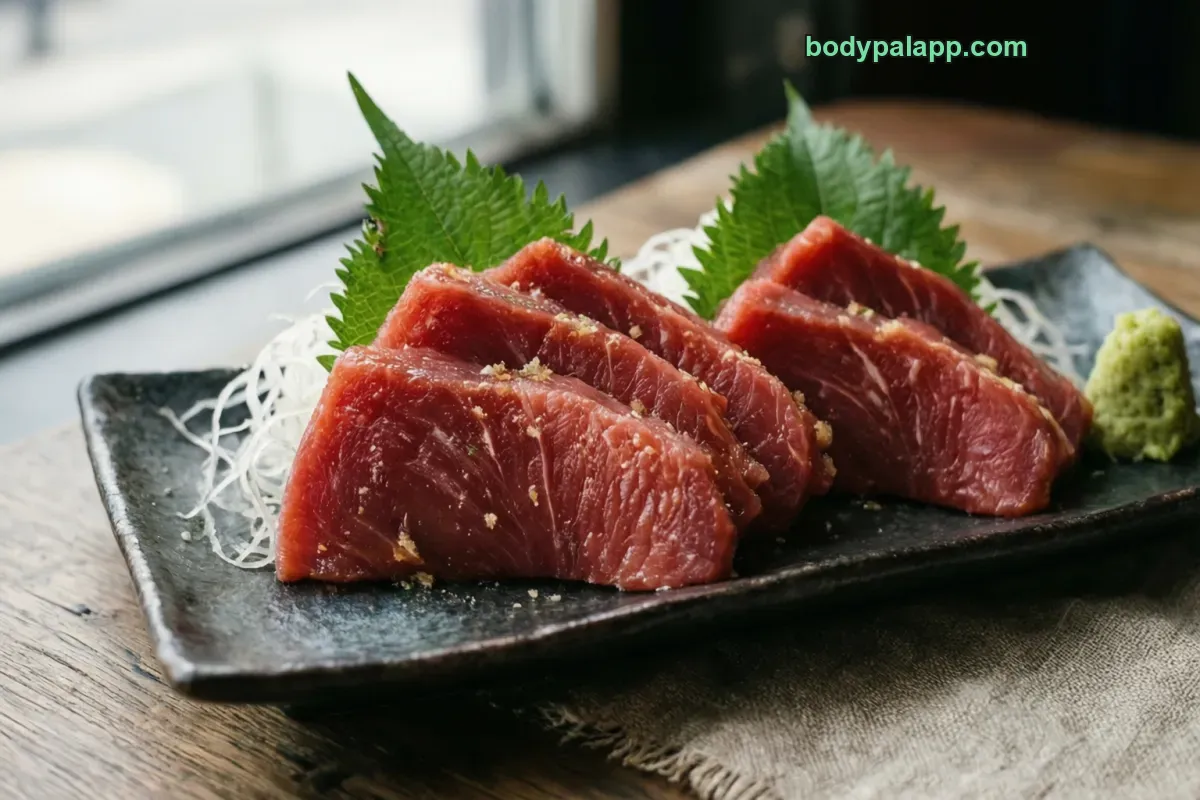
Tuna sashimi calories come to 31 for one 28 g piece and 109 per 100 g of raw yellowfin. Almost all of that energy is protein: 96% of calories, with fat at 4% and no carbs at all. The fish barely moves your total; the slice count, the rice and the sauces do.
31kcal
1 piece · 28 g, yellowfin tuna, raw
96%protein
6.8 gProtein
0 gCarbs
0.1 gFat
How to burn off 31 kcal
—Walking, brisk
—Jogging
—Cycling, moderate
—Swimming
Skip the math. BodyPal counts these calories from your steps and workouts automatically.
Nutrition facts
Yellowfin tuna, raw · per 28 g
Calories
31 kcal
Protein
6.8 g
Carbohydrate
0 g
Fat
0.1 g
Saturated fat
0 g
Cholesterol
11 mg
Sodium
13 mg
Potassium
123 mg
Iron
0.2 mg
Source: USDA FoodData Central
🛡️
Verified nutrition data
Numbers on this page come from USDA FoodData Central, the U.S. Department of Agriculture’s food composition database, and from manufacturer labels where a branded product is named. Last verified September 2026. How we verify our data →
Tuna sashimi: calories, protein and sodium by serving
Percent of daily value uses the FDA reference of 2,000 kcal a day.
Serving
kcal
Protein
Carbs
Fat
Sodium
% DV kcal
1 piece (28 g)
31
6.8 g
0 g
0.1 g
13 mg
2%
6 pieces (170 g)
185
41.5 g
0 g
0.8 g
77 mg
9%
100 g
109
24.4 g
0 g
0.5 g
45 mg
5%
Bluefin piece (28 g)
40
6.5 g
0 g
1.4 g
11 mg
2%
3 × 1 piece (28 g)
92
20.5 g
38 mg
5 × 1 piece (28 g)
153
34.2 g
63 mg
A six-piece plate is 185 calories
A typical piece of tuna sashimi weighs about 28 g and carries 31 calories, 6.8 g of protein and 0.1 g of fat. That makes each slice easy to count. Two pieces come to 61 calories, three reach 92, and five land at 153.
The usual six-piece order weighs about 170 g and totals 185 calories, which is 9% of the daily calorie value. The same plate delivers 41.5 g of protein, or 83% of the daily value. Few restaurant plates give you that much protein for so little energy. Thick-cut slices at some restaurants weigh more than 28 g, so a generous plate can run higher than the menu suggests.
Because the fish has no carbs and almost no fat, the total climbs in a straight line with the slice count. Add a piece, add roughly 31 calories. The bigger threat to your count sits beside the fish: rice, tempura, creamy sauces or a roll you did not plan to order.
Nearly every calorie is protein
Per 100 g, raw yellowfin has 24.4 g of protein, 0.5 g of fat and 0 g of carbs. Protein supplies 96% of the calories and fat the remaining 4%. There is no sugar and no fiber, which is what you expect from plain fish. Raw yellowfin is about as close to pure protein as a whole food gets.
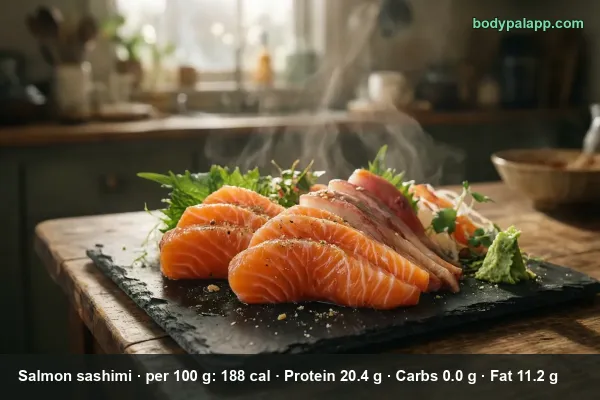
That ratio is rare even among lean proteins. A 100 g portion covers 49% of the daily protein value for only 5% of the daily calorie value. If you are chasing a protein target without spending many calories, few foods are this efficient. Salmon sashimi, by contrast, gets a much larger share of its energy from fat.
The smaller rows are quiet too. Saturated fat is 0.2 g per 100 g, close to nothing. Cholesterol is 39 mg per 100 g, a modest figure against the 300 mg daily value, and potassium is the quiet bonus at 441 mg. None of these rows runs high at a normal portion.
Bluefin adds fat and calories per slice
The main numbers on this page come from the USDA row for raw yellowfin tuna. Bluefin is richer. A 28 g bluefin piece has 40 calories and 1.4 g of fat, against 31 calories and 0.1 g of fat for the same weight of yellowfin.
Protein barely moves between the two: 6.5 g for a bluefin piece and 6.8 g for yellowfin. So the extra calories in bluefin come almost entirely from fat. That fat is also what gives the richer cuts their soft, buttery texture, and why they cost more.
If you order a mixed plate and cannot tell which tuna you got, count each slice somewhere between 31 and 40 calories. The gap is small on one piece and only starts to matter when you eat a lot of them. If you are tracking closely, ask the restaurant which species it serves; lean red slices fit the yellowfin numbers best.
The fish is low in sodium; the soy sauce is not
Plain tuna sashimi is a low-sodium food. One piece has 13 mg, and six pieces have 77 mg, just 3% of the daily value. Per 100 g the figure is 45 mg.
The dipping dish changes that picture. Soy sauce is salty, and a generous dunk on every slice can add far more sodium than the fish itself. If you watch sodium, touch only the edge of each piece to the sauce or use a reduced-sodium soy sauce. Rice shifts things as well: tuna nigiri carries 342 mg of sodium per 100 g once seasoned rice joins the fish.
Sashimi works well as the protein anchor of a meal. Pair it with seaweed salad, edamame, cucumber or a small bowl of rice if you want carbs, and the plate stays easy to count. BodyPal can log a sashimi platter from a photo, which helps when slices vary in size.
How does tuna sashimi compare?
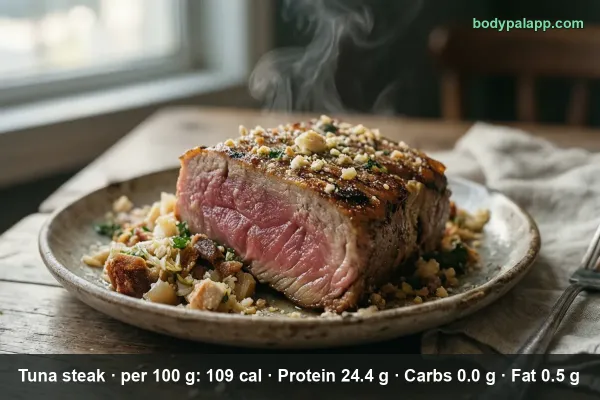
Here is how tuna sashimi stacks up against salmon sashimi, tuna nigiri and tuna steak, per 100 g and per usual serving.
Verdict: Tuna sashimi and plain tuna steak tie as the leanest picks at 109 calories and 24.4 g of protein per 100 g, well below salmon sashimi at 188. Choose salmon if you want richer fat at 11.2 g per 100 g, and pass on nigiri if you are cutting carbs, since its rice adds 15.3 g per 100 g.
Most popular tuna sashimi brands in the United States
Ranked by popularity in the BodyPal database
# Productkcal / 100 g
1Genji All Tuna Sashimi6.4 oz · 181 g88 kcal
Packaged sashimi trays are weighed raw like the numbers above, so the small gap comes from the tuna species used rather than the preparation. Source: manufacturer labels / USDA FoodData Central.
Tuna sashimi FAQs
How many calories are in tuna sashimi?
One piece (28 g) is about 31 calories and a 6-piece order (170 g) is about 185 calories. Raw yellowfin tuna has 109 calories per 100 g.
Is tuna sashimi good for weight loss?
It is one of the leaner options at 109 calories per 100 g, with 24.4 g protein and only 0.5 g fat. A 6-piece order adds 185 calories before soy sauce.
Tuna sashimi vs salmon sashimi: which has fewer calories?
Tuna is lower at 109 calories per 100 g against 188 for salmon sashimi. Over a 6-piece order that is 185 calories versus 320.
How much protein is in tuna sashimi?
Raw yellowfin tuna has 24.4 g protein per 100 g, so one piece (28 g) gives about 6.8 g and a 6-piece order about 41.5 g.
How many calories are in one piece of tuna sashimi?
One 28 g piece of yellowfin tuna sashimi has 31 calories. A bluefin piece of the same weight comes to 40 calories, because it carries 1.4 g of fat instead of 0.1 g.
How many calories and how much protein are in 6 pieces of tuna sashimi?
Six pieces (170 g) of tuna sashimi have 185 calories and 41.5 g of protein. That is 9% of the daily calorie value and 83% of the daily protein value, with only 0.8 g of fat.
What are the nutrition facts for 100 g of tuna sashimi?
100 g of raw yellowfin tuna sashimi has 109 calories, 24.4 g of protein, 0.5 g of fat and 0 g of carbs. It also has 45 mg of sodium, 39 mg of cholesterol and 441 mg of potassium.
What are the macros of tuna sashimi?
Protein supplies 96% of the calories in tuna sashimi and fat the other 4%, with no carbs. There is no sugar or fiber, so it fits low-carb plans easily.
How much does a piece of sashimi weigh?
A typical piece of tuna sashimi weighs about 28 g, the serving behind the 31-calorie figure. Six pieces weigh about 170 g. Slice size varies by restaurant, so thick cuts can run heavier.